Unitarian-Universalism
Unitarian-Universalism Quick Facts
| Formed | 1825 CE |
| Origin | United States |
| Followers | 250,000 |
| Deity | Various or none |
| Sacred Texts | Bible (contested) |
| Headquarters | Boston, MA USA |
Unitarian-Universalism

Unitarian-Universalism Overview
Unitarian-Universalism (commonly referred to as UU) is the result of the 1961 merging of two, pluralistic, Christian-based religious movements (even though many Unitarian-Universalists claim they are not a Christian denomination). Unitarianism was originally organized during the 16th century C.E. Reformation in Poland, Transylvania, and England, and then later developed from a break with the Protestant Puritans in New England. The Unitarians reject the doctrine of the Triune nature of God, which is held common among most Christian denominations. They claim a singular unity of God. The Universalists formed in the 18th century C.E. after a split with Baptist and Congregationalist churches over a teaching that claimed only a small number of people would be saved. Universalists claim that God will restore all humanity and that eternal torment in hell is a fabrication, not supported by the Bible. Even though Unitarians and Universalists originally viewed the Bible as an authority, there is currently much variety regarding its authority and sacredness. Many Unitarian-Universalist congregations use hymns and other ritual practices, but the majority of their religious beliefs are based on experience and reason. Unitarian-Universalists reject the use of confessions or creeds and do not rely on tradition or clerical authority, but believe in freedom of religious thought and tolerance regarding differing rituals and customs in worship and religious practice. The majority of Unitarian-Universalist congregations are in the United States, where they are noted for their attention and participation in issues of social justice including equality in race and gender.
Pauline Rooney explains what it means to be a Unitarian Universalist in today's world.
The denominations of Unitarianism and Universalism originated in the 18th century as separate movements, and both find inspiration in some of the earliest Christian controversies.
Early 18th-century Unitarianism and Universalism began as reactions against the strict predestinarian theology of Calvinism. Unitarianism emphasized the oneness of God and humanity's capacity for salvific moral behavior, and Universalists believed in universal salvation for all, without the punishments of a hell.
Both Unitarianism and Universalism look back to several 18th- and 19th-century ministers who played leading roles in the young movements, including William Ellery Channing for the Unitarians and Hosea Ballou and John Murray for the Universalists.
Although initially the Jewish-Christian Bible formed the primary scripture for both traditions, contemporary Unitarian Universalism draws from a wide range of inspirational sources, including scriptures from around the world as well as secular literature.
Scholarship on Unitarian Universalism currently focuses on four main areas: early Christian through Reformation antecedents, denominational history, the wider context of religious liberalism, and, in an effort to balance the numerous studies of Unitarianism, a renewed interest in Universalist history.
The first Unitarian congregations emerged out of schisms in New England Congregational parishes, while Universalist congregations were primarily founded as congregations intended to support belief in universal salvation.
Unitarian Universalism, which began as a sectarian Protestant movement, has experienced little to no sectarian activity, largely because of its open liberal perspectives.
In general, Unitarian Universalism does not engage in overt missionary activity, avoiding the resulting issues of conquest or violence. As a liberal movement of relatively recent origin, the religion tends to emphasize pacifism, anti-imperialism, and human rights.
In North America, both traditions began in New England and the mid-Atlantic regions, and as the population of the United States migrated westward, Unitarianism and Universalism followed. Today, Unitarian Universalism exists primarily in the United States and Canada.
The two separate denominations merged in 1961 to form the Unitarian Universalist Association, a union that continues today. Individual Unitarian Universalists embrace a diversity of beliefs, and they tend to support liberal and progressive causes within the broader culture.
Today's Unitarian Universalism centers its sacred narratives on the cycle of the seasons and the hope for "onward and upward" progress of both individuals and society.
Although opinions vary, most contemporary Unitarian Universalists hesitate to speak of an omnipotent, anthropomorphic deity, believing instead that this world is itself imbued with the divine. They honor Jesus as a great teacher and leader, and they accord this status to other religious leaders or founders as well.
Unitarian Universalists believe in the "inherent dignity and worth of every human person,"meaning that every person partakes in the divine essence. The purpose of existence is to live up to the high demands of this self-understanding.
Unitarian Universalism has no single theology of pain, evil, or suffering, and the religion's liberal optimism creates a focus on the alleviation of suffering rather than illumination of its cause.
In keeping with the tradition’s theological diversity, Unitarian Universalists believe in everything from heaven to reincarnation to the continuation of the dead in the memories of those still living, among other possibilities.
Unitarian Universalists generally consider all moments as suffused with the sacred. In terms of ritual, congregations typically meet on Sunday mornings, and they celebrate versions of Protestant Christian, American, and other holidays as part of a liturgical year.
As with sacred time, Unitarian Universalists hold all space as sacred. Most congregations meet in church buildings that exhibit a variety of architectural styles. Many Unitarian Universalists also find that nature and the environment offer a special sense of the divine.
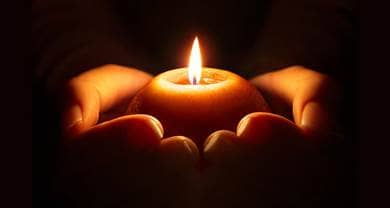
Sunday services often feature the lighting of a ceremonial chalice, and the sharing of congregational "joys and concerns" to the lighting of additional candles. Unitarian Universalists mark the life cycle with infant dedication ceremonies, weddings, and memorial services.
Contemporary Unitarian Universalists draw their practices from a variety of traditions, often turning to various forms of prayer, meditation, or yoga. Not all Unitarian Universalists engage in daily practices, and many seek unique ways to imbue the everyday with sacred significance.
The main Unitarian Universalist symbol is the flaming chalice, a ceremonial cup topped by a flame, surrounded by two overlapping circles that represent the two traditions. Other symbols use variations of the emblems of the world's religions.
Although ministers usually lead congregations and worship services, they have no priestly or sacramental function. Unitarian Universalism believes in the "priesthood of all believers" and holds all individuals responsible for their own salvation, whatever each person understands that to be.
Unitarian Universalist churches most often are led by a trained minister, although a few congregations are lay-led. The denomination follows congregational polity, meaning that each congregation is self-governing.
Unitarian Universalism draws its moral inspiration from several sources, including most prominently the Jewish-Christian tradition and the ethical teachings of the world's religions. Unitarian Universalist morality emphasizes justice, dignity, compassion, human rights, tolerance, and liberty.
Unitarian Universalists hope to realize their ideal society, one in which principles of justice, freedom, compassion, tolerance, and equity spread to all corners of both human society and the natural environment.
Unitarianism and Universalism have always been at the forefront of movements for gender equality; today that emphasis embraces sexual equality as well. Unitarian Universalism is one of the few religions to unequivocally support gay clergy and gay marriages.