The Living Legacy– a Graduation Message for Boston Baptist College

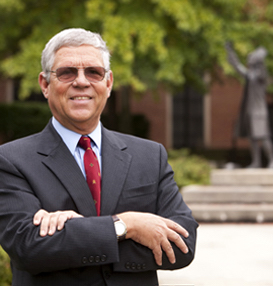
( the following commencement address was delivered in Faneuil Hall in downtown Boston on May 23rd, 2012).

THE LIVING LEGACY

Graduations are always rites of passage of one sort or another. For some students a college degree is only the stepping stone or pre-requisite to a higher degree or degrees. I remember the advice of my Grandmother who only graduated from the 8th grade, as I was going on to seminary and PhD work. She gave two pieces of wisdom: 1) don’t become an educated fool, and 2) when you are reading all that stuff, don’t be so open minded that your brains fall out. I am hoping I successfully avoided those two outcomes, but you’d need to ask my wife about that.

Lots of graduation speakers stand up and simply offer a piece of epideictic rhetoric, lauding the graduates and urging them on to greater glory thereafter. Obviously you are to be commended for what you have thus far accomplished, but for the Christian there is never a point in which he or she ceases to be a learner, never a point where he or she ceases to be a disciple, and by the way, ‘learner’ is the literal meaning of the word we usually translate as ‘disciple’. If you plan to be a disciple of Christ for the rest of your life you have committed yourself to further education. It is thus appropriate at the outset of this address to urge you strongly– commit yourselves now to life long learning and above all life long studying and learning of God’s Word. There are a plethora of reasons to do so.

In the first place, we live in a Jesus haunted culture that is Biblical illiterate. Almost anything can pass for knowledge of Jesus nowadays in America. I once did a book tour for my Gospel Code book (a critique of the Da Vinci Code) and was amazed at how little even committed Christians knew about the New Testament, early Christian history, or theology. When I told them there were over 150 historical mistakes in the Da Vinci Code, some of them were like— ‘really, really???’ They had mistaken hysterical fiction for historical fiction. I thought about writing up my encounters with such folks and calling it Gullible’s Travels. People who are not well grounded in God’s Word will fall for most anything that is winsome or interesting or peeks their curiosity. Or again, as my grand parents used to say ‘people who don’t stand for the right things, will fall for most anything’.

In a world of Biblically illiterate people, if you commit yourself to life long study of God’s Word, you will very quickly stand out from most of your peers especially as our culture becomes increasingly more post-modern and post-Christian in character. But here is the good news about that— you will have a chance to be salt and light in a world of increasing darkness, no matter what profession you take up.

Take for example Donald Miller, the author of the best-selling book Blue like Jazz, recently made into a movie. Little did he know when he went off to college to try and escape his conservative Christian past that he would end up being led to a more profoundly Christian life by a girl he admired, Penny, and indeed he even became father confessor to the various secular students on the campus of uber-liberal Reed College. The young man who sought to run away from God, ran smack dab into God, disguised in post-modern clothing.

No matter where you go, and what you do, God will have gone there before you, and can meet you there, and enable you to serve him well, even if, like Jonah, you might be tempted and attempting to run away from his calling on your life. There are of course many Biblical precedents of people trying to escape God’s call on their lives, surprisingly even by major Biblical figures. Remember the story of Moses at the burning bush, where he keeps telling God— ‘pick somebody else please!’ I call this an example of trying to practice ‘call-forwarding’. ‘Here I am Lord, take my brother’, said Moses. It just never works very well when you do that. You end up perpetually frustrated. One of the reasons it doesn’t work is because God has hard-wired you for serving him, or as Paul puts it— ‘you have been created in Christ Jesus for good works’. But what does that look like?

Somehow, some way, in Evangelical circles the word ‘works’ has become a dirty word. Now work can be dirty, to be sure, but what I mean is that ‘works’ are assumed to be the opposite of grace, and works are assumed to have nothing to do with working out your salvation with fear and trembling. Frankly, this is not true at all. As James says ‘faith without works is dead’. It follows from this that as one goes out to make one’s way in the world, that Christians especially should have a positive and clear perspective on work and works. Let me say something about the goodness of work, from a Biblical perspective.

Work is neither the curse nor the cure of our existence. It is neither the meaning nor the sole purpose of our existence or of our being. But it is definitely true that we have ben created in Christ Jesus for good works. Work itself is not a result of the Fall, and our attitudes about work should not be negative, nor should it be merely seen as a means to some material end. Any job worth doing, any job that can be done to the glory of God and the help of others, that you may undertake, is a job worth doing well, not least because it is your ministry for Christ.

The story is told about two men who died and went to heaven. When they got to the entrance gate and St. Peter’s desk, the first man, a cab driver from Boston named Carl came up to the desk and St. Peter gave him a golden staff and a gold silk robe, and he went into heaven beaming. The man right behind him was a minister named Frank from Dedham. He was given a burlap bag robe and a wooden staff. The minister protested ‘What about all those sermons I preached for the Lord?’ Peter replied: “Up here we go on performance—whenever that cab driver drove, people prayed, but whenever you preached people fell asleep.” Works matter to the Lord, and how we work matters to the Lord. Was it not Jesus who reminded his disciples that inasmuch as they had visited the imprisoned, fed the starving, and clothed the naked, it was as though they had done these things for Jesus himself? Whenever and whatever you do in service for the Lord is in fact service to the Lord. Think about that.

You do not need to have a job in a church to be a minister and witness for Christ. You can do this as a carpenter, an engineer, a computer programmer, a banker, a lawyer, and so on. But the goals of Christians as they go out into the world and assume jobs of various sorts, should necessarily be different from the goals of other people, not least because a Christian should take a more longitudinal, a more eternal perspective on their work. They neither merely work to live or to make a living, they work to please God and edify others.

Christians work hard not primarily to be a success in the world’s eyes, but to be pleasing to God in both the type and quality of work they do. Christians are never merely job seekers, they are called to seek the Lord, and when they do that, all the other things necessary will be added to them— doors will be opened, opportunities will arise, possibilities will become apparent. More important than your CV on Craig’s list is your trust in God. I would like to share with you some sage advice from my own spiritual mentor John Wesley. Listen to what he once told his young disciples and preachers.

‘Commit your selves to Christ as his servants. Give yourselves to him, that you may belong to him. Christ has many services to be done. Some are more easy and honorable; others are more difficult and disgraceful. Some are suitable to our inclinations and interests, others are contrary to both. In some we may please Christ and please ourselves. But then there are other works where we cannot please Christ except by denying ourselves.’ Be satisfied that Christ shall give you your place and work. YOU SHOULD
PRAY AS FOLLOWS: ‘Lord, make me what you will. I put myself fully into your hands: put me to doing, put me to suffering,
let me be used by you, or laid aside for you, let me be full, let me be empty,
I freely and with a willing heart give it all to your pleasure and disposal.’

It is important that I stress to you that God indeed can make a way where there seems to be no way, when it comes to helping you find your calling in life, find your first job, enabling you to pursue tasks worthy of serving Christ. Even in a difficult economy, you have so many opportunities to do the Lord’s work, and you should do it with joy and gladness. Some of the tasks you may assume after this graduation may seem to you demeaning, or trivial, or beneath your dignity. The first job I ever had was getting up at 5 in the morning, riding my bike down town in High Point N.C. rolling newspapers and putting rubber bands around them, and then delivering them before breakfast and school. I made about $10.00 a week doing this, or about $1 dollar an hour. But I also met a lot of interesting people and learned a lot about human personality that served me well later when I became a pastor.

If you feel you are now or will be soon doing menial work or meaningless work if you have a job at all, I would remind you of what Paul said in Philippians 2 about the example of Christ—-
have the same mindset as Christ Jesus:
6 Who, being in very nature[a] God,
did not consider equality with God something to be used to his own advantage;
7 rather, he made himself nothing
by taking the very nature[b] of a servant,
being made in human likeness.
8 And being found in appearance as a man,
he humbled himself
by becoming obedient to death —
even death on a cross!
9 Therefore God exalted him to the highest place
and gave him the name that is above every name,
10 that at the name of Jesus every knee should bow,
in heaven and on earth and under the earth,
11 and every tongue acknowledge that Jesus Christ is Lord,
to the glory of God the Father.

Notice that Paul says Christ himself, who was both fully divine and fully human, took on the form and the tasks of a slave, and indeed, died a slave’s death—on a cross. Notice it says that he is the model of humility. But if Christ is the model of humility, and there was no good task beneath his dignity, we certainly have no right to think a certain kind of job is beneath our dignity. Humility is the posture of a strong person stepping down and serving others, and Jesus said he came into this world not to be served but to serve.

Have you asked yourself the question how you can best serve others? Notice that humility is an action word in this passage, it’s not about feelings of low self-worth or feelings of inadequacy. Indeed, humility is the posture of a strong and brave person like Jesus, who knew exactly who he was, stepping down to serve, and even give his life for many. We are to have the same mindset as we go out into the world, asking questions like— how can I best serve, not ‘where can I go to make the most money’.

Consider the example of Jim Elliott (tell about Elizabeth Elliott Leach—‘he is no fool who gives up what he cannot keep to gain what he cannot lose’). If a Christian is a truth seeker throughout their lives, job seeking becomes much easier, because there are so many more options, so many more opportunities. Employment looks differently in the kingdom of God compared to in the mundane realm. God believes in full employment, whether this makes you a material success or not….. and probably not. God believes in the priesthood of all believers, every believer in ministry.

Dear friends I do not know what the future holds for each one of you, but what I do know is who holds the future in his hands— our Lord and Savior Jesus Christ. Because of this fact, because God can work all things together for good for those who love him, I can say to you without the slightest hesitation—‘the future is as bright as the promises of God’ if you will but trust him, and entrust him with your future. AMEN

The Problem for Christians in Syria

If you have not been hiding under a rock, you will have noticed that a lot of bad things have been going down in Syria in the last year. Lots of innocent persons killed, lots of mayhem and destruction. Most of it inflicted by governmental forces of President Bashar Assad. One of the great neglected subjects when it comes to American media coverage (see the article in U.S.A. Today May 11 by Stephen Starr, however, which is an exception), is the plight of Christians. Also MIA in American media coverage is an explanation of who exactly the resistance fighters are in Syria. As it turns out, some of them are Al Queda partisans who want a more radical Islam in control of that nation, though some of them are simply radicalized ordinary Muslims who have been harmed by the current regime. It’s a mixed and mixed up situation, and it’s complex.

In the case of the Christians in Syria, a few facts are in order. At the beginning of the ‘Arab spring’ uprising when it reached Syria, there was a chant amongst the revolutionaries—’Christians to Beirut, Alawites (i.e. the Assad clan) to the coffin’. In other words, the revolution was religious in character to a real degree, and one of its goals was driving Christians right out of the country.

In light of this, and partly because of this we have an explanation for the second fact— Christians in Syria tend to support Assad, and Assad in turn has protected various Christian groups and churches from radical Muslims. Of course, of this fact you hear nothing on the American news. A third fact is important. Christians in Syria know their fate will always be determined by the Muslim majority. But what sort of Muslims do they want in power? Obviously those who are tolerant of Christians and don’t try to drive them into the sea.

Thus it is, that while President Assad will not soon be winning any Nobel Peace Prize Awards, and there are many reasons to critique his regime on various issues, the Christians in Syria continue to support the current status quo. While Christians there do believe democracy would be the best of all possible worlds, they do not think they live in such a world at this juncture, and see no prospect of that yet to come, especially when they see what has happened in Egypt or Libya since the Arab spring.

While I do not know this to be the case with certainty, it is presumably in part because of the plight of Christians in Syria that we have not aided the rebels in that country unlike what we did in Libya to get rid of Qaddafi. Here again we have an important reminder that blind support by Americans for either this Muslim regime or that Israeli regime in the Middle East often comes at the expense of Christians. In the Holy Land, it comes at the expense of Palestinian Christians in places like east Jerusalem, Bethlehem, and Nazareth. In Syria it comes at the expense of Christians in places like Damascus or Homs. Christians have been leaving the Middle East in droves for the last five decades for a good reason….. they have been caught between a rock and a hard place again and again, and America has never really come to the rescue of these Christians in any of these countries. Never. And it is shameful.

Debating the Didache— Was it Orthodox?

One of the more important and neglected extra canonical but very early Christian books is the Didache. There is now a gigantic Hermeneia commentary on it, so one would expect more discussion of this interesting early Christian document. Here below is some of that discussion by my friend Larry Hurtado.

The Didache and Careful Reading
by larry hurtado

In the course of preparing an invited contribution for the Oxford Online Bibliography project on “Worship, New Testament and Early Christian”, I have tried to catch up on more recent publications on a few related topics. One of these is a vigorous study of the fascinating early Christian text, “The Didache”, which is included in the collection, “The Apostolic Fathers”.

Didache lay pretty much in oblivion for centuries until the discovery of a manuscript containing the text in 1873, the text of Didache published first in 1883. We now have two small (4th century) Greek fragments, but the sole witness of the full Greek text remains Codex Hierosolymitanus, discovered in 1873.

I was particularly interested in a recent study of Didache by Jonathan Schwiebert, Knowledge and the Coming Kingdom: The Didache’s Meal Ritual and its Place in Early Christianity (London: T&T Clark, 2008). It’s a close and detailed analysis, but Schwiebert builds his study heavily on Helmut Koester’s “trajectory” model of early Christianity, positing discreet versions of early Christian groups operating in virtual isolation from one another. Further, Schwiebert buys Koester’s dubious claim that one of these “trajectories” involves a historical linkage of “Q” and the Gospel of Thomas, representing a supposed version of early Christianity in which Jesus was interpreted solely as a wisdom-teacher/revealer, his death and resurrection not thematized (and perhaps not even meaningful).

I’ve engaged this view and the key evidence (Q and Gospel of Thomas) in my book, Lord Jesus Christ, and I will confine myself here to reiterating the view that the theory that these two texts reflect a continuing stream of early Christianity just doesn’t hold up. Indeed, the dynamics of each are quite distinguishable. So, to the extent that Schwiebert’s case depends on this construction, it has some problems in my view.

But the thing that prompts this posting is the summary and misrepresenting reference to my own work (Schwiebert, p. 4, n. 4). He characterizes what I wrote about Didache as follows: “…he simply assumes that it belongs to a ‘proto-orthodox’ trajectory and never observes that it lacks his key phrase ‘Lord Jesus Christ’, lacks identifiable ‘devotion’ to Jesus, and lacks the title ‘Christ’ for Jesus entirely.” A few points in reply and with a plea that if you want to refute and reject someone’s views, it’s really better to understand and represent them accurately.

Item: I don’t “assume” that Didache belongs to what I call “proto-orthodox” Christianity, but conclude that for very good reasons. Didache reflects the features that I cite as characteristics of “proto-orthodox” circles (which, NB, form a diversity, not a monochrome phenomenon), including a regard for the God of the OT (contra, e.g., Gospel of Thomas!), treats the historical figure Jesus as central in God’s redemptive/revelatory programme, and in numerous other ways reflects the language that came to be “mainstream” (e.g., the trinitiarian baptismal formula). Moreover, Didache clearly influenced other texts that form part of the emerging “orthodox/catholic/great-church” tradition, such as the Apostolic Constitutions. So, in that there is no indication of an effort to distinguish its view from other Christian views (again, contrasting with Gospel of Thomas’ disdain for other forms of Christianity), it doesn’t seem a stretch to see Didache as representing one of the various streams that comprise “proto-orthodox” Christianity in the first and second centuries CE.

Second, I can’t figure out where Schwiebert gets the idea that “Lord Jesus Christ” is my “key phrase”. A complete red-herrring. Never a good move. It’s the title of my book, but nothing more.

Third, to claim that Didache “lacks identifiable ‘devotion’” boggles the mind. Baptism is in Jesus’ name (a ritual with Jesus as the identifying figure and potency, for heaven’s sake!), and the meal-prayers make him the central figure through whom now the knowledge of God and the gift of life is given. Hmm. Prayers all about him, baptizing in his name. Sure looks like devotional acts to me.

Finally, the absence of the title “Christ” is both true and irrelevant. As if the presence or absence of this one title is definitive!

So, a lesson is careful reading before rejecting. There is some interesting analysis in Schwiebert’s book, but this sort of cursory treatment of other scholars doesn’t help his case.

More on Justification and Campbell’s Views

(The following info from Larry Hurtado shows the ongoing furor over Campbell’s take on righteousness).

More Engagement with Campbell on “Justification”
by larry hurtado

Running a little behind in tracking journals, I’ve only recently noted that a recent issue of Journal for the Study of the New Testament (vol. 34, 2011) is devoted to a robust debate over Douglas Campbell’s book, The Deliverance of God (which Campbell also discussed with me in response to an earlier posting on this blog site). Here are the contributions to that issue, which will now comprise a substantial engagement with Campbell’s big book:

R. Barry Matlock, “Zeal for Paul but Not According to Knowledge: Douglas Campbell’s War on ‘Justification Theory’,” pp. 115-49.
Grant Macaskill, “Review Essay: Douglas Campbell, The Deliverance of God,” pp. 150-61.
Douglas Campbell, “An Attempt to be Undestoood: A Response to the Concerns of Matlock and Macaskill with The Deliverance of God,” pp. 162-208. (As should be apparent from various examples, Campbell seems to require a lot of space to make his views clear!)

Hurtado on Hengel

(Here’s a fine reminder of the value of the voluminous work of Martin Hengel. See what you think. BW3).

New Testament Chronology and Christian Origins
by larry hurtado

In the course of writing an essay this past week in which I’m trying to work up a conceptual model for early Christianity, I had occasion to read again Martin Hengel’s pithy gem-essay: “Christology and New Testament Chronology,” in his book, Between Jesus and Paul (London: SCM, 1983), 30-47. Since grad students and other serious readers have often asked for suggestions of essential-reading items, Hengel’s essay would be prominent among them to my mind.

This essay lays out some very important basic facts, particularly chronological facts about earliest Christianity, emphasizing that the time-window for crucial developments (especially christological ones) was remarkably small. The essay appeared originally in German in 1972, the form in which I first read it (waaay back in the late 70s), but, though the discussion refers to works of that period and earlier, the issues and the points Hengel makes so pithily remain crucial.

“Crucial” but often overlooked still, even by some scholars. As Hengel put it (in his usual peppery style), “If we look through some works on the history of earliest Christianity we might get the impression that people in them had declared war on chronology” (p. 39). Here are a few of his points.

Paul’s letters (which date from ca. 50-60 CE), including notably Romans (addressed to a “pre-Pauline” Christian community), already reflect a developed christology, and do not indicate any real development across the years in which they were composed, the maximum period for the christological development reflected in the letters can be no more than ca. 18 years, “a short space of time for such an intellectual process” (39). Or, to cite another memorable statement: “In essentials more happened in christology within these few years than in the whole subsequent seven hundred years of church history” (39-40).
This christological development took place above all in Jewish-Christian communities in Jerusalem, Caesarea, Damascus, Antioch and other places in Syria and Roman Palestine, involving both Greek-speaking and Aramaic-speaking believers.
It is dubious, thus, to employ the multi-layered schemes of the old History-of-Religions scholars or the modified versions put out in the 60s and 70s, involving “Primitive Palestinian”, “Hellenistic-Jewish”, and “Hellenistic-Gentile” stages of development, all of these sometimes posited as preceding Paul’s “conversion”.
Speaking of Paul’s “conversion”, which likely must be placed within at most a couple of years subsequent to Jesus’ execution, we have to consider that an “enormously rapid christological development” took place within this even shorter period. Paul’s characterization of the cognitive content of his religious re-orientation is that it was a “revelation of God’s Son”. But, since he then promptly associated himself with other Jewish Christians (including Peter/Cephas, per Gal. 1), the most reasonable inference is that the christological view he adopted was pretty much what he had been opposing. And that means that some pretty powerful developments must be dated within the very first few years!
Given this tight chronology, it is also dubious to ascribe much to any supposed influence of pagan religious ideas and practices on these early christological developments. It requires a strong necessity to ignore chronology, and some implausible assumptions about psychology too, to posit, for example, that early Jewish Christians were somehow unconsciously disposed to treat Jesus as bearing divine-like honour through the subtle influence of pagan ruler-cults.

But I don’t want to steal Hengel’s thunder, and would really encourage a slow and careful digestion of this essay. It was formative in my own thinking from the late 70s onward, and remains unsurpassed in so concisely laying out some crucial matters.