Sam Gamgee and the Relief Society

Sam Gamgee and the Relief Society[1]

Whenever I watch the film version of the Lord of the Rings, it strikes me that Sam, Frodo’s gardener, is the real hero of the story. Although Frodo is the protagonist, the ring-holder, the champion who saves Middle-Earth, Sam was the one who stood strong when the going was rough, filled in the gaps, supported and carried Frodo when he could no longer go on. This is how I view the history of the Relief Society. Though Joseph Smith, his wife Emma, and Eliza R. Snow are remembered as “Frodos” of the Relief Society, there were also several people who filled the vital role of “Sam.” One of these is Sarah Granger Kimball. [Read more...]

On the Malleability of Gold Plates: Mormonism and Modern Biblical Scholarship

From the time I first came to understand the nature of  pseudepigrapha, I felt comfortable with the idea that many of these extra-scriptural writings were written under assumed names. Somewhere I had picked up the idea that it was a common and accepted convention for works of antiquity to be attributed to someone famous. There are ancient books of Adam, of Enoch, of Abraham, all written by later authors under a prophetic moniker to give their writings authority and status. Even our book of Psalms in the present canon includes poems with headings “A Psalm of David”—(lᵊ dawid).  This has traditionally been understood to denote Davidic authorship, even though Biblical scholars agree that some of these were post-exilic. As Jana Riess puts it:

The Hebrew preposition “l” can, like many Hebrew words, mean a variety of different things. Often translated “of,” it can also mean “to” or “for” (a Psalm for David) or “in the manner of” (a psalm that’s like something David might have written if he were still with us; R.I.P.).

In his work, “The Book of Psalms,” UC Berkeley Hebrew professor Robert Alter taught that “it was a regular practice in the later biblical period to ascribe new texts to famous figures of the past.” This is what I had always heard.

Not so! says Bart Ehrman in his groundbreaking treatment of the subject. In the 2011 book Forged,  Ehrman asserts that writing in the name of a famous prophet or biblical figure was just as scandalous in ancient times as any forgery would be today. [Read more...]

LDS Correlated Lessons and the Hermeneutical model “PaRDeS”

I deeply respect the Jewish approach to the study of the scriptures. It is said that simply stating an opinion about Torah without any background or training in how to critically think about the text is Torah discussion but is not necessarily Torah study. To encourage critical thinking, rabbis from at least the third century C.E. established a simple four-level system known as PaRDeS. Each consonant in this acronym stands for a Hebrew word, and put together they mystically form the word “orchard” (פָּרְדֵּס), or paradise.

  • p’shat — “plain”
  • remez — “hints”
  • d’rash/midrash — “inquire”
  • sod — “secret”

The p’shat level of exegesis seeks to explain the “plain,” simple, or obvious meaning of the text.  This is the type of scripture study that we see so often in our Sunday School classes. Even LDS Seminary and Institute manuals are filled with this level of study. Of course, the p’shat meaning of a text is quite important. It is the keystone of scriptural understanding, and takes into account the customary meanings of the words, literary style, historical and cultural setting, and context. In Lesson 20 of our current Sunday School manual, the teacher is advised: [Read more...]

A Dearth of Understanding Mormon Freemasonry in Nauvoo

A Freemason’s Critique of Sam Brown
by Guest Poster Joe Steve Swick III

Joe Swick is a longtime student of the history and dogmas of Mormonism and Freemasonry. He received his Endowment in 1982 and was raised a Master Mason in 1995. He is twice Past Master of his local lodge, and twice Past High Priest of his Royal Arch Chapter, receiving the Masonic Order of High Priesthood in 2004.

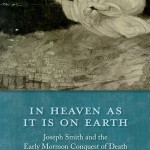
I recently attended a lecture by Samuel M. Brown on the subject of Mormon Masonry, which was a brief summary of chapters from his new book, In Heaven as It Is on Earth: Joseph Smith and the Early Mormon Conquest of Death,[i] particularly the chapter, “Negotiating Death and Afterlife in Nauvoo.”[ii] As a Freemason who has also received the LDS Temple Endowment, this topic is of particular interest to me. Unfortunately, there were several significant problems with the presentation of the subject of Mormonism and Freemasonry in Nauvoo, particularly as it touches the central themes of his book. Due to space constraints, I’d like to briefly look at just one of these troubling areas. [Read more...]

B.H. Roberts and the Mormon Political Left by Chris Smith

FPR would like to thank Christopher Carroll Smith for this guest post. Chris is an emerging Mormon Studies scholar out of Claremont Graduate University, in the tradition of Jan Shipps.

B. H. Roberts, a member of the First Council of the Seventy, is better known for his efforts as an apologist than as a politician, but this is a man who was regarded by some of his contemporaries as the most prominent Democratic orator in the state of Utah. Roberts, in fact, was elected to the United States House of Representatives in 1898, but the House refused to seat him because he was a practicing polygamist. Roberts also played an important role in shaping the state constitution when Utah was admitted to the Union.

[Read more...]

100 Years of Seminary. And BTW Gay Marriage

In 1971, Elder Boyd K. Packer gave a talk in which he stated:

The gospel might be likened to the keyboard of a piano—a full keyboard with a selection of keys on which one who is trained can play a variety without limits; a ballad to express love, a march to rally, a melody to soothe, and a hymn to inspire; an endless variety to suit every mood and satisfy every need.

How shortsighted it is, then, to choose a single key and endlessly tap out the monotony of a single note, or even two or three notes, when the full keyboard of limitless harmony can be played. (BKP, The Only True and Living Church, Ensign, Dec 1971) [Read more...]

Mormons and Wild Geese

The first line of Mary Oliver’s poem “Wild Geese” seems as at odds with Mormonism as anything can be. “You do not have to be good,” she states.

What’s that? It sounds an awfully lot like sacrilege. Of course we have to be good. Jesus admonished us to become perfect, and not only do we have the 10 commandments of other Bible-believers, we have a strict health code, a tithing requirement, and obligatory church attendance. A Latter-day Saint’s entire identity can be wrapped up in the necessity of being good. From choosing baptism and choosing the right in Primary, to serving a mission and serving our fellow man as a young adult, to marrying the right person at the right time in the right place — doing good is in our genes, and necessary for our salvation. [Read more...]

Capital Punishment and LDS Doctrinal Development

This morning my facebook and twitter feeds were inundated with declarations by my Latter-day Saint friends decrying capital punishment and the execution of Troy Davis last night. “I want to take this opportunity to voice my outright and unequivocal opposition to the death penalty,” said one. “A sad day to be a Georgian,” lamented another. I wasn’t really surprised, but I am fascinated by how the tide of public support of capital punishment has ebbed among Mormons in my own lifetime. [Read more...]

Dallin H. Oaks and Subtext

Have you ever listened to an entire talk on a subject wherein the subject was determinedly left unmentioned? I heard such a talk last Sunday night: Dallin H. Oaks’ CES devotional broadcast to single adults. The talk was titled “Truth and Tolerance,” but another, more intrepid Apostle might have named the same talk, “A Defense of the LDS Position on Gay Marriage.”

While never mentioning same-sex attraction, Elder Oaks gave several references that made it clear to the discerning listener what he had in mind. For example, [Read more...]

Mormon Women’s Texts and the New RS History, “Daughters in My Kingdom”

The much-heralded Relief Society history Daughters in my Kingdom commissioned by General President Julie B. Beck is now available online and will soon be distributed to Relief Society sisters all over the world. My preliminary reading of the book got me thinking about religious texts for Mormon women: what they are, their effectiveness and usefulness to LDS females, and how this latest work compares with what has gone before. I’d like this to be an interactive post, as commenters may be able to reference texts I haven’t thought of, as well as provide uniquely personal ideas about the effects these texts have had upon their lives. [Read more...]