O ye gods! WPost blazes trail in AP heresy (updated)

A reading, according to the Stylebook of the Associated Press.

Let us attend.

gods and goddesses Capitalize God in references to the deity of all monotheistic religions. Capitalize all noun references to the deity: God the Father, Holy Ghost, Holy Spirit, etc. …

Lowercase gods and goddesses in reference to the deities of polytheistic religions.

Lowercase god, gods and goddesses in references to false gods: He made money his god.

That is a pretty clear set of guidelines, methinks.

Thus, I am trying to imagine the conversation at The Washington Post copydesk that led to the following religious reference in a short news report about the amazingly quick political comeback by former South Carolina governor Mark Sanford (which Bobby addressed just yesterday). Here is the context:

The former governor beat Democrat Elizabeth Colbert Busch, the sister of comedian Stephen Colbert Busch, for the state’s 1st congressional district. …

In remarks at a victory rally Tuesday night, Sanford tipped his cap to Colbert Busch and her team for a “well-run race.” But the campaign, he said, “was based on two very different ideas on what ought to come next in Washington.”

Sanford also sounded a spiritual note in his address, thanking “god’s role in all of this,” and calling himself an “imperfect man” who was “saved by god’s grace.”

Say what? Saved by the grace of “god”? Which polytheistic or false god might that be?

But here is the crucial question, worthy of contemplation by the Post desk that works on corrections: Does this represent some kind of opposition to the AP gospel? That’s the question that amazed, or at least amused, conservative scribe Marvin Olasky of World magazine:

[Read more...]

Hey! So who is calling the new pope ‘unorthodox’?

YouTube Preview Image

So, a faithful GetReligion reader was working his way through a story printed by The Patriot-News in Harrisburg, Pa., when a most unorthodox turn of phrase reared up and slapped him in his Catholic face.

The story focused on the fact that the sudden death of the local Catholic shepherd, Bishop Joseph McFadden, was going to provide Pope Francis his first opportunity to oversee the full process of selecting a new diocesan leader.

The outcome would offer the experts another opportunity to see what makes this pontiff tick, in terms of church doctrine and tradition. Thus, in that context, the story noted:

A few weeks ago, Francis marked the 50th world day of prayer for vocations by ordaining 10 men to the priesthood to serve in the Diocese of Rome.

Francis, who is widely considered a reformer, has received early criticism in some circles for his lack of doctrinal orthodoxy. He has selected eight cardinals to find ways to reform the Church.

Now wait just a minute!

Yes, there are people who have raised questions about the new pope’s less formal approach to liturgy, especially in comparison with the very traditional Pope Benedict XVI. But very few Catholics have raised their criticisms to the level of doctrine. In terms of his actions in the past, Francis has been a very solid Catholic on issues of morality and doctrine.

What was going on here? Didn’t the team at The Patriot-News realize it was making a very, very serious accusation?

Thus, Thomas A. Szyszkiewicz sent a note to the reporter in question (while also copying your GetReligionistas). The note said, in part:

In your article headlined “Naming successor to Bishop McFadden: For Pope Francis it will be a first of sorts,” you stated the following: “Francis, who is widely considered a reformer, has received early criticism in some circles for his lack of doctrinal orthodoxy.” I would like to know who has made that criticism. I read widely in Catholic circles and I have yet to see anyone criticize him for lacking doctrinal orthodoxy. I have seen him criticized because of how he conducts his liturgy and because he has put aside many of the trappings of the papal office, but to my knowledge, no one has said that he lacks doctrinal orthodoxy.

You may not realize it, but that’s a huge statement. For a pope to be unorthodox in doctrine would be huge news.

To the newspaper’s credit, the story was quickly tweaked — with a correction at the end.

Thus, if you visit the newspaper’s website to read that particular story, this is what you will now find:

[Read more...]

Back to the Bible, with hot shot Stephen Curry

YouTube Preview Image

Hello all of you GetReligion readers who are totally into sports! I am sure, at this time of year, you are really getting into the NBA playoffs.

If you are, then that means you cannot believe what you are seeing whenever the mad gunner Stephen Curry of the Golden State Warriors takes the court. This young man is on fire.

Curry is also one of the most visible religious believers in basketball and that has in the past led to some interesting problems for mainstream sports reporters. For example, back in his March Madness days with tiny Davidson College, one Associated Press report noted:

On the red trim at the bottom of his shoes, Stephen Curry has written in black marker, “I can do all things.”

Yes, yes he can. And because of him, Davidson is marching on.

Now, the implication was that Curry — as a statement of confidence, if not outright ego — was saying that he could do whatever he wanted to do whenever he stepped onto a basketball court.

It was safe to say that the AP team did not recognize that this Christian kid was making a biblical reference that, as interpreted by most active Christians, could be seen as a statement of humility — precisely the opposite of the spin the AP put into that story. You see, there is every reason to think that Curry’s sneaker quotation referred to the New Testament, specifically to Philippians 4:13, which states:

I can do all things through Christ which strengtheneth me.

You think?

Now, I bring this up once again because GetReligion has, in recent weeks, spotlighted a few — click here and then here, for starters — mainstream press references to scripture that, like that 2008 gaffe about Curry, missed the mark when it came to accuracy.

Thus, I wanted to note a recent ESPN essay by superstar scribe Rick Reilly in which he got the Curry-loves-scripture thing right. Just to set the tone, here is the opening of that piece during the earlier Warriors playoff series:

[Read more...]

Problems with today’s press? Religion is No. 1

After a busy Pascha weekend, I need to jump back into the tmatt file of guilt for a moment or two.

You just know, with a single glance at the title on this essay, that dozens of GetReligion readers were going to clutch the mice to the side of their keyboards and forward this piece to us quicker than you can say, “The press … just doesn’t get religion.”

It helps that the byline — Carl M. Cannon — belongs to a man known as a top-rank White House correspondent. In other words, he gets politics which means that, among elite journalists, he’s important enough to opine on other lesser topics — like religion.

And then, of course, there was that headline:

The Problem With the Press, Part 1: Religion

Cannon opens with the by now well-established reality that journalism — primarily the advertizing wing of the enterprise — is in crisis. If the advertising doesn’t work then the whole business model doesn’t work. And then, from that sobering note, Cannon leaps straight to this point (with a time reference that suggests Dr. Kermit Gosnell, and perhaps one M.Z. Hemingway, are on his mind):

… (C)overage of religion in the mainstream media — and of the faith-tinged issue of abortion — has revealed that our journalism model is also broken. Most dispiriting of all, the recent coverage suggests that economic pressures are making the problem worse.

Despite the presence of the occasional pious Catholic, observant Jew, or devout Protestant, American newsrooms have long been highly secular places. This is as it should be for a mass circulation audience in a pluralistic society. But political and cultural polarization in the past generation has exacerbated the great spiritual divide between journalists and those we cover.

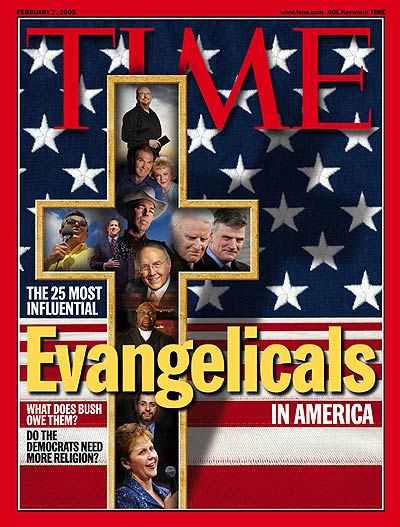
Although the number fluctuates, some 40 percent of the American people describe themselves as evangelical Christians. Yet in traditional U.S. news organizations, print or broadcast, such believers are a rarity. The news coverage tends to reflect this disconnect. Evangelicals are often dismissed, particularly in political reporting, as exotic; or, worse, as a menace to civil society.

Traditionally, the people covering religion knew what they were talking about, at least. And presumably, they exerted a leavening influence inside their newsrooms. But Biblical literacy isn’t necessarily a requirement for that beat anymore; meanwhile, newsroom budget cuts have decimated the ranks of the nation’s religion writers.

What’s he talking about?

[Read more...]

‘Christ is risen!’, for Greeks, Arabs, Russians & others

YouTube Preview Image

A blessed Pascha to the Orthodox readers of GetReligion. I hope you are recovering from the long, but glorious, week of services and the middle-of-the night rites and feasts. Personally, I think it is high time for a post-Great Lent barbecue run — soon.

In terms of Pascha news, I, for one, am stunned that a quick online search found next to nothing in terms of mainstream media coverage of what is, or is not, happening in Syria and Egypt — where there are are huge, endangered communities of Eastern Christians in the middle of the news events. Maybe tomorrow’s newspapers?

Here in America, I am also seeing/hearing discussion among some Orthodox of President Barack Obama’s interesting official statement marking Pascha. On one level, it’s quite solid, and much appreciated. But on another level — maybe not. Here’s the heart of the message:

For millions of Orthodox Christians, this is a joyful time. But it’s also a reminder of the sacrifice Christ made so that we might have eternal life. His decision to choose love in the face of hate; hope in the face of despair is an example we should always strive to follow. But it’s especially important to remember this year, as members of the Orthodox community have been confronted with persecution and violence, particularly in the Middle East and North Africa. For centuries, the region and the world has been enriched by the contributions of Orthodox communities in countries like Egypt, Lebanon, Syria, and Iraq. As a nation, we reaffirm our commitment to protecting universal human rights including the freedom of religion. And in this season of hope and restoration, we celebrate the transformational power of sacrificial love.

Now, other than a direct reference to the resurrection itself (which is a hard thing for a liberal Christian political leader to discuss), what is missing from this statement?

How about something specific about an unfolding drama in Syria, one involving the kidnapping by terrorists of Orthodox Bishop Paul Yazigi — the brother of Antiochian Orthodox Patriarch John X Yazigi of Damascus — and Bishop Yohanna Ibrahim of the Syriac Orthodox Church? It’s good to mention the generalities, but an actual call for the release of the two kidnapped bishops might have actually made news. Would that have rocked the U.S. State Department boat too much?

Meanwhile, the newspaper that lands in my front yard offered a quite nice Orthodox-angle Easter story that, as usual, focuses on Greek Orthodox life. Now, let me stress that the Greek Orthodox community in the Baltimore area is large and very important. It deserves coverage. However, the team at The Baltimore Sun seems to think that the Greek community and the Orthodox community are one and the same thing. This is not the case.

Anyway, Orthodox readers, check out the top of this story and tell me if you spot an interesting detail, or two (and I’m not talking about the fact that this particular Orthodox church has pews):

[Read more...]

Brave religious protestors fight devil in Oak Ridge

My goal is to write a relatively short post about a very, very long Washington Post story, a Style section story that I urge all GetReligion readers to check out.

As the name implies, the massive 14-part feature entitled “The Prophets of Oak Ridge” is a religion story from start to finish, drenched in biblical references, hymns and personal testimonies. This is the story of three anti-nuclear protestors — 83-year-old Sister Megan Gillespie Rice, 64-year-old Michael Robin Walli and 57-year-old Gregory Irwin Boertje-Obed. The story details their successful attempt to embarrass the U.S. government by breaking into the Oak Ridge National Laboratories in East Tennessee.

Now, if you look up the term hagiography in a dictionary, you will find something like this:

ha·gi·og·ra·phy … noun …

1: biography of saints or venerated persons
2: idealizing or idolizing biography

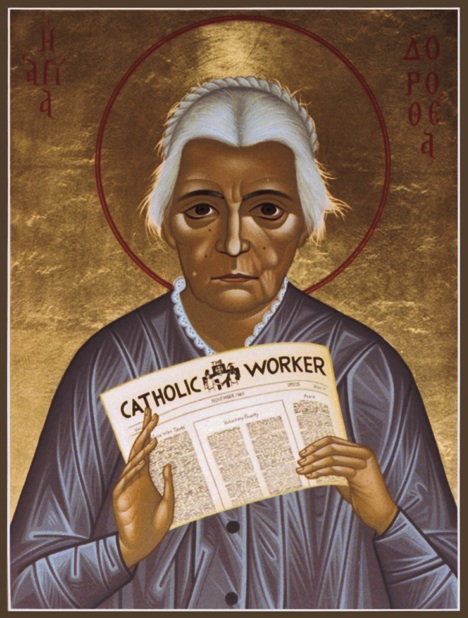
That’s exactly what we are dealing with here, in this feature that runs 9,000-plus words and is illustrated with cartoonish, yet powerfully iconic, drawings and photos.

Frankly, this is fine with me, seeing as how I am someone who has always been sympathetic to the views of the people who are often called “consistent” pro-lifers, the folks who are opposed to the death penalty, as well as to abortion, who worry about tobacco subsidies in the national budget as well as aid to Planned Parenthood. As I have said many times, my own views were changed by the famous Sojourners issue about abortion in 1980 (specifically the Rev. Jesse Jackson’s piece on legalized abortion as a form of institutionalized racism).

So this story was, for me, totally fascinating. Throw in the fact that I have happily lived in East Tennessee, and plan to return to the Volunteer State sooner or later, and this piece rang lots of bells.

So what is my concern about this one? Well, I do have one major question.

More on that later, after a few clips that establish the tone of the piece — right from the start.

Last summer, in the dead of night, three peace activists penetrated the exterior of Y-12 in Tennessee, supposedly one of the most secure nuclear-weapons facilities in the United States. A drifter, an 82-year-old nun and a house painter. They face trial next week on charges that fall under the sabotage section of the U.S. criminal code. And if they had been terrorists armed with explosives, intent on mass destruction? That nightmare scenario underlies the government’s response to the intrusion. This is the story of two competing worldviews, of conscience vs. court, of fantasy vs. reality, of history vs. the future.

And here is an early passage that establishes the angels vs. demons theme that runs through the whole piece.

[Read more...]

So, does LA need a ‘conservative’ newspaper or not?

Time for a quick trip into tmatt’s infamous GetReligion file of guilt.

You just know that plenty of GetReligion readers are going to send us emails about an essay — in this case, from The Week — that runs with the following headline:

Why newspapers need to hire more Christians

For starters, it would help rebut conservative concerns about media bias

This essay by Matt K. Lewis opened with a reference to the recent death of one of the most talented Christians who has ever worked in the hallowed environment of The New York Times — the great John McCandlish Phillips (click here for my recent Scripps Howard column on this reporter-turned-preacher). Here’s the key transition material in the Lewis essay:

Conservatives have long lamented our East Coast secular media, charging that its worldview bias (even more than its overt political bias) skews America’s information supply. Too often, Christians feel like they’re cast as the type of fringe characters one might associate with the bar scene from Star Wars. …

This longstanding lack of diversity in the newsroom is confirmed by the Times’ McCandlish Phillips obituary, which noted that “there were [no other evangelical Christians working at the Times] when he joined the paper.”

That was unfortunate. Media outlets who want to understand America should at least have a few journalists hanging around who share — or at least, aren’t hostile to — the Christian faith.

Lewis later deals with the fact that many newsrooms do contain their share of believers, often professionals whose religious views are quite progressive/liberal who work on the opinion side of the newspaper business. That’s good, but it almost misses the point.

The key issue being discussed here is actually the need for intellectual and cultural diversity and, quite frankly, tolerance in many major newsrooms when it comes to traditional forms of major religions such as Judaism, Christianity and Islam. Here, once again, is a key passage from the highly symbolic — especially in light of future events (hello Bill Keller) — 2005 self-study at The New York Times entitled “Preserving Our Readers’ Trust.”

Our paper’s commitment to a diversity of gender, race and ethnicity is nonnegotiable. We should pursue the same diversity in other dimensions of life, and for the same reason — to ensure that a broad range of viewpoints is at the table when we decide what to write about and how to present it. The executive editor should assign this goal to everyone who has a hand in recruiting.

We should take pains to create a climate in which staff members feel free to propose or criticize coverage from vantage points that lie outside the perceived newsroom consensus (liberal/conservative, religious/secular, urban/suburban/rural, elitist/white collar/blue collar). …

Too often we label whole groups from a perspective that uncritically accepts a stereotype or unfairly marginalizes them. As one reporter put it, words like moderate or centrist “inevitably incorporate a judgment about which views are sensible and which are extreme.” We often apply “religious fundamentalists,” another loaded term, to political activists who would describe themselves as Christian conservatives.

Now, let me stress that longtime GetReligion readers will know that I think, based on my experiences in mainstream newsrooms, that there are fine reporters doing accurate, balanced reporting on religious and cultural issues who are not believers of any kind. That’s not the point of the Times review material. The point is that culturally and intellectually diverse newsrooms do a better job covering modern America than newsrooms that are not as diverse.

At the same time, on the issue of Christians in the newsroom, my position is the same as that of Phillips. Bias issues exist, but it would also help if there were more religious believers who had the skills and the guts to work in elite newsrooms, which are not environments that embrace those with thin skins. We are dealing, as I have said many times, with a blind spot that has two sides. All too often, mainstream journalists do not respect the valid, First Amendment role that religious liberty plays in American life. At the same time, far too many religious believers do not respect the valid, First Amendment role played by the press.

Now, I said all of that to note this recent article at The Daily Beast about the potential sale of The Los Angeles Times to everybody’s favorite billionaire libertarian brothers, David and Charles Koch. I’m talking about the one that ran under the headline, “Could There Be A Conservative LA Times?

[Read more...]

From Reuters: Another by-the-book Womenpriests story

YouTube Preview Image

At this point, it seems that mainstream journalists have decided that the Womenpriests movement deserves a slow-rolling wave of coverage in which (a) it will clear that the women are operating outside the official borders of the Roman Catholic Church, but (b) the viewpoints of movement leaders will be quoted as gospel truth when it comes time to discuss why the nasty male church leaders believe what they believe.

For most reporters, appears that this is now a story in which only one side needs to be approached for in-depth quotes.

Yes, there is also a possibility that Catholic officials have decided to refuse all interview requests. However, I am convinced that if this was the case, journalists would be telling us that (with the standard, “A spokesperson for Archbishop Nasty Male declined comment when asked about the courageous work of the brave women who are willing to listen to the voice of Christ Sophia”).

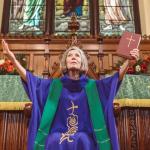
The other day, I took a look some of the pre-event coverage of the ordination of Rosemarie Smead in Louisville, Ky. Now, Reuters has produced a story on the ordination rite itself that is a five-star classic of the genre.

Let’s walk through the top of this story:

LOUISVILLE, Kentucky (Reuters) – In an emotional ceremony filled with tears and applause, a 70-year-old Kentucky woman was ordained a priest on Saturday as part of a dissident group operating outside of official Roman Catholic Church authority.

Where did this rite take place? In a liberal Protestant Church. Readers have to dig pretty deep into the story to find that out.

Rosemarie Smead is one of about 150 women around the world who have decided not to wait for the Roman Catholic Church to lift its ban on women priests, but to be ordained and start their own congregations.

Another interesting feature of this report: The Reuters team somehow managed to avoid using the actual name of the movement behind the event — Womenpriests. The implication is that these are dissident Catholic churches, not fledgling parishes in a separate movement. This is implied, of course, in the lede with the “operating outside of official Roman Catholic Church authority” language. But why not use the actual name of this schismatic movement?

Later on, readers are told:

The ordination of women as priests, along with the issues of married priests and birth control, represents one of the big divides between U.S. Catholics and the Vatican hierarchy. Seventy percent of U.S. Catholics believe that women should be allowed to be priests, according to a New York Times/CBS News poll earlier this year.

And who are these “American Catholics”? Might they be Catholics on the fringe of the church? The key number, of course, would be the number of PRACTICING American Catholics who are in favor of changing church doctrines on the priesthood. They are out there, but much smaller in number.

Now it is time, as usual, to quote several pieces of paper representing the views of the church establishment:

The former pope, Benedict XVI, reaffirmed the Catholic Church’s ban on women priests and warned that he would not tolerate disobedience by clerics on fundamental teachings. Male priests have been stripped of their holy orders for participating in ordination ceremonies for women.

In a statement last week, Louisville Archbishop Joseph E. Kurtz called the planned ceremony by the Association of Roman Catholic Women Priests a “simulated ordination” in opposition to Catholic teaching.

“The simulation of a sacrament carries very serious penal sanctions in Church law, and Catholics should not support or participate in Saturday’s event,” Kurtz said.

And what about this church traditions involved in this issue? What does church history say?

[Read more...]