A modern Pagan perspectivePosts RSS Comments RSS

Gay Marriage and Other “Pagan Behaviors”

On Wednesday, Republican presidential candidate Newt Gingrich participated in a conference call to conservative Christian supporters. In a statistical tie with fellow contender Mitt Romney in the upcoming Florida primary, Gingrich is trying to win the support of as many evangelicals and religious conservatives as possible, a demographic that Romney has had a hard time winning over. During the call, which had around 1000 participants, and was moderated by Jim “Cracking Da Vinci’s Code” Garlow, Gingrich called same-sex marriage a “fundamental violation of our civilization” that illustrates the “rise of paganism” in the United States.

“It’s pretty simple: marriage is between a man and a woman. This is a historic doctrine driven deep into the Bible, both in the Old Testament and in the New Testament, and it’s a perfect example of what I mean by the rise of paganism. The effort to create alternatives to marriage between a man and a woman are perfectly natural pagan behaviors, but they are a fundamental violation of our civilization.”

Gingrich also doubled down on earlier statements by saying during the call that “a lot of what surrounds us today is paganism,” drawing parallels to Christianity during ancient Rome. In Gingrich’s mind secularism and paganism seem to be one and the same, a force that joins Islam in a two-pronged “war” against Christianity. You can download and listen to the entire conference call, here.

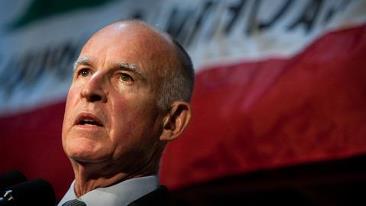
Newt Gingrich has got your nose.

Newt Gingrich has got your nose. Photo: New York Magazine

I have two responses to Gingrich’s comments, and this conference call. First, for a historian, Gingrich seems to have a shaky grasp on the history of marriage. Marriage has been an ever-shifting thing, practiced in a number of ways, and Christians did not always treat it as a holy condition. I’m certainly happy to agree that Pagans are open towards creating “alternatives” to the modern rigid constructions of this social contract envisioned by conservative Christians, but I part ways with candidate Gingrich on the idea that this is a “violation” of Western civilization. Perhaps he should remember that is was the “pagans” he seems to have no trouble vilifying that invented Western civilization.

My second response has to do with Florida. While it may seem like good politics to construct religious straw men that Christians can alternatively fear and revile, the state is far more diverse than many give it credit for. Florida has thriving Pagan, Hindu, Haitian Vodou, Santeria/Lukumi, and other non-Christian/non-Abrahamic faith communities. What could be beneficial in a primary might come back to harm you in a general election. I doubt that Gingrich much cares about this, but future politicians should. As I said not too long ago at The Washington Post:

America’s religious diversity isn’t simply a stock phrase to pull out when describing the virtues of our country. According to the Pew Forum, 16.1 percent of Americans claim no formal religion, while another 2.3 percent are part of religious tradition outside the Christian-Jewish-Muslim monotheistic paradigm. Those aren’t insignificant numbers, and they put the often lumped-together “other/unaffiliated” category on a statistical par with evangelical and mainline Protestants. Despite this, moral debates are almost always framed along a left-right Christian axis; Rick Warren gets to interview Obama and McCain, while Hindus, Pagans, Buddhists, and practitioners of indigenous traditions rarely get to ask questions on a national stage.  Gov. Johnson’s courage in talking to religious minorities might have been driven by a modicum of desperation in getting his message out, but it should be seen as a harbinger of what campaigning to religious groups will be like in the future.”

Declaring yourself in de facto opposition to America’s religious diversity and secular government should automatically disqualify you from running our executive branch. Our president is the duly elected representative of all its citizens, not just its Christian citizens. Assembling campaign faith coalitions that speak to one very narrow idea of religion alienates instead of unifies, and when that coalition claims that electing anyone outside their boundaries will bring about the end of civilization, it sends a dangerous signal. Americans shouldn’t be worrying about “Pagan behaviors.” Instead, they should worry about the “Christian behaviors” of Newt Gingrich and those like him.

No responses yet

Nicol Williamson 1936 – 2011

It has been announced to the public that actor Nicol Williamson died on December 16th, 2011, from esophageal cancer. Williamson was a mercurial actor who brought a tempestuous fearlessness and unpredictability to his many roles. While he starred in high-profile films like Robin and MarianThe Seven-Per-Cent Solution, and The Exorcist III, he is perhaps best known for playing Merlin in John Boorman’s Excalibur. A retelling of Malory’s Le Morte d’Arthur, the film was praised for its visuals, was a modest box-office hit, and went on to become a cult favorite in the decades since. For many, Williamson as the mischievous (and dangerous) magician Merlin and Dame Helen Mirren as the ambitious power-hungry Morgana served as the true creative and emotional heart of the film.

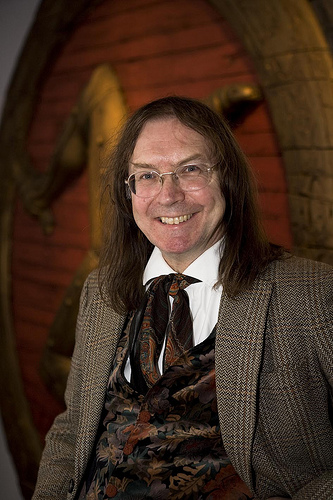
Nicol Williamson as Merlin

Nicol Williamson as Merlin

“He was the most honest, funny and intelligent man I have ever had the pleasure of knowing; he was my father and words cannot adequately express how proud I am of him. [...]  If anyone would like to express their love or appreciation of Nicol, I would ask them to make a donation in his name -however small- to a charity for children suffering from cancer or other life threatening illnesses. [...]  Dad will live in the memory of all those who knew him, all those who were affected by a performance of his they saw, and all those he made laugh until they couldn’t breathe. I love you Dad. Good game, sir, good game.”Luke Williamson

It is no overstatement to say that Williamson shaped our conceptions of Merlin for an entire generation, and shaped the consciousnesses of more than a few modern Pagans. The performances of Williamson and Mirren, coupled with Boorman’s symphonic direction, had a huge impression on me as a kid watching and rewatching the film on VHS and cable television. He became for me, and I suspect for others, the image of Merlin in their minds.

Farewell Mr. Williamson, you, and your Merlin, live on in our dreams.

3 responses so far

The Solace of Vodou for Haitian-Americans

After the 2010 Haitian earthquake there was quite a bit of attention on the religion of Vodou, though largely that attention was not positive. Immediately after the quake there were triumphalist smears from figures like Pat Robertson, and allegations that it was Vodou that held Haitians back from progress. While there were emerging “Vodou voices” rising up in defense of the religion, most notably Max Beauvoir, but more often than not the centrality of Vodou to many Haitians was often ignored. So it is a breath of fresh air to read Silvana Ordonez’s piece on Vodou among Florida’s Haitian-American community for the Miami Herald, talking about how the faith brought solace and re-connection after tragedy struck.

“A Voodoo ceremony makes you feel as light as a feather,” explained [Mambo Ingrid] Llera. “That’s where we go for therapy. We don’t go to the doctor, we go to Voodoo.” In ritual ceremonies, which typically last from several hours to several days, Voodoo practitioners pray, sing and dance to the rhythm of drums. “A wonderful combination to get connected with the unknown world, which is the spiritual world,” she added. “That’s where we release it all and find strength.” Since the Jan. 12, 2010 earthquake, more Haitians in South Florida have reconnected with Voodoo, according to local practitioners. “They have no choice, but to go back to their roots. It is registered in their DNA, this is who they are, this is where they feel more comfortable, this is where they can forget things,” said Llera. Llera has also witnessed a interesting phenomenon: a wave of young Haitian-Americans joining the religion of their ancestors.”

There’s been a quiet trend of Haitian-Americans re-embracing Vodou for years now, but its been only sporadically covered by journalists. These younger converts seem more willing to speak out about their faith, and a show willingness to fight popular misconceptions.

“Gone, for most, is the shame that used to be associated with the stigmatized religion. Unlike some of their parents who practiced Vodou in secrecy, the newcomers to the religion invite friends to Vodou ceremonies, have altars in their homes and work to shatter the stereotypes.”

While still small, there seems to be a growing number of Haitian Vodou practitioners who are raising their public profiles. For instance, last year saw the production of a Canadian documentary entitled “Real Voodoo” which looks at the effects of anti-Vodou rhetoric in Haiti, and interviews Haitian-Canadian practitioners like La Belle Deesse.

“Based on the people seen in this film, those who practice voodoo seem to be more likeable, more  relaxed, happier in their lives and more open-minded toward others and their beliefs, than the people who rail against it.”

Haitian Vodou in its homeland faces immense challenges, from anti-Vodou violence, to aggressive proselytism by Christian groups receiving federal funding from our government. At the same time, Vodou tourism is held up as a potential economic goldmine for a Haiti that wants to rebuild itself. Lost in this push-pull is the lives of Vodouisants worldwide, and how their faith nourishes and sustains them. As the Haitian diaspora grows, and Haitian Vodou becomes a point of pride within those communities, we could see a new paradigm for this faith, how it is received by non-initiates, and how these practitioners interact with their motherland. It is far too easy to lose sight of how Vodou serves its adherents in the lofty geopolitical and cultural discussions about Haiti and its future, forgetting that Vodou is a source of solace and enrichment. Silvana Ordonez’s article is a welcome corrective to that trend.

5 responses so far

Modern Paganism’s Role in Interfaith

While the concept of interfaith, constructive interaction between representatives of different religions, is truly ancient, its modern conception was largely birthed by the 1893 World’s Parliament of Religions (re-dubbed the Parliament of the World’s Religions in more recent times) where representatives of “Eastern” religions (Hinduism, Taoism, Jainism, Buddhism) created lasting contacts with representatives from the “Western” traditions of Christianity and Judaism. The star of that parliament was Swami Vivekananda, credited by many for bringing Yoga to America, who spoke to a rapturous audience of over 7000 about the end of religious fanaticism and intolerance.

Swami Vivekananda at the 1893 Parliament

Swami Vivekananda at the 1893 Parliament

“Sectarianism, bigotry, and it’s horrible descendant, fanaticism, have long possessed this beautiful Earth. They have filled the earth with violence, drenched it often and often with human blood, destroyed civilization, and sent whole nations to despair. Had it not been for these horrible demons, human society would be far more advanced than it is now. But their time is come; and I fervently hope that the bell that tolled this morning in honor of this convention may be the death-knell of all fanaticism, of all persecutions with the sword or with the pen, and of all uncharitable feelings between persons wending their way to the same goal.”

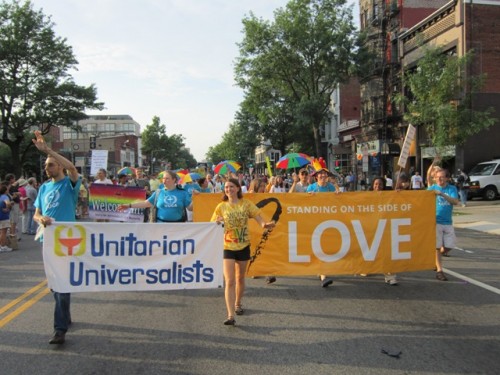
Today, the modern interfaith movement continues its work to end religious persecutions, whether by sword or by pen, and modern Pagans have played integral roles in its shaping. Pagans currently serve on the Council for a Parliament of the World’s Religions, play important roles within the United Religions Initiative (URI), and participate in several smaller regional interfaith councils. In some cases, Pagans can engage in kinds of interfaith dialog that more mainstream faiths can’t, as illustrated by Don Frew from Covenant of the Goddess.

Don Frew at the Parliament of the World's Religions

“Being a non-Abrahamic practitioner in dialogue with conservatives, Christians and others, has been helpful not only in talking to “exclusivists” but to non-exclusivist conservatives. Non-exclusivist Muslims and Jews who interpret their traditions and associated rules very strictly can feel excluded by what happens sometimes in interfaith settings. Because my own tradition has so often been excluded, they confide in me.”

That said, the interfaith movement has faced entrenched skepticism from some corners, including from many modern Pagans, who echo the question asked by Chas Clifton: “what do Pagans get from interfaith activities?”

“Were it not for the American constitutional tradition of religious freedom (and similar traditions in some other Western nations), I do not think that the Pagans would get a seat at the interfaith luncheon table.”

That skepticism is only enhanced when we see Catholics use interfaith as a way to criticize their guests, or when presidential contenders like Rick Santorum (who also happens to be Catholic) claim that the concept of equality comes only from his God, and is not found in other religions.

“I get a kick out of folks who call for equality now, the people on the left, ‘Well, equality, we want equality.’ Where do you think this concept of equality comes from?” Santorum asked the enthusiastic crowd packed into a restaurant here. “It doesn’t come from Islam. It doesn’t come from the East and Eastern religions, where does it come from? It comes from the God of Abraham, Isaac and Jacob, that’s where it comes from.”

American Muslim and Hindu groups were appropriately offended, and it caused many religious minorities to reiterate the question, do we get anything from trying to sit at the same table with faiths who seem to continually slander us? Rachael Watcher, a National Interfaith Representative with Covenant of the Goddess, says yes.

“A more pertinent question is “What DO Pagans get from Interfaith Activities?” (emphasis mine) The very most succinct answer that I can offer is legitimacy, respect, a place at the table. [...] If you think that this does not make a difference consider a comment from one United Church of Christ minister when told that individuals from a local Interfaith organization in Las Vegas had threatened to leave if Witches (In this case a full professor at ULV) were allowed to join. He wrote to the organization and then followed up with a call that boiled down to: “if they want to quit let them. You will loose nothing and gain a group of sincere people who are always the first to arrive (to be available for set up), the last to leave (to assure that everything is clean). They are not interested in trying to convince you of how important they are. They are simply involved to serve and share.

When Lady Liberty League and others were fighting for the right of Pagan Vets to have the pentacle on their grave stones, we were shoulder to shoulder with Ministers, Priests, and other Professional clergy who wrote letters and in some cases occupied the offices of the of the Veteran’s Administration. These religious leaders know who we are and respect us because of our long tradition of service. When Pagans are faced with violations of our civil rights, we are now supported, often by very well known and prestigious religious leaders. It pays to have friends.”

To emphasize their belief in, and commitment to, interfaith, Covenant of the Goddess is once again offering a scholarship contest for one young Wiccan/Witch to attend the upcoming 2014 Parliament of the World’s Religions in Belgium.

“The Covenant would like to see Wiccan youth involved in these historic occasions and has committed itself to providing the necessary financial support to be able to do so. We are beginning this call for applications early in order that young people can start the process of planning and becoming active in local organizations which in turn will help them with the experience that they will need to apply and participate in this call.”

As for my own opinion, I think Pagan involvement in interfaith, so long as we understand both the strengths and limitations of this movement, is a desirable and healthy thing. If the modern Pagan movement wants to have a voice as religious demographics shift and change, then we need to continually establish ourselves here and now. We need to make sure the thoughts, beliefs, and desires of our communities, and those of our allies, are not silenced by non-participation or the petty bigotries of  ideologues like Santorum. Interfaith can not only humanize us to the ignorant, but also create powerful bonds with those we can learn much from. In addition, I believe that those of us who are engaging in interfaith need to take those skills and bring them back to practice them within our own movement, to bring better communication between faiths and traditions that have, at times, chaffed under the crowded “Pagan” umbrella.

What we “get” from interfaith is a chance to change the very fabric of mainstream religion through dialog instead of violence. It drops a pebble in the waters of faith, and ripples forward through time. Just as 1893 saw Hindu and Buddhist voices establish themselves in the consciousness of America, so too does Pagan participation in modern parliaments, and similar gatherings, establish our thoughts and values to those who would find our ways alien and even dangerous. There is no instant radical change in interfaith, but the ripples are already starting to be felt, and it would be folly to draw back just as we are starting to emerge as a worldwide religious movement.

51 responses so far

Should We Worry About the Religious Right?

So, it has come down to this. The Republican Party, the unchallenged standard-bearer for conservative Christianity in America since Ronald Reagan was president, seems to be deciding between a sometimes-moderate, formerly pro-choice, Mormon, and an ethics-challenged serial philanderer with unfavorability numbers that would make any politician blanch, in their presidential primaries. The candidates who seemed to bank their support on evangelicals and conservative Christians: Michele Bachmann, Rick Perry, and Rick Santorum, have seen their campaigns run out of steam, dismantle in a stream of never-ending gaffes, or slowly fade into the background. It’s enough to make one wonder if the power of conservative Christianity in the United States is waning. Two recent articles at The New Republic debate this very question. The first, from Michael Kazin, argues that we are experiencing the twilight of the Christian Right.

Mitt Romney and Newt Gingrich

Mitt Romney and Newt Gingrich

“…contrary to the whims of lazy pundits, the waning of enthusiasm for battling over “social issues” is not due to higher concerns about jobs, the deficit, and the economic future [...] Put simply, the Christian Right is getting old. According to the largest and most recent study we have of American religion and politics, by Robert D. Putnam and David E. Campbell, almost twice as many people 18 to 29 confess to no faith at all as adhere to evangelical Protestantism. Young people who have attended college, a growing percentage of the population, are more secular still. Catholicism has held its own only because the Church keeps gathering in newcomers from Latin America, Africa, and Asia, few of whom are likely to show up at a Santorum rally. To their surprise, Putnam and Campbell discovered that conservative preachers infrequently discuss polarizing issues from the pulpit. Sermons about hunger and poverty far outnumber those about homosexuality or abortion. On any given Sunday, just one group of Christians routinely grapples with divisive political issues: black Protestants, the most reliably Democratic constituency of them all.”

Kazin concludes that if conservative Christians “hope to transform our pluralistic, profane culture into a new Jerusalem”, they will have to “find new holy battles to wage.” So are the culture wars essentially over? Are Christian conservatives no longer kingmakers in the Republican Party? Not so fast, says Ed Kilgore, who notes that while the Christian Right has botched attempts to control this election cycle, news of their demise is greatly exaggerated.

“It is true that they have been less conspicuous in this campaign, and less united in candidate preferences. But if they haven’t been able to pull their muscle behind a single candidate, that’s not a sign that they are on the wane—it’s a sign that, as far as the Republican Party is concerned, they have already won. Look at the potential nominees: Unlike 2008, no candidate in the field is pro-choice by any definition. Only Ron Paul seems reluctant to enact a national ban on same-sex marriage. Newt Gingrich, Rick Perry, Rick Santorum. and Herman Cain have been vocal in fanning the flames of Islamophobia; again, only Paul has bothered to dissent to any significant degree.”

Kilgore points out that the fight over abortion, a key issue for Christian conservatives, is escalating at the state level, not diminishing, and that a younger generation of culture warriors, some more radical than their elders, are just beginning to come into view.” Indeed, if there’s been one new phenomenon this year within Christian Right circles, its been the emergence of controversial neo-Pentecostal spiritual warriors into the mainstream. Journalist and author Jeff Sharlet has long argued against assertions that the Christian Right will fade away after a bad election or two, or because the current crop of leaders are growing old. That they have been a part of our spiritual makeup since the beginning.

“We don’t like to consider the possibility that they are not newcomers to power but returnees, that the revivals that have been sweeping America with generational regularity since its inception are not flare-ups but the natural temperature of the nation. We can’t conceive of the possibility that the dupes, the saps, the fools—the believers—have been with us from the very beginning, that their story about what America once was and should be seems to some great portion of the population more compelling, more just, and more beautiful than the perfunctory processes of secular democracy. Thus we are at a loss to account for this recurring American mood.”

So should we worry about the Religious Right? In so far as they battle against the rights and freedoms of religious minorities, yes, we should. Bad candidates and legislative setbacks don’t erase generations of grassroots organizing from the pulpits, and it would be folly to believe otherwise. Until demographics finally hit that magical tipping point, and conservative Christianity becomes simply one voice among many, vigilance is the watchword. As for Newt Gingrich’s ethical problems, we should never forget that evangelicals love a good forgiven sinner.

47 responses so far

Unleash the Hounds! (Link Roundup)

There are lots of articles and essays of interest to modern Pagans out there, sometimes more than I can write about in-depth in any given week. So The Wild Hunt must unleash the hounds in order to round them all up.

That’s it for now! Feel free to discuss any of these links in the comments, some of these I may expand into longer posts as needed.

8 responses so far

North Carolina Pagan Receives Death Threat After Challenging Bible Distribution

Last month, North Carolina Pagan Ginger Strivelli decided to challenge her child’s school’s policy regarding the distribution of religious materials. Strivelli felt that the manner in which Gideon Bibles were made available violated the Establishment Clause, and ostracized non-Christian students who didn’t want to use a special break to obtain a Bible. The school, when challenged, said the policy applied to all faiths, so Strivelli decided to test their commitment to theological neutrality. According to local Pagan leader and activist Byron Ballard, who’s been assisting Strivelli, the school’s tune quickly changed.

Ginger Strivelli

Ginger Strivelli

“We were there to deliver the materials that she was assured would be “made available” in the same way the Gideon material was, right before the winter break. No surprise to find that, in consultation with the system’s superintendent Dr. Baldwin, the principal Jackie Byerly and asst principal Danny Fusco couldn’t do that at all because the central office was reviewing its policy regarding religious materials in schools. They suggested that they would “hold onto” the books, in case the school system needed to review them for appropriate content, once the policy was vetted.”

The school is now officially “reviewing” their policy on distributing religious materials. Since then, Strivelli’s story has been covered by a number of mainstream media outlets, including Fox News, CBC News, the Houston Chronicle, and several others. Due to the intense level of coverage for this issue, perhaps I shouldn’t be surprised that Ginger Strivelli recently received an anonymous death threat.

“Buncombe County investigators are looking into a threatening phone call made to a local woman who made headlines when she criticized a county school for making Bibles available to students. [...] Strivelli believes that the threat is related to her speaking out. “It’s definitely related. He (the caller) said he saw me on the news,” she said. “I’m hoping it’s just some idiot trying to scare me into shutting up.” The man called Thursday night, claiming he was calling from Moscow, according to Strivelli. He told Strivelli that he had 20 or 30 people working in this area, and “I was done for. I was dead,” Strivelli said Friday.”

The Lady Liberty League, along with a coalition of local and national Pagan organizations, are coordinating to support Strivelli during this time of trial, and have started a Facebook page for those looking to give aid and support. Here are the Lady Liberty League’s recommendations for those seeking to help.

  • Do prayers, meditations, rituals of Protection, Healing, & Well-being to Ginger Strivelli & her family.
  • Learn more & Post words of support for Ginger & her family on their support page on Facebook.
  • Speak out in support of separation of church & state in comments sections of media sites carrying news and editorials about this issue.
  • Those with interfaith and/or law enforcement contacts in North Carolina interested in working with Lady Liberty League in providing support to the family and this situation should contact: liberty@circlesanctuary.org as soon as possible.
  • Share this email & support page link with others – by email, through social networking sites, on blogs & websites.

Prominent Pagan mom-blogger Mrs. B, from Confessions of a Pagan Soccer Mom,  who dealt with Christian death threats over a blog ranking contest, says that “there is nothing more frightening than thinking that some nutball is threatening your family.” These threats are part and parcel of any who have the temerity to challenge Christian norms or traditions that intersect with government-funded institutions, and represent a time when their cultural dominance when unquestioned. This is the reactionary shadow side of a religion who feels its dominance fading, the anxiety over changes they can’t control. The hope is always that these threats will amount to nothing, that they are ravings of powerless individuals wanting to inspire fear, but we must practice vigilance and solidarity in the off chance that this is no idle threat.

Our prayers and best wishes go out to the Strivelli family, may they remain safe and free of fear. The Wild Hunt will be keeping an eye open for future developments. In the meantime, you can get the latest from their support page on Facebook, and from Byron Ballard’s blog at The Citizen-Times.

50 responses so far

Older Entries »