2021-01-07T17:05:30-05:00

Q. Your discussion of whether Christians should go with Yahweh or with ‘the Lord’ as in many translations raises a further dilemma. The reason many Christians prefer Yahweh, the personal name of the God of the OT, is because they do not want to denude the name of its Jewishness, in some sort of supersessionist fashion. Indeed, they want to stress the Jewishness of God’s name as a way to counter the anti-Semitism of so much of the sad part... Read more

2021-01-07T17:02:48-05:00

Q. You go on to look at the LXX rendering of Exod. 3.14 which, as you say is more an interpretation of the assumed meaning of the Hebrew rather than a more literal translation. And this produces a dilemma. I once had a Greek Orthodox monk as a student at Ashland Seminary and we were discussing Isaiah 7.14 both in the Hebrew and in the Greek. He was insisting that no matter what the Hebrew meant, for the Christian the... Read more

2021-01-07T16:58:57-05:00

Q. Put a different way, one wonders if Exod. 3.14 isn’t meant to tease the mind into active thought (a quote I borrow from C.H. Dodd speaking about parables), and so is meant to be evocative rather than definitive. Or is this just a partial unveiling of the truth about Yahweh, and Moses is being told wait and see? But how would that be what Moses would convey to the Hebrews in Egypt when asked about the name of God?... Read more

2021-01-07T16:56:24-05:00

Q. Your discussion of Moses and the burning bush (where he nearly experiences pre-ministerial burnout J) is one of the best I’ve ever read. One of the things that struck me reading that story in light of the Stephen speech in Acts 7 is that Moses really is just making excuses…. including the notion that he can’t speak well. This hardly makes sense of the earlier part of his story while in Egypt or the sequel to this episode in... Read more

2021-01-07T16:54:25-05:00

Q. If the beginning of wisdom is the fear or revering of the Lord, then it seems to me this implies that to really understand reality one must know and trust and respect and indeed worship the God who created it all. In other words, wisdom that begins with God is hardly secular in character. It is deeply personal in character but not a private matter since God and his wisdom should not be exiled to the margins of reality... Read more

2021-01-07T16:49:43-05:00

Q. One subject that did not really come up in your first major chapter was the effect of the Fall both on nature and human nature. Yet I would suggest that Ecclesiastes and Job at least do come to grips with the fact that bad things do happen to God’s people or good people in general. If a good handling of life means being wise enough to be in tune with the nature of reality, I presume that would include... Read more

2021-01-07T16:46:39-05:00

Q. In his recent book History and Eschatology, our friend Tom Wright shows the rather devastating effects the Enlightenment had on separating religion and science, what is public and what is private, the natural processes and divine intervention (as if God was not always working in his creation, or that his miracles were somehow interrupting or contravening the natural order of things). How does wisdom literature help us have a more holistic approach to knowing reality, knowing God, and understanding... Read more

2021-01-07T16:44:10-05:00

Q. As you say, much of Wisdom literature is poetic and metaphorical or analogical in character. And as you suggest sometimes (for example in the 4th century Christology debates, but also in recent commentaries) Prov. 8 has been over-read, not recognizing the poetic character of the material. Applying strict logic to Prov. 8-9 is rather like trying to get at the essence of a symphony by doing a statistical analysis of which instruments played when and how much. It simply... Read more

2021-01-07T16:41:35-05:00

Q. Since various OT scholars have suggested, wrongly in my view, that OT wisdom literature is essentially secular rather than theological in character it was something of a bold move to start your discussion of the God of the OT by focusing on Wisdom literature. Why did you decide to do this? A. I have long been pondering possible similarities between “wisdom” and “theology” as terms which depict an integral relationship between thought and life, under God, in the kind... Read more

2021-01-07T16:39:15-05:00

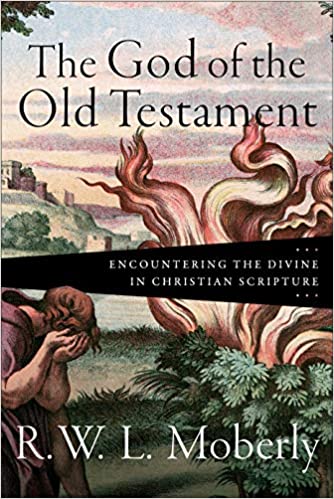
Q. As one progresses through this fine book, one begins to wonder why exactly it is entitled The God of the OT, when in fact, you are simply talking about the Biblical God as revealed in both the OT and the NT. How did you come to land on this particular title? A. The title of the actual Hulsean Lectures was in fact “The God of Christian Scripture”, and at one stage that was also the working title for the... Read more

Follow Us!


TAKE THE
Religious Wisdom Quiz

I became queen through a beauty contest, hiding my Jewish identity at my cousin's advice. Who am I?

Select your answer to see how you score.


Browse Our Archives