

What does Winnie the Pooh have to do with the Serenity Prayer? Both display truths found in Jesus and the Chinese philosopher Lao Tzu.
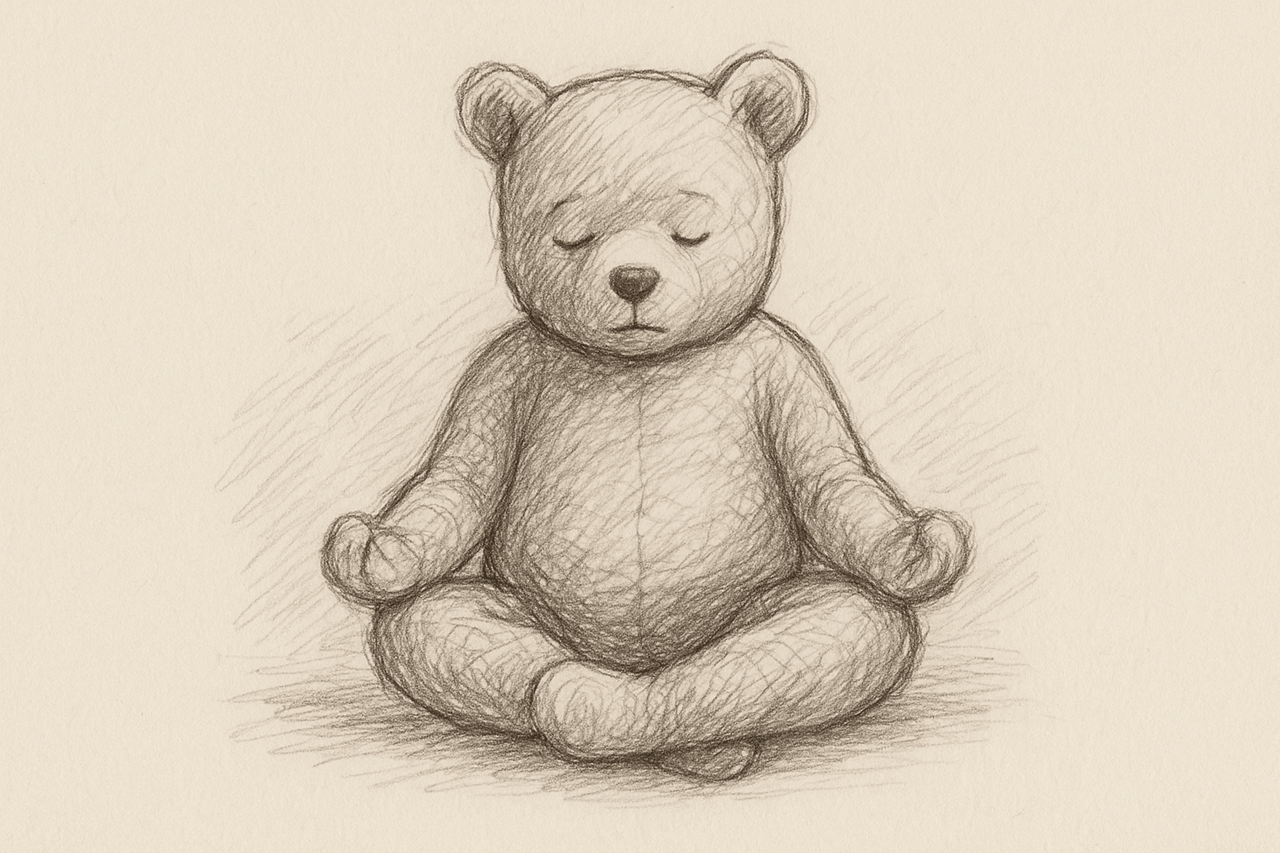
The beloved bear and the Serenity Prayer teach us to embrace the world as it is, without trying to change it. Lao Tzu, the Taoist author of the Tao Te Ching, compares this state of innocence to becoming like an Uncarved Block.
Lao Tzu’s Tao Te Ching, Chapter 28
J.H. McDonald Version
Know the masculine,
but keep to the feminine:
and become a watershed to the world.
If you embrace the world,
the Tao will never leave you
and you become as a little child.
Know the white,
yet keep to the black:
be a model for the world.
If you are a model for the world,
the Tao inside you will strengthen
and you will return whole to your eternal beginning.
Know the honorable,
but do not shun the disgraced:
embracing the world as it is.
If you embrace the world with compassion,
then your virtue will return you to the uncarved block.
The block of wood is carved into utensils
by carving void into the wood.
The Master uses the utensils, yet prefers to keep to the block
because of its limitless possibilities.
Great works do not involve discarding substance.
Winnie the Pu
In his groundbreaking yet unassuming book, The Tao of Pooh, author Benjamin Hoff draws a parallel between the Taoist concept of Pu, and Winnie the Pooh. In other words, Pooh is Pu. Winnie the Pooh is the Uncarved Block. He is simple, uncomplicated, and plain. Throughout the stories of A.A. Milne, Winnie the Pooh seems to have no agenda at all. He is a blank slate, simply allowing all the creatures of the hundred-acre wood to include him in their adventures. Rather than forcing his way upon others, he bumbles through life, and everything works out for the best. Because he remains open, Pooh becomes our favorite character.
The Taoist concept of Pu, or the Uncarved Block, represents the original state of creation before it had yet formed. It represents the primal state of the mind before it makes plans, forms opinions, and develops attachments. If there is a goal in Taoism, it is to become goalless. It is to become the Uncarved Block. Jesus demonstrated this repeatedly throughout his ministry.
Jesus and Pu
One example is his acceptance of little children who came to him. The disciples wanted to send them away, but Jesus told them to allow them. He reminded them that the Realm of Heaven belongs to such as these. For Jesus, the fundamental innocence of children was the perfect model of the Uncarved Block. Much like a blank slate that is unwritten upon, the Uncarved Block is pure potential. Jesus said that if we want to embody the Realm of God in our own lives, we should become like innocent children, the essence of Pu.
Because he was unattached to any agenda, Jesus could embrace the essence of the Uncarved block. Or, for a cinematic example, the silver movie screen. Jesus could allow others, like artists, to cast their vision upon him so he could become what they needed. If he had been more like a painting with one particular image upon his canvas, he could not have become what each person required. Like an Uncarved Block or movie screen, his virtue was in his blankness.
A Watershed to the World
Lao Tzu writes, “Know the masculine, but keep to the feminine: and become a watershed to the world. If you embrace the world, the Tao will never leave you and you become as a little child.” Jesus knew his own power, yet he allowed others to direct his path to where the need was greatest. In so doing, he became like a great riverbed or valley that showed the way for people to flow like a river through him.
A Model for the World
The Tao Te Ching says, “Know the white, yet keep to the black: be a model for the world. If you are a model for the world, the Tao inside you will strengthen and you will return whole to your eternal beginning.” So, Jesus calls every believer to be a model for the world. Like him, we are to know our strengths but keep to our weaknesses. For when we are weak, the Tao is strong inside us.
Embracing the World As it Is
“Know the honorable,” says Lao, “but do not shun the disgraced: embracing the world as it is. If you embrace the world with compassion, then your virtue will return you to the Uncarved block.” Jesus could have followed the path of the great. He had the attention of religious and political leaders alike. He knew the honorable but preferred the company of the lowly. By spending his time and giving his attention to the poor and needy, Jesus embraced the world with compassion. Time and again, his virtue returned him to the Uncarved block.
The Serenity Prayer
Jesus embraced the world as it was—poverty, pain, violence, warts, and all. This absolute acceptance is reflected in the full version of Reinhold Niebuhr’s Serenity Prayer, which says:
God grant me the serenity
To accept the things I cannot change;
Courage to change the things I can;
And wisdom to know the difference.
Living one day at a time;
Enjoying one moment at a time;
Accepting hardships as the pathway to peace;
Taking, as He did, this sinful world
As it is, not as I would have it;
Trusting that He will make all things right
If I surrender to His Will;
So that I may be reasonably happy in this life
And supremely happy with Him Forever and ever in the next.
Amen.
This prayer, made popular in part by Alcoholics Anonymous, exemplifies the Pu-quality of Jesus. Niebuhr prayed that, instead of carving his will on the world, he might take the world as it is. At the same time, he adopted the characteristic of the Uncarved Block himself, willingly permitting the world to have its way. He prayed only for serenity to accept the inevitable, courage to make a positive influence wherever possible, and the wisdom to know when to leave things as they are.
Jesus the Pu
Like Winnie the Pooh, Jesus the Pu becomes the titular character—not because he imposes his agenda upon others, but because he presents himself plain, uncarved, and open for the creative ideas of others. Lao Tzu writes, “The block of wood is carved into utensils by carving void into the wood. The Master uses the utensils yet prefers to keep to the block because of its limitless possibilities. Great works do not involve discarding substance.”
Making a Masterpiece
We regard great works of art as masterpieces. The apocryphal story is told of someone who asked the artist Michelangelo how he carved his statue of David. “Simple,” he replied. “David was already in the block of stone. All I needed to do was to carve out anything that wasn’t David.” In other words, the artist eliminated the negative spaces to draw out the positive spaces. He removed the Yin, so that all that remained was Yang. While we consider this statue a great work of art, the Tao Te Ching considers it a pity, because it was created by discarding substance.
Lao suggests that the Uncarved block is even better than the famous statue of David. While the artist demonstrates his great skill through carving, the Taoist concept of the Uncarved block communicates openness and receptivity, not just to the ideas of one carver but to the creative action of the Universe.
Ponder…
The more Jesus practiced returning to the state of the Uncarved Block, the more he stepped into the flow of the Tao. As you move through life, how can you suspend your own agenda in favor of the Spirit’s leadership? What actions do you need to take to allow yourself to be distracted, so that you no longer impress your will upon the day’s events? How can you make yourself available to divine energy guiding your timeline?
In your time of meditation, present yourself to that wise and loving essence, and imagine yourself as an Uncarved Block. Instead of asking God to bless your plans, hang those plans on a peg, just for today. Be like Jesus. Be like Pu. See what wonderful adventures await as you open yourself to everything.











 Ad-Free & Subscriber Log-In