

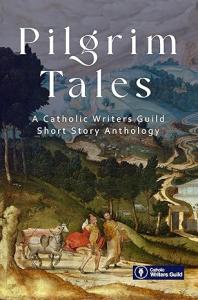
I actually went to school with someone named Mark Baker. It was interesting for me to actually have a writer submit to me an interview with the same name. Mr. Baker has a lot of things to say about writing and the writing process. As long as he has been a writer he has been catholic and found fulfillment doing what he does. He is one of the featured authors in the Catholic Writers Guild anthology Pilgrim Tales.
He really knows his craft and I think writers can learn a thing or two from him. He really stresses how getting technical in writing is a good way to make money. He has also produced some interesting historical fiction that is chock full of adventure waiting to read. Let this pilgrim take you on a writing journey. It’s now time to…
Meet the Catholic Historical Writer
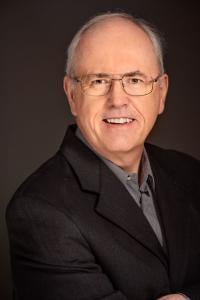
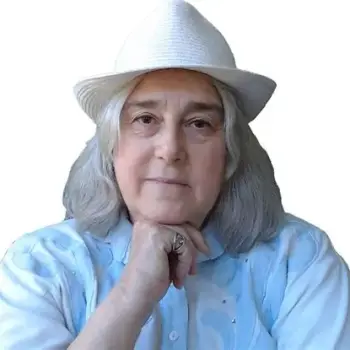
G.M. (Mark) Baker
1. Tell something interesting about yourself.
I’ve had just about every kind of writing job there is, from journalism to marketing to technical communication to technical books to fiction and essays. That wasn’t the plan, but it turned out that every writing job I’ve had was interesting, and every non-writing job I’ve had was boring. Young writers often imagine that they are going to feed themselves and their families as novelists. That’s about as likely as feeding your family by playing major league professional sports. But the world is full of writing jobs that pay well and steadily and can make a fine career for anyone. If people ask me how to make a living as a writer, I always tell them to look into technical writing. It may not be as romantic as being a novelist, but it pays the bills much more reliably.
2. What makes a good Catholic writer?
Being a good Catholic writer means first and foremost being a good writer. It means having a mature prose style, an acute and sympathetic view of the human condition, and a knack for storytelling. For non-fiction, it requires a firm grasp of the subject matter, just as it does for any non-fiction writer. For fiction, it requires what I would call a Catholic anthropology. I wrote about this at length in my article The Four Constraints of a Catholic Novelist in Dappled Things.
The question of what constitutes a Catholic novel or a Catholic novelist has led to complex conversations within Catholic culture for some time now. Does it make a difference to how a writer works whether the writer is Catholic or not; does it make a difference to a reader whether the novels they are reading are written by Catholic authors or not? We don’t care terribly that J. S. Bach was not Catholic. Should we care that C.S. Lewis was not Catholic either? Or Dickens? Or Steinbeck? Should we ignore the question entirely and read and write whatever we like? Can we come up with a reasonable and useful definition of a Catholic novelist and a Catholic novel, or at least, a novel acceptable to Catholics? The Four Constraints of a Catholic Novelist — Dappled Things
The great peril of aspiring Catholic writers is to imagine that their enthusiasm for the faith exempts them from the requirements of diligence, honesty, and craft that any good writer should uphold. The truth is quite the reverse. As Catholic writers, our commitment to excellence has to be absolute. We cannot take shortcuts. We cannot be partisan. We cannot be sloppy or hasty in our work. Our faith obliges us to be honest and excellent in all our works. Enthusiasm counts for nothing unless it drives us to excellence and truthfulness, even when it costs us dearly to pursue it.
3. What do you like about being a Catholic/Christian Writer?
That is a difficult question to answer. To be a Catholic writer today is to live as an exile from the mainstream of culture and publishing. Where one can find an audience, of course, the rewards are the same as I suppose any writer enjoys. It is always satisfying to know that someone has appreciated something you have written. In the end, though, I think it is the work that has been given to me to do, and I must strive to do it as diligently as I can. But as a writer, I often feel that I was born at the wrong time.
4. What is the Main focus of your particular Writing or what do you like to write about?
It’s not necessarily something I set out to do, but it seems that most of my novels center on what we might call the fall from grace and the road back. This is a universal human theme that plays out in many story forms. I see it as the inverse of the familiar hero’s journey story form, a form we might call the pilgrim’s progress. The hero of a hero’s journey story leaves home and enters the wild to answer the call to adventure, learns and grows, finds friends and allies, slays the dragon, and returns home with the treasure. The pilgrim in a pilgrim’s progress story exiles themselves from home by some act of separation, some sin, and must travel through the wild to expiate their sin before they can return home shriven. There is in this a particularly Catholic idea of sin as a burden that must be carried until we can find the grace to lay it down. The pilgrim’s progress story shape seems to feature in several of my novels, though not all.
In non-fiction, I often write about the nature of story. I don’t write much about the formal structure of stories, which so many other writers seem to write about. My interest is more in the role of story in human life and experience. Story is often dismissed as mere entertainment, but we have a fundamental biological drive to consume stories. We use stories to expand our range of experience, which is essential to our lives because it is by means of experience that we learn to be wise and brave. Being wise and brave are both fundamental survival skills, and no one ever learned either one of them in a classroom. We only learn them by experience. Fools and cowards tend to get eaten by lions, so we are all biologically programmed to seek stories so that we can be wise and brave when the lions come.
And I think this is equally true of our spiritual lives. We need to be wise and brave in matters of the spirit also, and stories help us to become wise and brave in matters of the spirit as well. That said, I don’t believe that it is a separate class of stories that has this effect. On the contrary, I believe that the same stories, if they are good and true stories, serve to make us wise and brave in matters physical and spiritual alike.
5. How does your Catholic Faith influence your writing?
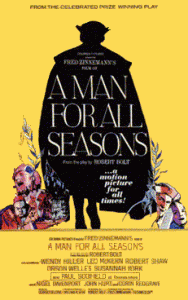
It’s hard to say. As a cradle Catholic, I don’t have any experience of writing as a non-Catholic to compare it to. It seems objectively clear to me that my work is based on a specifically Catholic anthropology. But I can point to writers like Robert Bolt, an atheist, who wrote the play which became the movie A Man for All Seasons, which is one of the works most beloved by Catholics for its portrayal of St. Thomas More. Bolt did get it wrong in places, but still, his portrayal of More’s Catholicism is overall sophisticated and sympathetic. A writer is an observer, and a good writer can observe and portray characters who don’t share their faith or their anthropology. Indeed, without that ability, how could anyone write a novel with a full and varied cast? The ability to accurately and fairly portray a variety of people, men, women, children, people of different races, of different backgrounds, of different religions, is a core skill for a novelist.
But if there is an area in which being Catholic seems to change how writers see the world, and the kinds of stories they write, I think it is sympathy for the sinner. Sympathy does not mean approval, though this is a mistake the modern world often makes. Rather, it means to recognize the humanity of someone, even in their sin. It is fellow feeling, sinner to sinner. It’s that very Catholic understanding of sin as a burden, a weight on the shoulders of the sinner, a weight with which we can sympathize because we feel it on our own shoulders as well.
The notion that sin is a burden and that to repent is to lay down that burden is one I think is largely absent from contemporary literature, which tends to divide the world into the virtuous hero, the vicious villain, and the pitiable victim. All the burdens lie on the victim and on the hero. The villain carries no burden but is simply the cause of the burdens that others bear. That sometimes happens in Catholic and Christian literature as well, but Catholic writers in particular are far more likely to give us the story of the sinner, not as a villain to be conquered, but a soul to be redeemed.
Catholic and Christian writers sometimes turn their eyes away from sinning and sinners, trying to create books that are “safe” or “clean.” And it is not hard to see why some readers crave such stories, particularly given the state of contemporary literature. But at the same time, Catholic anthropology tells us that we are all sinners. For this reason, we begin every Mass by saying “I confess to Almighty God and to you my brothers and sisters that I have greatly sinned…” As Christians, we understand ourselves to be sinners on a road to reconciliation and redemption, and if we are to tell honest stories about the human condition that are consistent with the faith, these are the stories we need to tell.
6. What’s your favorite article/Post/book/story you have written?
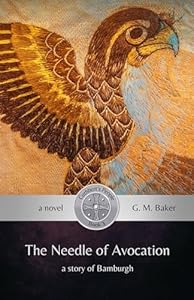
My personal favorite of my novels is the third book of my Cuthbert’s People series, The Needle of Avocation.
My readers, on the other hand, seem to feel that The Wrecker’s Daughter is the best.
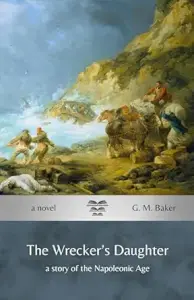
Both are stories of the plainer, cleverer sister living in the shadow of a prettier, more frivolous sibling.
In The Needle of Avocation, set in 8th-century Northumbria, Hilda is faced with a choice between an arranged marriage to an awkward young man she hardly knows and fleeing to an abbey where she can spend her days with her beloved embroidery.
In The Wrecker’s Daughter, set in Cornwall in the Napoleonic era, Hannah Pendarves seeks to follow in her father’s footsteps, wrecking ships and stealing their cargoes, but ends up a spy in the house of an upright and kindly shipping agent whom she secretly begins to love. Hilda’s sin is her withdrawal from the world, and her road back lies through discovered friendship and discovered love. For Hannah, a much more desperate sinner with the blood of many on her hands, it lies in one life spared, which brings her whole world crashing down.
7. What is your favorite topic/subject to write about?
I am fascinated by the concept of ordinate love, which I first encountered in C.S. Lewis’s The Abolition of Man. It is the notion that to be virtuous is to love each thing in proportion to its merit. Vice, then, is not necessarily to hate, but simply to love something more or less than it merits. Indeed, to love one thing more than it merits necessarily involves loving other things less than they merit.
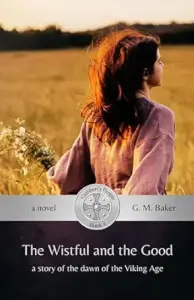
In my first novel, The Wistful and the Good, Elswyth is promised in marriage to a nobleman’s son, a great match to a man she admires, but her wistful heart longs for things over the horizon and far away. In attempting to find the right balance of these loves, she stumbles, and the result is chaos, death, and exile, a burden that she must bear through all the rest of the Cuthbert’s People series.
8. Favorite scripture verse.
“God so loved the world…”
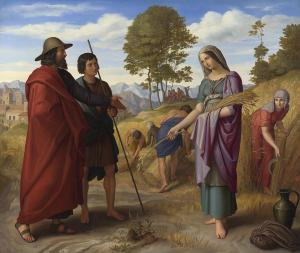
But at the same time, I am not a fan of taking scripture apart verse by verse. I am much more interested in whole stories than in individual aphorisms. The Book of Ruth, for example, is a particularly affecting story.
9. What Are you currently working on?
I am finishing up a YA portal fantasy called The Withered King. There is nothing explicitly religious about it, but one of its major themes is ordo amoris, the right ordering of loves. In it, Colin and his little sister Effie stumble through a portal into the Kingdom of the Green King, where the people believe that Effie is their promised savior, the only one who can defeat the demonic Withered King, whose minions are slowly withering the land to dust, threatening the Green King’s people with starvation and death. Colin is forced to wrestle with the question of whether to let his little sister fight a demon king, an encounter which she is by no means guaranteed to survive, or to turn his back on the desperate pleas of the Green King and especially his enchanting daughter.
10. Name a favorite saint or Catholic or some other figure who inspires you in your life.
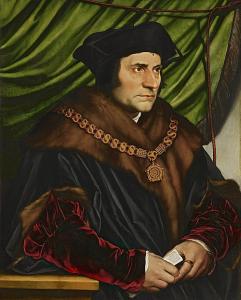
I’ve always had a particular affection for St. Thomas More. His dying words, “I die the King’s good servant and God’s first,” walk so perfectly the middle course between fanaticism and indifference. They also express that division between church and state which has been the foundation of Western Civilization. And it is also, of course, an expression of properly ordered love.
11. Who is your favorite Living Writer?
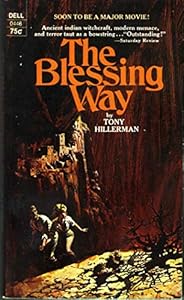
That’s a difficult question. I don’t honestly read a lot of living writers. A few years ago, I might have said Tony Hillerman, author of the Leaphorn and Chee Navajo mystery series, but he is no longer with us.
I know a number of living Catholic writers, of course, but to name one of my friends would be to slight the others, and I would not know who among them to choose.
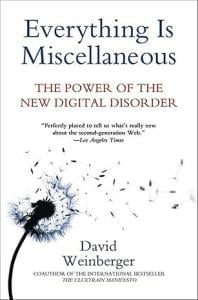
As I was puzzling over this question, I actually Googled lists of favorite living writers. The problem is, there are so many of them, and most of the names on the lists I found were people I have never heard of. The name Cormac McCarthy turns up on a lot of those lists, but he is no longer eligible. Paul Johnson is another favorite who recently died. This may seem like a left-of-field choice to many of your readers, but for today at least, I will say Internet philosopher David Weinberger, the author of Everything is Miscellaneous and Too Big to Know, whose insights on the way we think about what knowledge is and what it is shaped like influenced my earlier non-fiction work profoundly.
12. If you could have lunch with any deceased writer who would it be, what would you eat and what would you talk about?
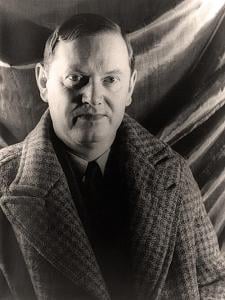
Evelyn Waugh, and I would let him pick the menu and the topic of conversation, because he would anyway, so why fight it?
13. Name a favorite movie/tv show or music you find worth sharing with others.
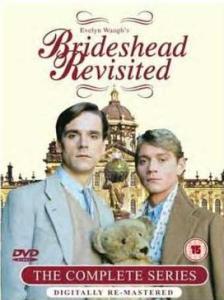
The Brideshead Revisited miniseries. It is probably the best piece of television that has ever been made, and one of the few examples of a TV series that is both faithful to the book and excellent in its own right. And it also happens to be the case that Brideshead Revisited is my favorite novel.
14. Can you see one of your books being made into a movie or tv series?
The Wrecker’s Daughter would probably have the best chance. It has all the elements of action, farce, romance, and intrigue that translate well to the screen. I can’t say that I think it likely, however, and I’ve never been the kind of writer who writes a novel with the thought of the movie version playing in their heads. I think that the novel is a fundamentally different art form from the cinema, and that whichever you are writing, you should be giving the whole of your creative attention to the form you are currently working in.
I understand the attraction of writing a book with the movie in mind, because you can produce and publish a book all by yourself without needing permission or financing from anyone else. I just don’t think it is the best way to write a book. If what is in your heart and in your head is a movie, I would say, be true to your muse and write a screenplay. If what is in your heart and in your head is a book, write it as a book, and don’t let thoughts of a movie enter your head. In the end, it will have to sell very well as a book before someone will want to make a movie of it, and to do that, it needs to be the best book it can be.
15. Favorite Historical event.
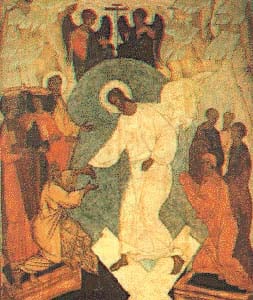
What can one say other than the resurrection? What other event can compare to it in the change it makes to the nature of the universe and the destiny of man? Even from a purely secular point of view, it would be hard to think of anything more consequential to history than the belief in the resurrection and the change that that belief has made to the way people understand their relationship to God, to the world, and to each other.
This interview was published on April 19, 2026
The day these events took place
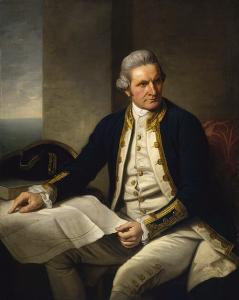
1770 – Captain James Cook, still holding the rank of lieutenant, sights the eastern coast of what is now Australia.
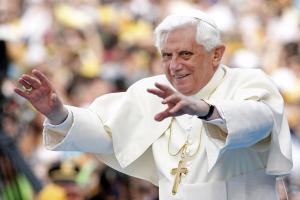
2005 – Cardinal Joseph Ratzinger is elected to the papacy and becomes Pope Benedict XVI.
2021 – The Ingenuity helicopter becomes the first aircraft to achieve flight on another planet.

2026 – The Way Home (TV series) Season 4 premieres on the Hallmark Channel.
16. What else do you want people to know about anything.
I really want to emphasize to people the importance of experience in our lives and the importance of stories as a source of experience. We are in very real danger today of becoming lost in abstractions, in ideas that sound good but which have little grounding in reality. Ideas can make us clever, but they don’t make us wise or brave. Wisdom and bravery are learned from experience and from stories. And when people become clever but do not become wise or brave, they can do very foolish things.
In an age in which children increasingly grow up without any form of real adventure, without any kind of challenge or danger, stories assume an even more important role in giving them the kinds of experience that can make them wise and brave. Stories are not trivial, therefore. They are not mere entertainments. They are as essential to human beings as food and water. And this means that we should pay as much attention to the story diet that we and our children consume as we do to our food and drink. Good food helps us to grow up and to remain strong and healthy; good stories help us grow up and to remain wise and brave. These things work together to create human beings capable of living good lives and doing good work.
But because our lives now are so safe and tame, it is important that our stories be proper adventures, full of peril and strife, the ugly and the fair, the virtuous and the wicked, all in their truthful proportion. It is by experiencing the whole of life, in all its terror and wonder, that we learn to become wise and brave. Those are the kind of books I try to write, the kind of stories I seek to tell.
Learn More at
G. M. Baker – Author – G.M. Baker – Author
Want to Be Interviewed Also?
The Catholic Bard Wants To Interview You! |
Interview Questions For My Catholic Blog
Meet The Catholic Writers |
A Link List To The Catholic Bard’s Meet The Writer Series










 Ad-Free & Subscriber Log-In