

I have gathered some inspiring videos and blog posts that I have come across that I thought were inspiring and got me thinking about Lent. I share them with you so that you can watch them and get inspired as well. They will challenge you. They will encourage you. They will guide you in your Lenten Journey.
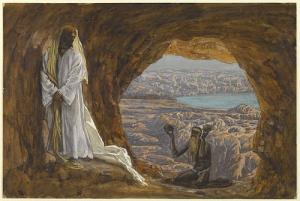
A stark confrontation with truth is required of us during Lent. Quite frankly, this would be just too much to bear if not for the fact that Christ assures us that he will come to us, not simply as a teacher or a judge, but as a Savior who is ready and willing to forgive us and restore us to communion with him.
The truth of who we are, what we have become, what we have done, what we have failed to do is necessary because without such a reckoning we would remain in the dark place of denial, and in that dark place, we would languish in misery. But this reckoning is meant to bring us out of the darkness, not deeper into it. Lent, if it is observed rightly, is a spiritual passage into forgiveness and the possibility of a second chance. – Ashes to Ashes . . . – Word on Fire
This Lent, Seek the Inner Room
with Sr. Miriam James Heidland, SOLT
Word on Fire Institute
On Ash Wednesday you walk out into the world with a small humiliation on your face. It isn’t painful. It isn’t dramatic. It’s just… there. A thumbprint of ash, slightly crooked, slightly smudged, announcing that you’ve opted into an old story while everyone else is trying to stay young, curated, and unbothered. You catch your reflection in a window and, for a second, you look less like a “self” and more like a creature: mortal, contingent, passing through.
And the words are blunt enough to shake you awake: remember you are dust.
Congratulations, You’re Dust – by John Stanczak
This Is Why Your Lent Keeps Failing…
Shameless Popery
Back in the day, I wrote this here book here called THE WORK OF MERCY: BEING THE HANDS AND HEART OF CHRIST (available here, signed by me, or in Kindle format here, or as an audiobook here).
It was published in 2011 and was my first foray into exploration of the Church’s social teaching. Before that, I had primarily written in order to speak to Evangelicals from my own background and argue that being Catholic contradicted nothing in Scripture or reason. But by the early 2010s, partly due to my surprise at how people I thought were “faithful conservative Catholics”: seemed to have remarkably little familiarity with the Church’s social teaching, I decided it was time to raise the visibility of that aspect of the Faith.
Now I typically tend to focus, in my writing, on what I myself am learning about. I am one who deeply believes that if you cannot articulate the Church’s teaching in a way that makes sense to John Q. Public, then it is likely you don’t understand it yourself. I also am somebody who, when I learn some thrilling new insight about the Faith, draws tremendous energy from watching the lights come on for somebody else when they get it. –Hey! It’s Lent! So let’s learn about the Works of Mercy! – Stumbling Toward Heaven
Kick Off Their ‘Pray 40’ Lent Challenge
The View
At the beginning of each liturgical season, we joyfully rediscover the grace of being Church, namely a community gathered to listen to the word of God. The voice of the Prophet Joel speaks to us, bringing each of us out of our isolation and showing us the urgent need for conversion, which is always both personal and public: “Gather the people. Sanctify the congregation; assemble the aged; gather the children, even infants at the breast” (2:16). He mentions the most fragile and least suited to large gatherings, those whose absence would be easy to justify. The prophet goes on to refer to husband and wife: he seems to call them from the privacy of their marital life, so that they will feel part of a larger community. Then he turns to priests, who already find themselves — almost by duty — “between the vestibule and the altar” (v. 17). They are invited to weep and to express these fitting words on behalf of all: “Spare your people, O Lord!” (ibid).
Even today, Lent remains a powerful time for community: “Gather the people. Sanctify the congregation” (Joel 2:16). We know that it has become increasingly difficult to gather people together and make them feel like a community — not in a nationalistic and aggressive way, but in a communion where each of us finds our place. Indeed, during Lent, a people is formed that recognizes its sins. These sins are evils that have not come from supposed enemies, but afflicts our hearts, and exist within us. We need to respond by courageously accepting responsibility for them. Moreover, we must accept that while this attitude is countercultural, it constitutes an authentic, honest and attractive option, especially in our times, when it is so easy to feel powerless in the face of a world that is in flames. Truly, the Church exists as a community of witnesses that recognize their sins. =Holy Mass, blessing and imposition of Ashes (18 February 2026)
Read More From the Popes
Starting Off Lent With The Popes | Inspiring Words From The Popes On Ash Wednesday
Why Every Christian Should Celebrate Ash Wednesday
The Counsel of Trent
Pope Francis consistently taught us to see how all of humanity is interconnected. And that we are interconnected to all of creation. In order to survive and thrive, we need to join hands and hearts in prayer, and to tirelessly work together to build a world of love, social justice and peace (see this encyclical).
Jesus said, “I am the light of the world. Whoever follows me will not walk in darkness, but will have the light of life.”
As we walk with increasing faithfulness in the Master’s footsteps, we become more and more radiant like him. And we begin to better understand and more fully live out his related challenge to us: “You are the light of the world. A city set on a mountain cannot be hidden. … Your light must shine before others, that they may see your good deeds and glorify your heavenly Father.”
There is no better time than Lent to “Turn away from sin and be faithful to the Gospel!”
Lent urges us to venture from darkness into the light – Where Peter Is
When Beauty Becomes a Barrier (Lent)
ICS Publications
When we think about the Seven Last Words, they often seem like theological puzzles to solve. What did Jesus mean by saying, “My God, my God, why have you forsaken me?” When He says, “It is finished,” what exactly is He talking about? Such questions, of course, require answers, and there is a wealth of convincing and inspiring explanations offered by a panoply of Saints and theologians across the history of the Church. But there is another approach to interpreting Jesus’ final statements from the Cross, one with an ancient pedigree: to study the Seven Last Words as insights into the good life, into how to be holy and righteous. – Meditating On Death Is Critical To A Good Life – Crisis Magazine
How to Offer Everything to God this Lent
Fr. Mike Schmitz & Fr. Columba Jordan
God never acts imperfectly, incompletely, which is why God need never repeat himself. Whatever God does, God does once for all.
Consequently, sacraments that fundamentally alter our relationship with God are never repeated. We are variable, inconsistent and inconstant, but God is not. If we have been baptized, confirmed or ordained in Christ, God has acted, and whatever God does, God does once for all.
It is in our nature as those bound to time, bobbing in its ebb and flow, to renew and recommit ourselves after periods of decline, in the face of new challenges or when confidence itself is shaken. And there are sacraments in which we do just that.
The Eucharist is the primordial sacrament of renewal. It does not repeat the death and resurrection of Christ because these are eternal, ever-ongoing actions on the part of God. So, while God’s Eucharist never alters, none of us ever celebrates the same Mass twice because time continually changes us.
Remembering your Baptism on Ash Wednesday – America Magazine
When Beauty Becomes a Barrier (Lent)
ICS Publications
The reason Lent lasts 40 days is that 40 is the traditional number of judgment and spiritual testing in the Bible (Gn 7:4, Ex 24:18, 34:28, Nm 13:25, 14:33, Jon 3:4). Lent bears particular relationship to the 40 days Christ spent fasting in the desert before entering into his public ministry (Mt 4:1-11). Catholics imitate Christ by spending 40 days in spiritual discipline before the celebration of Christ’s triumph over sin and death. – Why Do Catholics Fast During Lent? | Catholic Answers Q&A
Priestly Counsel for a Holy Lent
St. Michael’s Abbey
“Ash Wednesday is a great opportunity to invite people back to their faith and into a relationship with Christ,” he added. “As we enter into the season of Lent, of penance and reconciliation, we can reach so many more students through this witness.”
Like many campus ministries across the country, Ash Wednesday is one of the best-attended days of the year at American, drawing students who may not regularly go to Mass but still desire the ashes. –‘Why Do You Have Ashes?’: Catholic Students Marked by Faith on a Secular Campus| National Catholic Register
You’re Probably Not Fasting Enough
Breaking In The Habit
10 Forgotten Catholic Lent Traditions
The Catholic Talk Show
Fr. Mike Schmitz’s Top 10 Tips for Lent |
Hallow – #1 Prayer App
Hallow: Prayer & Meditation














 Ad-Free & Subscriber Log-In