

Every Catholic writer in the Meet the Writers series tries to communicate God in their writing. Some express their love of God through philosophical musings. Some express it by creating fantasy worlds that can only be accessed by your imagination. Some take others back in time to a historic period worth fleshing out in a story. Still another Catholic writer makes her personal journey of grief and hope alive in written words. Joseph expresses the truth of God by creating edgy Catholic writing.
He is straight forward, raw and direct. One particular genre is not enough for him to pitch his tent in. He also wants people to read his work and offers several of his works for free. His stories are too Catholic for some and not Cath0lic enough for others. But his stories are not lukewarm and are written with a passion for sharing the truth of the Catholic faith. So, if you want some stories with some hot sauce, it’s time to…
Meet the Edgy Catholic Writer Joseph Cillo Jr
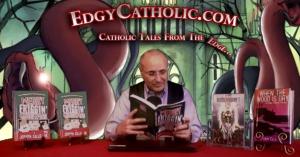
1. Tell something interesting about yourself.
I would like people to judge who I am by what I write. Details about my personal life would only be a distraction. I will say, I have always been a Catholic, but not always a good Catholic.
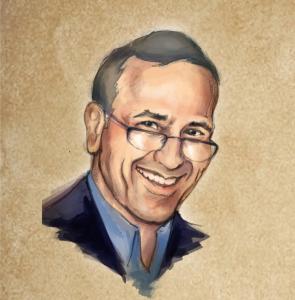
2. What makes a good Catholic writer?
First, be a good Catholic. Then, be a good writer. Which will be more difficult? My path to becoming a better Catholic was through suffering. To become a better writer was less painful. The craft of writing is complex, but to get down to what is most important—what is the fundamental thing that a writer needs to be a good writer? Empathy. A good writer needs to place himself fully in his fictional character’s shoes and live what he writes. A good Catholic writer will place the characters in a world consistent with a Catholic perspective, where sin, the consequences of sin, prayer and redemption, are a reality. God is always a character in a work of Catholic fiction, whether he is listed in the credits or not.
3. What do you like about being a Catholic/Christian Writer?
I don’t like being a Catholic writer. I am a Catholic and I enjoy writing. There is nothing about the identity of being a writer that I like. People sometimes ask, “what should I do as an aspiring writer?” I always answer, “stop aspiring and start writing.” You don’t become a thing when you start writing. You do something. Aspire to write well, not be a writer. Aspire to create something beautiful.
4. What is the Main focus of your particular Writing or what do you like to write about?
I am attempting to create a genre I call Edgy Catholic Fiction, which includes works directed at an adult audience, from a Catholic perspective, that may be in any genre. My work typically includes elements of the invisible things Catholics profess to believe in the creed, which may be supernatural or preternatural. “I believe in one God, the Father almighty, maker of heaven and earth, of all things visible and invisible [emphasis added].”
I began writing screenplays but quickly got the feedback that it did not matter how well-written my work was, the stories would never make it to the screen. So, I converted three screenplays into forms I could produce on my own and continued producing such works.
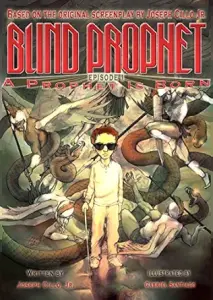
So far, I have published a comic book series:
Blind Prophet,
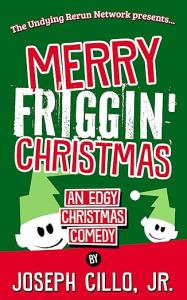
a comedy: Merry Friggin’ Christmas,
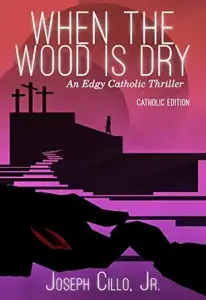
a thriller: When the Wood Is Dry,
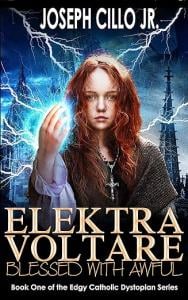
The Edgy Catholic Dystopian Series:
including so far the Elektra Voltare trilogy,
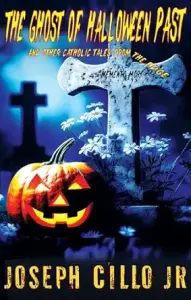
and a collection of ten short stories:
The Ghost of Halloween Past and Other Catholic Tales from the Edge.
5. How does your Catholic Faith influence your writing?
My goal in writing is to draw people toward the Catholic Faith, and to unabashedly claim that the universe works in ways consistent with the Catholic Faith, including the supernatural and preternatural elements of the universe. Many Catholic writers bury the Catholic worldview in their work so that it must be discovered like some hidden treasure. I believe the world is past the point where subtlety works, so I tend to hit them with a baseball bat rather than tickle them with a feather. So, I guess my Catholic faith is more than a mere influence in my writing.
6. What’s your favorite article/Post/book/story you have written?
My most serious work, and likely the best, is, When the Wood Is Dry: An Edgy Catholic Thriller. Writing it nearly broke me. But it is the best example of what I call, Edgy Catholic Fiction.
“Don’t you get down on yourself, Officer Russo. That girl must have been swept out to sea a long time ago after she fell off that cliff – or jumped, as some say.”
“It’s just… well, I have a daughter too, you know.”
“Yes, I know. You best keep your eye on that one. She’s a cliff walker. Those cliffs seem to get into people’s heads.”
“The cliffs are the least of my worries with her.” Robert raised the coffee to his lips, daring to take a sip. “It’s the boys I worry about. She’s been seeing one that’s a little edgy for my taste.”
“Edgy? I like that, for a cliff walker.” Rosie laughed. “Sounds like a match made in heaven.”
“I don’t believe in heaven, Rosie, and this one’s from the east side, across the tracks, and I’m afraid he’s going south.”
7. What is your favorite topic/subject to write about?
I like to write about the reality of things invisible and how they are at work whether we recognize them or not.
8. Favorite scripture verse.
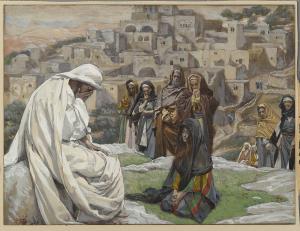
“Jesus wept.” –John 11:35
It’s the shortest one, so it is easy to remember.
9. What Are you currently working on?
I currently have two works in progress. The next additions to my Edgy Catholic Dystopian Series: Milo Milovich, which will be published in three volumes yet to be titled, and The Transitional Guy, a romantic comedy, which I began writing before the world usurped and perverted the word “transitional.” I plan to take the word back. It’s about a guy who helps women transition from bad relationships into better ones.
10. Name a favorite saint or Catholic or some other figure who inspires you in your life.
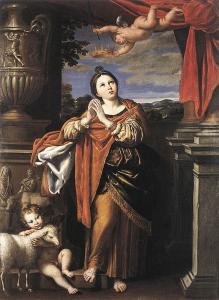
My favorite saint is St. Agnes, whose story was an influence on “When the Wood Is Dry.” If you are curious, look her up. It is too long a story to recount here, but I visited her Church in Rome and encountered her relics.
11. Who is your favorite Living Writer?
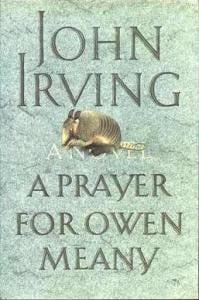
I’m afraid all my favorite writers are dead or are no longer my favorites. In my prodigal journey, I loved John Irving, but I outgrew him, so now, the only thing he wrote that is worth reading is, A Prayer for Owen Meany, which still has the best first sentence ever:
“I am doomed to remember a boy with a wrecked voice — not because of his voice, or because he was the smallest person I ever knew, or even because he was the instrument of my mother’s death, but because he is the reason I believe in God; I am a Christian because of Owen Meany”
12. If you could have lunch with any deceased writer who would it be, what would you eat and what would you talk about?
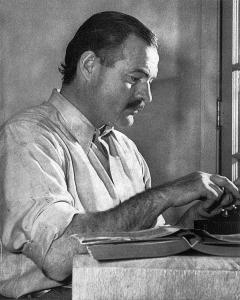
I would have a baloney sandwich with Ernest Hemingway, and we would talk about trout fishing.
13. Name a favorite movie/tv show or music you find worth sharing with others.
I have shared two television series with others, something I rarely do:
Dead Like Me,
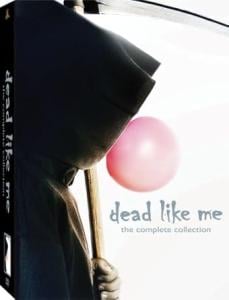
and Supernatural.
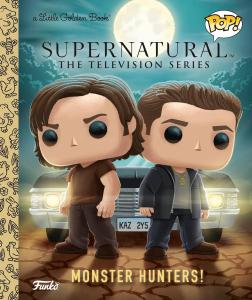
They both deal with the invisible realm I am fond of, but not from a Catholic perspective, which we can hardly expect from popular media. I also suggested the movie Twelve Monkeys to my brother, because it is my favorite Brad Pitt movie. I still can’t believe they cast him in that role and he did it.
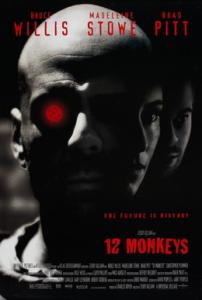
14. Can you see one of your books being made into a movie or tv series?
I imagined most of my stories for the screen, and I am writing my dystopian series in more of an episode format rather than typical novel chapters, so I can see them as movies or television shows, but it would take a producer with courage to invest in them. And courage is sorely lacking these days.
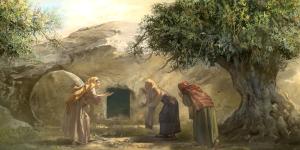
15. Favorite Historical event.
The Resurrection.
This interview was published on April 27, 2026
The day these events took place.
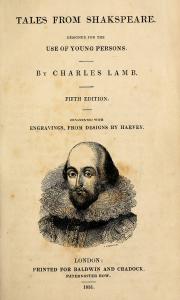
1564 – Playwright William Shakespeare is baptized in Stratford-upon-Avon, Warwickshire, England (date of birth is unknown).
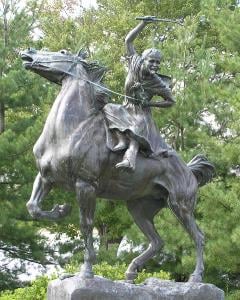
1777 – Sybil Ludington, aged 16, allegedly rides 40 miles (64 km) to alert American colonial forces to the approach of British regular forces.
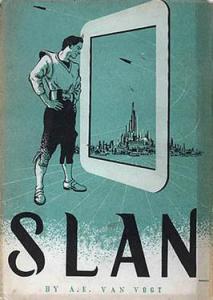
1912 – Classic Sci-Fi author A. E. van Vogt (died 2000) is born.
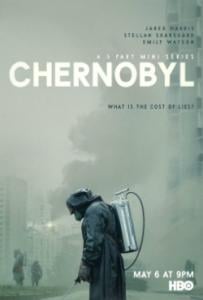
1986 – The Chernobyl disaster occurs in the Ukrainian Soviet Socialist Republic.
16. What else do you want people to know about anything.
My work isn’t for everyone. In fact, I take criticism from both sides of the religious divide: too edgy for Catholics; and too Catholic for people who like the edge. A fellow writer who is not religious read my comedy, “Merry Friggin’ Christmas,” and found it frightening.
I WOULDN’T BE caught dead in Jersey. That’s what I used to say. And then I was. Twice. You know that bit they say Hemingway said? All true stories end in death. Well, it’s a lot of bunk. I know that from experience. Death is never the end of the story. Put that one down to me, Carlton St. Michael, if no one else ever said it. But I wouldn’t call my story a true story. I don’t see how it could be. More like the most outlandish, superstitious nonsense ever contrived. That’s what I would have called it when I was alive. Or, at least, before I died the first time.
It’s a comedy. Many Catholics criticize this book, mostly because they don’t finish it. You cannot have a great redemption story without a great sinner. My hope has always been to help people to step back from the edge and get into the boat—to venture into the deep waters where the big fish are and lower the nets for a catch. The works may not be a great choice for fish that are already in the boat.
Learn More
Prolific Works – Joseph Cillo Jr.
Want to Be Interviewed Also?
The Catholic Bard Wants To Interview You! |
Interview Questions For My Catholic Blog
Meet The Catholic Writers |
A Link List To The Catholic Bard’s Meet The Writer Series






 Ad-Free & Subscriber Log-In