

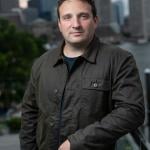
Mixing Sci-Fi with Catholicism is like mixing Chocolate and Peanut Butter. You get an other-worldly combo of taste and flavor, imagination and truth. Mr. M.R. Leonard is very professional in his writing approach and also very relaxed and seems to be having a good time weaving a modern tale of St. Augustine through the lens of aliens and spaceships. He 0nly has one book so far to his name, but it is published with such professionalism you’d think he had been doing this sort of thing for years. His background has prepared him for his talent as a author. He takes the treasures of 2000 years of Catholic writing and brings them to a modern audience. I’m honored that he reached out to me for an interview. I waited to publish his interview on this day when the most monumental Sci-Fi film in my lifetime was released on May 25, 1977. It’s also on Memoria Day 2026 that this blog post is being released. So now it is time to….
Meet Catholic Sci-Fi Author M.R. Leonard
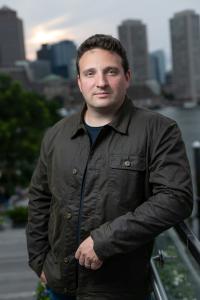
An interview for The Catholic Bard
- Tell something interesting about yourself.
I’m a China hand. Despite having no background in Chinese language and history, I dove headfirst into being a China market entry advisor. Basically, I helped American companies get established and do deals in China. It was eye-opening, specifically the part where people back in the US had no idea how different Chinese culture (and communism) is from what they are used to. It informs my perspectives on the world and my fiction, and it made me much more grateful to be American.

- What makes a good Catholic writer?
Being a good writer first; you get no points for being Catholic. Tell stories about the Good, the True, and the Beautiful. When you do so—by definition—you are glorifying Creation. And don’t sanitize stories so that they feel like the Magic Kingdom in Orlando. Reality is harsh. And there is no better expositor of that fact than the Bible itself. So let your Catholicism inform what you depict, but don’t let that be an excuse for making something that is unrealistically saccharine.

- What do you like about being a Catholic/Christian Writer?
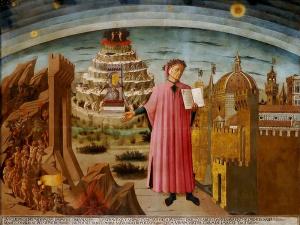
The sheer depth of material to draw from. Catholicism hands you two thousand years of serious thinking about what it means to be human and what we owe to God and to each other. Secular sci-fi has to keep reinventing its own metaphysics from scratch (and it does so very badly imho). I get to stand on Augustine, Aquinas, and Dante. It isn’t a fair fight.
- What is the main focus of your particular writing or what do you like to write about?
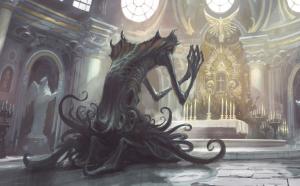
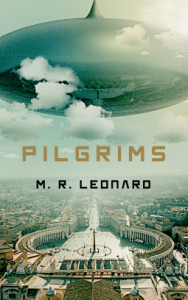
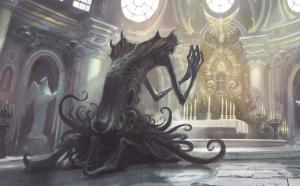
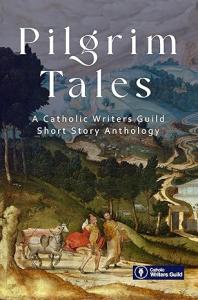
I like to write about the intersection of faith and high-concept “what ifs.” For instance, PILGRIMS, my debut novel, imagines what happens when an alien ship approaches Earth for five years with no communication. This understandably sends humanity into a frenzy. However, when the aliens finally arrive, they land at the Vatican, proclaim to be Catholic, and ask for an audience with the Pope. How the world reacts and how the aliens proceed is all told through the lens of a very broken washed-up Latin teacher who gets thrust into the center of everything.
- How does your Catholic Faith influence your writing?
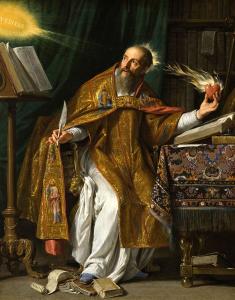
It’s less influence than foundation. PILGRIMS is a sci-fi retelling of Saint Augustine’s Confessions. For those who are familiar with that great work, the references will be readily apparent. But for those who’ve never read it, PILGRIMS is often a gateway to going back and giving that far more venerable title a read, which is intensely gratifying to me as an author.
- What’s your favorite article/post/book/story you have written?
PILGRIMS. Although, I’m hard at work on the sequels (it will be a trilogy) and I know I can improve on the craft with each iteration so I’m looking forward to doing that.
- What is your favorite topic/subject to write about?
Science fiction where the metaphysics is taken seriously. Which is another way of saying, science fiction that takes Christianity seriously, because Christian metaphysics are by far the most serious metaphysics on offer.
- Favorite scripture verse.
Matthew 7:13: “For wide is the gate, and broad is the way that leadeth to destruction, and many there are who go in thereat.”
- What are you currently working on?
The sequels to PILGRIMS. I can’t say too much without spoilers, but the story isn’t finished. PILGRIMS ends about fifty days after the aliens arrive. The sequels will look at what sort of effect they’ve had on humanity almost a decade after arrival. It won’t be salutary.
- Name a favorite saint or Catholic or some other figure who inspires you in your life.
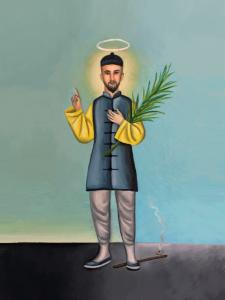
Saint Mark Ji Tianxiang. A nineteenth-century Chinese Catholic doctor whose opium addiction kept him from Communion for thirty years. He prayed for martyrdom because he so wanted to be reconciled with the Lord, but he could not kick his opium dependency. Eventually his prayers were answered during the Boxer Rebellion. He watched his whole family die. And he went to his death happy the Lord had answered his prayer. It’s bracing to consider such piety and a reminder that the Church is built on the bones of martyrs like him.
- Who is your favorite living writer?
Christopher Ruocchio. His Sun Eater series is the most ambitious science fiction being written right now by anyone.
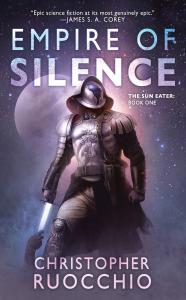
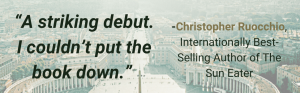
Reading him is like being alive while Tolkien was in his prime. Yes, he’s that talented. And I’m honored he blurbed PILGRIMS.
- If you could have lunch with any deceased writer who would it be, what would you eat and what would you talk about?
Joseph Heller, on the beach in Elba, with locally caught anchovies and a bottle of Chianti. Catch-22 is probably my favorite novel. And I’d love to know how he came up with Milo Minderbinder.
- Name a favorite movie/TV show or music you find worth sharing with others.
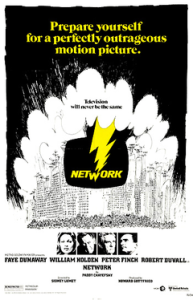
Network, directed by Sidney Lumet, written by Paddy Chayefsky, 1976. The most brilliantly written film ever made, in my opinion, and it isn’t a close contest. What I love most is what Chayefsky saw about institutions: the way they’re quietly structured to fail the people inside them and the people they’re supposed to serve. It makes the movie both prescient and timeless all at once. I watch it every now and again and find it explains so much of what is going on in the world at the current moment. That’s how you know it’s a masterpiece.
- Can you see one of your books being made into a movie or TV series? Who would you want to star or direct?
Tony Gilroy directing. Tom Holland as Austin. Tom Hanks as Father Ambrose. Mel Gibson as General Fergusson. And Virgil, the alien robot, voiced by Justin Thomas James, who already voices him in the PILGRIMS audiobook and frankly can’t be improved upon.
- Favorite historical event.
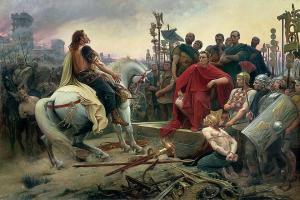
Julius Caesar’s defeat of Vercingetorix at the siege of Alesia, 52 BC. Caesar built a ring of fortifications around the Gallic stronghold, then built a second ring around himself to hold off the relief army. It doesn’t feel real. It feels like a novel plot. And when I remember that it is history, it drives home the fact that truth is stranger than fiction.
This interview was published on May 25, 2026
The day these events took place
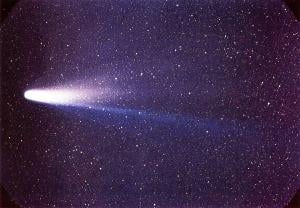
240 BC – First recorded perihelion passage of Halley’s Comet.
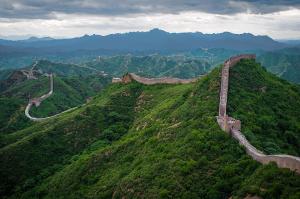
1644 – Ming general Wu Sangui forms an alliance with the invading Manchus and opens the gates of the Great Wall of China at Shanhaiguan pass, letting the Manchus through towards the capital Beijing.
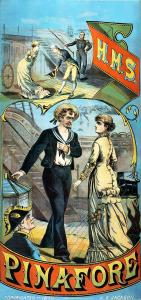
1878 – Gilbert and Sullivan‘s comic opera H.M.S. Pinafore opens at the Opera Comique in London.
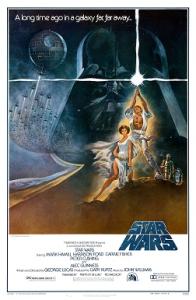
May 25, 1977 – Star Wars opens in theatres and becomes the highest-grossing film of the year. The film revolutionises the use of special effects in film and television production. It also embraces the notion of omitting any sort of opening credits sequence. Lucas, told by the Directors Guild of America that he must have an opening credits sequence, instead distributes the film independently, sans the opening credits. The film’s release is often considered one of the most important events in film history.
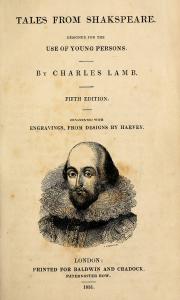
Also on this date- – The Chinese government removes a decade-old ban on William Shakespeare‘s work, effectively ending the Cultural Revolution started in 1966.
- What else do you want people to know about anything?
If you enjoyed PILGRIMS, the audiobook is something special. Soundbooth Theater produced a full dramatic version with Jeff Hays of Dungeon Crawler Carl fame at the helm. It’s not a reading; it’s closer to a radio play but without too many sound effects, so you don’t get distracted. And if you’ve read the book and liked it, tell someone. Word of mouth is still how novels survive.
Finally: thank you to Mark for doing this series.
Learn More
Want to Be Interviewed Also?
The Catholic Bard Wants To Interview You! |
Interview Questions For My Catholic Blog
Meet The Catholic Writers |
A Link List To The Catholic Bard’s Meet The Writer Series





 Ad-Free & Subscriber Log-In