


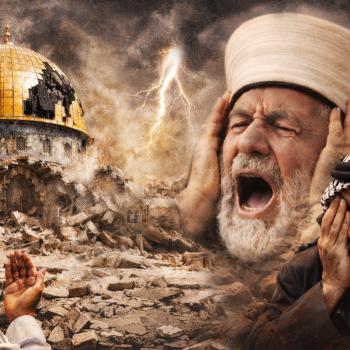
If the historical personage behind the title Muḥammad (ca. 570–632 CE) could behold what was wrought in his name—how the Caliphal dynasties embalmed his living daʿwah into the lifeless orthodoxy of an imperial cult—he would surely weep. There is no question, to anyone who has placed the finger of their consciousness upon the historical Muḥammad, that the last thing he would have wished to see was the islām of Qurʾānic aslama turned from a syncretic verb of universalist unity into a brand and bludgeon of Caliphal and Islamist power.
The Caliphate’s Distortion of Muḥammad’s Vision of Islām as a Verb
What the Caliphate did to contort his teachings and destroy his once-vital Ummah Wāḥidah—the unified community, One Ummah, One Nation—of the Jewish tribes of Madīnah and the Muhājirūn or Gerim defies comprehension. Those who truly knew this Muḥammad, as the Yemeni mystic Uways ibn ʿĀmir al-Qaranī (594–657 CE) knew him, understand that what now passively endures under the banner of an institutionalized, noun-based “Religion of Islam” would, without question, be revolting to the first historical orator of the Qurʾān. For his islām was never a doctrinal creed, but an act—the living verb of aslama. Were the historical Muḥammad to see what became of the islām he spoke of—once the living fiʿl of aslama, now a frozen –ism or –iyyah in which dissent is silenced by state theology—he would turn over in his grave… were he still there.
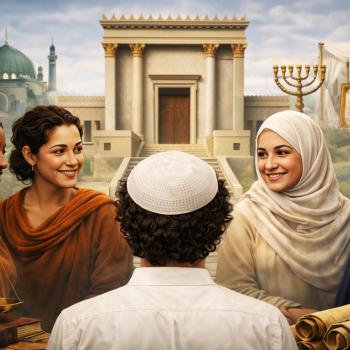
The historical Muḥammad who had bound the Gerim of the Muhājirūn with the Jewish tribes of Madīnah into a single covenant of ethical Noachide monotheism would scarcely recognize the ummah that now bears his name. Of all the charges of doctrinal and practical bidʿah one could level against the Caliphate and its normative modes of Islam, the Caliphal dumbing-down of the Biblical prophecy—the call for all nations to come to the Beyt Ha-Miqdash, the Temple in Jerusalem for Ḥag Ṣukkot—into nothing more than an institutional, tourism-funding pilgrimage of the Umayyad Meccan Caliphate is among the most exegetically egregious.
The Caliphal dynasties embalmed Muḥammad’s living daʿwah and recast the Biblically foretold ingathering of all nations, once invited to the Ḥag of Ṣukkot in Jerusalem, into the sterilized imperial Ḥajj of their own making. The prophetic vision—once so radiant—of ḥag la-kol ha-gōyim, the pilgrimage of all nations, was, almost before Muḥammad’s body grew cold, reduced to a yearly choreography of state-regulated rites stripped of their Jewish origins and Essene memory. History shows that empires prefer those whom they claim as founders to have their spiritual verbs embalmed as nouns, their pilgrimages emptied of prophecy, and their festivals of universal gathering replaced by spectacles of tribal exclusivity.
“And it shall come to pass that all the nations which came against Jerusalem shall go up year by year to worship the King, Ha-Shem Tzava’ot, and to keep the Feast of Ṣukkot.”¹
Ve-hāyāh kol ha-gōyim ha-baʾīm ʿal Yerushalayim yaʿalū mi-dei shānā ve-shānā le-hishtaḥavōt le-melekh Ha-Shem Tzevaʾōt ve-laʿasot ḥag ha-Ṣukkōt.
וְהָיָה כׇל־הַגּוֹיִם הַבָּאִים עַל־יְרוּשָׁלִַם יַעֲלוּ מִדֵּי שָׁנָה בְּשָׁנָה לְהִשְׁתַּחֲוֹת לְמֶלֶךְ יְהוָה צְבָאוֹת וְלָחֹג אֶת־חַג הַסֻּכּוֹת ׃
The Qurʾānic milieu that first heard ḥajj resonant with this Biblical expectation saw, under the early Caliphs, this shared Abrahamic horizon forcibly localized. The Caliphate narrowed its horizon from ḥag la-kol ha-gōyim—“a feast for all nations”—to a parochial ritual circumscribed by Arab ethnicity and state control. In the process, the very verb aslama was transformed into a fixed noun, designating not an ethical activity but an imperial identity.
What the early Muhājirūn and the ancestrally Judean Jews of Madīnah had lived as a verb of surrender and alignment was reified by the Caliphate into “Islam,” the religion. This semantic ossification paralleled the ritual one: the dynamism of prophetic pilgrimage, which once embodied reconciliation, was turned into the static spectacle of conformity. The living language of faith—like the ḥag itself—was domesticated, divorced from its Judean soil, and re-sown in the service of imperial Caliphatism.
From Ḥag to Ḥajj
Long before the Caliphal codification of “Islam,” the Semitic lexicon of pilgrimage bore witness to a single linguistic field. The Hebrew ḥag (חַג) and the Arabic ḥajj (حَجّ) both descend from the Proto-Semitic root ḥ-g-g, meaning “to make a procession, to circle, to keep a festival.” In Biblical Hebrew, ḥag designated the great pilgrimage feasts— ḥag ha-Maṣṣot (“Feast of Unleavened Bread”), ḥag ha-Shavuʿot (“Feast of Weeks”), and pre-eminently ḥag ha-Ṣukkot (“Feast of Tabernacles”). Each required ʿaliyah la-regel—ascending to the sanctuary in Jerusalem—according to the Torah’s command in Devarim (Deuteronomy 16:16):
“Three times a year all your males shall appear before the Lord your God in the place that He will choose: at the Feast of Unleavened Bread, the Feast of Weeks, and the Feast of Booths.”²
Shalosh peʿamim ba-shānāh yeirāʾeh kol zekhurkha et penei Ha’Shem Elohekha ba-maqom asher yivḥar, be-ḥag ha-maṣṣot, u-ve-ḥag ha-shavuʿot, u-ve-ḥag ha-Ṣukkot.
שָׁלֹשׁ פְּעָמִים בַּשָּׁנָה יֵרָאֶה כָּל־זְכוּרְךָ אֶת־פְּנֵי יְהוָה אֱלֹהֶיךָ בַּמָּקוֹם אֲשֶׁר יִבְחָר בְּחַג הַמַּצּוֹת וּבְחַג הַשָּׁבֻעוֹת וּבְחַג הַסֻּכּוֹת
Likewise, in pre-Caliphal Arabia, Ḥajj referred to cyclical journeying and circumambulation of sacred precincts—local echoes of that ancient Semitic practice of ascent toward the divine dwelling. The Qurʾān’s usage of Ḥajj and ʿUmrah retains this wider field of meaning, unconfined to later juridical codifications:
“And proclaim the Ḥajj among mankind: they will come to you on foot and on every lean camel, coming from every distant pass.”³
Wa-adhdhin fī al-nās bi-l-Ḥajj yaʾtūka rijālan wa-ʿalā kulli ḍāmirin yaʾtīna min kulli fajjin ʿamīq.
وَأَذِّنْ فِي النَّاسِ بِالْحَجِّ يَأْتُوكَ رِجَالًا وَعَلَى كُلِّ ضَامِرٍ يَأْتِينَ مِنْ كُلِّ فَجٍّ عَمِيقٍ (Q 22:27)
The phrase adh-dhin fī al-nās (“proclaim among mankind”) resonates unmistakably with the Hebrew prophetic idiom of universal ascent. Zekharyah envisions “many peoples and strong nations” seeking the Lord in Jerusalem;⁴ Yeshayahu (Isaiah) proclaims, “It shall come to pass in the latter days that the Mountain of the Beyt Ha-Shem shall be established… and all nations shall flow to it”;⁵ and Mikhah echoes, “Many nations shall come and say: ‘Come, let us go up (naʿaleh) to the Mountain of Ha-Shem.’”⁶
Such intertextuality indicates that early Qurʾānic audiences could apprehend Ḥajj within an Abrahamic matrix of covenantal universality, not the insular ritualism later imposed upon it. Indeed, the Qurʾānic Ḥajj envisions an Abrahamic return—a revival of the sanctuary built by Abraham and Ishmael:
“And when Abraham raised up the foundations of the House, and Ishmael [with him], they said: Our Lord, accept this from us; surely You are the Hearing, the Knowing.”⁷
Wa-idh yarfaʿu Ibrāhīmu al-qawāʿida mina al-bayti wa-Ismāʿīlu rabbanā taqabbal minnā innaka anta as-samīʿu al-ʿalīm.
وَإِذْ يَرْفَعُ إِبْرَاهِيمُ الْقَوَاعِدَ مِنَ الْبَيْتِ وَإِسْمَاعِيلُ رَبَّنَا تَقَبَّلْ مِنَّا إِنَّكَ أَنتَ السَّمِيعُ الْعَلِيمُ (Q 2:127)
This moment mirrors the post-exilic rebuilding of the Beyt Ha-Miqdash under Zerubbabel (fl. 538 BCE) and Yehoshua ben Yehotzadaq (6th cent. BCE):
“Then rose up Zerubbabel the son of Shealtiel and Yehoshua ben Yehotzadaq, and began to build the Beyt Ha-Elohīm which is in Yerushalayim.”⁸
Vayyaqumu Zerubbāvel ben-She’altīʾēl ve-Yeshuaʿ ben-Yotzadaq vayyaḥelu livnot bet-ha-Elohīm ʾăsher birushalayīm.
וַיָּק֣וּמוּ זְרֻבָּבֶל בֶּן־שְׁאַלְתִּיאֵל וְיֵשׁוּעַ בֶּן־יוֹצָדָק וַיָּחֵלוּ לִבְנוֹת בֵּית־הָאֱלֹהִים אֲשֶׁר בִּירוּשָׁלִָם ׃ (Ezra 5:2)
Both scenes symbolize covenant renewal rather than conquest. The Bayt (House) in Mecca was remembered as a mirror of the Bayt Elohīm in Jerusalem—an axis of divine encounter before it was conscripted as political theater. Only under later Caliphs did this shared prophetic memory undergo deliberate amnesia: the Ḥag of gathering “all nations” was narrowed to a closed ethnocentric performance; the ʿaliyah la-regel to Zion was replaced by exclusive ṭawāf—the outer shell of Ḥag preserved while its inner covenantal core was hollowed out.
The Lunisolar Calendar and the Hijrah of Time
The earliest strata of the Qurʾānic discourse assume a lunisolar calendar, continuous with the Biblical reckoning that governed the agricultural and liturgical rhythms of Israel. Sefer Berashit declares (Genesis 1:14):
“And Elohīm said, ‘Let there be lights in the expanse of the heavens to separate the day from the night; and let them be for signs and for appointed seasons (moʿadim), and for days and years.’”⁹
Vayomer Elohīm yehī meʾorot birqīa ha-shamayim lehavdil bein hayom u-vein halaylah; vehayū le-ʾotot u-le-moʿadim u-le-yamim ve-shanim.
וַיֹּאמֶר אֱלֹהִים יְהִי מְאֹרוֹת בִּרְקִיעַ הַשָּׁמַיִם לְהַבְדִּיל בֵּין הַיּוֹם וּבֵין הַלָּיְלָה וְהָיוּ לְאֹתֹת וּלְמוֹעֲדִים וּלְיָמִים וְשָׁנִים׃
Here the sun and moon jointly determine the moʿadim—the “appointed times” of worship. In Sefer Shmot (Exodus 12:2), the new year is fixed by the spring month of Aviv—the ripening of the barley—linking the liturgical to the agricultural:
“This month shall be for you the beginning of months; it shall be the first month of the year for you.”¹⁰
Ha-ḥodesh hazzeh lakhem rosh ḥodashim, rishon hu lakhem le-ḥodshei ha-shanah.
הַחֹדֶשׁ הַזֶּה לָכֶם רֹאשׁ חֳדָשִׁים רִאשׁוֹן הוּא לָכֶם לְחׇדְשֵׁי הַשָּׁנָה׃
Second-Temple and sectarian texts—Sefer ha-Yovelim (Book of Jubilees 6) and Sefer Ḥanokh Alef (1 Enoch 72–74)—codify this same solar-lunar harmony.¹¹ The Qumran community guarded it as a divine covenant, condemning those who “change the times and the law.”¹² This ancient anxiety about calendrical corruption already anticipates what would later occur under the Caliphate.
Within the Qurʾān itself (2:197), the plural ashhur ḥurum—“the sacred months”—and the phrase al-Ḥajj ashhur maʿlūmāt—“the Ḥajj is [in] well-known months”—imply a sequence of multiple months, not a single fixed lunar phase:
“The Ḥajj is [in] months well known; so whoever undertakes the Ḥajj therein, let him not engage in lewdness, wickedness, or disputation during the Ḥajj.”¹³
Al-ḥajju ashhurun maʿlūmātun fa-man farada fīhinna al-ḥajja fa-lā rafatha wa-lā fusuqa wa-lā jidāla fī al-ḥajj.
الْحَجُّ أَشْهُرٌ مَعْلُومَاتٌ فَمَنْ فَرَضَ فِيهِنَّ الْحَجَّ فَلَا رَفَثَ وَلَا فُسُوقَ وَلَا جِدَالَ فِي الْحَجِّ
This articulation presupposes an intercalated system—a cycle of months that remained synchronized with the solar year, so that the Ḥajj would fall in its proper harvest season. Early Arab practice, known as nasīʾ, adjusted lunar months by periodic intercalation to preserve that alignment. Far from being condemned outright, the Qurʾānic rebuke of nasīʾ (9:37) targets its manipulative misuse—delaying or advancing months for tribal warfare advantage—not the principle of synchronization itself.¹⁴
The Qur’anic era thus continued a lunisolar framework in which the pilgrimage coincided with the autumnal ingathering. This was the period when Israel, too, celebrated Ḥag ha-Sukkot—“the Feast of Ingathering at the turn of the year”:
“You shall observe the Feast of Ingathering at the end of the year, when you gather in from the field the fruit of your labor.”¹⁵
Ve-ḥag ha-ʾāsif tekufat ha-shānāh be-ʾosfekha et maʿasekha min ha-sadeh.
וְחַג הָאָסִף תְּקוּפַת הַשָּׁנָה בְּאָסְפְּךָ אֶת מַעֲשֶׂיךָ מִן הַשָּׂדֶה׃ (Exodus 23:16)
Only under the Umayyad Caliphs—beginning with Muʿāwiyah ibn Abī Sufyān (602–680 CE) and solidified under ʿAbd al-Malik ibn Marwān (685–705 CE)—was the system forcibly converted into a purely lunar calendar, erasing its agricultural correspondence. The reform severed ḥajj from its agrarian moorings and ensured that the festival would drift through the seasons—untethered from any shared Biblical cycle.¹⁶ By making sacred time rotate independently of the sun, the Caliphate effectively nationalized eternity, ensuring that every generation’s pilgrimage would sustain the same imperial Meccan center, unlinked from any harvest, covenant, or cosmic order.
This was not a neutral reform but a “Hijrah of Time.” Where the historical Hijrah marked migration through space—from Mecca to Madīnah—this second Hijrah transposed the axis of holiness from cosmic rhythm to political calendar. The movement from a lunisolar to a purely lunar system thus transformed the Qurʾānic calendar of covenant into an instrument of state theology. Time itself was made to revolve around the Caliphate.
The cumulative effect was profound. By removing intercalation, the Umayyads extinguished the seasonal logic that had once united Israel and Ishmael in a single covenantal rhythm of sowing and reaping, fasting and feasting. What had been a cosmic liturgy became a temporal abstraction—a rotation without revelation. Chroniclers remembered the popular disorientation that followed the abolition of nasīʾ.¹⁷
Thus, the Caliphal calendarization of Islam completed the semantic freezing begun with the transformation of aslama from verb to noun. Just as al-Islām was turned into an institutional religion, so sacred time itself was frozen, its pulse amputated from the solar covenant of Genesis. The Hijrah of Time ensured that the Ḥajj could no longer coincide with the Ḥag Ṣukkot, nor recall the prophetic vision of the nations ascending together. The empire’s year could henceforth belong only to the empire’s moon.
The Reconstructed Abrahamic Rite
The later Caliphate’s claim that the Ḥajj merely “restored” an ancient Abrahamic pilgrimage obscures the deeper and more subversive truth: it reconstructed it. ʿAbd al-Malik ibn Marwān’s seventh-century codification of the Ḥajj was not a simple preservation of an inherited tradition but a deliberate re-engineering of ritual memory. The Qurʾānic text itself, as even early exegetes such as Mujāhid ibn Jabr (d. ca. 722 CE) and al-Ḍaḥḥāk ibn Muzāḥim (d. 723 CE) concede, lacks the detailed sequence of rites later legislated in fiqh manuals. What the Caliphate did was to fill those silences with political choreography.
Before the Meccan consolidation, Muḥammad’s circle had oriented their ritual life toward Jerusalem. Early sūwar evoke the rhythm of Israelite liturgy: fasting in alignment with Yom Kippur, prayer direction toward the Beyt Ha-Miqdash, and the Abrahamic feasts patterned on the calendar of Ṣukkot and Pesaḥ. The redirection of the qiblah from Jerusalem to Mecca (Q 2:142–150) was a moment of theological negotiation, not rupture—a symbolic inclusion of Ishmael’s lineage into the covenantal geography already anchored in Zion. Yet the Umayyad project reinterpreted this redirection as territorial replacement. The Caliphal Ḥajj became the annual ritual that publicly enacted that ideological transfer.
The Umayyad expansion of Mecca and Medina under ʿAbd al-Malik and his son al-Walīd I (r. 705–715 CE) was accompanied by a massive re-framing of the Kaʿbah’s history. Newly minted ḥadīth collections began to ascribe to Abraham and Ishmael every act of the contemporary pilgrimage: the running between Ṣafā and Marwah, the standing at ʿArafāt, the stoning of pillars at Minā. Yet none of these appear as fixed rites in the Qurʾān. Their scriptural silence betrays their late construction.
The Bayt Allāh of Qurʾānic memory was an echo of the Bayt Elohīm—a place of covenant renewal, not expiation through spectacle. In Judaean liturgy, the Feast of Ṣukkot marked both agricultural gratitude and the eschatological hope of the nations’ ingathering. In the Caliphal Ḥajj, that symbol of universal assembly was transformed into a demonstration of imperial unity. The ḥag la-kol ha-gōyim became the ḥajj li-ummat Muḥammad, the pilgrimage of one nation to one center—an inversion of prophetic cosmopolitanism.
This reorientation was not accidental. The Umayyads were seeking legitimacy over rival claimants who still held Jerusalem and its Temple Mount—Bayt al-Maqdis—as the axis of Abrahamic worship. By codifying the Ḥajj and erecting the Dome of the Rock (691 CE) over the very stone once identified with the Holy of Holies, ʿAbd al-Malik declared that Mecca and Jerusalem were twin reflections of one sanctity—while insisting that Mecca alone would now define the borders of the newly codified replacement theology of Caliphal Islam™.
. In this architecture of memory, ritual became manifesto.
The textual evidence confirms that the early Caliphate was engaged in a polemical act of substitution. The ḥajj verses were reread as abrogating the Temple pilgrimage, not fulfilling it. The Qurʾānic invitation—wa-adhdhin fī al-nās bi-l-Ḥajj—which once echoed Zekharyah’s call for “all nations” to ascend, was reinterpreted by exegetes such as al-Ṭabarī (d. 923 CE) to mean only “the believers.”
The universal verb became an exclusive noun.
The transformation of the Abrahamic rite thus mirrors the empire’s transformation of language itself. In both, an open verb of faith was turned into a closed noun of identity. The Caliphal Ḥajj was the linguistic ossification of aslama made visible—a ritualized morphology of political theology.
The Restoration of Sacred Time
The Caliphate’s lunarization of the year, its semantic petrification of islām into a noun, and its ritual monopolization of the Ḥajj all represent facets of a single phenomenon: the imperial expropriation of prophetic temporality. In the Biblical and Qumranic worldview, time was covenantal—an ever-renewed dialogue between heaven and earth, sun and moon, Israel and the Creator. The Caliphal reform converted this cyclical covenant into a mechanical recurrence, severed from the cosmic harvests and therefore from the moral ecology they symbolized.
To restore sacred time is to re-engage that dialogue. The prophetic calendars of Sefer Ḥanokh, Sefer ha-Yovelim and the Megillat Ha-Miqdash (11QTemple Scroll; or 11Q19), testify that true sanctification of time requires correspondence with creation’s own rhythms. The later Muḥammadan community, still echoing these texts in its earliest strata, remembered that “God created the sun for the day and the moon for the reckoning.” Their restoration lies not in reviving antiquarian forms but in recovering the intent of the verb aslama itself—to realign, to harmonize.
The historian’s task, then, is not to condemn but to unveil: to see beneath the Caliphate’s marble theology the living covenant it buried. For in every language the root ḥ-g-g still whispers the same invitation—to gravitate back towards, circling back toward the center, to make pilgrimage in act rather than ideology.
The Ḥajj, stripped of its imperial accretions, remains a reminder that universal truth was never meant to be embalmed. The Beyt Ha-Miqdash, the Holy Temple of Jerusalam and the Kaʿbah; Jerusalem and Mecca; Israel and Ishmael—these are mirrors of a single cosmic movement. To reclaim that movement is to let the verb live again.
Endnotes
-
Zechariah 14:16.
-
Deuteronomy 16:16.
-
Q 22:27.
-
Zechariah 8:22.
-
Isaiah 2:2.
-
Micah 4:2.
-
Q 2:127.
-
Ezra 5:2.
-
Genesis 1:14.
-
Exodus 12:2.
-
Book of Jubilees 6; 1 Enoch 72–74.
-
1 Enoch 82:6; cf. Daniel 7:25.
-
Q 2:197.
-
Q 9:37 and early exegesis in al-Ṭabarī, Tafsīr, vol. 10, p. 166.
-
Exodus 23:16.
-
Al-Yaʿqūbī, Tārīkh, vol. 2, pp. 257–59; Crone and Cook, Hagarism (Cambridge, 1977), pp. 24–30.
-
Al-Bīrūnī, al-Āthār al-bāqiya ʿan al-qurūn al-khāliya, ed. Sachau (Leipzig, 1879), pp. 48–50.













 Ad-Free & Subscriber Log-In