


Across Biblical literature, Rabbinic tradition, and the Qurʾān, the most dangerous religious figure is not the idolater who openly denies the Oneness of the Creator, but rather the one who knows the Reality expressed by the Torah as Ha-Shem and then exploits that knowledge—specifically the knowledge of the Holy Name—to mislead others or to secure personal power and gain (Devarim/Deuteronomy 13:2–6; 18:20–22; b. Sanhedrin 90a; Qurʾān 7:175–176).
This shared concern forms the axis around which the figures of Bilʿam ben Beʿor—whose mischief is associated in Midrash with both the Golden Calf (as we will see) and the era of the Judges (Bamidbar/Numbers 22–24; 31:16; b. Sanhedrin 105a; Midrash Tanchuma, Balaq 8)—and al-Sāmirī are constructed (Qurʾān 20:85–97). What is at stake in these traditions is not the mere presence of incorrect worship, but the far more acute danger of authentic proximity to the sacred being converted into technique—into what may be called, without romanticization, “name-technology” (b. Berakhot 7a; b. Sanhedrin 101a; b. Shabbat 104a).
Proximity to the Divine, Misuse of the Name, and the Ethical Counter-Answer from Sinai to Late Antiquity
At the level of Torah peshat, the Golden Calf episode appears to implicate Aaron in a catastrophic failure of leadership (Sefer Shemot/Exodus 32:1–6). Neither Rabbinic nor Qurʾānic traditions absolve him of responsibility (Shemot/Exodus 32:21–24; Devarim/Deuteronomy 9:20; Qurʾān 20:90–94). What they refuse to allow, however, is that political or communal failure exhausts the explanation. Both traditions insist that something far more dangerous is at work: the instrumentalization of Divine Power through the misuse of the Holy Name—quite literally, the taking of the Name in vain (Shemot/Exodus 20:7; b. Sanhedrin 101a; Pirqe de-Rabbi Eliezer 45; Qurʾān 20:88). The common diagnosis is that when the sacred is treated as operable—when it can be triggered, activated, timed, or installed—the boundary between worship and manipulation collapses, and the gravest forms of idolatry become possible precisely under the banner of the true God (Shemot/Exodus 32:5; b. Avodah Zarah 55a).
This danger becomes intelligible only in light of Sinai itself. Revelation introduces an unprecedented condition: the Divine Name is publicly disclosed, covenantally operative, and ritually efficacious. Revelation does not merely command; it enables. Rabbinic literature repeatedly emphasizes that such enablement magnifies moral risk rather than diminishing it—the closer one stands to the Divine, the more catastrophic misuse becomes (b. Sanhedrin 90a; 101a; b. Shabbat 104a). The central tension is therefore not “religion versus irreligion,” but a more unstable polarity internal to religion itself: proximity answered as submission versus proximity answered as control (Devarim/Deuteronomy 4:35; b. Avot 5:19).
Sinai, the Golden Calf, and the Emergence of Sacred Metaphysical Technique
Within the Qurʾānic corpus, a second narrative complex shadows the Sinai crisis in a way that later interpretive traditions repeatedly associate with it: the encounter between Moses and the enigmatic teacher later identified, in Sufi tradition, with al-Khiḍr (the Green One) (Qurʾān 18:60–82; cf. al-Ṭabarī, Tafsīr, ad loc.). This figure functions as a bāṭinī, esoteric counterpart to what Jewish mysticism will later articulate through mediatory categories such as 3 Enoch and the Metatron tradition, and what the Torah itself frames in the language of the Malakh Ha-Shem (Shemot/Exodus 23:20–21; 3 Enoch 12; Zohar II.51a).
In the Qurʾānic narrative, the teacher kills a youth, provoking Moses’ protest (Qurʾān 18:74). This episode is presented without the kind of explicit chronological anchoring that would render it transparent, and the sūrah remains deliberately elusive (Qurʾān 18:66–82). Yet the juxtaposition of hidden knowledge, morally disturbing action, and the claim to perceive what others cannot perceive becomes a thematic prefiguration of the Golden Calf technician motif that later appears with al-Sāmirī (Qurʾān 20:88, 96).
The internal chronological tension underscores the literary-theological point. Moses’ confrontation with Pharaoh is anchored in the Torah at the age of eighty (Shemot/Exodus 7:7). The Qurʾānic account does not dwell on this chronology but does produce, in proximity, a pattern: those who claim superior perception and hidden technique operate in the same narrative universe as the Calf’s activation, and the ethical question is not whether perception exists, but what it is used to do (Qurʾān 18:68–82; Qurʾān 20:96–97). The tradition’s interest lies precisely where technique and ethics diverge.
Micah of the Golden Calf and Shoftim as Internal Technician of the Name
It is in this context that Rabbinic tradition introduces a single decisive internal agent into the Golden Calf narrative: Micah, later known from Shoftim/Judges 17–18 (b. Sanhedrin 103b; Shoftim/Judges 17–18). This Micah is not the prophet of the same name. Rabbinic sources deliberately distinguish the two, and the shared name is treated as an intentional provocation within the Biblical corpus rather than an accidental homonym (Shemot Rabbah 41:1; Mikhah/Micah 1:1). Micah is presented not as a marginal accomplice but as the technical instigator who renders the Calf cultically dangerous.
According to early ʿaggadic tradition, Aaron fashions the object under duress, but Micah activates it through misuse of the Divine Name (b. Sanhedrin 101a; Pirqe de-Rabbi Eliezer 45). The decisive sin is not sculpture but installation—the ancient Near Eastern logic whereby an image becomes divine through ritual ensoulment rather than craftsmanship. The calf’s movement or vocalization is treated not as illusion but as illicit efficacy. The Babylonian Talmud preserves the identification with blunt precision:
“This is Micah who made the idol, and this is Micah who caused Israel to sin with the calf.” (b. Sanhedrin 103b)
Zeh Mikhah she-ʿasah et ha-pesel, ve-zeh Mikhah she-heti et Yisrael ba-ʿegel.
זה מיכה שעשה את הפסל וזה מיכה שהחטיא את ישראל בעגל
The language is exact: Micah does not merely assist or encourage; he causes Israel to sin through the calf. The object functions as a medium of transgression because it has been activated by someone who knows how to make it function (b. Sanhedrin 103b; b. Shabbat 104a).
A second ʿaggadic strand deepens this portrait by anchoring Micah’s story in the Exodus itself (b. Sanhedrin 101a; Pirqe de-Rabbi Eliezer 45). Micah is portrayed as a direct beneficiary of Mosaic mercy, saved from death in Egypt through use of the Divine Name. That same Name, detached from ethical restraint, becomes the instrument of catastrophe:
“When Israel was enslaved in Egypt, a child was sunk into the building. Moses stood and brought him out by means of the Name. This was Micah.” (b. Sanhedrin 101a; Pirqe de-Rabbi Eliezer 45)
Ke-she-hayu Yisrael meshubadim be-Mitzrayim, tavu tinok ba-binyan, ve-amad Mosheh ve-hotzio be-shem; ve-zeh hayah Mikhah.
כשהיו ישראל משועבדים במצרים טבעו תינוק בבנין ועמד משה והוציאו בשם וזה היה מיכה
This tradition is not biographical but theological. Mercy exercised without foresight generates unintended consequences. The Name that saves can also corrupt. The Golden Calf thus becomes the first demonstration of a recurring pattern: revelation intensifies moral stakes (Shemot/Exodus 19–20; b. Shabbat 88b). Micah is thereby framed as a carrier of a cultic-spiritual pathology, not as a merely local sinner whose significance is exhausted by one episode (b. Sanhedrin 101a; b. Sanhedrin 103b).
Rabbinic narrative then makes an additional move that is central to the present argument and must be stated with the explicitness demanded by the sources’ own logic. Micah is a youth in Egypt, active at the Golden Calf, and yet still operative in the period of Shoftim/Judges 17–18 (b. Sanhedrin 101a; 103b; Shoftim/Judges 17–18).
The impossibility of this lifespan is not treated as a “problem” requiring rational repair. It is intentional. Micah is not framed as a conventional historical individual bounded by a single biological life but as a trans-generational returning figure through gilgul—reincarnation—presupposed as intelligible within Judaism’s interpretive world and therefore not introduced as a novelty (Zohar 1.186b; 2.94b; cf. Shaʿar ha-Gilgulim, introd. and throughout). The narrative strategy assumes readers already understand how one soul-pattern may recur until Tīqqūn is completed.
The Torah itself provides parallel phenomena where extraordinary temporal extension is presented without explanatory apology and is then supplied, in Rabbinic tradition, with midrashic rationales that still leave the deeper issue unresolved unless gilgul is presupposed. The paradigmatic example is Og, King of Bashan. Rabbinic tradition states that Og survived the Flood by “holding onto” the Ark of Noah (b. Niddah 61a; Pirqe de-Rabbi Eliezer 23). Yet this image does not actually explain survival into the Mosaic period centuries later, when Og confronts Israel east of the Jordan (Devarim/Deuteronomy 3:1–11). The coherence of such temporal extension, within the Jewish worldview at issue, lies precisely in gilgul, whether stated explicitly or assumed implicitly as the intelligible horizon of the narrative’s claim (Zohar 1.186b; 2.94b). The Rabbis do not pause to defend reincarnation; they write as though it is already known to be true.
Balaam as External Metaphysical Technician of Prophecy and the Supreme Name
At this point, Rabbinic literature introduces a decisive symmetry: the danger represented by Micah is not unique to Israel. It has an external counterpart, operating at the same historical moment and through the same misuse of Divine access. That counterpart is Balaam.
Rabbinic literature is explicit that Balaam’s prophetic power is genuine; he is not a charlatan (Bamidbar/Numbers 22–24; b. Sanhedrin 105a). The Bavli even dares to claim a technical parity between Moses and Balaam—while stressing absolute ethical divergence—thereby isolating ethics, not access, as the decisive variable (b. Sanhedrin 105a; Sifrei Devarim 357).
Chronologically, Rabbinic tradition situates Balaam squarely within the Exodus–Sinai horizon, as a contemporary of Moses. This is crucial because it locates Balaam at the precise historical moment when divine access becomes newly available—and newly dangerous (Bamidbar/Numbers 22:5; b. Sanhedrin 105a; Seder ʿOlam Rabbah 10; Shemot/Exodus 19–20).
Balaam is described as one who “knows the knowledge of the Most High,” which the Rabbis interpret not as piety but as technical knowledge of the Divine Name and of the precise moment when Divine Wrath is aroused (Bamidbar/Numbers 24:16; b. Berakhot 7a; b. ʿAvodah Zarah 4b). The Talmud’s formulation makes the point with programmatic clarity:
“He knew the knowledge of the Most High—he knew how to determine the moment when the Holy One, blessed be He, becomes angry.” (b. Berakhot 7a; cf. b. Sanhedrin 105b)
Yodeaʿ daʿat Elyon—yodeaʿ le-khaven shaʿah she-ha-Qadosh Barukh Hu koʿes.
יוֹדֵעַ דַּעַת עֶלְיוֹן — יוֹדֵעַ לְכַוֵּן שָׁעָה שֶׁהַקָּדוֹשׁ בָּרוּךְ הוּא כּוֹעֵס
This is not devotion. It is name-technology. Balaam’s sin is not false belief but the instrumentalization of prophecy itself: treating revelation as a weapon—calibrating curses, timing invocations, attempting to coerce God into action (Bamidbar/Numbers 22:6; b. Sanhedrin 105b; Midrash Tanchuma, Balaq 6). He does not surrender to the Power and Ultimate Primordial Reality of the Name; he deploys it. Rabbinically, this places him in a category more dangerous than ordinary idolaters: those who are close enough to God to do real damage (Devarim/Deuteronomy 13:2–6; b. Sanhedrin 90a; b. ʿAvodah Zarah 55a).
The symmetry is then sharpened: Balaam weaponizes the Name externally to curse; Micah weaponizes the Name internally to install divinity. One corrupts Israel from without; the other corrupts Israel from within (Bamidbar/Numbers 22–24; b. Sanhedrin 101a; 103b).
The Sāmirī as Qurʾānic Technician and Functional Designation
Within the Qurʾān, the same structure appears narratively through al-Sāmirī. The Qurʾān preserves Moses’ physical anger toward Aaron—grasping him by the beard—maintaining leadership accountability (Qurʾān 20:92–94). Yet it also isolates the technical agent: al-Sāmirī, who “perceived what they did not perceive,” took a “trace of the messenger,” cast it into the calf, and caused it to emit sound (Qurʾān 20:88, 96).
In this way, Sāmirī seeks to entice the ego—the nefesh or nafs—of the narrative figure of Moses, attempting to seduce him toward what might be termed the “dark side.” The strategy is not to deny revelation outright, but to reframe explicit shirk or idolatry as an act of honoring the Messenger of Allah—Moses himself—by presenting the power manifested through the Golden Calf as nothing less than the power of Allah. Through this inversion, Sāmirī manipulates perception, rendering the crooked straight and the straight crooked.
Furthermore, the text is uninterested in genealogy; al-Sāmirī functions as a role designation—the one who knows how to activate sacred power illicitly. The Qurʾānic narrative articulates the technician motif with unusual explicitness:
“He said: ‘What was your motive, O Sāmirī?’ He said: ‘I perceived what they did not perceive. So I took a handful from the trace of the messenger and cast it, and thus my soul prompted me.’” (Qurʾān 20:95–96)
Qāla fa-mā khaṭbuka yā Sāmirī. Qāla baṣurtu bimā lam yabṣurū bihi fa-qabaḍtu qabḍatan min athari al-rasūli fa-nabadhtuhā wa-kadhālika sawwalat lī nafsī.
قَالَ فَمَا خَطْبُكَ يَا سَامِرِيُّ قَالَ بَصُرْتُ بِمَا لَمْ يَبْصُرُوا بِهِ فَقَبَضْتُ قَبْضَةً مِنْ أَثَرِ الرَّسُولِ فَنَبَذْتُهَا وَكَذَٰلِكَ سَوَّلَتْ لِي نَفْسِي
The act is framed as technical misuse, not doctrinal denial. Al-Sāmirī’s punishment likewise preserves the same conceptual logic: the technician who collapses distance between human manipulation and sacred presence is sentenced to radical separation, condemned to live in a state of untouchability until a promised deadline that will not fail (Qurʾān 20:97). Here the Qurʾān performs in narrative peshat what Rabbinic ʿaggadah performs homiletically: responsibility is divided between leadership failure and technological misuse of the sacred (Qurʾān 20:85–97; cf. b. Sanhedrin 101a).
Rabbinic Concepts of Gilgul Reincarnation, Role-Recurrence, and the Isāwiyah Jews Integration of Balaam–Sāmirī–Micah as One
At this juncture, the Tariqat ʿIsāwiyah makes explicit what is already implicit in the Rabbinic and Qurʾānic materials. Balaam, Micah of the Golden Calf and Shoftim/Judges, and al-Sāmirī are understood as successive incarnations—gilgulīm—of a single recurring spiritual role. These are not merely archetypes or metaphors but manifestations across lifetimes of the same unresolved soul-pattern.
This is stated not as an embarrassed concession to “later mysticism,” but as the direct theological meaning of the Rabbinic temporal collapse itself: the text is written as though gilgul is already known to be true, and the Isāwiyah reading simply says openly what the Rabbinic narrative assumes (b. Sanhedrin 101a; b. Sanhedrin 103b; Zohar 1.186b; Zohar 2.94b).
In this framework, “Balaam,” (or the earlier gilgul of the Micah of Judges) or Quranically, the “Sāmirī” are not emptied into abstractions. They are personal manifestations of a recurrent pathology: authentic access to Ha-Shem combined with instrumental misuse. The recurrence is not a literary convenience but a spiritual diagnosis: some figures return until Tīqqūn is completed. Rabbinic tradition already gestures in this direction by collapsing centuries into Micah’s biography, pairing Balaam and Micah typologically, and treating misuse of the Name as a trans-historical danger (b. Sanhedrin 101a; 103b; 105a).
Islamic tafsīr, for its part, readily sustains functional naming and moral recurrence across prophetic history (cf. al-Ṭabarī on Qurʾān 20:85–97; Qurʾān 7:175–176). Isāwiyah doctrine integrates these strands and names the synthesis without dilution: it is gilgul.
Micah the Prophet as Counterweight and Theological Antidote
This synthesis would be theologically fatal without a counterweight. That counterweight is Micah—the prophet. Micah the prophet bears the same name, lives centuries later, and answers the name’s question correctly (Mikhah/Micah 1:1). “Who is like God?” is no longer answered through technique, timing, or installation, but through justice, lovingkindness, humility, and mercy (Mikhah/Micah 6:8).
Rabbinic tradition elevates Micah the prophet precisely because he reduces Torah without instrumentalizing it, and because his climactic verse—“Who is a God like You, forgiving iniquity”—becomes the liturgical language of repentance (b. Makkot 24a; b. Rosh Hashanah 17a).
Micah’s reduction is preserved by the Bavli in a way that explicitly positions it as a stable ethical condensation rather than an invitation to technique:
“Micah came and established them upon three: to do justice, to love kindness, and to walk humbly with your God.” (b. Makkot 24a; citing Mikhah/Micah 6:8)
Ba Mikhah ve-heʿemidan ʿal shalosh: ʿasot mishpat, ve-ahavat ḥesed, ve-hatsneʿa lekhet ʿim Elohekha.
בָּא מִיכָה וְהֶעֱמִידָן עַל שָׁלֹשׁ… עֲשׂוֹת מִשְׁפָּט וְאַהֲבַת חֶסֶד וְהַצְנֵעַ לֶכֶת עִם אֱלֹהֶיךָ
Micah’s climactic doxology then answers the question embedded in the name not by comparison but by mercy:
“Who is a God like You, forgiving iniquity and passing over transgression?” (Mikhah/Micah 7:18)
Mi El kamokha, noseʾ ʿavon ve-ʿover ʿal peshaʿ.
מִי אֵל כָּמוֹךָ נֹשֵׂא עָוֹן וְעוֹבֵר עַל פֶּשַׁע
Thus, the name Micah itself becomes a fork in the road: one answer leads to control, the other to submission. The shared name is not an embarrassment to be explained away; it is a canonical mechanism for forcing the reader to confront two incompatible postures toward divine proximity. One posture tries to operate the Power of Ha-Shem; the other confesses that God’s likeness is disclosed precisely in the refusal of operability, in forgiveness and patience rather than in leverage (Mikhah/Micah 7:18; b. Rosh Hashanah 17a).
The Ethical Arc as a Single Distributed Diagnosis
Placed together, the full arc is coherent. Balaam exposes the danger of prophetic power without ethics, demonstrating how genuine access can be converted into a weapon (Bamidbar/Numbers 22–24; b. Sanhedrin 105a; b. Berakhot 7a).
Micah of the Golden Calf and Shoftim/Judges internalizes that danger within Israel, showing how misuse of the Divine Name can corrupt covenantal life from inside rather than assault it from without (Shemot/Exodus 32; Shoftim/Judges 17–18; b. Sanhedrin 101a; b. Sanhedrin 103b). Al-Sāmirī names the technical role explicitly, isolating the function of illicit activation and separating it from mere leadership collapse (Qurʾān 20:85–97).
Micah the prophet resolves the crisis ethically and theologically by re-answering the name’s question in a manner that forecloses technique altogether (Mikhah/Micah 6:8; 7:18; b. Makkot 24a). This is not contradiction across traditions. It is a distributed diagnosis of the same disease: authentic access to the Divine divorced from ethical submission (Devarim/Deuteronomy 13:2–6; Qurʾān 7:175–176).
The Two Micahs, the Two Judahs and the Twin Within
Within Tariqat ʿIsāwiyah doctrine, the pattern traced above—Balaam, Micah of the Calf and Shoftim/Judges, al-Sāmirī, and the ethical corrective of Micah the prophet—is extended backward and forward through a lost proto-textual tradition identified as Sefer ha-Ruʿaḥ be-Basar (“The Book of the Spirit in the Flesh”), something of what we might regard as the Hebrew and Jewish Ur Gospel. Within this teaching, that proto-text is not a later invention but an early stratum of reflection on revelation, embodiment, and moral bifurcation, standing conceptually between Sinai and the early Jesus-movement.
According to Isāwiyah teaching, this work was composed by Yehudah ha-Galili, whom the order identifies with Judas Didymus Thomas of the Gospel of Thomas (Gospel of Thomas, prologue; Nag Hammadi Codex II). This identification is not presented as a matter of positivist historical certainty, but as esoteric continuity: a single authorial voice appearing under multiple titles across Jewish and early Jesus-movement contexts. The concern is not biography for biography’s sake, but transmission—how a single interpretive consciousness refracts through different communal settings while preserving a stable moral grammar.
Within this framework, Didymus (Greek “twin”) and Thomas (from Aramaic tʾōmā, “twin”) are not treated as casual nicknames but as symbolic declarations (cf. Gospel of Thomas 13). “Judah the Twin” (Yehudah ha-Teʾom) signifies an author consciously presenting an anthropology of internal doubling, the same moral bifurcation already articulated through the Two Micahs: one name, two answers; one proximity to the sacred, divergent outcomes. In this economy, twinship is not a decorative metaphor but the structural claim that revelation produces inner duplication—one impulse toward mastery, one toward humility.
A further Isāwiyah claim—explicitly esoteric—is that the “Twelve Disciples” of the Ur Gospel are not twelve discrete historical individuals in the modern biographical sense, but literary personae representing differentiated modes of response to revelation (cf. Gospel of Thomas passim). “Twelve” functions symbolically (tribes, permutations, faces), and the figures distribute traits such as betrayal, fidelity, doubt, zeal, and insight as aspects of a single interpretive self rather than as isolated biographies.
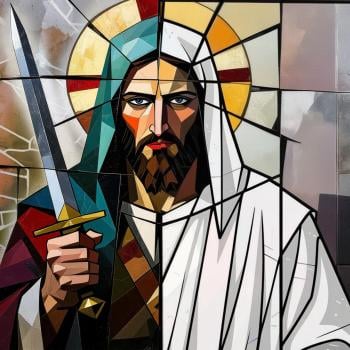
Within this symbolic economy, Judas is not singled out as an aberration imposed from without; rather, Judas represents the necessary shadow produced by proximity itself. The one closest to the mystery is also the one most capable of its misuse (cf. Gospel of Thomas 13, 108). This logic is articulated most explicitly in the late Gnostic Gospel of Judas, which presents Judas as the disciple closest to the Gospel’s protagonist and recasts the betrayal not as treachery but as a darkly veiled act of fidelity—an action that appears as darkness precisely because it issues from the deepest intimacy (see Gospel of Judas 33–35, in Rodolphe Kasser, Marvin Meyer, and Gregor Wurst, The Gospel of Judas, National Geographic Society, 2006). In this framing, “Dark Judah” is not the negation of discipleship but its most dangerous intensification. In contemporary analytical terms, this dynamic is commonly described through Carl Gustav Jung’s concept of the Shadow, understood as the repressed or unintegrated dimension of the self that gains particular force through denial rather than distance (C. G. Jung, Aion: Researches into the Phenomenology of the Self, Collected Works, vol. 9, pt. 2). The same logic governs the rabbinic treatment of figures such as Balaam and the idolatrous Micah, where access itself—not ignorance—is the condition of danger (b. Berakhot 7a; b. Sanhedrin 101a; b. Sanhedrin 105a).
Isāwiyah interpretation places special emphasis on the convergence of names: Yehudah (Judah) signifies praise or confession (hodah); Judas is its Greek rendering; Didymus and Thomas both mean “twin”; and even the designation Ish-Sicarii (“man of the dagger”) is read as a signal of embodied revolutionary milieu rather than as a mere literary flourish (cf. Luke 6:15 in contrast with non-canonical traditions). In this synthesis, Judah the Betrayer is not a villain external to faith but the internal twin of faith itself. Just as Micah can answer the name either by installing divinity or by walking humbly with God (Mikhah/Micah 6:8), Judah/Judas can embody either confession or betrayal depending on which impulse is cultivated.
The Ur-Gospel as Meta-Mashal
Within Tariqat ʿIsāwiyah, certain Thomasine materials are read not as isolated historical anecdotes but as remnants of a broader Ur-Gospel—an explicitly didactic composition structured as a meta-mashal rather than a biographical narrative. The text as a whole is treated as a parabolic architecture composed of nested parables, aimed at exposing the internal bifurcation of the religious subject rather than recounting discrete historical episodes. In this sense, the Ur-Gospel is understood as an Adamic parable: humanity as primordial insān, internally doubled, capable of enlightenment or domination. In comparative idiom, this is sometimes glossed as “the awakened human within,” occasionally rendered as “the Buddha within,” not as doctrinal borrowing but as heuristic shorthand for awakened Adam—recognition of divine likeness without attempting to weaponize it.
At the same time, and decisively for the point at issue, Isāwiyah teaching maintains that a particular mashal within this Thomasine/Ur-Gospel stratum—one involving killing—does not function as a vague symbol for “coercion” in general. It is a mashal, but it is a mashal whose detail is said to presuppose intimate knowledge of martial training and the realities of actual killing. The Isāwiyah argument is that such concreteness is not incidental: it lends credence to the claim that the authorial voice corresponds to Yehudah ha-Galili (Judas the Galilean), precisely because the mashal’s realism coheres with a revolutionary milieu in which disciplined violence was not an abstraction but a lived possibility. The mashal therefore functions, within Isāwiyah doctrine, as a kind of internal signature: not a confession of literal intent within the text’s surface narrative, but a marker of the author’s experiential horizon.
In this reading, the Ur-Gospel’s meta-mashal structure and the embodied specificity of the martial mashal are not in conflict. They are complementary. The parable diagnoses a perennial temptation: proximity to truth converting into mastery. Yet the parable is authored from within a world where mastery and killing were not theoretical. That conjunction is precisely what Isāwiyah doctrine claims: the “twin” theme is not the fantasy of a sheltered moralist, but the self-diagnosis of a revolutionary intellect aware that the line between devotion and domination is not merely conceptual; it is lived in bodies, training, and decisive action.
It is important to stress—precisely as previously insisted—that this Isāwiyah claim functions here only as background resonance and is not made the central pillar of the argument. Whether or not one accepts the historical identification of Yehudah ha-Galili with Thomasine authorship, the relevance here is structural rather than evidentiary in a positivist sense. The Ur-Gospel, as construed by Isāwiyah doctrine, belongs to the same family of diagnostic texts as Rabbinic ʿaggadah and Qurʾānic narrative: traditions that deploy narrative and mashal to expose the danger of instrumentalized holiness and to insist that revelation produces an internal fork.
When the Isāwiyah synthesis is added as a coherent background resonance to the rabbinic–Qurʾānic framework, the full arc becomes visible. Balaam, Micah of the Golden Calf and Shoftim/Judges, al-Sāmirī, and Judas/Thomas are not random villains scattered across traditions. They are names for the same recurring misuse of sacred proximity, expressed variously as curse, idol, technique, or betrayal (Bamidbar/Numbers 22–24; Shemot/Exodus 32; Shoftim/Judges 17–18; Qurʾān 20:85–97; Gospel of Thomas, prologue; 13). Micah the prophet provides the counter-answer: revelation that refuses control, knowledge that renounces mastery, and proximity that yields humility (Mikhah/Micah 6:8; 7:18; b. Makkot 24a). The question “Who is like God?” thus echoes across texts and centuries (Shemot/Exodus 15:11). Every tradition preserves both possible answers. The danger is not that the wrong answer exists, but that it is always closest to the right one.
In this light, the “Two Micahs” are not merely two figures, but two answers to the same name. One asks, “Who is like Yah?” and attempts to install something like Yah, treating the Name as operable and the sacred as a manipulable force (b. Sanhedrin 101a; b. Sanhedrin 103b; Shemot/Exodus 20:7). The other asks the same question and concludes that no one is—therefore justice, lovingkindness, and humility are the only safe responses (Mikhah/Micah 6:8). Everything else is idolatry with better tools.
“Do Not Take the Name in Vain”: The Prohibition as Anti-Sorcery, Not Mere Pronunciation Control
The prohibition “You shall not take the Name of YHVH your God in vain” (Shemot/Exodus 20:7; Devarim/Deuteronomy 5:11) has been persistently flattened in later popular reception into a rule of pronunciation, etiquette, or verbal reverence. While Rabbinic halakhah quite properly erects fences around the utterance of the Tetragrammaton—restricting its pronunciation to sacred contexts and eventually to silence altogether—those later restraints must not be mistaken for the core meaning of the commandment itself. The prohibition does not originate as a rule against casual speech. It originates as a categorical ban on weaponizing the Divine Name.
In its original narrative and theological context, lo tissa et shem YHVH Elohekha la-shavʾ does not mean “do not say the Name lightly,” but “do not bear, carry, or deploy the Name emptily, falsely, or destructively.” The verb nasaʾ does not primarily denote speech; it denotes bearing, lifting, carrying, or wielding. The sin addressed is not accidental utterance but intentional use—the attempt to harness divine power for purposes opposed to the Divine will (Shemot/Exodus 20:7; b. Sanhedrin 101a).
This reading is not imposed retroactively. It is demanded by the narrative placement of the commandment itself. The Decalogue is given in immediate proximity to the Golden Calf crisis (Shemot/Exodus 19–32). The prohibition against misusing the Name stands as a direct response to the precise danger that will erupt only days later: the transformation of revelation into cultic technology. The Torah is not legislating against bad manners; it is legislating against rebellion through sacred means.
Rabbinic tradition consistently reads the third commandment in this light. The Bavli explicitly links misuse of the Name to sorcery, idolatrous activation, and manipulative invocation rather than to casual speech (b. Sanhedrin 101a; b. Shabbat 104a). The concern is not phonetics but function. The Name is life-giving when aligned with divine purpose—used for healing, intercession, restoration, and preservation of life—but becomes lethal when turned toward domination, deception, or coercion.
This distinction is already embedded in the Torah’s own internal contrasts. Moses uses the Name to save life—to draw Micah out from death in Egypt according to ʿaggadic tradition (b. Sanhedrin 101a; Pirqe de-Rabbi Eliezer 45). The same Name, detached from ethical restraint, is then used by Micah to animate the Calf, installing false divinity at Sinai. The act is identical at the technical level and opposite at the moral level. This is precisely the danger the commandment anticipates. The Name is not neutral power. It magnifies intention.
Balaam represents the same violation from without. Scripture describes him as one who “knows the knowledge of the Most High” (Bamidbar/Numbers 24:16), which Rabbinic interpretation understands as technical mastery over the timing and invocation of divine wrath (b. Berakhot 7a). Balaam does not deny God. He attempts to use God. His sin is the paradigmatic example of nissiat ha-Shem la-shavʾ: bearing the Name emptily, that is, bearing it without covenantal alignment, for curse rather than blessing, for death rather than life (Bamidbar/Numbers 22:6; b. Sanhedrin 105b).
Seen in this light, the Golden Calf, Balaam’s curses, and the third commandment form a single conceptual unit. The prohibition against “taking the Name in vain” is the Torah’s firewall against sacred sorcery—against the attempt to turn revelation into leverage. It is the negative formulation of a positive principle articulated elsewhere: “You shall choose life” (Devarim/Deuteronomy 30:19). The Name exists to sustain life, not to enthrone power.
Later halakhic restrictions on pronunciation, while fully legitimate and necessary, function as protective fences rather than as the core offense itself. By limiting utterance, the Rabbis reduce the risk of functional misuse. But they never confuse the fence with the field. Silence is a safeguard; it is not the sin’s definition. The sin is instrumentalization—the attempt to make the Holy Name serve ends that negate its own ethical content.
This is why Rabbinic tradition can simultaneously affirm that Moses, Elijah, and the prophets use the Name for miracles, healing, and restoration, while condemning Balaam and Micah as among the gravest offenders in Israel’s memory. The difference is not access. It is orientation. One bears the Name as servant; the other bears it as owner.
The Qurʾān preserves the same logic in different idiom. Al-Sāmirī does not deny God; he claims superior perception and technical insight (baṣurtu bimā lam yabṣurū bihi) and uses that perception to activate false presence (Qurʾān 20:88, 96). His punishment—radical separation and deferred judgment—mirrors the Torah’s concern: misuse of sacred power fractures communal life and cannot be allowed to circulate unchecked (Qurʾān 20:97).
When read correctly, then, the third commandment is neither trivial nor merely verbal. It is the Torah’s earliest and most radical anti-magic law. It prohibits the conversion of holiness into technology, covenant into control, and proximity into domination. It draws a bright line between using the Name to give life and using the Name to seize power.
This is why the prohibition is absolute, not contextual. One may speak the Name rarely or never and still violate it. One may refrain from utterance entirely and yet commit its essence. The commandment does not ask whether the Name is spoken. It asks what is being done with it.
In this sense, “Do not take the Name in vain” is not ancillary to the Golden Calf narrative. It is its theological preemption. The Torah names the danger before it erupts, because it knows that the gravest rebellions will not come from those who reject God, but from those who know Him well enough to try to make Him work.
Lo Tissa et Shem YHVH la-Shavʾ: The Prohibition Reconsidered
The third commandment—lo tissa et shem YHVH Elohekha la-shavʾ—has been radically flattened in later popular religious consciousness. It is routinely reduced to a speech-ethic: do not pronounce the Name casually, falsely, or irreverently. While such restraint is indeed righteous and functions as a protective fence around the Torah, it is not the core meaning of the prohibition, nor could it have been intelligible as such in its original Sinai context.
The commandment does not prohibit utterance. It prohibits bearing (nasaʾ) the Name la-shavʾ—for emptiness, falsehood, vanity, or destructive ends (Shemot/Exodus 20:7). The concern is juridical, cultic, and moral, not phonetic.
To “bear” the Name is to act under divine authority, to invoke God’s power, legitimacy, or presence in the world. This is why the commandment concludes with judicial language: “for YHVH will not acquit the one who bears His Name la-shavʾ.” The offense is not impiety of speech but misrepresentation of God through action.
The historical context makes this unavoidable. The commandment is delivered immediately prior to the Golden Calf rebellion and immediately following the public revelation of the Divine Name at Sinai. The danger being legislated against is not hypothetical. It is imminent.
The Torah is preemptively outlawing religious sorcery: the attempt to mobilize divine power for purposes divorced from God’s ethical will.
Bearing the Name as Power: Why Revelation Increases Risk
Sinai introduces a condition unprecedented in biblical history: the Divine Name becomes publicly known, covenantally operative, and ritually efficacious. Revelation does not merely command obedience; it enables action.
Rabbinic literature repeatedly insists that increased proximity to God does not sanctify automatically—it magnifies moral danger. The closer one stands to the sacred, the more catastrophic misuse becomes (b. Sanhedrin 90a; 101a; b. Shabbat 104a). This is why insiders are treated more harshly than idolaters.
This principle governs every figure in the arc under discussion.
Balaam knows the Name, and just the same and in the same generation and same place Micah of the Calf knows the Name. Had these been two different people in the same time and place with the same agenda and same outcome of misleading the Children of Israel, it would only be logical that they be mentioned as in cahoots or as rival cult-leaders in conflict with one another. That this never happens speaks to the fact that they are one and the same.
Similarly, the Qurʾānic Sāmirī knows the same metaphysical technique of activation in the story. None of these deny the Existence of Ha-Shem. All attempt to operate the Name thereof. This is thus precisely what lo tissa et shem YHVH la-shavʾ forbids.
Balaam Literally: The Master Manipulator of the People
Balaam represents the external form of the sin. Rabbinic tradition is unambiguous: his prophetic power is genuine (b. Sanhedrin 105a). The Talmud’s claim that Moses and Balaam are equal in prophetic capacity is deliberately shocking, and its purpose is diagnostic, not laudatory.
Balaam’s defining trait is not disbelief but technical mastery. He “knows the knowledge of the Most High,” which the Rabbis interpret as knowledge of the Divine Name and the precise instant of divine wrath (b. Berakhot 7a). Prophecy becomes a timed invocation.
This is sorcery masquerading as prophecy.
Balaam does not submit to God’s will. He attempts to manipulate it—by curses, timing, and ritual speech (Bamidbar/Numbers 22–24). His intent is explicit in Midrash: if he cannot curse Israel directly, he will provoke their God into cursing them Himself.
This is the clearest possible violation of the third commandment. Balaam bears the Name not to heal, bless, or restore, but to destroy. The Name becomes an instrument of violence.
Micah of the Golden Calf: Weaponizing the Name Internally
Micah represents the internal form of the same sin. Rabbinic ʿaggadah identifies Micah as the technical instigator of the Golden Calf (b. Sanhedrin 101a; 103b). Aaron fashions the object under duress; Micah activates it through misuse of the Name.
The decisive sin is not sculpture. It is installation.
Ancient Near Eastern cultic logic distinguishes sharply between crafting an image and ensouling it. An image becomes divine not by form but by ritual activation. Rabbinic tradition insists that the Calf’s movement or sound is real efficacy produced by illicit use of the Divine Name.
This is not Egyptian animal worship. It is Mesopotamian image-theology fused with revealed power.
Micah bears the Name la-shavʾ—not emptily, but abusively. He uses the Name to make God functionally present where God does not will to dwell.
That is sorcery.
Seen in this light, the third commandment is not abstract law but narrative anticipation. The Torah warns Israel against precisely what Micah and Balaam enact: the conversion of divine access into technique.
This also explains why later Jewish tradition erects fences around pronunciation. Silence is not the law’s goal; ethical restraint is. Speech taboos are prophylactic. The real crime is bearing God’s authority for wicked ends.
This is why Moses’ use of the Name to save life is praised, while Micah’s use of the Name to animate the Calf is condemned—despite formal similarity. The Torah judges telos, not mechanics.
Healing aligns with God’s will, control does not. Life sanctifies the Holy Name, while power for its own sake profanes it.
The Qurʾānic Sāmirī
The Qurʾān preserves the same diagnosis with surgical clarity. Moses’ anger at Aaron remains intact (Qurʾān 20:92–94), preserving leadership accountability. But the Qurʾān isolates the technical agent: al-Sāmirī.
Al-Sāmirī “perceives what others do not,” takes a “trace of the messenger,” casts it into the Calf, and produces sound (Qurʾān 20:88, 96). This is cultic technology, not ignorance.
Crucially, al-Sāmirī is punished not by death but by isolation—lā misās, “no contact.” He sought to collapse the distance between God and human control. His punishment restores distance.
The Qurʾān thus affirms the same principle as Torah and Talmud: the danger is not idolatry per se, but misused proximity.
The Name Reclaimed: Micah the Prophet
Without a counterweight, this synthesis would be theologically fatal. That counterweight is Micah the prophet.
The name Micah—Mi khamocha?—becomes the fulcrum of the entire tradition. One Micah answers the question by attempting to replicate divine presence. The other answers it by denying comparability altogether.
Micah the prophet refuses technique. His reduction of Torah to justice, lovingkindness, and humility (b. Makkot 24a) is not moral minimalism; it is anti-instrumental theology. These virtues cannot be weaponized.
His climactic declaration—“Who is a God like You, forgiving iniquity” (Mikhah/Micah 7:18)—directly repudiates sorcery. God’s uniqueness lies not in controllable power but in mercy. Mercy cannot be coerced, timed, or activated.
This is why Micah’s verse becomes liturgical. It is the final word of repentance. It answers Balaam, Micah of the Calf, and al-Sāmirī in one stroke.
Choosing Life: The Positive Use of the Name
The Torah does not merely prohibit misuse of the Divine Name; it commands choice. The covenantal demand is framed explicitly in existential terms: “I have set before you life and death… therefore choose life” (Devarim/Deuteronomy 30:19). The bearing of the Name is thus never neutral. It is oriented toward an end, and that end is life.
Within the covenantal grammar of Torah, the Divine Name may be borne for healing, for liberation, for restoration, for intercession, and for the preservation of life. These are not ancillary permissions but the very purposes for which proximity to the Divine is granted. Conversely, the Name may not be borne for domination, coercion, curse, manipulation, or self-exaltation. To do so is not merely error but rebellion. This distinction constitutes the moral axis of revelation itself.
When the relevant traditions are read together, the structure that emerges is exact and internally coherent. The Third Commandment prohibits the sorcerous bearing of the Name—its conversion into an instrument detached from ethical submission. Balaam externalizes this misuse by attempting to deploy the Name as a curse against Israel, transforming prophetic knowledge into coercive technique. Micah of the Golden Calf internalizes the same misuse by installing divinity through illicit activation, collapsing reverence into manufacture. Al-Sāmirī names the pathology explicitly as technical manipulation of sacred residue, efficacy without authorization. Against all three stands Micah the prophet, who resolves the crisis not through counter-technique but through renunciation of technique altogether, redirecting proximity to God toward justice, lovingkindness, and humility. To choose life is therefore to restore the Name to its proper end.
The danger, then, is not that the Name is powerful. It is precisely that it is power-full—filled with power. To speak a Name is implicitly to claim knowledge of its meaning. Pronouncing the Name without knowledge of its meaning is itself a form of vain bearing. Uttering the Holy Name with full intention (kavvanah), with knowledge (daʿat), entails awareness of why a verbal form is used, why particular vowels are intoned as they are, and how intentionality governs efficacy. These are not superstitions but keys. Without them, the Name remains locked.
Yet locked it must remain for the masses, not because the sound itself is dangerous, but because the true danger lies in forgetting—or disregarding—why the Name was given and how it must be carried. The prohibition is not phonetic; it is ethical. The Name is not protected by silence alone but by purpose.
In this light, the distinction between different bearers of the Name becomes instructive rather than genealogical. One ancestral figure is remembered as a Baʿal Shem Tov, a master of the Good Name, who bears the Name in order to give life. The Micah of the Sinaitic rebellion—who reappears in the cultic narratives of Shoftim/Judges through gilgul—is, by contrast, a Baʿal ʿAm, a master of manipulating the masses. The distinction is absolute. One bears the Name as service; the other wields it as control.
That same contrast reappears generations later in the figure of Rabbi Naḥman of Breslov, a great-grandson of the Besht and likewise a Baʿal Shem Tov. He lived and died surrounded by only a small circle of true talmidim and explicitly refused to use the Name to gather crowds, acquire wealth, or secure authority. The power entrusted to him was not converted into influence. It was used for its intended purpose alone: to nourish seeds of life planted in a darkened and spiritually malnourished world.
The line that separates holiness from sorcery is therefore not visibility, charisma, or even efficacy. It is orientation. The Name may either be borne as a burden in service of life, or wielded as a weapon in service of the self. The Torah does not allow a third option.
Bearing the Name as Burden, Not Privilege
The arc traced from Sinai forward converges on a single, austere conclusion: to bear the Divine Name is not to possess power but to accept restraint. Revelation does not elevate the human agent into mastery; it subjects the agent to judgment. The Name is not a tool conferred for effectiveness but a burden imposed for accountability. Torah, rabbinic ʿaggadah, Qurʾānic narrative, and later esoteric syntheses all converge on this point with remarkable consistency, even while diverging sharply on other matters.
The third commandment, lo tissa et shem YHVH la-shavʾ, legislates against the conversion of proximity into instrumentality. To “bear” the Name is to act under divine authority, to present one’s deeds as carrying God’s imprimatur. To bear that Name la-shavʾ is therefore to enlist God in emptiness, falsehood, or harm—to make the Holy serve purposes alien to holiness. Its severity anticipates the catastrophe that follows immediately in the narrative: the Golden Calf, the first attempt in Israel’s memory to domesticate God through technique.
Balaam and Micah reveal the two principal vectors of this sin. Balaam externalizes it, standing outside the covenant yet seeking to coerce divine will through calibrated curse. Micah internalizes it, born within the people and entrusted—directly or indirectly—with sacred proximity, yet converting revelation into installation. In both cases, the Name is borne la-shavʾ: not vainly in speech, but violently in deed.
The Qurʾānic figure of al-Sāmirī sharpens the diagnosis by naming the role itself. He is not defined by lineage but by function: one who “perceives what others do not,” manipulates a trace of revelation, and produces efficacy without authorization. His punishment—permanent distance—matches the crime. One who collapses the distance between divine will and human control must himself be removed from contact. The Qurʾān thus renders explicit what rabbinic tradition implies: the gravest religious danger is not error but technique severed from obedience.
Against this convergence stands Micah the prophet. The shared name is a deliberate provocation. The question embedded in Mi khamocha—“Who is like You?”—demands an answer. One answer attempts likeness through power; the other denies likeness altogether and thereby discovers ethics. Micah’s condensation of Torah into justice, lovingkindness, and humility is not reduction but inoculation. These virtues resist weaponization. They place the human agent under obligation rather than above consequence.
His climactic confession—“Who is a God like You, forgiving iniquity and passing over transgression”—resolves the crisis at its root. Divine uniqueness is located not in manipulable force but in mercy freely given. Mercy cannot be timed, extracted, or installed. It nullifies sorcery by rendering technique irrelevant. The Name is sanctified not when it is hidden, but when it is borne for life.
Micah, Mashiach and the Metaphor of Bethlehem as Critique of Uncritical Monarchial Authority
The distinction between the two Micahs—one who attempts to render the sacred operable and one who refuses likeness altogether—clarifies the central problem animating the prophetic critique. The issue is not kingship as such, nor Jerusalem as such, but the transformation of authority into something presumed to be beyond judgment. Once power is sacralized, inherited, or institutionally secured, it becomes tempting to treat it as self-legitimating. Micah the prophet’s intervention is directed precisely against this error. He dismantles technique, installation, and inherited immunity, insisting that proximity to the divine intensifies accountability rather than suspending it.
It is at this juncture that Micah’s reference to Bethlehem must be read. The move does not introduce a new messianic datum, nor does it shift the argument from ethics to geography. Within the book of Micah, Bethlehem functions as a symbolic reminder rather than a predictive coordinate. The prophet does not oppose Jerusalem as a sacred or cultic center, nor does he reject Davidic kingship. Instead, he invokes Bethlehem to recall David prior to enthronement, before kingship hardened into an insulated institution. The contrast is temporal and ethical, not spatial: David before monarchy versus Davidic authority once institutionalized.
Read in this light, Bethlehem operates as a conceptual check on uncritical monarchial authority. It destabilizes the assumption that Davidic lineage or royal office confers righteousness automatically. David’s legitimacy, as Micah implicitly insists, was not guaranteed by origin, anointing, or location, but was continually tested by covenantal fidelity. Bethlehem therefore signifies accountability prior to insulation, authority before exemption, leadership before sacralized power. It is not a rival capital to Jerusalem, nor a fixed prophecy of messianic birth, but a reminder that kingship must be continually re-earned.
This reading preserves Micah’s broader theology of Zion. Jerusalem is not rejected; it is judged. When it becomes unjust, it is condemned; when justice is restored, it is envisioned as restored as well. The prophet does not call for decentralization for its own sake, nor does he imagine redemption apart from the center. Rather, he refuses to allow any center—political, cultic, or messianic—to escape ethical evaluation. Kingship remains legitimate only insofar as it remains answerable to Torah.
The implications for Davidic messianism follow directly. By framing Bethlehem as a symbol of accountability rather than as a literal locus of birth, Micah forecloses messianic claims grounded in pedigree, geography, or inevitability. Mashiach ben David cannot be validated by lineage alone, institutional endorsement, or inherited authority. Davidic legitimacy, in Micah’s logic, is conditional and ongoing, measured by justice, lovingkindness, and humility rather than by credentials or power.
Seen within the wider architecture of the book, this argument coheres with the contrast between the two Micahs themselves. Whether the misuse of sacred proximity appears as cultic installation, technical manipulation, prophetic coercion, or unexamined monarchy, the underlying error is the same: the attempt to convert covenant into control. Against this stands Micah the prophet’s consistent refusal of leverage. Authority exists only for life, and power is legitimate only when it remains under judgment. Everything else—however venerable its lineage or persuasive its rhetoric—amounts to idolatry refined rather than authority redeemed.
Final Synthesis
When the Isāwiyah synthesis is read as a background resonance alongside the rabbinic–Qurʾānic framework, the full arc becomes visible. Balaam, Micah of the Golden Calf and Shoftim/Judges, al-Sāmirī, and Judas/Thomas are not random villains scattered across traditions. They are recurring names for the same misuse of sacred proximity, expressed variously as curse, idol, technique, or betrayal. Micah the prophet provides the counter-answer: revelation that refuses control, knowledge that renounces mastery, and proximity that yields humility.
The “Two Micahs” are therefore not merely two figures but two answers to the same question. One asks, “Who is like God?” and attempts to install something like God, treating the Name as operable and the sacred as a manipulable force. The other asks the same question and concludes that no one is—therefore justice, lovingkindness, and humility are the only safe responses. Everything else is idolatry with better tools.
The verdict is not ambivalent. The Name is given for life: for restoration, intercession, liberation, and mercy. When borne for these ends, it sanctifies. When borne for control, it profanes. The commandment does not forbid speech; it forbids the betrayal of purpose. Between Balaam and Micah the prophet, between installation and humility, the tradition leaves no neutral ground. The Name must either be carried as a yoke or wielded as a weapon. One path leads to life. The other, however sophisticated, leads to spiritual—and often physical and sociological—death.













 Ad-Free & Subscriber Log-In