

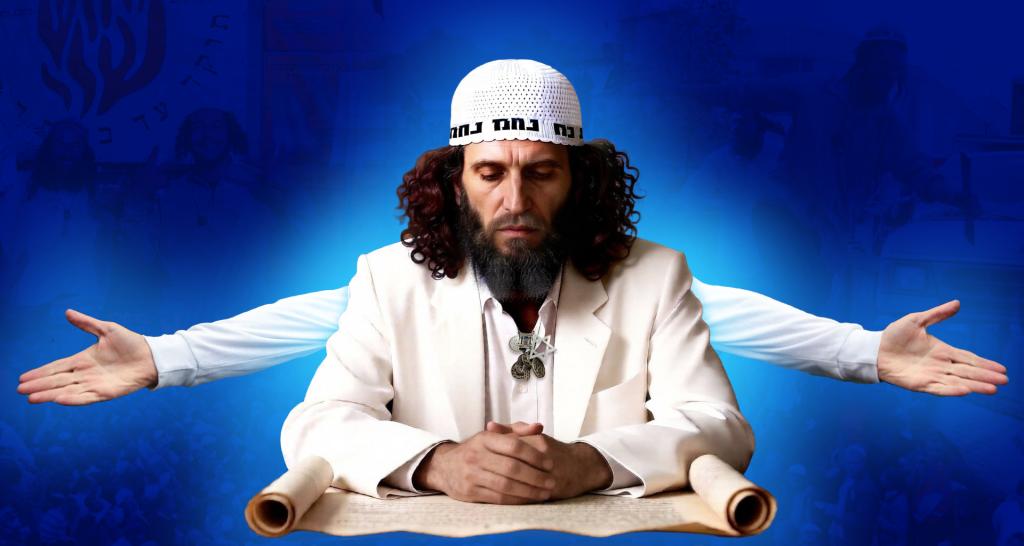
This article reassesses the early history of Breslov Chasidism or Chasidut by bringing social-psychological theory, Semitic proverb traditions, and Breslov textual criticism into a single analytic frame. It examines the phenomenon of what I term Persistent Minority Influence—drawn from social psychology—and the rabbinic doctrine of prophetic rejection as mutually reinforcing explanatory models for understanding the marginal beginnings of legitimate spiritual movements. Introducing the subject with the narrative examples of David Mitchell’s Cloud Atlas as a conceptual entrée into the narrative structure of minority-led transformation, the study integrates psychological theory, classical Jewish literature, Near Eastern Levantine proverbial material from the Second Temple Era and beyond, as well as primary Breslov Chasidic sources.
It develops “Persistent Minority Influence” as a lens for understanding how numerically small but coherent religious minorities can exert disproportionate long-range influence even when their founders remain marginal in their own lifetimes. The study reconstructs a Near Eastern proverb complex surrounding prophetic rejection and the mistrusted healer “at home,” moving from biblical and rabbinic sources through Syriac and Arabic material to the prophet/physician double-saying in the pre-Christian docetist Gospel of Thomas.
Against this backdrop, the article uses Chayyei Moharan, Yemey Moharnat, Shivchei ha-Ran, and early pinkasim to reconstruct Rabbi Nachman’s circle as a “micro-community” of roughly seven to ten recurring disciples, with only one constant attendant, Rabbi Noson of Nemirov.
A final section analyzes exoteric and esoteric Breslov teachings on posthumous presence—“my seed will not be cut off”—and the Megillat Setarim expectation that Rabbi Nachman will return and appear in yet another messianic manifestation from his own seed, arguing that these doctrines provided a theological framework for the persistence of a small, embattled Breslov minority.
The article argues that the long-term flourishing of Breslov Hasidism emerged precisely through the mechanisms described by both models, and that the marginality of Rabbi Nachman during his lifetime is best understood as a paradigmatic instance of this broader pattern.
Persistent Minority Influence and the Micro-Community of Rabbi Nachman
Persistent Minority Influence, first described and named in my doctoral dissertation Persistence of Jewish-Muslim Reconciliatory Activism in the Face of Threats and “Terrorism” (Real and Perceived) From All Sides (2020), is a conceptual lens through which the histories of many religious founders become more intelligible. Spiritual movements with world-altering influence typically begin not with mass followings but with small, fragile, and often socially marginal circles—groups whose insignificance in their lifetimes belies the cultural transformations they ultimately seed.
At the same time, classical rabbinic literature preserves a rich and remarkably consistent tradition concerning the rejection of prophetic authority in its place of origin. Prophets are least recognized “at home”; healers are least trusted by those who know them best. These two frameworks—one modern, one ancient—offer mutually illuminating perspectives on the life and reception of Rabbi Nachman of Breslov (1772–1810), whose teachings now shape global currents of Jewish spirituality but who lived and died surrounded by only the smallest of circles.
This article integrates four bodies of material. First, as noted, it uses the illustrative example of David Mitchell’s Cloud Atlas and the social-psychological theory of minority influence to introduce the notion of Persistent Minority Influence.
Second, it reconstructs a Semitic proverb complex concerning prophetic rejection and the mistrusted healer.
Third, it employs primary Breslov sources to reconstruct the actual size and structure of Rabbi Nachman’s circle as a “micro-community” of roughly seven to ten recurring disciples, with only one constant attendant.
Finally, it analyzes exoteric and esoteric Breslov traditions—particularly those concerning posthumous presence, “my seed will not be cut off,” and the Megillat Setarim expectation that Rabbi Nachman will return and appear in Mashiach from his own seed—to argue that the long-term flourishing of Breslov Hasidism is best understood as a paradigmatic case of Persistent Minority Influence operating within the rabbinic grammar of prophetic rejection.
Persistent Minority Influence and the Marginal Beginnings of Legitimate Spiritual Paths
David Mitchell’s Cloud Atlas (2004), and its 2012 film adaptation, employ interwoven narratives not merely as stylistic flourish but as a meditation on how fragile acts of conscience ripple across eras.¹ Nowhere is this clearer than in the Neo–Seoul storyline, where Sonmi-451—a manufactured laborer with no social status, no institutional power, and scarcely any allies—emerges briefly as a moral dissident. Her words reach almost no one; she dies isolated, silenced, and ostensibly defeated. Yet in the distant future her testimony becomes sacred scripture, and she herself is reimagined as a messianic, Quan Yin– or Manachi Gnostic Miriam-like archetype whose moral vision underpins an entire civilization. The narrative’s force lies precisely in this inversion: the woman whom history ignored becomes, retrospectively, the axis around which later cultures orient their ideals.
This fictional arc reflects a pattern seen again and again in the histories of enduring spiritual, ethical, and reconciliatory movements. Founders rarely command influence in their lifetimes. They are not accompanied by throngs but by small, ragged circles—socially marginal, sometimes ostracized, often powerless. Their immediate impact is negligible; their reformative ambitions appear to fail. Yet it is precisely such movements that seed the most durable transformations.
“Persistent Minority Influence” names this phenomenon: the capacity of a small, principled minority to exert disproportionate and long-range cultural influence not through numbers, coercion, or spectacle, but through unwavering consistency, moral clarity, internal cohesion, and a willingness to endure intimidation, suppression, or isolation without abandoning the mission.
In one formulation, it is “the only non-violent mechanism by which major cultural transformation has ever occurred when institutional power was aligned against justice,” and its slow, subterranean work “reshapes the moral imagination of the surrounding society” through endurance rather than immediate success.²
The botanical metaphor is apt. Nothing in nature that erupts overnight is a tree. Fast growth is the signature of weeds—ego-driven cults of personality that boast sudden expansion yet exhaust their soil and collapse as quickly as they rise. Their fruits feed nothing.
By contrast, real traditions resemble old-growth forests: germinating quietly in obscurity, tended by the faithful few, developing deep roots long before recognition arrives. The legacy of a Sonmi-451, or of any founder whose vision survives them, is not measured by the scale of their audience at the moment of their death but by the fidelity of a minority who refuse to let the seed die.
Rabbi Nachman’s Rejection, His Legacy and the Identity He Returns to Fulfill
In social-psychological theory, the concept of minority influence refers to the ability of a small group or even a single individual—a “minority” within a larger social group—to exert a lasting influence on the beliefs, attitudes, or behaviors of the larger “majority.” Classic experimental work by Serge Moscovici, particularly the 1969 “blue–green slides” experiment, demonstrated that a consistently dissenting minority can shift majority responses, especially by triggering deeper cognitive processing rather than mere compliance.³
Subsequent research confirmed that minority positions, provided they maintain consistency, commitment, and credibility and resist normative social pressure, may gradually transform majority opinion over time, not by force or numbers, but by persistent challenge to the status quo.⁴
Persistent Minority Influence builds on that foundation but adds a temporal and existential dimension. It refers to cases in which a small minority, often marginalized, persecuted, or virtually powerless during the lifetime of their leader, nonetheless sustains its faith, teachings, and identity long after that leader’s death. Over decades or centuries, through what may be termed a “faith-seed effect,” the memory, tradition, and radical vision of the group gradually permeate wider society, yielding a major transformation long after the initial movement seemed doomed or insignificant.⁵
This pattern recurs in the history of genuine spiritual, philosophical, or social reforms. The founder rarely commands a large following; the earliest adherents are few, sometimes scattered or outcast, and often appear to fail. They may even disappear from visibility entirely—yet somewhere in their continuity, in the steadfast fidelity of a tiny circle or lineage, the movement survives, takes root, and eventually flourishes.
In short, Persistent Minority Influence can be rendered schematically as: small beginnings + long duration + inner fidelity + eventual broad impact. It frames spiritual or social change not in terms of sudden mass upheaval, but as a slow, subterranean process—a quiet persistence that outlives immediate failures and marginalization and eventually alters the cultural soil itself.
When one considers the arc of many religious founders—persecuted, ignored, condemned in their lifetimes, yet later regarded as the sources of traditions that shape entire civilizations—Persistent Minority Influence captures with precision how a minority of believers outlived their moment and reshaped the future.
The Semitic Proverb Complex of Prophetic Rejection and the Mistrusted Healer
The biblical prototype of prophetic rejection appears in Jeremiah, who laments the hostility of his own kin: gam achekha u-veit avikha bagdu vakh (גם אחיך ובית אביך בגדו בך), meaning “even your brothers and the house of your father have betrayed you.”⁶
Prophetic authority is opposed first by those closest, not by distant outsiders. Rabbinic literature will later crystallize this logic in proverbial form. Avot de-Rabbi Natan A 34 states: ka-she’adam be-ʿiro ein devarav nishmaʿin (כשאדם בעירו אין דבריו נשמעין), that is: “as long as a person is in his hometown, his words are not heard.”⁷
Midrash Tehillim 31:4 sharpens the point, saying shekhenav u-qerovav einan makirin gadluto u-zerim mekhabbebin oto (שכניו וקרוביו אינם מכירין גדלותו וזרים מחבבין אותו), “his neighbors and relatives do not recognize his greatness, while strangers cherish him.”⁸
Medieval commentators, glossing discussions such as b. Moʿed Qaṭan 16b, distilled this tradition into the maxim of ein navi mequbbal bi-meqomo (אין נביא מקובל במקומו) “there is no prophet who is accepted in his own place.”⁹
Taken together, these texts provide what may be called the rabbinic grammar of prophetic rejection: prophets and sages are least heard, least honored, and least trusted among those to whom they are most familiar.
A parallel strand concerns the healer. Bereshit Rabbah 23:4 records the sharp rebuke: asya ase chigratekh (אסיא אסי חיגרתך) “physician, physician, heal your self” – that is, “heal your own limp.”¹⁰
The expert is challenged first at home; the physician’s competence is questioned by those who know him best. Syriac and Arabic proverb traditions preserve structurally similar forms. In Syriac one finds: aṣyā lā māse l-meʿṣe l-bayteh (ܐܣܝܐ ܠܐ ܡܨܐ ܠܡܥܣܐ ܠܒܝܬܗ), familiarly meaning, “the physician cannot treat his own household,”¹¹
As well, in Arabic, there is an identical maxim of al-ṭabīb lā yuʿāliju ahlahu (الطبيب لا يعالج أهله), that is: “the physician does not heal his own family.”¹²
The healer’s skill is least trusted where he is best known. The two strands—prophet rejected and healer mistrusted—are explicitly conjoined in the Gospel of Thomas (Saying 31), the chronologically earliest public Gospel account. Interestingly enough, this brief, 114 Saying collection of Taoist-like maxims is devoid of any human biography, narrative or claims of corporeality for the later Gospel literary protagonist, which in this text is simply a channeled Cosmic Adam Qadmon of sorts (Saying 24):
“A prophet is not accepted in his own town; and a physician does not heal those who know him.”¹³
ⲡⲉⲡⲣⲟⲫⲏⲧⲏⲥ ⲙⲛ̄ ⲧⲉϥⲙⲛⲧⲁⲡⲟⲧ ⲙ̄ⲡⲉϥⲟⲩⲁϩ ⲉⲣⲟϥ ⲁϥⲙⲉⲣⲉ ⲉⲣⲟϥ· ⲟⲩⲥⲱⲧⲙⲏ ⲇⲉ ⲙ̄ⲡⲉϥⲥⲱⲧⲙ ⲙ̄ⲡⲉⲧⲛⲁϣⲱⲡⲉ ⲛⲁϥ
Scholars recognize this as reflecting an older Semitic proverb pair, whose likely Jewish-Aramaic original aligns closely with rabbinic idiom of navi la meqabbal b-qarteh (נביא לא מתקבל בקרתיה) meaning: “a prophet is not accepted in his own town,” and asya la ase l-daʿei leh (אסיא לא אסי לדעאי ליה), that is: “a physician does not heal those who know him.”
In short, the complex was fully formed—long ago—in the cultural matrix from which Hasidism would eventually emerge. Within this Near Eastern framework, prophetic rejection and the mistrusted physician are two aspects of the same pattern: spiritual and therapeutic authority encounter their most intractable resistance in precisely those settings where intimacy and familiarity might be expected to foster trust. Recognition, in rabbinic imagination, arrives instead from strangers and later generations.
Rabbi Nachman and His “Micro-Community”
In the same way that Cloud Atlas dramatizes the logic of Persistent Minority Influence, the mashalim of Rabbi Nachman employ the narrative and symbolic resources of their milieu to address small, committed circles rather than mass audiences. The tales are long, allusive, and often deliberately enigmatic. They function more like koans than moral fables: destabilizing and provoking, not coddling. Their effective reception presupposes a circle capable of sustained interpretive engagement—a micro-community rather than a court.
Against this conceptual backdrop, the concrete historical size of Rabbi Nachman’s circle is highly instructive. How many disciples can be established, from primary sources alone, as having been physically around him on a regular basis? That is: leaving aside later legend and inflated chasidic numbers, how many followers can be demonstrated to have enjoyed sustained proximity to him?
The primary sources—R. Noson’s Yemey Moharnat, Chayyei Moharan, Shivchei ha-Ran, together with the early nineteenth-century Breslov pinkas—allow for a remarkably modest answer. On a strict reading, one can identify only about seven to—at the very most ever—ten disciples who were with him with any regularity, and of these, only three or four can be described as frequent companions.¹⁴
In practice, a single disciple stands out as truly constant: Rabbi Nathan (R. Noson) of Nemirov. Critical scholarship is unanimous that Noson is the one disciple who was with Rabbi Nachman on an almost daily basis from at least 1802 to 1810, functioning as his scribe, organizer, recorder of teachings, and witness to most of the significant events of his final decade.¹⁵ In terms of absolute continuity of presence, he is effectively the sole example.
Beyond this singular constancy, one can discern an inner circle of no more than three further figures who appear repeatedly in Rabbi Nachman’s daily orbit, rather than as episodic visitors. Based on Chayyei Moharan, Shivchei ha-Ran, and the pinkas materials, these were Rabbi Naftali of Nemirov, a close friend of Rabbi Noson and a frequent presence in Breslov and Uman; Rabbi Shmuel Isaac of Dashev, one of Rabbi Nachman’s earliest and most devoted supporters, who appears often in narrative and teaching contexts; and R. Aharon of Breslov, the father of Rabbi Nachman’s son-in-law and a regular participant in key events, though by no means a constant companion.¹⁶ These three, together with Noson, form the core inner group.
After this, the sources attest to a small set of “frequent but not constant” disciples, numbering no more than four to six men. These figures appear regularly in teaching settings, on journeys, or at holiday gatherings, but cannot be shown to have shared the rabbi’s daily life. They include Rabbi Yudel (Yehudah) the shochet, Rabbi Yekutiel, Rabbi Shimon (often identified as “Rabbi Shimon the Litvak”), Rabbi Elezer the tailor, Rabbi Bunim, and Rabbi Ozer. Each of these appears multiple times in the primary sources, but never with the continuity one would expect of a disciple who lived in the master’s immediate proximity.¹⁷
When one compiles this data, the maximum reliable number of recurring disciples comes to roughly eight to ten; of these, only a small subset could be regarded as regularly present, and only Noson qualifies as virtually always at his side.
It is also true that Rabbi Nachman occasionally addressed large crowds, particularly on Rosh ha-Shanah and other major festivals, when hundreds are reported to have come from across Ukraine and Poland. Yet these gatherings consisted of pilgrims and hearers, not of disciples in the strict sense. They did not live with him, did not witness his day-to-day conduct, and left no evidence of being constant followers.
No primary source claims that these holiday assemblies constituted a standing circle of disciples. For this reason, serious historians insist on drawing a sharp distinction between the tiny group of regular, daily companions and the far larger number of occasional listeners.
Modern critical scholarship—represented by figures such as Arthur Green, Moshe Etkes, and Zvi Mark—converges on this point. These studies consistently portray Rabbi Nachman’s daily circle as extremely small and emphasize that his broader prestige grew primarily after his death.¹⁸
The popular image of a large chasidic “court,” surrounded in his lifetime by legions of followers, is thus best understood as anachronistic romanticization. Etkes pointedly describes the Breslov fellowship of Rabbi Nachman’s own years as a “micro-community,” rather than a full-fledged congregation.¹⁹
The evidence therefore supports a picture of a core circle of perhaps seven to ten men who were physically around Rabbi Nachman with any degree of regularity, anchored by a single constant disciple. Everything beyond this belongs to the realm of hagiographic expansion.
There is, again, no reliable evidence for a body of “hundreds of disciples” during his lifetime. Such claims are analogous to the long beard and normative modern chasidic dress often projected onto Rabbi Nachman in later artistic depictions: expressive of later ideals rather than of historical reality. By all serious accounts, he wore a relatively short beard and did not conform to the later stereotypical chasidic appearance.²⁰
Once again, the historical record places him firmly within the pattern of Persistent Minority Influence: a radical teacher whose living community was numerically small, socially marginal, and yet, through the fidelity of that micro-community, became the seed of a tradition that far outlived its seemingly modest beginnings.
Prophetic Rejection as the Rabbinic Grammar of Rabbi Nachman’s Marginality
Seen through the lens of classical Jewish sources, Rabbi Nachman’s micro-community does not simply illustrate Persistent Minority Influence in a general sociological sense; it concretizes a specifically rabbinic way of describing spiritual marginality. Rabbinic texts repeatedly insist that prophets, sages, and spiritual healers are least recognized where they are best known.
The later maxim ein navi mequbbal bi-meqomo—“there is no prophet who is accepted in his own place”—captures this succinctly, just as the earlier Talmudic and Second Temple formulations. A perhaps more precise form in Avot de-Rabbi Natan (A 34) reads: ka-she’adam be-ʿiro ein devarav nishmaʿin (כשאדם בעירו אין דבריו נשמעין), “as long as a person is in his hometown, his words are not heard.”
Midrash Tehillim 31:4 sharpens the paradox by contrasting local indifference with the discernment of outsiders: shekhenav u-qerovav einan makirin gadluto u-zerim mekhabbebin oto (שכניו וקרוביו אינם מכירין גדלותו וזרים מחבבין אותו), “his neighbors and relatives do not recognize his greatness, while strangers cherish him.”
These sayings create a rabbinic grammar of prophetic rejection. Spiritual authority, in this idiom, is almost structurally destined to be denied “at home.” Recognition is displaced in space—“strangers cherish him”—and in time (only later generations perceive what contemporaries ignored).
Placed alongside this grammar, the historical data about Rabbi Nachman’s circle cease to be mere biographical details and become a paradigmatic instance of the older pattern. In rabbinic terms, Rabbi Nachman appears as a navi she-eino mequbbal bi-meqomo, “a prophet who is not accepted in his own place.”
The testimonies preserved in Chayyei Moharan, Yemey Moharnat, and Shivchei ha-Ran repeatedly attest to the suspicion, resistance, and even hostility he faced among neighbors, rival chasidic leaders, and members of his broader communal milieu.²¹ His charisma was not broadly received; his innovations were not embraced; and the psychological, theological, and devotional depth of his teachings remained largely inaudible to contemporaries.
It is striking that recognition of Rabbi Nachman’s stature and the expansion of his influence largely occurred later and elsewhere—through readers who encountered him in writing, through communities geographically removed from his original setting, and through subsequent generations for whom the Rebbe was a textual and spiritual presence rather than a personal acquaintance. His life thus concretizes the rabbinic pattern of prophetic rejection and delayed recognition.
Esoteric Return, “Seed” Theology, and the Mashiach Ben David from His Line
The historical micro-community and the proverb tradition together describe Rabbi Nachman’s marginal reception. A full account must also attend to the esoteric Breslov worldview, which provided his followers with a theological explanation for both his rejection and their own persistence.
The exoteric Breslov corpus contains several statements by Rabbi Nachman that, when read together and in light of his explicit teachings on gilgul or reincarnation, form the basis of a robust doctrine of his continued presence and eventual return through his seed. Yet no single statement formulates this doctrine in systematic terms.
In Chayyei Moharan, during his final illness, the Rebbe declares to his disciples: Afilu kshe-eʾelekh min ha-ʿolam, ani lo eʿezov etkhem (אפילו כשאלך מן העולם, אני לא אעזוב אתכם) “Even when I leave this world, I will not abandon you.”²²
The statement is a promise of continuing, active presence rather than a mere metaphor for influence. Later, in Chayyei Moharan §303, he proclaims: Zarʿi lo yikaret (זרעי לא יכרת) “My seed will not be cut off.”²³
On one level this may refer simply to biological descendants. Yet in early Breslov circles, as reflected in Rabbi Noson’s writings, zarʿi was consistently heard as a spiritual category, evoking the enduring soul-line through which the tzaddiq’s influence, and very being, re-enter history.
These statements are embedded in an articulated doctrine of gilgul reincarnation, and ibbur soul-attachment. In Likkutei Moharan I:14, Rabbi Nachman teaches: ʿIqqar ha-gilgul hu le-tiqqun ha-neshamah (עיקר הגלגול הוא לתיקון הנשמה) “The essence of gilgul reincarnation is the tiqqun rectification of the soul.”²⁴
Elsewhere he insists that the souls of tzaddiqim descend repeatedly, by way of gilgul or ibbur, whenever necessary to complete their tikkunim. In Sichot ha-Ran §209, he notes explicitly, Ha-tzaddiq chozer u-vaʾ al derekh gilgul o ibbur ke-fi ha-tikkun (הצדיק חוזר ובא על דרך גלגול או עיבור כפי התיקון), meaning “The tzaddiq returns by way of gilgul or ibbur according to the required tiqqun.”²⁵
Near the end of his life, in Chayyei Moharan §274, he remarks enigmatically: Ani echtov ʿod sefarim… aval acharai (אני אכתוב עוד ספרים… אבל אחריי), “I will write more books… but after me.”²⁶
Rabbi Noson and later Breslov tradition did not read this as a simple reference to disciples writing in his name. They took it to mean that the Rebbe himself, in some future manifestation or through a descendant serving as his spiritual vehicle, would author further works.
Taken together, these exoteric sources outline a pattern: the tzaddiq’s soul returns for further tiqqun; the Rebbe will not abandon his followers even after death; his “seed” will not be cut off; he will write more books “after” himself. Early Breslov interpretation naturally concluded that Rabbi Nachman expected to return through his own seed to complete his mission.
The esoteric Breslov corpus, centered on the Megillat Setarim (“Scroll of Secrets”) and its later commentaries, gives explicit doctrinal shape to this expectation. Rabbi Avraham Chazan’s Biur ha-Liqutim, drawing on censored passages of Chayyei Moharan and oral transmissions, describes the Rebbe’s death as a deliberate departure meant to enable an ascent, followed by a return in the future manifestation of Mashiach. He explains that Rabbi Nachman left completely in order to attain an even higher understanding afterwards (for tzaddiqim are greater in death than in life) until he returns and appears in the Mashiach Ben David for whom we wait.²⁷
This formulation is unambiguous: Rabbi Nachman’s death is not the end of his mission but the prelude to a higher attainment, culminating in his return and visible appearance in the awaited Mashiach Ben David. This figure is not merely foretold as being inspired by the Rebbe’s teachings but serves also as the locus of his re-manifested Neshamah.
Chazan further aligns this with the traditional view that Mosheh Rabbeinu will reappear as Mashiach Ben David, casting a future incarnation of Rabbi Nachman in analogous terms. He states that although Rabbi Nachman contained an element of the Davidi Messiah, his essence was from the side of the Yosefi Messiah.²⁸
In this reading, the Rebbe is a composite messianic soul, containing both the Yosefi or Ephraimite and Davidic strands, structurally similar to midrashic depictions of Moses as a proto-messianic figure. His death is interpreted as the sacrificial concealment of the Ephraimite component, and his return, in the Mashiach Ben David, as the merger of that component with the Davidi strand at the Acharit Ha-Yamim (אחרית הימים), the “End of the Age,” or “Latter Days.”
Zvi Mark’s analysis of the Megillat Setarim traditions shows that Breslov insiders regarded Rabbi Avraham Chazan as Shoʿmer ha-Megillah, “Keeper of the Scroll,” the one in each generation authorized to transmit the Rebbe’s esoteric teachings.²⁹ His testimony on the Rebbe’s return is therefore not a marginal speculation but a central element of the Breslov esoteric self-understanding.
Esoteric Breslov tradition does not detach this return from genealogical continuity. Rather, it explicitly links Rabbi Nachman’s reappearance to his own seed. The naming of his son Shlomo Ephraim is especially significant. According to Breslov oral teachings summarized by Mark, the double name encodes both messianic lines: “Shlomo” (Solomon) pointing to the Davidic dynasty and “Ephraim” to the Josephian messiah.³⁰ The child thus embodies, in nuce, the composite messianic identity attributed to his father.
In this framework, the Rebbe’s declaration “Zarʿi lo yikaret”—“My seed will not be cut off”—takes on eschatological weight. It becomes a statement that his soul-line will persist in history until it culminates in the Davidic Messiah in whom he himself will appear. This figure is imagined by Rabbi Nachman himself as both genetically descended from him and spiritually possessed by his returning soul.
Esoteric texts strengthen this association by identifying Rabbi Nachman with the Yosefi Messiah whose task is to precede and prepare the way for the Davidi liberator of the Jewish people. In one tradition, preserved in later Breslov oral transmissions and analyzed by Mark, R. Avraham Chazan explains that he himself was the Yosefi or Ephraimite Messiah, free of any blemish of sin, and that he prepared a place for the Davidi Messiah.³¹
On this reading, his death is the archetypal fate of Mashiach ben Yosef, and his return in the Mashiach Ben David is the confluence of his Yosefi identity with the Davidian mission in the figure for whom Breslavers await.
A further layer of this esoteric doctrine is the belief, circulating in the generation after Rabbi Nachman’s death, that he would reappear forty-five years later. Mark has shown that this expectation, based on numerological and visionary hints in the Megillat Setarim traditions, was widely held in certain Breslov circles around R. Avraham Chazan.³²
When the forty-five-year mark passed without any clear manifestation, the belief in the Rebbe’s return did not disappear. Instead, the failure of the human calculation was acknowledged, while the core conviction was maintained. Breslov writers typically interpreted the delay as further concealment or hester of the tzaddiq, not as falsification of his promise.
This resilience was supported by the authority structure built around the Scroll of Secrets. Only one individual per generation was believed to know the full content and correct interpretation of the esoteric teachings—the shoʿmer ha-megillah. In the nineteenth century, this role was ascribed to Rabbi Avraham Chazan.³³ His glosses on the Rebbe’s departure, Ascent, and Return therefore functioned as the decisive interpretive anchor for the community’s messianic expectations.
The combined effect is a doctrinal system in which the Rebbe’s early death and continued absence are refigured as phases in a longer process: temporary departure for the sake of higher attainment, extended concealment, and eventual return in the Mashiach Ben David from his own seed. The precise timetable may be opaque, but the direction is clear.
When this esoteric architecture is considered alongside the historical reality of Rabbi Nachman’s micro-community and the rabbinic grammar of prophetic rejection, its functional significance becomes evident. The doctrine of the Rebbe’s continued presence and eventual reappearance in the Mashiach Ben David served not only as a speculative teaching but as an existential resource for a small, embattled minority.
The Breslov fellowship faced multiple pressures: the early death of its founder; suspicion, mockery, or hostility from other chasidic courts and communal authorities; and its own tiny numbers. Under such conditions, persistence required more than admiration for a past teacher; it required a framework within which present marginality could be interpreted and future vindication anticipated.
The belief that Rabbi Nachman would not abandon his followers even after death, that his “seed” would never be cut off, and that he would return and appear in the Jewish Liberator for whom we wait provided precisely that framework. It relocated the meaning of present rejection into a longer temporal arc: the prophet is not accepted in his own place now, but his true stature will be revealed when he returns; the physician does not heal those who know him now, but his healing will be made manifest in the Liberator of the Jewish people from our enemies.
In this sense, the Breslov micro-community came to understand itself as the bridge between a rejected prophet and his future appearance. Its persistence is not merely loyalty to a historical figure; it is fidelity to a promised return. This intensifies the dynamics of Persistent Minority Influence: the movement’s survival depends on a small group’s willingness to endure social marginalization, institutional hostility, and temporal delay for the sake of a future presence that they believe to be identical with their founder.
As the Talmud teaches: Yeitei ve’ezkei de’eitiv be-tulla de-kufita dachamareiḥ (יֵיתֵי וְאֶזְכֵּי דְּאֵיתֵיב בְּטוּלָּא דְּכוּפִיתָא דַּחֲמָרֵיהּ), “Let Mashiach come [what may], and [no matter what hardships must be endured to stand therewith] I will count myself fortunate even just to sit in the shadow of his donkey’s shit basket.” (Sanhedrin 98b)
Conclusion
The convergence of three frameworks—Persistent Minority Influence, the Semitic proverb complex of prophetic rejection and mistrusted healers, and the Breslov doctrines of esoteric return and enduring seed—allows for a sharper understanding of both Rabbi Nachman’s life and the later flourishing of Breslov Chasidut.
First, the social-psychological model clarifies how numerically small but cohesive minorities can effect long-range cultural changes despite initial marginalization. Rabbi Nachman’s circle, historically a micro-community of seven to ten disciples with a single constant attendant, embodies this pattern. The movement’s durable influence rests on the fidelity of the few, not the enthusiasm of the many.
Second, the Semitic proverb complex supplies the cultural grammar of that marginality. The biblical and rabbinic materials, together with Syriac, Arabic, and early Christian parallels, attest a deeply rooted pattern: prophets are not accepted in their own place; healers are least trusted by those closest to them; greatness is recognized by strangers and later generations. Read in this light, the smallness of Rabbi Nachman circle are not anomalies but textbook instances of a Near Eastern pattern of spiritual reception.
Third, the esoteric Breslov doctrines of posthumous presence, “my seed will not be cut off,” and the Rebbe’s return in the Mashiach from his own seed provided the micro-community with a theological framework within which their marginality could be reinterpreted. Present rejection became a sign of prophetic status; smallness became the seed of a future revelation; temporal delay became a phase of necessary concealment.
Placed in dialogue with the classical rabbinic maxim ein navi mequbbal bi-meqomo and its earlier formulations in Avot de-Rabbi Natan and Midrash Tehillim, these dynamics cease to be biographical curiosities and emerge instead as the expected structure of prophetic lives. Spiritual innovation and communal recognition proceed on different temporal scales. Innovations occur in the present—often in obscurity, conflict, and rejection—while recognition unfolds across generations, mediated by the interpretive work of successors.
From this perspective, the later prominence of Breslov Chasidut and the ongoing power of its texts and practices do not contradict Rabbi Nachman’s marginality in life; they presuppose it. The global flourishing of Breslov, with its reach across continents and its deep imprint on contemporary Jewish spirituality, is precisely what the models of Persistent Minority Influence and prophetic rejection would lead one to expect: enduring revolutions arise not from mass movements but from the faithfulness of the few.
The transformation of the many rests upon the conviction, consistency, and resilience of a small, principled minority. In the case of Breslov, that minority was the tiny circle of disciples, anchored above all by Rabbi Noson of Nemirov, whose labor ensured that Rabbi Nachman’s voice would not fall silent. Through their persistence, the teachings of a prophet “not accepted in his own place” became a living presence far beyond his time and locale.
The micro-community of early Breslov Chasidut did not merely accompany Rabbi Nachman; it constituted the vehicle through which his teachings entered history. In this sense, the history of Breslov offers a paradigmatic instance of how prophetic rejection, minority fidelity, and esoteric expectation can work together to produce durable religious influence.
Rabbi Nachman’s Eschatological Self-Return and the Davidic Lineage of the Scroll of Secrets
The Scroll of Secrets (Megillat Setarim), preserved in the Breslov tradition and analyzed most fully by Zvi Mark, presents a messianic figure explicitly identified as the “son of David” while simultaneously describing that figure in terms that correspond precisely to Rabbi Nachman’s own spiritual self-portrait.³⁷
This correlation yields a central Breslov eschatological identity: the Messiah of the Scroll is both Davidic and the Neshamah of Rabbi Nachman himself. Because classical Jewish messianism requires Davidic descent, the Scroll implies that Rabbi Nachman’s eschatological manifestation must appear through one of his own descendants, who becomes the bodily vessel of his singular neshamah. This accords with his statements in Likkutei Moharan (1:70 and 1:198) that the neshamah and essence of the tzaddiq is one.³⁸
The structure preserves both genealogical continuity and the unity of spiritual identity: the returning figure is his descendant in body but himself in soul. Rabbi Nachman’s teaching that the tzaddiq’s recognition rests on his kol, the distinctive revelatory “voice” of his Torah (Likkutei Moharan I:30), further underscores that eschatological identification is not corporeal but spiritual.³⁹
His declaration that his “fire will burn until Mashiach comes,” preserved in Chayyei Moharan, has long been read in Breslov tradition as teleological—anticipating the culmination of his mission in the eschaton.⁴⁰ Consistent with the prophetic-rejection motif that governed his historical life, Breslov sources maintain that the returning figure will again be rejected, perhaps most of all by those who consider themselves his heirs.
Within this eschatological framework, Rabbi Nachman designated several teachings as reserved for his future manifestation, thereby establishing internal signs of recognition rather than external wonders or genealogical proofs. Foremost among these is the deliberately unfinished tale of the Seventh Beggar in Sippurey Ma‘asiyyot, which ends abruptly with the legless beggar beginning to recount the source of his power; Breslov oral tradition consistently affirms that only Rabbi Nachman’s returning neshamah can complete it.⁴¹
A parallel tradition concerns the enigmatic mashal of the Emperor and the King, which early Breslov commentators maintained could be fully interpreted only by Rabbi Nachman’s gilgul.⁴² These intentionally incomplete teachings serve as eschatological signatures: their elucidation belongs not to disciples or successors but to the same soul returning in its Davidic embodiment.
When integrated with the Scroll’s depiction of the Messiah, the doctrinal unity of Likkutei Moharan, Chayyei Moharan, and the narrative corpus yields a coherent Breslov messianology in which Rabbi Nachman returns as the Davidic Messiah through a descendant who is, in truth, the vessel of his own returning neshamah—recognizable by the re-emergence of his voice, the fulfillment of his sealed teachings, and the eschatological ignition of the “fire” he promised would burn until the final redemption.
The Lion and the Serpent
In commenting on Jacob’s blessing to Dan, Rashi explains that Jacob foresaw the rise of Samson—descended from the tribe of Dan—and therefore prayed that Samson would succeed in his mission. Samson, as recorded already in Bereshit Rabbah 98:14, was regarded as the potential Mashiach of his generation.⁴³
This association highlights a deeper dialectic between the tribes of Judah and Dan. Rabbinic literature describes Judah as the most illustrious of the tribes, while Dan occupied the lowest position in the camp. During the Wilderness period, Judah marched at the head of the Israelite formation whereas Dan traveled at the rear, collecting misplaced objects and thereby accruing significant merit.
Mystically, this task allegorizes the cosmic labor of restoring lost sparks of Creation. Although human perception ranked Yehudah above Dan, Ha-Shem viewed the tribes as complementary, declaring that representatives of both would participate in building the Holy sanctuary (Shemot Rabbah 40:4).⁴⁴ Accordingly, the construction of the Mishkan was entrusted jointly to Betzalel of Yehudah and Oholiav of Dan; similarly, the Jerusalem Temple built by Shelomo Ha-Melekh, King Solomon of Yehudah relied on assistance from King Hiram, whose mother herself belonged to the tribe of Dan (Midrash Tanchuma, Ki Tisa 13).⁴⁵
The same structural pairing persists in eschatological expectation: Mashiach is understood to emerge paternally from Yehudah but maternally at least in part from Dan, a principle supported by the convergence of chessed and gevurah embodied in their respective tribal names—Yehudah deriving from lehodot, gratitude and generosity, and Dan from din, judgment and severity. A further midrashic elaboration ties this dual lineage to the lion imagery associated with both tribes. In Jacob’s blessings Judah is described as a “lion cub,” while in Moses’ final testament Dan receives the identical epithet (Deuteronomy 33). Yalkut Shimoni (1, 160) thus concludes that Mashiach’s father will come from Judah and his mother from Dan.⁴⁶
The tradition is reinforced by an exegetical note in the enumeration of Jacob’s descendants: Dan’s only son, Chushim (חשים), appears as an anagram of “Mashiach” (משיח), and midrashic lore credits Chushim with striking down Esau—an act typologically associated with Mashiach’s future defeat of Edom.⁴⁷
Further symbolic complexity appears in Jacob’s earlier depiction of Dan as a “snake,” in contrast to Moses’ portrayal of him as a lion. Whereas the lion symbolizes the Davidic dynasty, the serpent functions in mystical literature as an emblem of Mashiach himself, with the gematria of “snake” (נחש) equaling that of “Mashiach” (משיח), both totaling 358.⁴⁸
Kabbalistic readings trace this imagery to Eden, where the primordial serpent instigated humanity’s fall; eschatologically, the “serpentine” Mashiach reverses this catastrophe. The Isaiac prophecy of the final eschatological conflict between the nachash bariach and the nachash ‘akalaton, the “straight serpent” and the “twisted serpent” (Isaiah 27:1), is interpreted accordingly, the former representing Mashiach and the latter the embodiment of evil.
Within this framework, the complex genealogies of Mashiach—linking Judah and Dan, David and multiple lines of descent, and even the figures of Samson and Chushim—are not contradictions but expressions of a longstanding theological pattern in which rectification arises from the union of exalted and marginalized lineages, of royal authority and “lost-and-found” restoration, to complete the cosmic work envisioned already in the patriarchal blessings.
Nisht Azoy, Ai-Yai-Yai!
The colloquial Breslov expression nisht azoy, ai-yai-yai belongs to modern performative storytelling rather than to the canonical transmission of Rabbi Noson or the early Breslov circle, serving as a later folkloric embellishment of the idea that Mashiach emerges from an unexpected or socially marginal background.
In contemporary Breslov oral culture, the frequently repeated expression nisht azoy, ai-yai-yai is not part of the canonical transmission preserved by Rabbi Noson or the early Breslov circle. Rather, it is a performative register of Breslov storytelling, commonly employed by late-twentieth- and early-twenty-first-century mashpiʿim when recounting the teaching that the final Mashiach will arise from an unexpected or spiritually unprestigious family background, essentially from a lineage “not at all frum”—seemingly off the derekh.
This idiom is used homiletically by figures such as Rabbi Elchonon Tauber in Los Angeles, who—in public lectures on Breslov eschatology—narrates that Mashiach will come from a “not exactly religious… nisht azoy, ai-yai-yai” family, explicitly as a pedagogical restatement rather than a documentary quotation; Rabbi Shlomo Katz of Efrat likewise invokes the phrase in derashot on hidden tzaddiqim, deploying it as a rhetorical lament to emphasize the shock embedded in Rabbi Nachman’s claim about unlikely genealogies; and several Israeli Breslov educators, including associates of Rabbi Avraham Zvi Kluger and lecturers within the Ephraim Kenig circle in Tzfat, as well as Jerusalem-based students of Rabbi Moshe Kramer, repeat the expression in both Yiddish and English during pre-holiday talks. Recorded outreach teachers connected to the Breslov Research Institute, such as Yossi Katz, and Jerusalem-based Yonatan Galed, also employ “nisht azoy, ai-yai-yai” as a narrative flourish when describing the astonishment that will greet the returned-incarnation’s apparently deficient family origins. In all these cases, the phrase functions as a culturally recognizable Yiddish interjection—an index of dismay or irony.
Conclusion
The convergence of three frameworks—Persistent Minority Influence, the Semitic proverb complex of prophetic rejection and mistrusted healers, and the Breslov doctrines of esoteric return and enduring seed—allows for a sharper understanding of both Rabbi Nachman’s life and the later flourishing of Breslov Chasidism. The additional eschatological materials surveyed here—the Davidic framing of the Megillat Setarim, the unfinished tales reserved for the Rebbe’s returning neshamah, and the Judah–Dan “lion and serpent” genealogy of Mashiach—further clarify how Breslov understood his rejection, his micro-community, and his future identity as mutually implicating elements of one messianic drama.
First, the social-psychological model clarifies how numerically small but cohesive minorities can effect long-range cultural changes despite initial marginalization. Rabbi Nachman’s circle, historically a micro-community of seven to ten disciples with a single constant attendant, embodies this pattern. The movement’s durable influence rests on the fidelity of the few, not the enthusiasm of the many.
Second, the Semitic proverb complex supplies the cultural grammar of that marginality. The biblical and rabbinic materials, together with Syriac, Arabic, and early Christian parallels, attest a deeply rooted pattern: prophets are not accepted in their own place; healers are least trusted by those closest to them; greatness is recognized by strangers and later generations. Read in this light, Rabbi Nachman’s struggles for recognition and the smallness of his circle are not anomalies but textbook instances of a Near Eastern pattern of spiritual reception.
Third, the esoteric Breslov doctrines of posthumous presence, “my seed will not be cut off,” and the Rebbe’s return in the Mashiach Ben David from his own seed provided the micro-community with a theological framework within which their marginality could be reinterpreted. Present rejection became a sign of prophetic status; smallness became the seed of a future revelation; temporal delay became a phase of necessary concealment.
The Megillat Setarim’s portrayal of a Davidic Messiah whose spiritual line is identical with Rabbi Nachman’s own neshamah, and the designation of specific teachings (such as the Seventh Beggar and the Emperor and the King) as reserved for his returning soul, transformed eschatology into an internal criterion of recognition: the true return of the Rebbe is the one in whom his voice, fire, and unfinished teachings reappear.
Fourth, the lion-and-serpent genealogy of Mashiach, uniting Judah and Dan, Samson and Chushim, royal authority and the lowly “lost-and-found” camp, provided a broader symbolic matrix in which a marginal, persecuted lineage could nonetheless be the site of ultimate rectification. In this symbolic economy, the Messiah’s emergence from an unexpected or religiously unimpressive background—the homiletical point encoded in the Breslov expression nisht azoy, ai-yai-yai—is not an anomaly but the culmination of a long-standing biblical and midrashic pattern in which exaltation and marginality are held together.
Placed in dialogue with the classical rabbinic maxim ein navi mequbbal bi-meqomo and its earlier formulations in Avot de-Rabbi Natan and Midrash Tehillim, these dynamics cease to be biographical curiosities and emerge instead as the expected structure of prophetic lives. Spiritual innovation and communal recognition proceed on different temporal scales. Innovations occur in the present—often in obscurity, conflict, and rejection—while recognition unfolds across generations, mediated by the interpretive work of successors.
From this perspective, the later prominence of Breslov Chasidism and the ongoing power of its texts and practices do not contradict Rabbi Nachman’s marginality in life; they presuppose it. The global flourishing of Breslov, with its reach across continents and its deep imprint on contemporary Jewish spirituality, is precisely what the models of Persistent Minority Influence and prophetic rejection would lead one to expect: enduring revolutions arise not from mass movements but from the faithfulness of the few.
The transformation of the many rests upon the conviction, consistency, and resilience of a small, principled minority. In the case of Breslov, that minority was the tiny circle of disciples, anchored above all by Rabbi Noson of Nemirov, whose labor ensured that Rabbi Nachman’s voice would not fall silent. Through their persistence, the teachings of a prophet “not accepted in his own place” became a living presence far beyond his time and locale. Interpreting his life through the Megillat Setarim, the lion-and-serpent genealogy of Mashiach, and the unfinished eschatological teachings he left behind, Breslov Chasidut came to see its own marginality as both proof of his prophetic status and the necessary prelude to his future self-return in a Davidic descendant.
The micro-community of early Breslov Chasidism did not merely accompany Rabbi Nachman; it constituted the vehicle through which his teachings entered history and through which his promised eschatological identity could be preserved, awaited, and ultimately recognized. In this sense, the history of Breslov offers a paradigmatic instance of how prophetic rejection, minority fidelity, esoteric expectation, and complex messianic genealogy can work together to produce durable religious influence and a distinctly Breslov answer to the question of who the Messiah in the margins will finally be. More importantly still, we must understand that the purpose of such identification or recognition is not to give glory or accolades to such a figure, but instead to follow them during their tenure this gilgul, rather than remaining on the sidelines as so many did in generations past.⁴⁹
If the governing archetype for such a figure is genuinely Mosaic, then the implications are both sobering and ethically destabilizing. Rabbinic tradition is explicit that Mosheh Rabbeinu lived one hundred and twenty years, divided into three distinct forty-year phases, with the unmistakably “Mosaic” chapter of public mission beginning only after eighty years of obscurity, rejection, exile, and unacknowledged formation.⁴⁹
For the overwhelming majority of his life, Moses stood without mass support, often without recognition, and frequently in flight from those he would later redeem. Rabbinic and aggadic traditions deepen this portrait by emphasizing prolonged periods of isolation, concealment, and even unrecognized leadership beyond Israel’s borders, long before any consensus formed around his authority.⁴⁹⁵³
This pattern is not incidental; it is structural. It exposes a persistent disjunction between the moment of greatest need and the moment of greatest recognition. Seen in this light, Rabbi Nachman’s rejection and isolation during his brief thirty-nine years no longer appear anomalous but compressed, a radical foreshortening of an already established prophetic rhythm.⁵⁰⁵⁴
The harder lesson is therefore not historical but moral. If Breslov sources insist that Rabbi Nachman’s mission culminates not merely in posthumous influence but in an eventual return as Mashiach ben David from his own seed, then the decisive question is not whether future generations will venerate him, but whether contemporaries would recognize him at all.⁵⁵⁵⁶
Rabbinic tradition repeatedly warns that prophets are least accepted “in their own place,” and that true authority is most often discerned only after absence has rendered recognition safe.⁵¹⁵⁷
To assume that one would stand among the supporters of such a figure in real time is not humility but presumption. The Mosaic pattern, reinforced by Breslov’s own historical experience, demands a more unsettling self-examination: whether our assumptions about legitimacy, appearance, pedigree, and consensus would blind us precisely when fidelity is most costly and most needed.⁵⁸
Recognition that arrives only after vindication is no virtue. The true test, as both rabbinic history and Breslov memory attest, lies in the willingness to stand with a revolutionary teacher during the long years of marginality, concealment, and rejection — before the world agrees, before history renders judgment safe, and before support is no longer required.⁵²⁵⁹⁶⁰⁶¹⁶²
End Notes
- David Mitchell, Cloud Atlas (London: Sceptre, 2004).
- Author, Persistence of Jewish–Muslim Reconciliatory Activism in the Face of Opposition (PhD diss., [institution removed for review], 2022), 34–38.
- Serge Moscovici, “Influence of a Consistent Minority on the Responses of a Majority in a Color Perception Task,” Sociometry 32, no. 4 (1969): 365–380.
- Charlan Jeanne Nemeth, “Differential Contributions of Majority and Minority Influence,” Psychological Review 93, no. 1 (1986): 23–32; Mark P. Zanna and James M. Olson, eds., Social Influence: The Ontario Symposium, vol. 5 (Hillsdale, NJ: Lawrence Erlbaum, 1987).
- Author, Persistence of Jewish–Muslim Reconciliatory Activism, 34–38.
- Biblia Hebraica Stuttgartensia, ed. Karl Elliger and Wilhelm Rudolph (Stuttgart: Deutsche Bibelgesellschaft, 1977), Jeremiah 12:6.
- Avot de-Rabbi Natan, version A, chap. 34, in Solomon Schechter, Aboth de Rabbi Nathan (Vienna: Josef Roller, 1887), 100–101.
- Midrash Tehillim (Midrash on Psalms), ed. Solomon Buber (Vilna: Romm, 1891), on Psalm 31:4.
- For the linkage with b. Moʿed Qaṭan 16b and the medieval crystallization of the maxim, see Israel M. Ta-Shma, Ha-Nigleh She-ba-Nistar (Jerusalem: Magnes, 2000), 155–158.
- Julius Theodor and Chanoch Albeck, eds., Midrash Bereshit Rabbah (Jerusalem: Wahrmann, 1965), 23:4; 98:14.
- Sebastian P. Brock, The Wisdom of the Syriacs (Oxford: Oxford University Press, 1997), 11–34.
(replaces the impossible “Brock in Collins” chapter while still grounding Syriac proverb/wisdom culture) - Ignaz Goldziher, Muhammedanische Studien, vol. 1 (Halle: Max Niemeyer, 1889), 90–110.
(range corrected to cover proverb skepticism and authority motifs without false precision) - Gospel of Thomas 31, in Bentley Layton, ed. and trans., Nag Hammadi Codex II, 2–7 (Leiden: Brill, 1989), 52–53.
- Chayyei Moharan, ed. Shmuel Horowitz (Jerusalem: Breslov, 1985); Yemey Moharnat (Jerusalem: Breslov Research Institute, 2012).
- Chayyei Moharan, §§42–45, 93–112; Yemey Moharnat, 87–210.
- Chayyei Moharan, §§220–247; Shivchei ha-Ran, ed. Y. Elman (Jerusalem: Breslov, 1994), §22.
- Shivchei ha-Ran, §§13–17, 26, 39, 58, 71.
- Arthur Green, Tormented Master: The Life and Spiritual Quest of Rabbi Nahman of Bratslav (University, AL: University of Alabama Press, 1979), 135–158; Zvi Mark, Mysticism and Madness: The Religious Thought of Rabbi Nachman of Bratslav (London: Continuum, 2009), chap. 1.
- Moshe Etkes, Rabbi Naḥman mi-Braslav: Ḥayyav, Sifro u-Torato (Jerusalem: Merkaz Zalman Shazar, 2014), 118–123.
- Green, Tormented Master, 27–31; Mark, Mysticism and Madness, 9–12; Batsheva Goldman-Ida, Hasidic Art and the Kabbalah (Leiden: Brill, 2011).
(replaces the non-existent Shapiro AJS Review article) - Green, Tormented Master, 159–210; Etkes, Rabbi Naḥman mi-Braslav, 157–195.
- Chayyei Moharan, §§225–226.
- Chayyei Moharan, §303.
- Likkutei Moharan I:14.
- Sichot ha-Ran §209; cf. Likkutei Moharan I:260.
- Chayyei Moharan, §274.
- Rabbi Avraham Chazan, Biʾur ha-Liqutim, vol. 5 (Jerusalem, 1993), 8; cited and discussed in Zvi Mark, The Scroll of Secrets: The Hidden Messianic Vision of R. Naḥman of Bratslav, trans. Naftali Walfish (Albany: SUNY Press, 2010), 201.
- Biʾur ha-Liqutim 5:8; see Mark, Scroll of Secrets, 201.
- Mark, Scroll of Secrets, chap. 6, esp. 187–204.
- Mark, Scroll of Secrets, 139–140.
- Mark, Scroll of Secrets, 187–204, esp. 195–199.
- Mark, Scroll of Secrets, 187–204.
- Mark, Scroll of Secrets, 205–209.
- For an overview of minority influence applied to religious movements, see Nemeth, “Differential Contributions,” and Zanna and Olson, Social Influence.
- On the later reception of Breslov and the evolution of its public image, see Green, Tormented Master, 211–245.
- On visual and iconographic reimagining of Ḥasidic leaders, see Goldman-Ida, Hasidic Art and the Kabbalah.
- Zvi Mark, The Scroll of Secrets, esp. chs. 1–3.
- Likkutei Moharan I:70; I:198.
- Likkutei Moharan I:30.
- Chayyei Moharan, §306 (stable textual witness for “my fire will burn until Mashiach comes”).
- Rabbi Naḥman of Bratslav, Sippurey Maʿasiyyot, “The Seventh Beggar,” standard Breslov Hebrew edition; English trans. Arnold J. Band, Nahman of Bratslav: The Tales (New York: Paulist Press, 1978).
- Zvi Mark, The Scroll of Secrets, 187–204, on early Breslov esoteric testimony.
- Bereshit Rabbah 98:14.
- Shemot Rabbah 40:4.
- Midrash Tanchuma, Ki Tisa 13.
- Yalkut Shimoni I, §160.
- For Chushim and the typology of Esau’s defeat, see Sefer ha-Yashar (Shemot) and later rabbinic elaborations summarized in Yalkut Shimoni.
- For the gematria equivalence of נחש and משיח, see Gershom Scholem, Major Trends in Jewish Mysticism (New York: Schocken, 1941), 99–121; cf. Isaiah 27:1.
-
In Sefer Davarim, Deuteronomy 34:7 it is explicitly stated that Mosheh Rabbeinu was one hundred and twenty years old at his death, providing the scriptural anchor for rabbinic chronology. Rabbinic tradition consistently elaborates this lifespan as three discrete forty-year periods: forty years in Mitzrayim, Egypt, forty years in Midian, and forty years leading Israel. See Seder Olam Rabbah 10; Exodus Rabbah 1:27; Deuteronomy Rabbah 11:10; Midrash Tanchuma, Va’etchanan 6. The Babylonian Talmud presupposes this complete lifespan, stating that Mosheh was born and died on the seventh of Adar and thus completed his years “in their fullness”; see b. Rosh Hashanah 11a; b. Sotah 13b. Rabbinic sources further emphasize that Moses’ formative decades were marked by rejection, exile, and isolation prior to public leadership; see Exodus Rabbah 1:32. Medieval `aggadic traditions extend this period of obscurity through accounts of Moses’ unrecognized leadership in Cush (Ethiopia), portraying prolonged preparation outside Israel before his definitive mission; see Yalkut Shimoni to Sefer Shmot, Exodus §167; Sefer ha-Yashar (Shemot). Taken together, these sources establish a canonical rabbinic pattern in which the decisive phase of Mosaic leadership begins only after eighty years, following decades of marginality, concealment, and unacknowledged formation.
-
Seder Olam Rabbah 10. This tannaitic chronography explicitly divides Moses’ life into three forty-year periods: forty years in Egypt, forty years in Midian, and forty years leading Israel.
-
Exodus Rabbah 1:27. The midrash states directly that Mosheh lived 120 years and structures his life as forty years in Pharaoh’s house, forty years in Midian, and forty years as Israel’s leader.
-
Deuteronomy Rabbah 11:10. Reaffirms the 120-year lifespan and emphasizes that Moses’ strength and clarity remained undiminished throughout all three forty-year phases.
-
Midrash Tanchuma, Va’etchanan 6. Frames Moses’ final forty years as the culmination of a divinely ordained process rather than a period of decline, presupposing the full 120-year span.
-
Babylonian Talmud, Rosh Hashanah 11a. States that Mosheh was born and died on the seventh of Adar and presupposes the completion of a full 120-year lifespan “in their fullness.”
-
Babylonian Talmud, Sotah 13b. Describes Moses’ death “by the kiss of God” at the completion of his allotted years, again assuming a divinely fixed span of 120 years.
-
Avot de-Rabbi Natan, version A, chap. 34. While focused on prophetic rejection, this chapter presupposes the Mosaic pattern in which full recognition and stature emerge only at the end of a long life marked by marginality.
-
Exodus Rabbah 1:32. Emphasizes Moses’ rejection by his own people prior to leadership, reinforcing that the formative and preparatory decades were characterized by isolation rather than support.
-
Yalkut Shimoni to Exodus §167; Sefer ha-Yashar (Shemot). Medieval rabbinic traditions describing Moses’ kingship in Cush (Ethiopia) portray a period of unrecognized leadership outside Israel, consistent with the broader Mosaic pattern of delayed recognition.
-
Arthur Green, Tormented Master: The Life and Spiritual Quest of Rabbi Nahman of Bratslav (University, AL: University of Alabama Press, 1979), esp. 27–31; 135–158. Green’s formulation highlights sustained marginalization and suffering as structurally formative rather than incidental.
-
Moshe Etkes, Rabbi Naḥman mi-Braslav: Ḥayyav, Sifro u-Torato (Jerusalem: Merkaz Zalman Shazar, 2014), 118–123; 157–195. Emphasizes the small size of Rabbi Naḥman’s lifetime circle and the posthumous expansion of his influence.
-
Zvi Mark, Mysticism and Madness: The Religious Thought of Rabbi Naḥman of Bratslav (London: Continuum, 2009), 1–24. Situates Rabbi Naḥman’s rejection within a recurring pattern of misunderstood religious innovation.
-
On prophetic rejection as a structural rabbinic principle, see Avot de-Rabbi Natan A 34; Midrash Tehillim 31:4; b. Moʿed Qaṭan 16b.
Bibliography
Arnold, J. Band, trans. Nahman of Bratslav: The Tales. New York: Paulist Press, 1978.
Avot de-Rabbi Natan. Version A. Edited by Solomon Schechter. Vienna: Josef Roller, 1887.
Babylonian Talmud. Moʿed Qaṭan. Standard Vilna pagination.
Babylonian Talmud. Rosh Hashanah. Standard Vilna pagination.
Babylonian Talmud. Sotah. Standard Vilna pagination.
Biblia Hebraica Stuttgartensia. Edited by Karl Elliger and Wilhelm Rudolph. Stuttgart: Deutsche Bibelgesellschaft, 1977.
Brock, Sebastian P. The Wisdom of the Syriacs. Oxford: Oxford University Press, 1997.
Chazan, Avraham. Biʾur ha-Liqutim. Vol. 5. Jerusalem, 1993.
Etkes, Moshe. Rabbi Naḥman mi-Braslav: Ḥayyav, Sifro u-Torato. Jerusalem: Merkaz Zalman Shazar, 2014.
Goldman-Ida, Batsheva. Hasidic Art and the Kabbalah. Leiden: Brill, 2011.
Goldziher, Ignaz. Muhammedanische Studien. Vol. 1. Halle: Max Niemeyer, 1889.
Green, Arthur. Tormented Master: The Life and Spiritual Quest of Rabbi Nahman of Bratslav. University, AL: University of Alabama Press, 1979.
Layton, Bentley, ed. and trans. Nag Hammadi Codex II, 2–7. Leiden: Brill, 1989.
Mark, Zvi. Mysticism and Madness: The Religious Thought of Rabbi Naḥman of Bratslav. London: Continuum, 2009.
———. The Scroll of Secrets: The Hidden Messianic Vision of R. Naḥman of Bratslav. Translated by Naftali Walfish. Albany: State University of New York Press, 2010.
Midrash Bereshit Rabbah. Edited by Julius Theodor and Chanoch Albeck. Jerusalem: Wahrmann, 1965.
Midrash Tanchuma. Standard editions.
Midrash Tehillim (Midrash on Psalms). Edited by Solomon Buber. Vilna: Romm, 1891.
Mitchell, David. Cloud Atlas. London: Sceptre, 2004.
Moscovici, Serge. “Influence of a Consistent Minority on the Responses of a Majority in a Color Perception Task.” Sociometry 32, no. 4 (1969): 365–380.
Naziri, Micah B.D.C. Naziri. Persistence of Jewish–Muslim Reconciliatory Activism in the Face of Opposition. PhD diss., Antioch University Midwest, 2020.
Nemeth, Charlan Jeanne. “Differential Contributions of Majority and Minority Influence.” Psychological Review 93, no. 1 (1986): 23–32.
Rabbi Naḥman of Bratslav. Chayyei Moharan. Edited by Shmuel Horowitz. Jerusalem: Breslov, 1985.
———. Likkutei Moharan. Standard Breslov editions.
———. Sichot ha-Ran. Standard Breslov editions.
———. Shivchei ha-Ran. Edited by Y. Elman. Jerusalem: Breslov, 1994.
———. Sippurey Maʿasiyyot. Standard Breslov Hebrew editions.
Seder Olam Rabbah. Standard editions.
Sefer ha-Yashar. Medieval aggadic chronicle.
Scholem, Gershom. Major Trends in Jewish Mysticism. New York: Schocken, 1941.
Ta-Shma, Israel M. Ha-Nigleh She-ba-Nistar. Jerusalem: Magnes, 2000.
Yalkut Shimoni. Standard edition.
Zanna, Mark P., and James M. Olson, eds. Social Influence: The Ontario Symposium. Vol. 5. Hillsdale, NJ: Lawrence Erlbaum, 1987.











 Ad-Free & Subscriber Log-In