

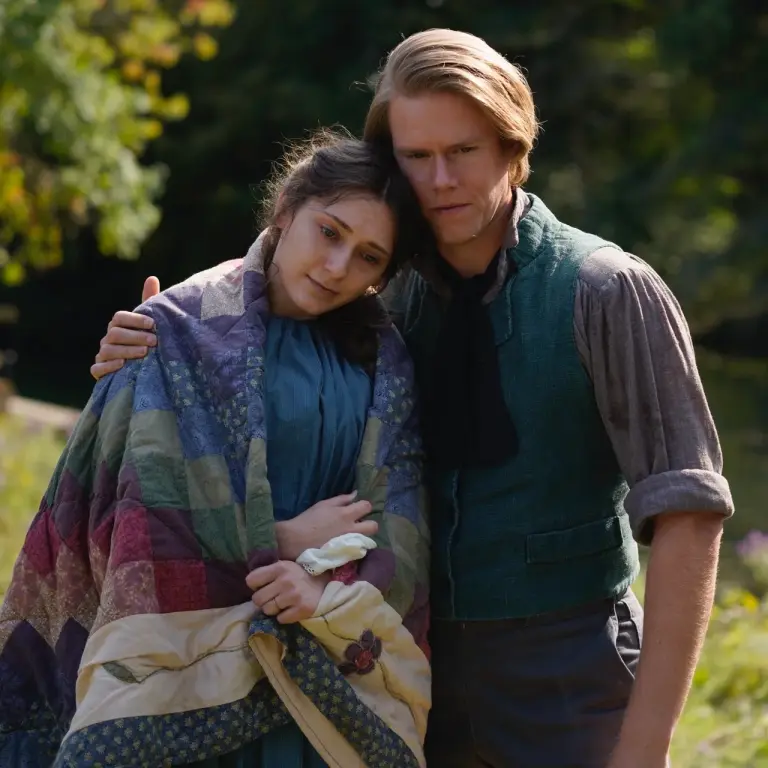
The fifth installment of the Interpreter Foundation’s ongoing series of mini-documentaries is now up for viewing, and (of course) it’s available at no charge: Becoming Brigham, Episode 5—”Why Brigham Young?” Part Two. Today’s video features Matt Grow, who is the managing director of the Church History Department in Salt Lake City.
All of the episodes of Becoming Brigham — including this new one, Episode 5 — are available for viewing at becomingbrigham.com. We hope that you’ll subscribe, so that you don’t miss any of the forthcoming episodes, and that you’ll share the becomingbrigham.com site with others. There’s good stuff on the way.
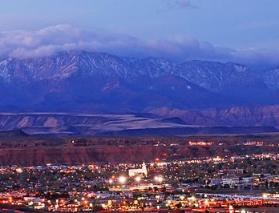
I anticipate that the number of installments in the series will eventually reach about seventy or seventy-five, which means that, barring unforeseen circumstances, Becoming Brigham will conclude sometime around the middle of 2027. That is, as it happens, about the time that the open house will be held for the renovated Salt Lake Temple. We’re trying to imagine ways in which Becoming Brigham might contribute to that celebration. After all, it was Brigham Young who began construction of the Salt lake Temple, designating the spot where it would stand within just a few days of his arrival in the Valley of the Great Salt Lake.
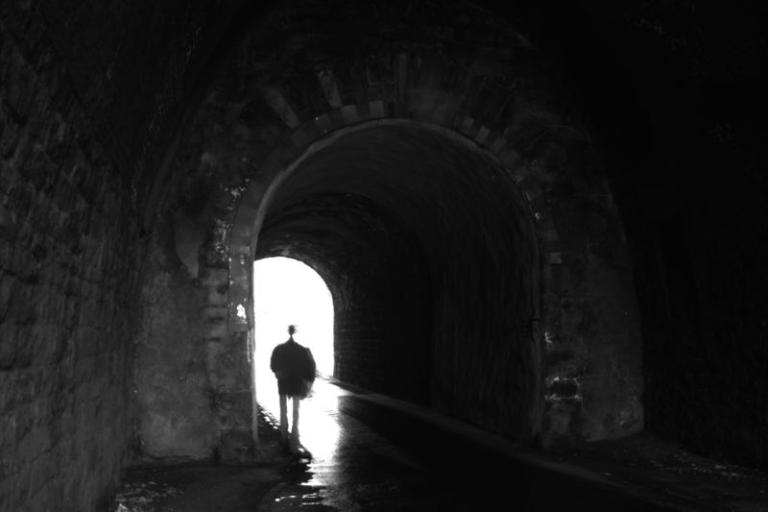
(Wikimedia Commons public domain image)
I think that I’ll share a story that I marked sometime ago while reading Sarah Hintze, The Announcing Dream: Dreams and Visions of Children Waiting to Be Born (Mesa, AZ: Three Orchard Productions, 2016). It’s told by a woman who is identified only as Joann B.:
I was scheduled for my first surgery. It was a very delicate surgery that was to last seven hours. But during this experience, I stopped breathing. Instantly, I found myself suspended in the air above my body. I could look down and see everything the doctors and nurses were doing. I saw the heart monitor flat and the nurses stirring about. My doctor moved away from me to allow another doctor to come in. I couldn’t understand why everyone appeared to be so worried.
I found myself in a place where there was a brilliant white light all around me. As my senses became alert, I heard a beautiful sound — it was the sound of peace. I cannot describe it with mortal words, only that a powerful feeling of peace permeated my very being. I could hear spiritual beings moving around behind me in a very calm and orderly manner. I don’t know where it came from, but all of a sudden I was holding an infant. There was a personage behind me and he said to me, “This is your daughter, Virginia.”
I looked at her and I was so thrilled. Ever since I was a child I had always wanted a blond-haired, blue-eyed little girl. These were the features of the beautiful baby girl I was holding. My fiancé, Wade, had blond hair and blue eyes.
I looked at her and asked, “Her name is Virginia?” The personage behind me said “Yes.”
I turned around to thank him, and all of a sudden, the heart monitor started going again and I was immediately returned to my body. I knew I had been summoned back. I was really sad, and my arms hurt because I wasn’t holding that beautiful baby. (43-44)
It scarcely needs to be said that Joann B. eventually did have a blond-haired, blue-eyed baby girl who was given the name Virginia.
But that isn’t the aspect of the story that caught my attention. Rather, it’s Joann B.’s recollection of having been “suspended in the air above [her] body. Such accounts are omnipresent in the literature. I’ve probably read at least a hundred of them, and probably many more than that, from widely scattered places and times. In more than a few such cases, they report verifiable details that could not have been observed from the location of the witness’s body. What to make of such things? If even one of these cases is true, accurately reported, that would seem to be very good evidence for the distinct nature of mind and brain.
So here’s another instance. Cited in a paper by my friend Brent Top entitled “The Near-Death Experience: Why Latter-day Saints are So Interested,” it’s a lesser-known element of a fairly familiar event from the nineteenth-century life of the Prophet Joseph Smith:
One experience is particularly remarkable. It involves Joseph Smith, Jr., the Mormon Prophet, himself. Most Latter-day Saints are familiar with an 1832 event in Hiram, Ohio, where Joseph was beaten, tarred and feathered by his enemies. What may not [be] so familiar is the account of Joseph’s out-of-body experience at the time. His wife, Emma Hale Smith, remembered:
“The converts to Mr. Smith’s teaching were constantly arriving from all parts of the country, [which added] greatly to the disturbance of antagonists to the Mormon religion, and in March, 1832, the most violent persecution followed. Mr. Smith was dragged from his bed, beaten into insensibility, tarred and feathered and left for dead. A strange part of this experience was, that his spirit seemed to leave his body, and that during the period of insensibility he consciously stood over his own body, feeling no pain, but seeing and hearing all that transpired.”
This account was given many decades before Raymond Moody’s best-selling 1975 book Life After Life coined the term near-death experience and made NDEs and OBEs (out-of-body experiences) popular subjects for numerous other books and innumerable conversations. Thus, it’s doubtful that either Joseph or Emma was influenced by Dr. Moody’s writing.
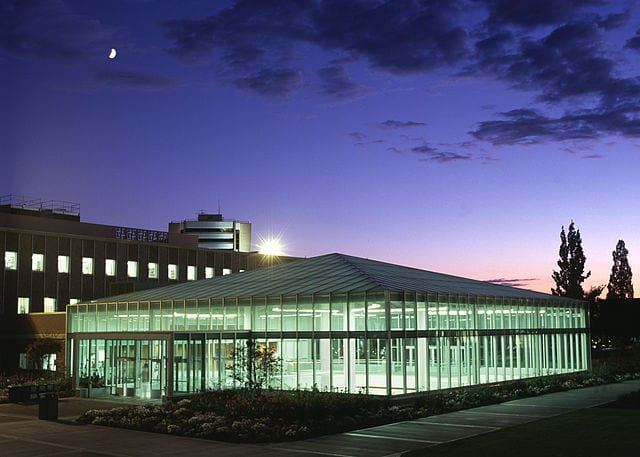
Surprise! Here’s something from the Christopher Hitchens Memorial “How Religion Poisons Everything” File™: “BYU at 150: The Language University: BYU teaches courses in more foreign languages than any college in America”









 Ad-Free & Subscriber Log-In