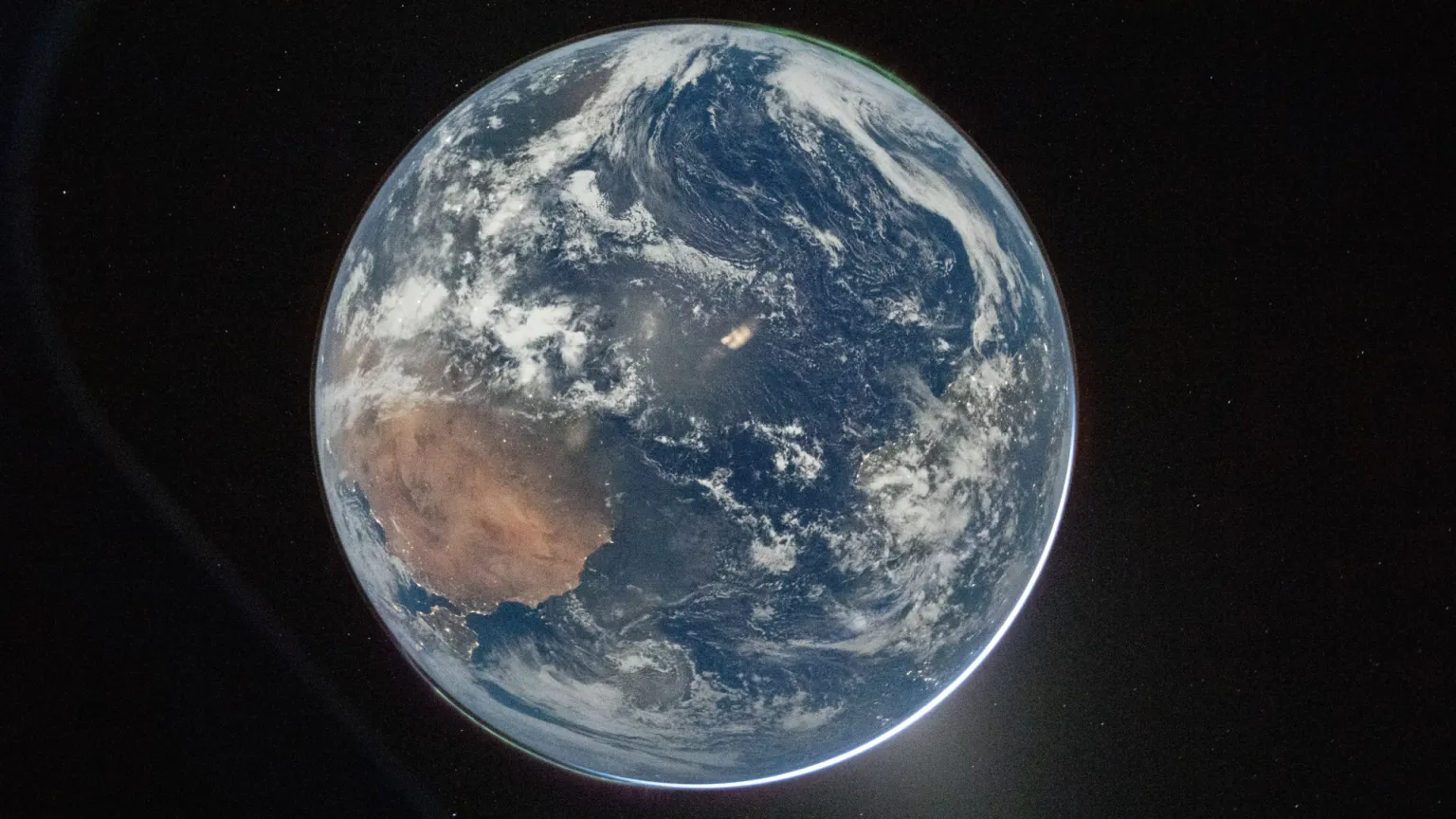
I think that it’s time to celebrate what the Artemis II mission has already accomplished and to pray for the crew’s safe return to Earth. So my photographic theme for (most of) this blog entry is images of Earth and the Moon taken from the Orion spacecraft.
This photograph was taken by Commander Reid Wiseman shortly after the four astronauts of Artemis II essentially exited Earth’s gravitational pull. (NASA public domain photo)
Part of our book chapter reprint series, this article originally appeared in Abraham and His Family in Scripture, History, and Tradition, edited by Jeffrey M. Bradshaw, John S. Thompson, Matthew L. Bowen, and David R. Seely. For more information, go to https://interpreterfoundation.org/books/abraham-and-his-family.
“This paper addresses what I have long felt to be a gap in studies on the Book of Abraham. Scholarship on the book has tended to focus on the issue of its historicity—or, more precisely, on whether it is best understood in an ancient context as an example of Joseph Smith’s divine gift of translating ancient records, as many scholars within The Church of Jesus Christ of Latter-day Saints maintain, or in a modern context as an example of a bungled attempt at translating ancient Egyptian hieroglyphs, as the critics maintain. To be sure, this issue is of great importance, both for those attempting to historically contextualize the book’s message and for Latter-day Saints who struggle with the question of historicity as a test of Joseph Smith’s seership. However, in the widespread scholarly preoccupation with this issue, there has not emerged, to my knowledge, a focused treatment of what I see as an equally important issue—namely, the book’s narrative art: how the narrative itself is crafted in a way designed to powerfully inspire readers. In this study, I examine how the Book of Abraham’s narrative interacts with the biblical account of Abraham (Genesis 12–22). I attempt to show that the Book of Abraham is in dialogue with the biblical narrative, dynamically complementing it.”
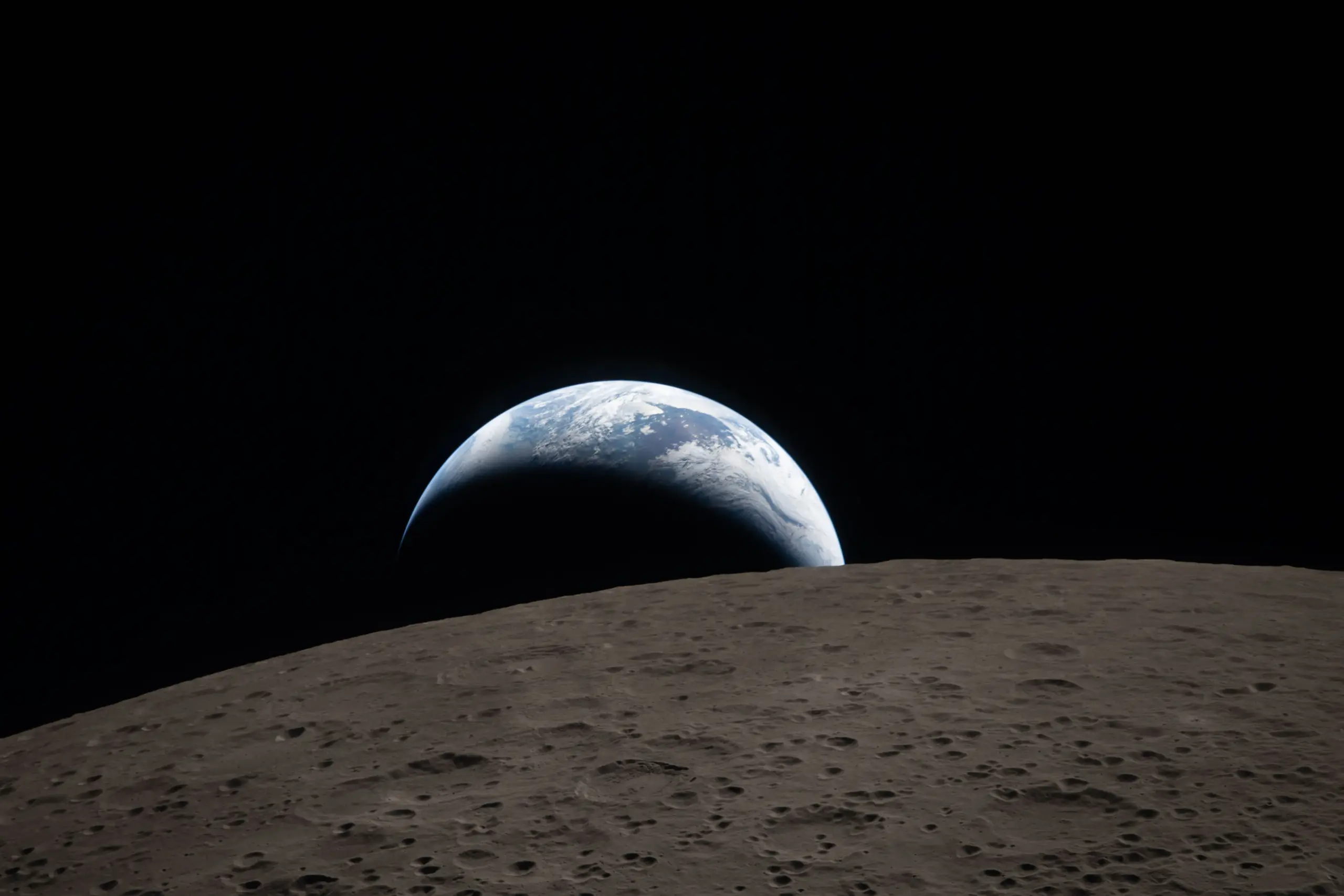
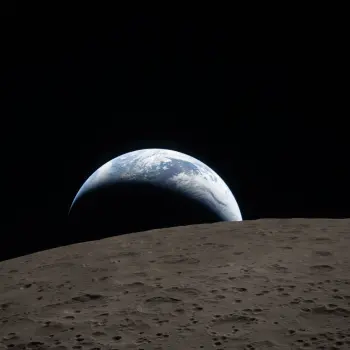
Earthset captured through the Orion spacecraft window at 6:41 p.m. EDT, April 6, 2026, during the Artemis II crew’s flyby of the Moon. A muted blue Earth with bright white clouds sets behind the cratered lunar surface. The dark portion of Earth is experiencing nighttime. On Earth’s day side, swirling clouds are visible over the Australia and Oceania region. In the foreground, Ohm crater has terraced edges and a flat floor interrupted by central peaks. Central peaks form in complex craters when the lunar surface, liquefied on impact, splashes upwards during the crater’s formation. (Image Credit: NASA)
I’ve heard all of my life about “Flat Earthers,” but I hadn’t really encountered any of them until the Artemis II mission began to get news coverage. Now, though, I’ve seen several of them popping up online, and I’m still recovering from the shock of learning for myself that such people do actually exist — although one that I noticed was perspicacious enough to acknowledge that the evidence on the subject is, as he put it, “mixed” and indecisive. He apparently also believes — of course! — that the Apollo moon landings were faked on a soundstage somewhere, that the seven astronauts aboard the Challenger space shuttle survived the “explosion” that “destroyed” it in 1986 and are living under assumed names in a kind of NASA witness-protection program; that Lee Harvey Oswald was framed by the CIA; that the COVID pandemic was really a “plandemic,” and that the anti-COVID vaccines were part of a plot to . . . do something or other. (I begin to zone out, sometimes.) I’m not sure, but I think that the fact that President Nelson and other leaders of the Church of Jesus Christ of Latter-day Saints received the COVID vaccine is what took him out of the Church; he probably realized at that point that the Church is just one more part of the vast global conspiracy. And, oh yes, he’s an anti-Semite.
I find myself wondering what it would be like to live in his world. I can easily imagine that it might be very terrifying. But it’s also, I suspect, deeply gratifying for him to know that he’s one of the elite few who know what’s really going on.
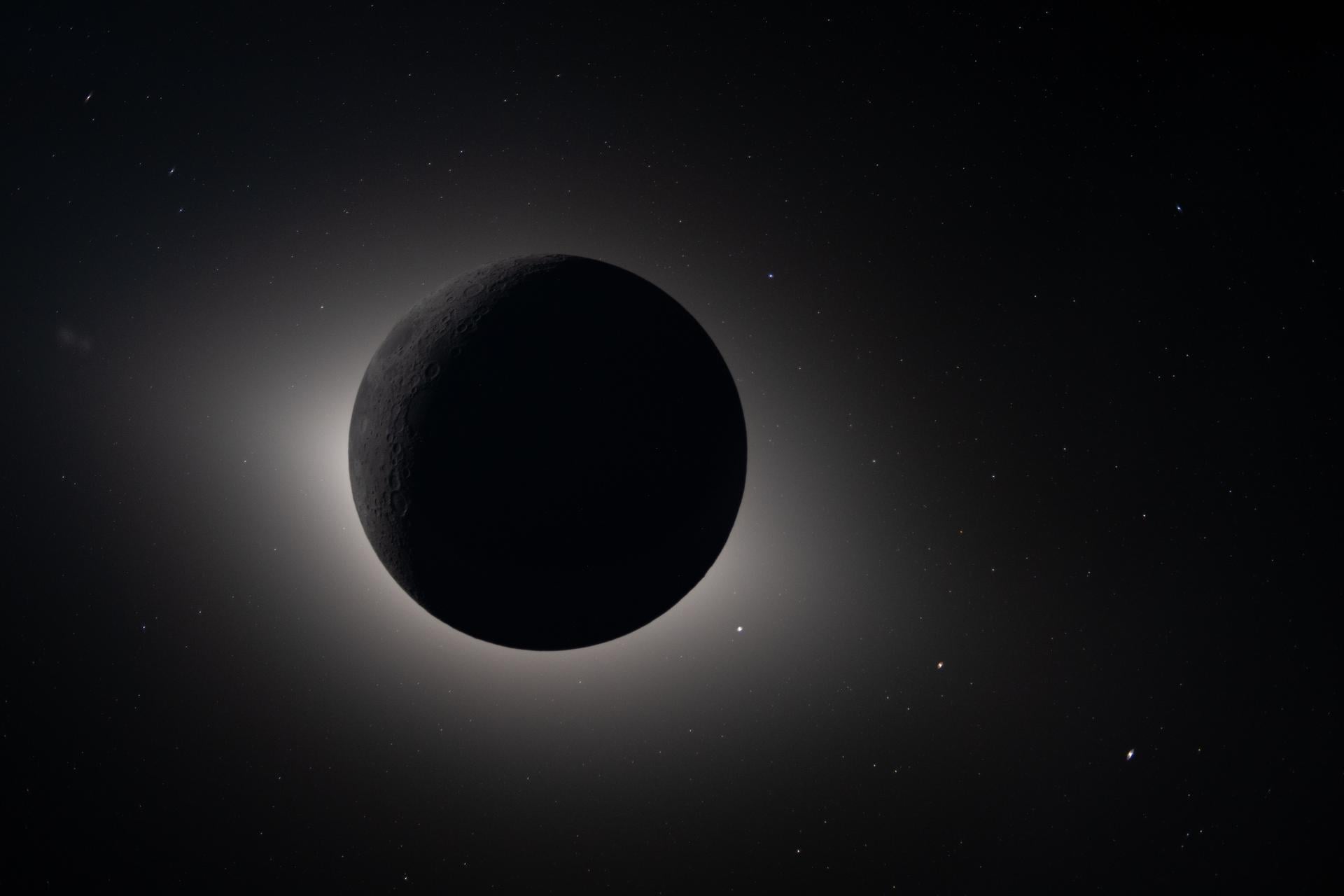
Captured by the Artemis II crew during their lunar flyby on April 6, 2026, this image shows the Moon fully eclipsing the Sun. From the crew’s perspective, the Moon appears large enough to completely block the Sun, creating nearly 54 minutes of totality and extending the view far beyond what is possible from Earth. The corona forms a glowing halo around the dark lunar disk, revealing details of the Sun’s outer atmosphere typically hidden by its brightness. Also visible are stars, typically too faint to see when imaging the Moon, but with the Moon in darkness stars are readily imaged. This unique vantage point provides both a striking visual and a valuable opportunity for astronauts to document and describe the corona during humanity’s return to deep space. The faint glow of the nearside of the Moon is visible in this image, having been illuminated by light reflected off the Earth. (Image Credit: NASA)
Some of those who were outraged at my disapproval of Mr. Donald J. Trump’s threat to destroy “a whole civilization” in Iran pointed to his threat as evidence of his alleged brilliance in negotiation. (They seem to believe that he himself has read The Art of the Deal.) He demands eleven and gets five, one told me, whereas conventional (i.e., lesser) statesmen demand two and get one. Naturally, when news of the claimed two-week ceasefire broke, they triumphantly described it as vindication for them and as proof of his unprecedented genius.
Well, we shall see. At this point, the ceasefire appears to be rather shaky — though I must say that, if we’ve really weakened Iranian command and control as much as we appear to have done, and if, as has long been suggested, units of the Iranian military system (including not only the regular military but the roughly parallel Islamic Revolutionary Guard Corps) have been designed to function, in the event of such an attack as the Americans and the Israelis have just carried out, without central command — it may simply be the case that outlying units haven’t yet received the memo. (The Iranian internet has been down since the beginning of the conflict.)
But it’s also not yet clear to me that the ten-point peace plan that Mr. Trump and his acolytes are celebrating really represents much of a success. In case some of you are able to access it, I recommend this important article in National Review: “Iran Prepares to Dupe the West Again.”
I like tacos, but I don’t quite know why I thought of a taco just now. Maybe because the ceasefire was announced on Tuesday? (Public domain image from Wikimedia Commons)














 Ad-Free & Subscriber Log-In