

There’s a Problem with the Virgin Mary
There’s a problem with the Virgin Mary. I have that problem, and I think that others do too. I believe all four major dogmas about Our Lady, but I do not feel close to her in my religious experience. As a priest and as a Catholic, that distresses me. Protestants would be happy that I feel distant from her, since they don’t really see why she is important. My Catholic faith tells me that I don’t need to pray the rosary in order to get to heaven. Mary is not necessary for salvation; Jesus is. But I’m still distressed. Why? Because you really can’t be fully Catholic without a deep devotion to the Blessed Virgin. Like I said, my beliefs about her are fine. It’s just that there is a disconnect, a glitch, in my spiritual synapses that keeps my beliefs about Mary from intersecting with my religious experience. I’m wondering if that is true for you?
My Experience Honoring Our Lady
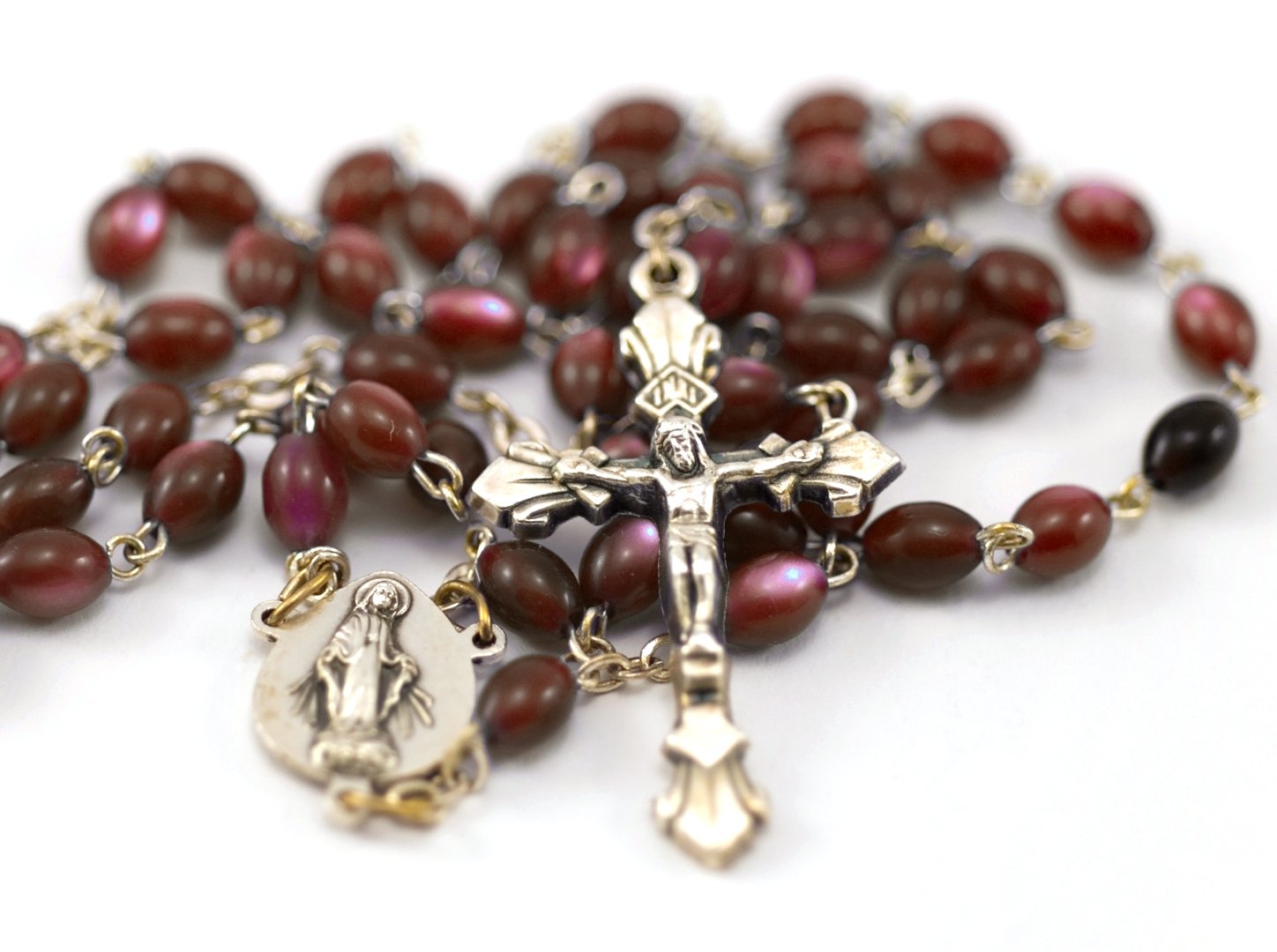
It wasn’t always like this. In my formative years, particularly from First Communion in second grade onward, but especially between the ages of 10 and 18, I had a profound devotion to Mary. My mom and the Sisters of Mercy instilled in me a love and devotion for her. I remember many days after middle school, I would go back to our home–we lived in a woods–I would walk through the forest to the nearby cornfield, climb a solitary oak that guarded the land, and pray the rosary. I was so much at peace. She led me to love and worship her Son as God and as my friend. My spirituality bloomed. It was in that tree that whispers of a vocation to the priesthood reached my ears. I went to a high school seminary. We had to get up early, but I would get up even earlier to go outside to greet the dawn, praying my rosary. So cool, so great.
Years passed, and I was eventually ordained a priest. My graduate theology experience was excellent, but the ambience was not. The liberal theological establishment was faced with a new pope, an actual saint, who said that their iconoclasm, their dismissal of devotion to Mary and to the saints, would not stand. He made it cool again to love the Blessed Virgin. The establishment resisted. Little did they know their point of view was dying. That fact did not help me. I still prayed the rosary–occasionally. But my soul was not uplifted. I still loved Mary, but at a distance. I took some high school seniors to Medjugorje in the early years of the apparitions back in the 1980s. Their faith was changed, and I was so inspired. But it was a fleeting moment of joy. Years later, I tried to rekindle my devotion to Mary by praying the rosary each day for a year — something that many priests and faithful people do ordinarily. I did it, but I felt nothing. I was devastated.
That desert aridness did not touch my belief system. I taught Christology to deacons and college students, and the dogmas of the Blessed Virgin Mary served as anchors that helped me teach people about who Jesus truly is. That was exciting to me–but mostly from an intellectual aspect. Still, I could preach great homilies about Mary–the Holy Spirit made sure of that. And I still prayed the rosary–occasionally. Again, the disconnect occurred between belief and religious experience.
Having Trouble Putting Mary In Your Spiritual Life?
Why did this happen? For me, it’s easy to explain, and I believe my reasons will resonate with other Catholics who may face a similar issue. You see, I can’t stand the ideas of Mary that many of my parishioners and other Catholics have. The problem is that, for them, the appearances of Mary, particularly Fatima, have established among the laity one of two images of Mary. Either they relate to her in a super pious, emotionally wrought way that places Mary as almost a goddess, an untouchable woman, a mother, of course, but an unrealistic one. This is no Mary of the New Testament. Or, they relate to her as an apocalyptic, cosmic harridan, a vengeful weapon of the Lord, intent on saying that so many people, perhaps most, are going to hell. She’s like Athena, except instead of a sword of vengeance, Mary opens the possibility that only hellfire awaits a pernicious humanity.
Obviously, these images of Mary do not comport with the dogmas about her or the scriptural representations of her. I, through my priesthood, was just repelled that no matter what I said or taught, many of the ordinary devotions to Mary by parishioners dwelt on sinfulness and damnation instead of the loving mercy and care of Christ. Why was I so upset about this? Because I truly believe that for a Catholic, indeed for any Christian, the religious experience of a person without a devotion to Mary may still lead to heaven, but it is a poverty-stricken experience. Mary provides the maternal element to our faith. She gives birth and brings to us the Son of God. She’s the spiritual mother we need.
Vatican II was right to situate Mary, not with her own document, but within the context of the Church. When we do this, Mary can never be the overly syrupy, otherworldly, and detached-from-normal-life holy person that some think she is. In and of herself, she is an ordinary woman, but because she was specially graced to be the Mother of God, she becomes the New Eve, the New Advent who, by birthing the Christ, breaks through whatever blindness or hardness of heart we have and allows us to more easily experience the presence of her Son in our lives.
A Possible Solution
I turned 70 this year, and it was a momentous event. I am now truly in the autumn of my life, even though I hope God gives me decades yet to serve as a priest. But for this to be a glorious Indian Summer, I decided I had to reactivate my Marian devotion, so that I didn’t just believe in but could experience her maternal love. I have always felt close to Christ, but I am well aware that his disciples and apostles could never have known him or loved him unless they had experienced and treasured his mother. That’s how involved she was in his life. I have to do the same. Here’s how I’m doing it.
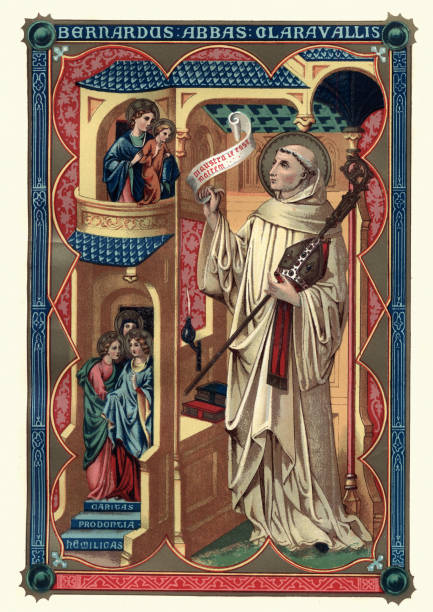
I decided I needed to have a new understanding of Mary that I could relate to. So I searched through the apparitions she has made down the years to humanity. I looked at what the Fathers of the Church and some of the saints said about her. I tested which images and ideas could help revive this devotion. And I found one. The Blessed Virgin Mary, under her title of Stella Maris–The Star of the Sea, works for me. We just recently celebrated the Feast of St. Bernard of Clairvaux. He had a lot to say about Mary under this title. Here’s how he phrased it:
“And the virgin’s name was Mary” (Lk 1:27). Let us also say a few words about this name, which means “star of the sea” and is most suitably fitting for a virgin mother… She is that noble star risen from Jacob, whose ray gives light to the whole world, whose brightness both shines forth in the heavens and penetrates the depths. It lights up the earth and warms the spirit more than the body; it fosters virtues and dries up vices. Mary, I say, is the distinguished and bright shining star, necessarily lifted up above this great broad sea, gleaming with merits, giving light by her example. Oh, if any of you recognizes that he is caught between storms and tempests, tossed about in the flood of this world, instead of walking on dry land, keep your eyes fixed on the glow of this star, unless you want to perish, overwhelmed by the tempest! If the winds of temptations surge, if you run aground on the shoals of troubles, look to this star, call upon Mary! If you are tossed by the winds of pride or ambition or detraction or jealousy, look to this star, call upon Mary! If anger or greed or the allurements of the flesh dash against the boat of your mind, look to Mary! And if you are troubled by the enormity of your sins, confused by the foulness of your conscience, terrified by the horror of the Judgment, so that you begin to be swallowed up by the pit of sadness, the abyss of despair, think of Mary! In dangers, in straits, in perplexity, think of Mary, call upon Mary. Let her name be always in your mouth and in your heart, and, if you would ask for and obtain the help of her prayers, do not forget the example of how she lived. If you follow her, you will not go astray. If you pray to her, you will not despair. If you think of her, you will not be lost. If you cling to her, you will not fall. If she protects you, you will not fear; if she is your guide, you will not tire; if she is favorable to you, you will reach your goal. Thus you will experience personally how rightly it was spoken: “And the Virgin’s name was Mary.”
—Bernard of Clairvaux, Super missus est 2, 17; PL 183, 70-71
Stella Maris–Our Lady Star of the Sea. An Image for All Christians
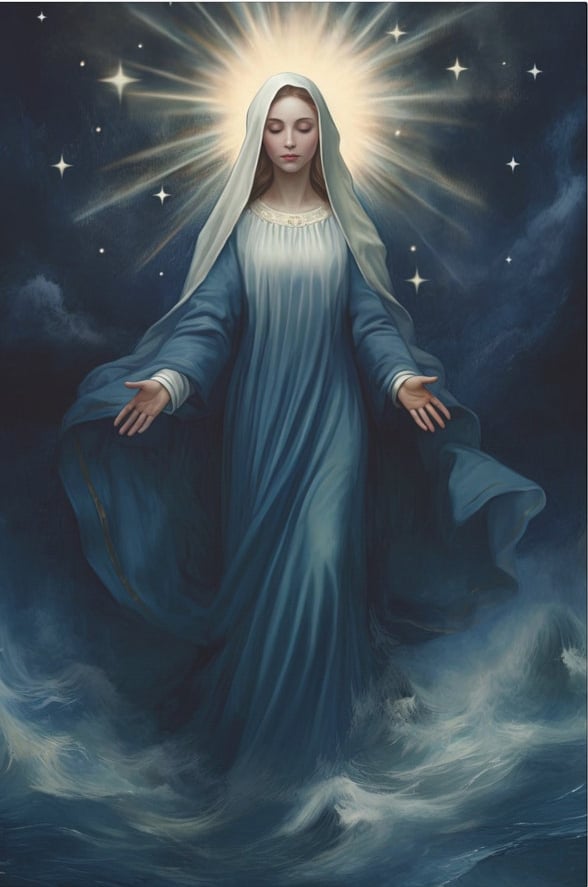
Why do I like to envision Mary as Stella Maris? For me, that image recalls Mary as she was in Nazareth — strong, loving, and an advocate for her Son. My favorite Marian apparitions at Guadalupe, Lourdes, and Knock remind me that Mary brings Christ to people, tells of his mercy, and is with us in the silent struggles of life, teaching us peace and giving us strength in suffering. Mary, as Stella Maris, isn’t just for seafarers — the ocean is a symbol of all life, and she can help guide us through the storms of our personal lives and keep us pointed toward her Son. Under this title, she fixes the glitch in the synapses of our brain between our intellectual belief in the importance of Mary and our religious experience of Mary, leading us to meet Jesus.
One of the remarkable aspects of the Blessed Virgin is that she is honored under numerous titles. Stella Maris–Mary as Star of the Sea–is now my favorite, and I feel a new peace in my soul. There are, of course, many traditional images of Stella Maris. But what shows the continuing vibrancy of this image are the many new representations being created of her under this designation. The Jessica Huber print I used as a cover for this article is one of those. Mary still inspires devotion under this title. If you are like me, do a little searching for the different ways Mary is presented to us, remember that she exists to bring us Jesus, to bear him in our hearts, and to help us never forget that she is our Mother. She reflects the maternal care of God, and that means she brings us out of our intellect into the experiential nature of our faith. That’s what will keep us human. That is what will keep us Catholic. Stella Maris, pray for us!
Time to dust off the rosary beads.












 Ad-Free & Subscriber Log-In