

When faith leaders propel truth into the public square, Washington takes action
By Guest Contributor Rev. Samuel Rodriguez
Washington is not known for unity. It is known for division—competing voices, self-serving agendas, and a constant struggle for power. In recent years, that divide has only widened, and we’ve likely grown numb to the constant conflict.
But every now and then, something good breaks through the noise. When moral clarity rises above the chaos, people from opposing sides of the aisle lay down their pride and acknowledge the truth that is staring them in the face.
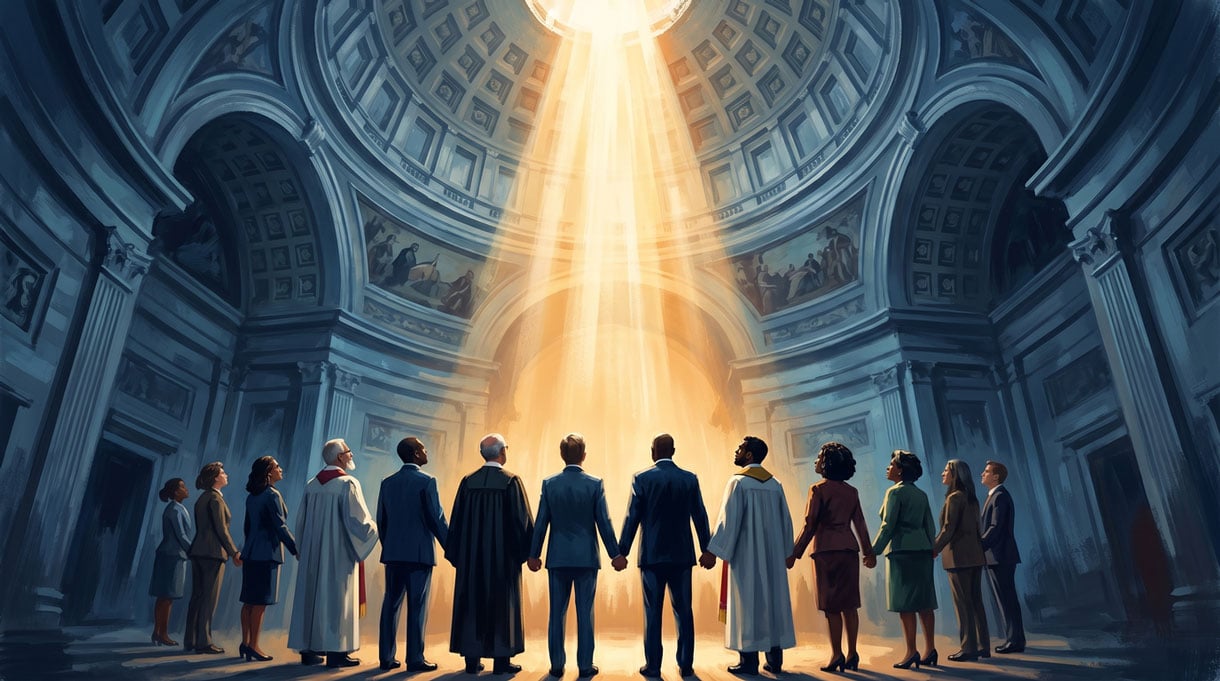
One of the clearest examples of this in modern American history was the passage of the First Step Act in 2018. This bill was the most significant criminal justice reform in a generation. While pundits focused on the politics, what unfolded behind the scenes tells a far more powerful story: people of faith helped carry this moment across the finish line.
For decades, the church had already been on the frontlines of this issue. We have prayed with the incarcerated. We have stood with families carrying the pain of separation. We have welcomed men and women back home—not with judgment, but with hope, and the promise of a new beginning.
We did not study this issue as an academic subject. We walked with those who traveled this road. And we prayed over it.
What we witnessed was undeniable. This is not just about policy. This is about people. It’s about sons and daughters, mothers and fathers. The First Step Act proved redemption still has a place in the American story.
That conviction compelled faith leaders to step into difficult conversations. In 2017, leaders from the National Hispanic Christian Leadership Conference joined a growing coalition committed to meaningful reform. This reform did not seek out political favors but rather remained focused on pursuing righteousness. It was anchored in the biblical truth that justice and mercy always walk hand in hand.
The First Step Act upheld accountability while opening the door to restoration. It created pathways for rehabilitation and affirmed something we must never forget: people can change. Not because a system allows it, but because God creates a way and makes it possible.
In the days leading up to its passage, pastors and faith leaders spoke with boldness and clarity. We met with lawmakers. We shared heartbreaking stories. We reminded those in power that every decision carries the weight of human life. We brought families’ voices into every room and refused to let them be ignored.
Slowly, something shifted.
Leaders who typically disagreed with each other found common ground. They recognized that actions must have consequences, but that authentic justice must also leave the door open to restoration.
That shared conviction made the difference.
The First Step Act became law, and lives began to change. Thousands of Americans have been given opportunities that once seemed impossible. Families have been reunited. Communities have witnessed the power of restoration in real time.
I want to be clear: accountability still matters. The law still matters. But a system with no pathway to redemption does not reflect the heart of our Creator, or the best of America.
People are redeemable. Lives can be restored. And through the power of Christ, no story is beyond transformation.
That is the Gospel.
That is why faith leaders stepped into this moment—not as political opportunists, but as moral witnesses.
The First Step Act was a step toward a more just and compassionate system. But perhaps its greatest testimony is how it came to pass. In a time defined by division, it proved that progress is still possible when we focus on the truth.
Faith leaders helped propel that truth into the public square. We reminded our nation that justice must be joined with mercy, that second chances are not a weakness but a reflection of strength, and that redemption is not just possible, it is essential.
The First Step Act did not fix everything. But it revealed something powerful.
When people of faith speak with conviction, walk in compassion, and stand on truth, they do more than influence policy—they help shape a nation’s moral conscience.












 Ad-Free & Subscriber Log-In