

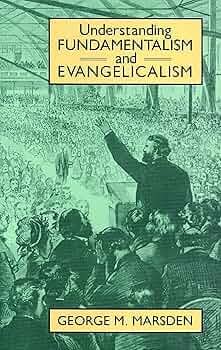
Here I begin a series telling my memories of American evangelicalism and what happened in it and to it. Here I am and will be talking about the Evangelical Movement that was born in the early 1940s with the founding of the National Association of Evangelicals and given impetus in the 1950s by the founding of the magazine Christianity Today. I was brought up in that movement. And worked within it as long as it lasted.
I have studied the history of the movement in depth. I knew most of its leading historians. I taught theology within it and served as a contributing editor of Christianity Today. I also served as senior editor of a leading evangelical scholarly journal called Christian Scholar’s Review. I attended meetings of that journal’s editorial board which consisted of representatives of its supporting evangelical colleges and universities, about fifty of them.
My uncle, president of our evangelical-Pentecostal denomination, served on the national board of the NAE and shared many stories about it with me. From the time I was a teenage I knew we were evangelicals, not fundamentalists. The main difference had to do with two things: separatism and dogmatism.
Although he was not there when the NAE was founded, my uncle knew much about it. In the early 1940s conservative Protestants brought together representatives of evangelical denominations to influence the FCC (Federal Communications Commission) that gave privileged status to mainline religious radio programming. That was the main motive for the founding of the NAE. But the NAE also wanted to form a united front of conservative Protestants against the Federal Council of Churches that became, later, the National Council of Churches. Most of the members of that were liberal Protestants. They had tremendous influence on the American government, the mainstream media and culture in general. As it turned out, the NAE became an alternative to the American Council of Christian Churches led by fundamentalist leader Carl McIntire.
The American Evangelical Movement (henceforth “AEM”) was a loose coalition of relatively conservative American Protestant denominations, churches, ministries and organizations. Did it die out? If so, when? Various historians of the movement have offered years of its demise and reasons for it.
The AEM held within itself diverse conservative Protestant traditions especially and most notably: Pentecostals and non-Pentecostals (including some cessationists) and Reformed and non-Reformed. The deepest division from the start was Pietists (experience-oriented) and Orthodox (doctrine-oriented) conservative Protestants. The various factions within the NAE and the AEM generally eventually disrupted their unities.
One of my earliest memories from within AEM was attending, with my family, a Billy Graham crusade. I was probably about eight years old. The crusade was held inside a large auditorium in a mid-sized city in the Upper Midwest, the city where I was born and raised. As we approached the entrance to the auditorium I saw a group of people holding up protest signs. They were picketing the crusade. I asked my father who they were. He said “fundamentalist Baptists.” I later learned they were members of GARBC churches (General Association of Regular Baptists). They were a strong group of churches in that area and had a Bible college in a suburb of the city. I learned that they did not like Billy Graham because he allegedly…what? My father and my uncle both said because he integrated his crusades and because he allowed liberal Protestants and even Catholics to support them.
My father and uncle both told me that those picketing fundamentalists were evangelicals of a different kind from us. They were evangelicals but also fundamentalists. We were conservative and evangelical but not fundamentalist. The piqued my curiosity. I went on to spend a lifetime figuring out the difference together with historians such as Mark Noll and George Marsden.
Stay tuned as I tell more about the AEM, the NAE, CT and other things “from the inside.” I plan here to tell secrets that I have kept for many years.
*Note: If you choose to comment, make sure your comment is relatively brief (no more than 100 words), addressed to me, civil and respectful (not hostile or argumentative), and devoid of pictures or links.*









 Ad-Free & Subscriber Log-In