


As we enter December, several faiths celebrate Holy Days. Although this season is a time for family and friends, it is also, moreover, an opportunity for all of us to set aside our differences and, ultimately, come together as one people. Let’s take a look.
December Holy Days
December is full of holy days across traditions—Advent, Christmas, Hanukkah, Bodhi Day, and others. Each connects to public virtues in ways that help shape civic life:
- Christian – Advent and Christmas: Themes of hope, peace, joy, and love translate into public virtues like hospitality, generosity, and care for the vulnerable. The nativity story itself highlights justice for the marginalized (shepherds, refugees, the poor).
- Jewish – Hanukkah: The festival of lights emphasizes resilience, religious freedom, and fidelity to conscience—virtues that resonate in societies committed to protecting minority rights.
- Buddhist – Bodhi Day: Commemorating the Buddha’s enlightenment, it points to virtues of wisdom, compassion, and mindfulness—qualities that strengthen civic dialogue and ethical leadership.
- Secular celebrations: These align with the virtues of dignity, equality, and solidarity, echoing the moral imperatives found in religious traditions. Examples of these celebrations are Kwanzaa and Human Rights Day. There is no major Muslim holy day that regularly falls in December.
Together, December’s holy days remind communities that public virtues are lived through generosity, resilience, and justice.
Faith and Friction
We have seen both cooperation and tension during the Holy Days:
- Social Services: Faith groups partner with governments in social services—soup kitchens, refugee resettlement, disaster relief—where shared values of compassion and justice meet.
- Interfaith coalitions: Work with municipalities to promote peace initiatives, public health campaigns, and housing justice.
- Nativity scenes or menorahs: Located in public squares have sparked debates about church–state separation.
- Faith-based objections: To laws (e.g., abortion, euthanasia, marriage policy) often create tension when conscience rights clash with civil mandates.
This interplay of collaboration and friction is part of the dynamic balance between conscience and civic order. Unfortunately, political groups and the mainstream media (MSM) focus more on what divides us than what we have in common.
Symbols Can Cause Friction in the Public Square
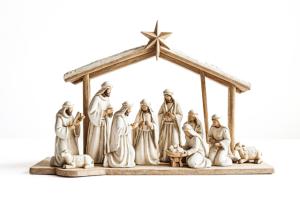
People often disagree about religious symbols in the public square. Symbols carry deep meaning, and shared spaces require discernment. Communities can navigate this with integrity and grace:
- Balance: Ensure representation of multiple traditions, or frame symbols around universal virtues (light, peace, justice) that resonate across faiths. Adding displays that explain the meaning of the symbols can invite dialogue.
- Respect: Honor both freedom of expression and the principle of neutrality in government spaces. For example, a public square might host a “festival of lights” including menorahs, Christmas trees, and secular lanterns.
- Hospitality: Our communities can share their traditions to enrich those celebrating together.
These three areas, balance, respect, and hospitality, are all areas that invite conversation as opposed to dividing us. If we can focus on these areas year-round and not just during the Holy Days, we can better bridge our divides and come together as a people. These are conscious choices we can make every day.
How Could This Work?
The Holy Days offer a unique opportunity for people of multiple faiths and our government agencies to work together for the common good. In the U.S. today, the cost of living is still too high. While many families have drawn from savings to make ends meet, many others don’t have savings to dip into. This holiday season can be an opportunity to partner with other faiths and state agencies to provide food for those in need. While multiple faiths offer soup kitchens and food assistance, it is never enough. State agencies seem to work in a vacuum. While it isn’t clear how much pre-planning there is across different faiths and government agencies, a more collaborative effort may ensure we reach more people in need. It may make sense to establish coordinators across faiths and partner with the local governments to focus on food distribution, taking into account faith requirements. At a minimum, all churches, synagogues, and mosques should know the locations of all soup kitchens in their area. There may be other opportunities and/or synergies across organizations providing food assistance. Still, the expression “many hands make light work” comes to mind as a way to address common needs.
The Catholic View
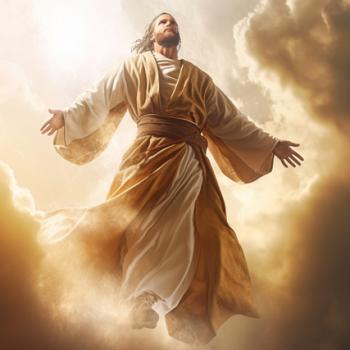
I go back to my favorite lines in scripture, Matthew 25:31-40:
“When the Son of Man comes in his glory, and all the angels with him, he will sit upon his glorious throne, and all the nations will be assembled before him. And he will separate them one from another, as a shepherd separates the sheep from the goats. He will place the sheep on his right and the goats on his left. Then the king will say to those on his right, ‘Come, you who are blessed by my Father. Inherit the kingdom prepared for you from the foundation of the world. For I was hungry and you gave me food, I was thirsty, and you gave me drink, a stranger and you welcomed me, naked and you clothed me, ill and you cared for me, in prison and you visited me.’ ”
“Then the righteous will answer him and say, ‘Lord, when did we see you hungry and feed you, or thirsty and give you drink? When did we see you a stranger and welcome you, or naked and clothe you? When did we see you ill or in prison, and visit you?’ And the king will say to them in reply, ‘Amen, I say to you, whatever you did for one of these least brothers of mine, you did for me.'”
I pray that all have an amazing December and Holy Day celebrations. Let’s all choose to be balanced, respectful, and hospitable during these special days, and choose to be so all year round. Please share your thoughts about this article in the “Comments” section.
Peace
If you like this article, you might enjoy:
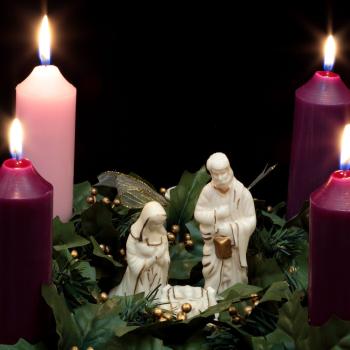
The Season of Hope and Waiting Begins
The Day of the Lord
Giving Machines: A New Way to Donate Easily







 Ad-Free & Subscriber Log-In