


The Solemnity of the Most Holy Body and Blood of Christ, also called Corpus Christi, celebrates the real presence of Jesus Christ in the Eucharist. This feast invites believers to reflect on how God feeds both the body and the soul. It reminds us that Jesus gives Himself as spiritual nourishment and unites His people through one sacred meal.
The readings for this celebration move from the desert journey of Israel to the teaching of Jesus as the living bread. Together, they tell one story: God provides, God sustains, and God draws people into unity through His Word and His presence.
Gospel Text – John 6:51-58
Jesus said to the Jewish crowds: “I am the living bread that came down from heaven; whoever eats this bread will live forever; and the bread that I will give is my flesh for the life of the world.” The Jews quarreled among themselves, saying, “How can this man give us his flesh to eat?”
Jesus said to them, “Amen, amen, I say to you, unless you eat the flesh of the Son of Man and drink his blood, you do not have life within you. Whoever eats my flesh and drinks my blood has eternal life, and I will raise him on the last day. For my flesh is true food, and my blood is true drink. Whoever eats my flesh and drinks my blood remains in me and I in him. Just as the living Father sent me and I have life because of the Father, so also the one who feeds on me will have life because of me. This is the bread that came down from heaven. Unlike your ancestors who ate and still died, whoever eats this bread will live forever.”
1st Reading – God Feeds His People in the Desert
In this reading, Moses reminds the Israelites about their journey through the desert. God allowed them to face hunger, but then He gave them manna, a mysterious bread from heaven. This experience taught them that life depends not only on physical food but on the Word of God. This passage shows that God forms His people through trust. The desert becomes a place of learning. God teaches them humility and dependence. He shows that human life is not sustained solely by material things.
The desert landscape matters in this reading. It is dry, empty, and harsh. In that setting, food and water become vital. God’s provision stands out clearly because survival is not possible without help. This helps us understand that all people, no matter where they live, rely on God in both visible and invisible ways.
Responsorial Psalm – Praise for God’s Care
This psalm calls Jerusalem to praise God. It celebrates peace, protection, and the gift of God’s Word. It also highlights that God feeds His people with the finest wheat and sends His commands across the earth. The psalm teaches that God cares for both physical and spiritual needs. He provides food, safety, and guidance. He also gives His law and His Word as a special gift.
The city of Jerusalem becomes a symbol of community. It represents a place where God gathers people and blesses them. The imagery of fertile land, strong gates, and abundant wheat shows a place of stability and nourishment. This reading connects food with peace. It shows that when God provides, communities thrive.
2nd Reading – One Body in Christ
Saint Paul speaks about the bread and the cup that believers share. He explains that when people receive the Eucharist, they participate in the body and blood of Christ. Because there is one bread, all who share it become one body. This passage focuses on unity. The Eucharist is not only about personal faith. It brings people together. It builds a community that shares one life in Christ.
This message crosses boundaries. Different regions, cultures, and languages come together in one shared act. The Eucharist unites people across cities, countries, and continents. This reading reminds us that faith is both personal and communal. We do not walk alone. We belong to one body.
Gospel Reading – Jesus, the Living Bread
In the Gospel, Jesus declares that He is the living bread from heaven. He tells the crowd that those who eat His flesh and drink His blood will have eternal life. Many listeners struggle to understand this teaching, but Jesus repeats it with strong clarity. This passage reveals the heart of the Eucharist. Jesus does not offer only words or teachings. He offers Himself. He becomes true spiritual food that gives eternal life.
The setting of this Gospel matters. Jesus speaks to people who have just experienced the multiplication of loaves. They understand hunger and food. He uses that real-world experience to lead them to a deeper truth—spiritual hunger needs a greater answer. Food sustains every culture. Bread, in many forms, is a universal staple. Jesus uses this universal need to explain a universal gift. He becomes nourishment for all people, everywhere.
The Catholic View
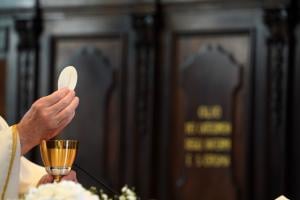
All the readings share one clear theme: God feeds His people:
- In the desert, God provides manna.
- In the psalm, God provides wheat and peace.
- In Paul’s letter, God provides unity through shared bread.
- In the Gospel, Jesus provides Himself as eternal food.
Together, these readings show that God meets human needs at every level. He feeds the body, guides the mind, and strengthens the soul. Another key message is unity. The Eucharist brings people together as one body. This unity goes beyond geography. It connects believers across all places and times. Finally, the readings call for trust. Just as the Israelites trusted God in the desert, believers today must trust Jesus as the source of life. The Eucharist becomes a sign of that trust and a way to grow closer to God.
Corpus Christi Sunday invites us to see the world differently. It reminds us that every land, every city, and every person depends on God’s gifts. Through these readings, we learn that God feeds, unites, and sustains His people. The Eucharist stands at the center of this truth. It is both a meal and a mystery, a gift that nourishes the whole world.
Please share your thoughts or any questions about this article in the “Comments” section below.
Stay updated on the latest articles and insights from the column. Subscribe to my newsletter to ensure you receive every new post. Click here to subscribe to the newsletter.
Peace
If you like this article, you might also enjoy:
Charlie Kirk Case: Timeline, Court Hearing, and Faith
Pope Leo: His AI Encyclical and the Call to “Disarm”
LA Mayoral Primary: The Challenges Facing the Candidates







 Ad-Free & Subscriber Log-In