


This Sunday, April 19, 2026, is the Third Sunday of Easter, and the gospel story is of the two disciples on the road to Emmaus. The disciples did not recognize Jesus until the “breaking of the bread.” Jesus calls us to walk with Him on our own “road to Emmaus.” Let’s take a look.
Gospel Text –Luke 24:13-35
“That very day, the first day of the week, two of Jesus’ disciples were going to a village seven miles from Jerusalem called Emmaus, and they were conversing about all the things that had occurred. And it happened that while they were conversing and debating, Jesus himself drew near and walked with them, but their eyes were prevented from recognizing him.
The Road to Emmaus
He asked them, “What are you discussing as you walk along?” They stopped, looking downcast. One of them, named Cleopas, said to him in reply, “Are you the only visitor to Jerusalem who does not know of the things that have taken place there in these days?” And he replied to them, “What sort of things?” They said to him, “The things that happened to Jesus the Nazarene, who was a prophet mighty in deed and word before God and all the people, how our chief priests and rulers both handed him over to a sentence of death and crucified him. But we were hoping that he would be the one to redeem Israel, and besides all this, it is now the third day since this took place.
Some women from our group, however, have astounded us: they were at the tomb early in the morning and did not find his body; they came back and reported that they had indeed seen a vision of angels who announced that he was alive. Then some of those with us went to the tomb and found things just as the women had described, but him they did not see.” And he said to them, “Oh, how foolish you are! How slow of heart to believe all that the prophets spoke! Was it not necessary that the Christ should suffer these things and enter into his glory?”
Then beginning with Moses and all the prophets, he interpreted to them what referred to him in all the Scriptures. As they approached the village to which they were going, he gave the impression that he was going on farther. But they urged him, “Stay with us, for it is nearly evening and the day is almost over.”
The Breaking Of The Bread
So, he went in to stay with them. And it happened that, while he was with them at table, he took bread, said the blessing, broke it, and gave it to them. With that, their eyes were opened, and they recognized him, but he vanished from their sight. Then they said to each other, “Were not our hearts burning within us while he spoke to us on the way and opened the Scriptures to us?”
So they set out at once and returned to Jerusalem, where they found gathered together the eleven and those with them who were saying, “The Lord has truly been raised and has appeared to Simon!” Then the two recounted what had taken place on the way and how he was made known to them in the breaking of bread.”
First Reading –Acts 2:14, 22-33 – Peter Announces The New Reality of the Resurrection
Peter stands before Jerusalem and declares that Jesus, crucified and rejected, has been raised and exalted by God. Jesus’ death was not a failure but God’s plan all along. The Spirit’s outpouring is proof that Jesus now reigns at the right hand of the Father. This is the Church’s first proclamation: the Resurrection changes everything.
Responsorial Psalm –Psalm 16:1-2, 5, 7-8, 9-10, 11
This psalm (Psalm 16) becomes a prophetic window into Christ’s Resurrection. The psalmist rejoices because God will not abandon him to the grave. God shows the path of life, fullness of joy, and eternal security. He is refuge, portion, and guide. In the early Church, this psalm became a Resurrection psalm—David’s words fulfilled in Jesus.
Second Reading –1 Peter 1:17-21 -The Resurrection Reshapes How Believers Live!
Peter urges Christians to live with reverence because they were ransomed with Christ’s precious blood. Through Him, believers now trust in God, who raised Him from the dead. The Resurrection becomes the foundation for holy living, hope, and identity.
Gospel Reading – Luke 24:13-35 – The Disciples On The Road To Emmaus
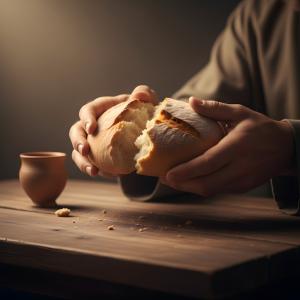
Two of Jesus’ disciples walk to Emmaus, confused and disappointed by the events of the past few days. Jesus walks with them, though they do not recognize Him. Along the way, Jesus opens the Scriptures, showing how suffering and glory fit together. The disciples invite Jesus to stay with them, and it is at the breaking of the bread that their eyes are opened, and they recognize Jesus. The Resurrection transforms their grief into mission—they run back to Jerusalem with joy.
The Catholic View
The Resurrection of Jesus transforms vision, identity, and hope. We see this in all of the readings for Sunday from different perspectives:
God reinterprets our story through the Resurrection:
- Peter reinterprets Israel’s history (Acts)
- Jesus reinterprets Scripture on the road (Luke)
- The psalm is reinterpreted as prophecy (Psalm 16)
God’s faithfulness is revealed in the Resurrection:
- God does not abandon His Holy One (Psalm 16)
- God fulfills His promises to David (Acts)
- God’s eternal plan is revealed in Christ (1 Peter)
The Resurrection changes how we live:
- We walk in reverence and holiness (1 Peter)
- We move from confusion to mission (Luke)
- We proclaim Christ boldly (Acts)
The Resurrection gives unshakable hope:
- “You will show me the path of life” (Psalm 16)
- “God raised Him” (Acts)
- “Your faith and hope are in God” (1 Peter)
- “Were not our hearts burning?” (Luke)
The risen Christ opens our eyes, anchors our hope, and sends us forth as witnesses who see the world through Resurrection light. Please share your thoughts about this article in the “Comments” section.
Peace
If you like this article, you might also enjoy:
Triduum: The Heart Of The Liturgical Year
Divine Mercy Sunday: Mercy From The Risen Christ
New York City’s Growing Homeless Problem











 Ad-Free & Subscriber Log-In