


Press reports and discussions about Magnifica Humanitas have to be brief. They also have to titillate and compete for the attention of a public that is both overwhelmed and jaded by an unending deluge of “information” being dumped on it by the many channels of communication we have today.
From what I’ve seen, the press, or at least the so-called “legacy” press, made an honest attempt to report what Pope Leo wrote as accurately as they could within the parameters in which they operate.
The press focused its coverage of Magnifica Humanitas on what Pope Leo teaches us about AI, and they just hit the high points of that. That was a good call on their part. After all, Magnifica Humanitas is an encyclical that applies Church teaching and the Gospels, to AI.
Magnifica Humanitas is about more than AI.
But it’s not accurate to simply say that Magnifica Humanitas is an Encyclical about AI. That description just doesn’t do it justice.
Pope Leo covers a lot more than AI in Magnifica Humanitas. He raises quite a number of topics that not only deserve an entire encyclical of their own, the laity actually needs an encyclical about each of them to help us understand how we, as Christians, should deal with them.
Leo speaks about slavery.
The Holy Father addresses the evil of slavery, including the new forms of slavery our technology is creating today. He admits it took the Church too many centuries to condemn slavery absolutely, and he apologizes for it.
Leo speaks against violence against women.
He speaks of the violence and persecution that women suffer and affirms both women’s humanity and their basic human right to education, self-determination, the vote, and opportunities to occupy seats of power, decision-making and responsibility in society at large.
He apologizes once again and without equivocation for the clergy sex abuse scandal.
Leo challenges how the Just War Doctrine has been misused.
He takes on the plasticity of the “Just War” doctrine and how it has been abused. While he affirms that self-defense is a basic right of nations as well as individuals, he admits that the Just War Doctrine has been successfully twisted to provide a veneer of false Christian morality to waging war for almost any reason.
Leo reconfirms the right to life from conception to natural death.
He reconfirms the basic human right to life from conception to natural death that applies to every person, especially the weak and vulnerable who cannot defend their lives themselves.
He also takes us on a grand survey of Catholic social teaching, how it has developed, and how it applies to what he is teaching us today.
Pope Leo divided Magnfica Humanitas into an Introduction, five chapters, and a conclusion.
Let’s take a look at the introduction.

Catholic Social Teaching began with Rerum Novarum
Pope Leo tells us that Catholic Social Teaching, as a separate ministry to the faithful by the various popes, began 135 years ago when his predecessor, Pope Leo VIII, wrote Rerum Novarum.
Rerum Novarum applied the teachings of Christ to the crisis of inhumanity toward working people that came about as a result of the Industrial Revolution.
The Law of Moses had rules to provide for the humane treatment of domestic animals such as an oxen, hooked to a plow. But there were no rules in the 19th century to protect the vast majority of people from the avaricious greed of the few men who had managed to climb atop the industrial heap.
People, including very young children, were forced to work in factories for such long hours and under such horrible conditions that it shortened their lives. Workplace safety did not exist. Many people died in these dangerous work environments.
Their wages could not support their lives. Whole families were fed into the maw of industrial manufacturing in order to make enough money just to survive.
Meanwhile the few, the owners of these plants, acquired such a concentration of wealth that it destabilized the society of their time and allowed them to live in wanton pretense and luxury. The press of that day named these industrialists “Robber Barons,” and the name stuck.
Pope Leo XIII, our Pope Leo’s predecessor, stepped into this terrible history when he wrote Rerum Novarum and applied the teachings of Christ to the workplace. He taught that people matter more than machines and massive profits. He taught that a living wage, safe working conditions and the right to personal development through work were basic, Christian teaching applied to that day’s big problem.
Jesus’ teachings apply to us today.
Each succeeding pope since Leo VIII has addressed the challenges of his day by applying the Gospel to that problem. The underlying message in all of their Encyclicals, taken together, is simply that the teachings of Christ do not just apply to the fishermen and shepherds of First Century Judea. They apply to each succeeding generation. They apply to you, and me, our government, and the tech billionaires, right now, today.
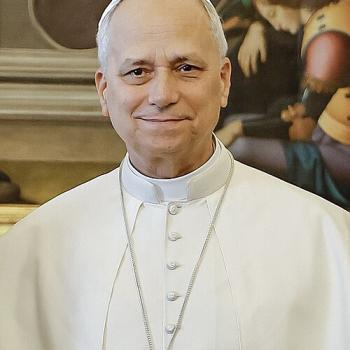
Pope Leo XIV, our Pope Leo, is simply doing what Jesus instructed the Apostles to do before He ascended to His Father. He is teaching us what Jesus taught.
In his Introduction to Magnifica Humanitas, Pope Leo goes through each succeeding pope’s encyclicals and pulls out the teachings they gave as they dealt with the challenges of their time that he is applying in Magnifica Humanitas.
He goes to great lengths to demonstrate that, while Magnifica Humanitas deals with what he calls his “res novae,” he is standing on the shoulders of the popes who have gone before.
Popes don’t just jump off the side of the clerical cliff and swim out to sea alone. They are always tethered to 2,000 years of Christian teaching.
Pope Leo isn’t changing Church teaching. He’s applying it to today’s challenges.
The challenge humanity is facing today is indeed a res novae. Like that earlier Pope Leo surveying the human destruction of laissez faire capitalism and an unregulated industrial revolution, we are indeed confronted with a new thing.
Science fiction writers foresaw AI long before we got here. But that was entertainment. This is now, and it is here in our real world.
AI has the potential to attack human dignity in such a fundamental way that it reaches into an atomic level understanding of who and what a human being is and what it means to be human.
The question: Who and what is a human being?
It seems that each generation of people has to answer the question: Who and what is a human being?
American’s fought a bloody civil war that came down to the question: Is a slave a human being?
The battles we’ve fought over Worker’s Rights, Civil Rights, Women’s Rights, Gay Rights, always, everytime, come down to one question: Are these human beings?
Are working people human beings? Are black people human beings? Are women human beings? Are homosexuals human beings?
Human beings are transcendent creatures made in God’s Image.
The question of who is a human beings has always been a struggle, and it always will be because human beings are transcendent creatures made in the Image of the living God.
Human beings have enormous power that they do not earn but that simply is theirs by right of their humanity. Human beings are free moral agents who can, by their own choice, serve God or reject Him. Human beings have an inalienable, God-given, right to self-determination. Human beings have individual voices and the ability to express their personal wants, beliefs and needs. Human beings are magnificent creatures.
Those who value power and money above all things have never been and will never be easily and happily willing to consider those they want to exploit and kill as human beings. They will avoid accepting that all people are human beings because if they do that, they become monsters in their own eyes.
Magnifica Humanitas comes immediately to one conclusion: All people are human beings. And the needs of human beings come before the needs of machines, money and power.
That is the Jesus conclusion.
It is the Gospel conclusion.
It is the Catholic Social Teaching conclusion.
When Pope Leo says that every person is a human being with all the rights and responsibilities that means, he is simply repeating what Jesus said.
Note: Res Novae is a term Pope Leo uses to describe the “new thing” that popes have addressed through their encyclicals. I don’t know the theological definition of the term, so I applied the definition I do know when writing this. In legal terms, “res novae” refers to a point of law or a case of law that has never been seen before and that requires courts, legislatures and attorneys to develop applications of existing law that apply to it. There are a number of Old Testament references to humane treatment of farm animals. See Deuteronomy 25:4; Deuteronomy 22:10 for examples. Also, New Testament writers used these instructions to illustrate human relationships in the Epistles.












 Ad-Free & Subscriber Log-In