


In 1984, a group of artists gathered to raise awareness and funds for the starving in Africa with the haunting question: “Do They Know It’s Christmas?” It was powerful, convicting, and unforgettable.
Forty years later, we find ourselves asking a different question: “Do Christians Know It’s Christmastime At All?”
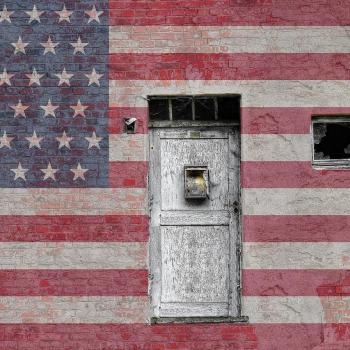
Because when we look around at the loudest voices in modern Christianity — the Christian Nationalists, the ultra-right “culture warriors,” the ones clutching their Bibles while shoving away anyone who doesn’t fit their narrow mold — we can’t help but wonder if they’ve missed the whole point.
Christmas is supposed to be a celebration of Jesus — the Christ child, born into poverty, a refugee before his second birthday, welcomed by shepherds (the marginalized) and foreigners (the outsiders). Jesus, whose life and message centered around good news for the poor, freedom for the oppressed, healing for the broken, and love without condition.
And yet, here we are, watching people who call themselves Christians fight against feeding the hungry, reject helping immigrants, slash funding for the poor, and legislate hate against the very people Jesus would have embraced. Then they turn around and belt out “O Holy Night” under twinkling lights and glittering trees, as if the glaring disconnect doesn’t matter.
So, do Christians know it’s Christmastime at all?
Because Christmas without compassion is just noise. Christmas without generosity is just consumerism. Christmas without love is just… empty.
We’re not saying this to be harsh (okay, maybe a little snark, but you know us). We’re saying this because we care too much not to. Because the hypocrisy is staggering. It’s one thing to say you believe in Jesus. It’s another thing entirely to live in a way that looks like Jesus.
Here’s the fruit of Christian Nationalism and ultra-right “faith”: fear, exclusion, greed, cruelty, control. None of that looks like Jesus. None of that reflects the God who came to us as a vulnerable baby in a manger, dependent on human kindness for survival.
And yet, many of these same folks will pack into churches this December, singing “Joy to the World” while their politics and practices rob the world of joy. They’ll read about Mary and Joseph seeking room in the inn, then turn away modern-day immigrants and refugees at our borders. They’ll praise the Prince of Peace, then cheer for more guns and more wars. They’ll worship the baby born in a barn because no one made room, while refusing to make room in their hearts or policies for the poor, the unhoused, the LGBTQ community, and anyone “different.”
Do Christians know it’s Christmasttime at all?
Because Christmas is not about power or control or “winning the culture war.” It’s about God’s radical act of love — showing up in vulnerability, in humility, in solidarity with the least and the lowest.
And honestly? If your version of Christianity doesn’t look like love, if it doesn’t smell like compassion, if it doesn’t taste like generosity — then you might be missing Christmas altogether.
So this year, we challenge all of us — ourselves included — to stop and look at the fruit of our beliefs. Does the way we live bring light into darkness? Does it lift burdens, heal wounds, and welcome the outcast? Does it actually look like Jesus?
Because that’s Christmas. That’s the Gospel. That’s the hope of the world.
Do Christians know it’s Christmastime at all? Let’s make sure we do.















 Ad-Free & Subscriber Log-In