Tastelessness in the Church

Tastelessness in the Church

Jason Braaten, at Concordia TheoBLOGical Seminary, links to a good Touchstone essay by Anthony Esolen, then draws some incisive conclusions of his own:

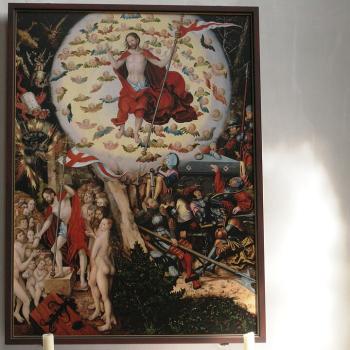
Talking about taste is not bad with regard to the arts in the church, unless you have none. And it is this that we as the church have been reticent to discuss-mainly due to the fact that we ourselves don’t actually have taste. We have knowledge of what we want people to think is good taste, but don’t actually have it. It isn’t a part of the fiber of our being. We are fakes. We are phonies. We have no taste-some to a lesser degree than others.

What strikes chords that resonate within me with this essay is Esolen’s ability to say just that. To evaluate tastes, you must have some taste. And what the church hasn’t done, nor is it quite prepared to do because we are in a very real sense victims and perpetrators of the enemy issues, is come out to say some tastes are better than others. We have not inculcated and nurtured people to identify with those tastes that are higher and better. And this is not just the case in church, but probably more so in the home. There is objectivity to beauty and taste, even though we have learned otherwise. And the saddest and most shameful thing about this is that we have chosen simply to maintain status quo and hand it on to subsequent generations.

To remind those of us who say we believe in “absolutes” against the postmodernists who deny there is any such thing, the three absolutes were and are Truth, Goodness, and BEAUTY. Christians are against relativism when it comes to truth and goodness but they tend to agree with the postmodernists that beauty is relative. This must be challenged. Once beauty goes, the other absolutes quickly become unravelled. (This is not, by the way, just the problem of churches; rather, it reflects the even bigger tastelessness of the culture as a whole, which Christians, while criticizing the culture on many points, emulate it on this one.)

Yes, beauty involves a subjective response and that “tastes” differ, but taste, like other human faculties, must be cultivated, educated, and disciplined. We need to learn how to take subjective pleasure in what is objectively GOOD.

"Or John Wayne! (nee Marion Robert Morrison)"

How Religion Can Be Growing and ..."
"In a pulp story I read recently, the American protagonist was on the entirely wrong ..."

How Religion Can Be Growing and ..."
"I found out from Airwolf."

How Religion Can Be Growing and ..."
"I am by no means defending the conduct. If you think so, you wholly misconstrue ..."

How Religion Can Be Growing and ..."

Browse Our Archives

Follow Us!


TAKE THE
Religious Wisdom Quiz

True or False: James teaches that pure religion before God is to visit orphans and widows in their trouble.

Select your answer to see how you score.