

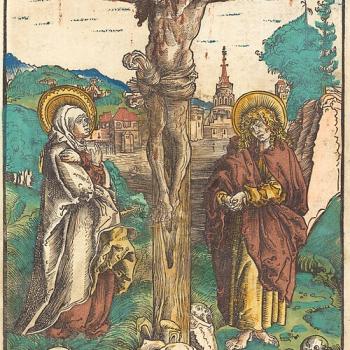
Let me propose this thesis, drawing on the recent post about what Bruce Springsteen said about Hank Williams: All distinctly Christian art must be, in some sense, about the agonizing struggle between sin and grace.
Mere moral lessons, while perhaps commendable, are not enough to be distinctly Christian, since Mormons, Muslims, and ethical humanists could agree with them. And mere optimistic positive messages are not enough and may even be harmful, since they can create the illusion that we can achieve righteousness by our own efforts. Works of meaning and beauty have their own value. But to be explicitly “Christian,” a work needs to be, directly or indirectly, about sin and grace and what Christ has to do with them.
To test the thesis: Let’s consider classic Christian works of literature. The Divine Comedy. check. Paradise Lost. check. The poems of John Donne and George Herbert. check. The Chronicles of Narnia. check. Flannery O’Connor. check. Graham Greene’s The Power and the Glory. check.







 Ad-Free & Subscriber Log-In