


Just three more shopping days until Christmas! You can still give away 3-month gift subscriptions to Cranach for free, just click this link. Offer closes Christmas day.
Also, be thinking of your predictions for 2026. We’ll be posting those on New Year’s Day, as is our custom. On New Year’s Eve, we’ll be checking our predictions for 2025, as is also our custom.
In the meantime, we’ll lead off this week leading up to Christmas with a special Miscellany, one to finish off Advent and open up to Christmas. Our topics:
I with you am. Counting down and counting forward from history’s turning point. And Christmas music that is actually Advent music, revisited.
I With You Am
Reformed theologian Peter Leithart offers a fascinating meditation on Advent and its fulfillment at Christmas based on Hebrew word order.
His article published in First Things is entitled I With You Am. It’s behind a paywall, but here is a description from the First Things newsletter:
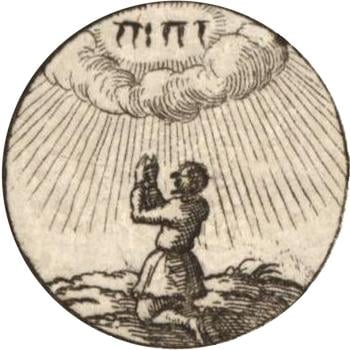
The last thing Jesus tells his disciples before his Ascension is “Behold, I am with you all the days, until the end of the age” [Matthew 28:20; Lexham English Bible]. Except our English translation isn’t quite accurate—he actually says “I with you am.” This slight rearrangement is the fulfillment of all God’s “I am” statements throughout all of Scripture, Peter Leithart explains. God places his people (“you”) within himself (“I am”)—a fitting reflection in Advent as we await Immanuel, “God with us.”
Now I’m not sure that in a highly inflected language like Hebrew the word order carries this much meaning, but maybe it does. At any rate, Leithart’s point remains. Christ really does place His people within Himself. Those who have been baptized are “in Christ” (Romans 6:1-11).
And this does indeed speak to us of Advent and brings up an aspect that we often overlook. Advent is about Christ’s “coming to” us. He came to us in the past, in His birth in Bethlehem. He will come to us in the future, when He comes again in glory to judge both the living and the dead. And He also comes to us in the present, in Word and Sacrament. This is particularly fulfilled in the Sacrament of the Altar, in which He is actually “present” in the Bread and Wine of Holy Communion.
That text that Leithart is considering emphasizes that Christ is with us always. He is Immanuel, “God with us.” And because of our union with Him by faith, we are always with God.
Counting Down and Counting Forward from History’s Turning Point
“A turning point is an event that inaugurates substantial change,” observes David Bonagura. “The change is decisive – the future takes an unexpected path that would not have worked out otherwise.” And this turning point is what we celebrate in Advent and Christmas: “With Advent, we prepare for the biggest turning point the universe has ever seen: the Incarnation of the Son of God.”
In his essay for the Catholic Thing, Advent: Turning Point Universe, Bonagura points out that the very way we count time testifies to this turning point;
The West’s calendar places the universe’s turning point at its center. The years of antiquity are counted downwards until His Advent – the time “before Christ.” A new era dawned at His birth – the years of our Lord, anni Domini – and time is now counted forward. The years will cease when the second Advent dawns.
Thus, I would add, our soon-to-come New Year’s holiday, though seemingly a secular observance, also testifies to this turning point by giving a new number to the year. We will be approximately 2026 years after the turning point.
“Where the Christian sees the reconstitution of creation in Christ, nonbelievers see nothing.” Bonagura mocks how the secularists have tried to replace the numbering of our years with “B.C.” (Before Christ) and “A.D.” (anno domini, the Year of Our Lord), with “B.C.E.” (Before the Common Era) and “C.E.” (Common Era). But what is “common” about these eras? Ironically, of course, these new abbreviations keep the same reckoning as the Christian numbering.
The secularists have no turning point. So some of them try to make one:
The Modern Project has been to find a new turning point of history that is not Christ. Perhaps it’s the Renaissance, or the Enlightenment, or the French Revolution, or the Industrial Revolution, or the Sexual Revolution. Each has produced new gods: individualism, freedom, democracy, money, pleasure.
None of these gods has liberated us from the fundamental problem of the world – human sin. Only God has done that.
Retired literature professor that I am, I have to point out that “turning point” is a literary term. Every story has a plot, and every plot involves some kind of conflict. At the turning point, one side of the conflict prevails. But the story isn’t ended yet.
We have the “rising action” until the turning point, but afterwards is the “falling action,” which typically involves “reversals” (with the other side of the conflict coming back and seeming for awhile to prevail), all building up to the conclusion, often called the “epiphany,” the revelation at the grand finale, in which all is revealed, everything is tied together, and we live happily ever after.
This describes history and real life after the turning point of Christmas. There is more to come. Christianity has setbacks and reversals, times in which it looks like the other side is winning. But we are moving to the conclusion. The children story formula is a prophecy. We really will live happily ever after.
So it’s appropriate that after Advent and Christmas comes the season of Epiphany.
The Christmas Music That Is Advent Music, Revisited
Last year about this time, I posted The Christmas Music That Is Advent Music, a response to Terrence Sweeney’s piece in the Plough entitled Not Enough Christmas Music, in which he argued, “We barely have any Christmas music at all. We have too much Advent music.”
“Few popular Christmas songs are about celebrating Christmas in the present,” he observed. “They are about the longing for Christmas in the future.”
But, I pointed out, there is another category: Christmas in the past. In secular music, that means indulging in nostalgia. In Christian music, that means attending to objective historical fact of Christ’s incarnation. And there is yet another category exemplifed by Luther’s Christmas music: blending past, present, and future together.
I came across this post again while looking for something else and thought it was worth revisiting. In it, I tested Sweeney’s thesis by considering actual Christmas songs. Here is my breakdown, with some added commentary and reorganization:
Christmas in the Future
“I’m Dreaming of a White Christmas.” [Yearning, but the yearning is for the past. Nostalgia: “Just like the ones I used to know.”]
“It’s Beginning to Look a Lot like Christmas.” [The decorations go up and everyone is shopping.]
Santa Claus Is Coming to Town. [A secular judgement day, when Santa comes to separate the naughty from the nice. (“You better watch out! You better not shout! You better not pout, I’m telling you why. . . “)]
“All I want for Christmas [is you].”[Mariah Carey, Sweeney points out, is here longing for the presence of a loved one.]
“I’ll be home for Christmas.”[This achingly poignant song from World War II depicts a GI yearning for home, ending, though, with the realization that this will happen “only in my dreams.”]
“Deck the Halls.” [About decorating for Christmas. Unusually joyful for the category.]
“Silver Bells.” [About shopping].
“We Three Kings.” [They “traverse afar” and “westward leading, still proceeding,” but they never quite get there.]
Christmas in the Past
“Away in a Manger.” [“The stars in the sky looked down where He lay.” But the response of faith is in the present: the prayer of the last stanza, concluding with “take us to Heaven to live with Thee there.”
“It Came upon the Midnight Clear.” [“That glorious song of old.”]
“Once in Royal David’s City.” [Once the lowly cattle shed stood. But the song closes with a future-looking statement of faith: “And our eyes at last shall see him/Through His own redeeming love.”]
“God Rest Ye Merry Gentlemen.”[Sweeney classifies this one as Christmas in the present, but it refers to the past: “Remember, Christ, our Savior/Was born on Christmas Day.” But it does, as he says express a joyful faith in that fact.]
“The Christmas Song (Chestnuts Roasting On An Open Fire).” [Nostalgia.]
Christmas in the Present
“Joy to the World.”[“The Lord is come.”]
“Hark the Herald Angels Sing.”[Hark. That is, you can hear them now. “Veiled in flesh the Godhead see.”]
“O, Come, All Ye Faithful.”[As Sweeney says, this time it isn’t Christ who is coming, we are coming to Him. “Come let us adore Him.”]
“Silent Night.”[“Glories stream from Heaven afar. . .Christ the Savior is born!”]
“O Little Town of Bethlehem.” [“The hopes and fears of all the years, are met in thee tonight.”]
“Angels We Have Heard on High.” [We have heard them! And this is what they sang!]
“What Child Is This?” [The one who is sleeping on Mary’s lap.]
Luther’s Christmas Songs
In trying to classify Luther’s Christmas songs, I found that he jumped around freely in time, but then leaped to the present contemporary moment, not just in the moment Christ was born, but in the moment that He dwells in our hearts.
“Savior of the Nations, Come.” [An Advent hymn, of course, asking Jesus to come, and yet some of its verbs are in the past tense (“God the Father was His source”; “Here a maid was found with child”); some are in the present tense (“For You are the Father’s Son”; “From the manger newborn light/Shines in glory through the night”). And the lyrics also describe His real presence with us now: “Make here your home”; “In this light faith now abides.”]
“From Heaven Above to Earth I Come.” [In the first stanza, the speaker, presumably an angel, says, I am coming from Heaven to earth to tell you about the Christ child, who “shall be [future tense] the joy of all the earth.” After hearing all about Him, the singers are invited to join the shepherds: “How glad we’ll be to find it so!/Then with the shepherds let us go/To see what God has done/In sending us His own dear Son.” The other stanzas go back and forth between past and present (“Ah, Lord, though You created all,/How weak you are, so poor and small”). The joy Sweeney talks about is certainly here (“My heart for very joy must leap”). And then it gets personal:
Ah, dearest Jesus, holy Child,
Prepare a bed, soft, undefiled,
A quiet chamber set apart
For You to dwell within my heart.]








 Ad-Free & Subscriber Log-In