

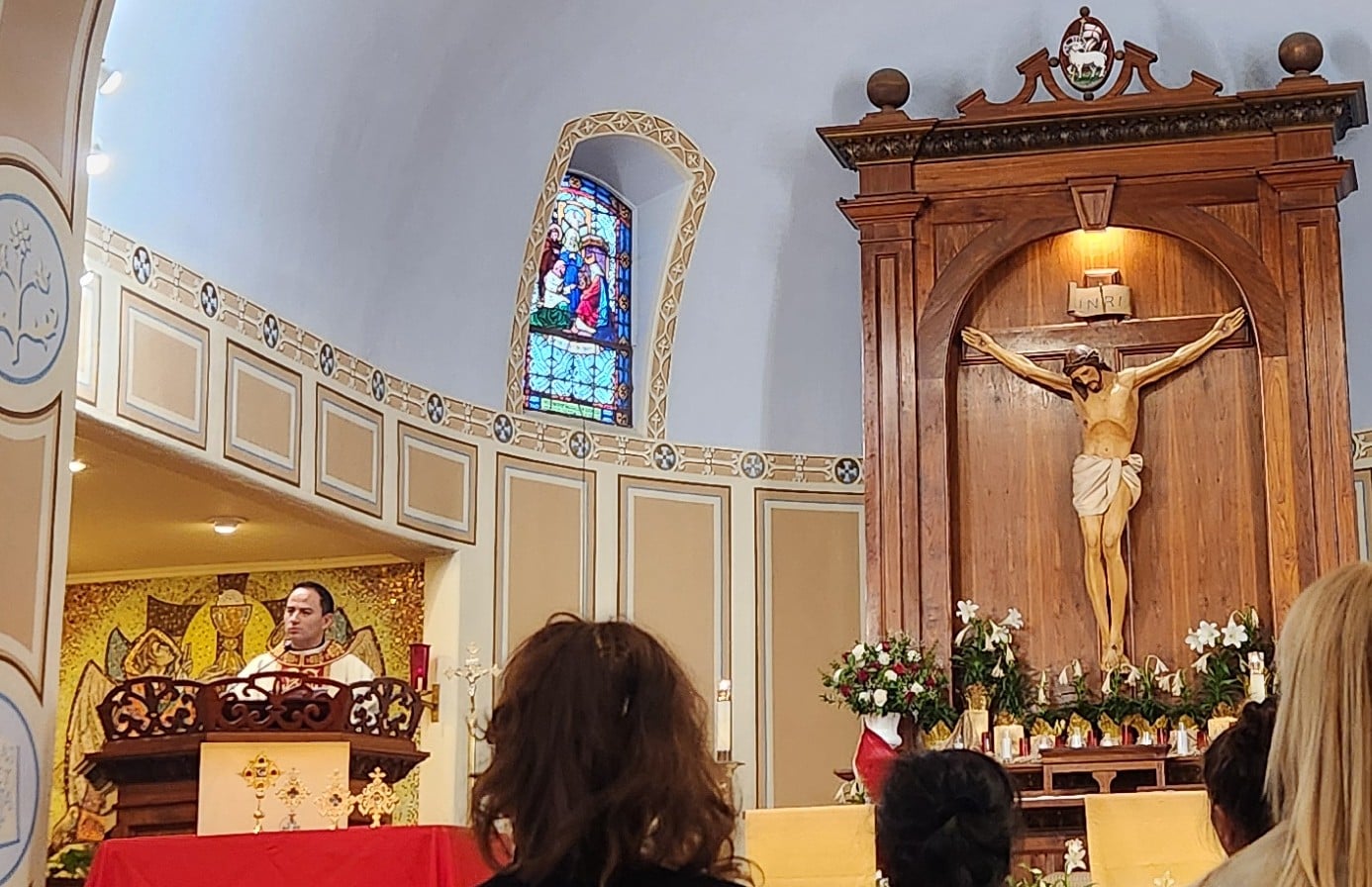
The 5 first-class relics of Cristero martyrs displayed during Mass on a table with the blood-red tablecloth, April 17, 2026. Photo by author.
The visiting priest, originally from Jalisco, intoned the final prayers of the Mass in his soft Spanish and we made the Sign of the Cross, standing expectantly in our pew. I glanced at my youngest son, just weeks away from making his First Holy Communion, and I could feel his anticipation. The moment had arrived!
Everyone began crowding into the center aisle in a rather disorganized fashion and I felt transported to Mexico. At the front of the line, we would be blessed with a first-class relic of five martyrs from the Cristero War, which erupted in 1926 when Mexican Catholics defended their right to practice their faith. Without this war and these martyrs, my family might not be Catholic today. I might not be Catholic today. I might not exist today.
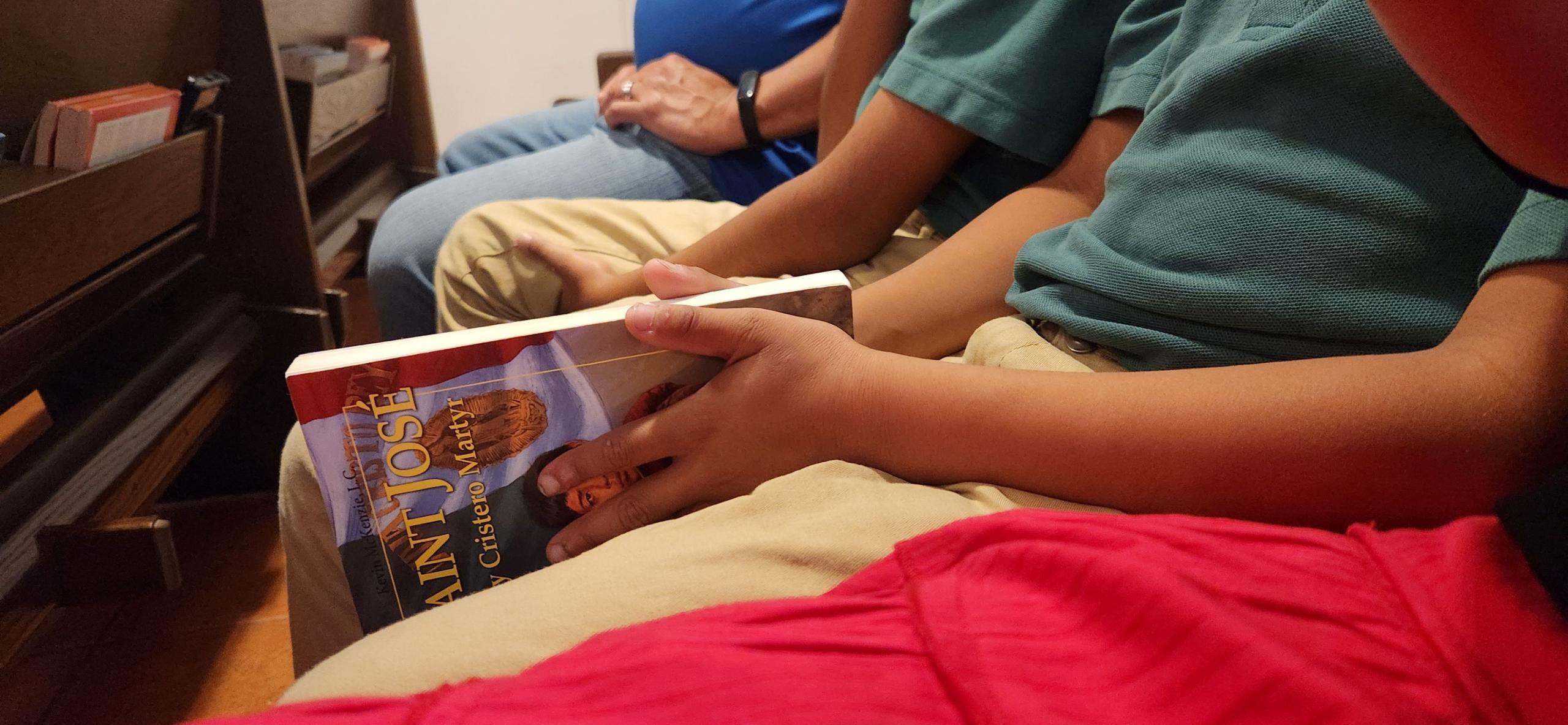
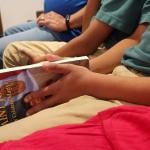
The author’s family in the pew during Mass with the relics of the Mexican martyrs, April 17, 2026. Photo by author.
***
The first time I taught the Mexican Revolution was at Loyola Marymount University during my doctoral studies at UCLA. I was scheduled to be observed by a colleague and I fretted about how to organize this complex topic. Mid-lecture I began writing the names of each faction’s leaders on the board, erasing the names and writing them on the opposing side when they shifted allegiance. I made my point about the complicated nature of this war, but otherwise left the students completely dazed. My observation notes were kind, but clear: instructor should avoid becoming bogged down by the details.
One of the results of the Mexican Revolution was the decidedly anti-Catholic 1917 Constitution. Various articles barred religious corporations and ministers of religion from operating primary schools; limited public worship to inside churches under government supervision; banned the founding of monasteries and taking religious vows; expropriated and nationalized Church property; empowered the states to regulate the number of priests; and forbid clerics from voting, holding office, or criticizing the government.
In part because of the disastrous effects of the Revolution – telegraph lines destroyed, railroads bankrupt, astronomical foreign debt – President Venustiano Carranza (1913-1920), though hostile to the Church, did not enforce the constitutional mandates against it. Neither did his similarly hostile successor, President Álvaro Obregón (1920-1924). The next president, Plutarco Elías Calles (1924-28), however, not only enforced the Constitution’s anti-clerical articles, but his June 14, 1926 “Law on Crimes and Offences Related to Religious Worship and External Discipline,” introduced additional restrictions with severe penalties for disobedience. Priests wearing cassocks or a Roman collar in public would be imprisoned, foreign-born priests would be fined or deported, and existing friaries and convents would be dissolved.
The Catholic Church responded in an unprecedented and astonishing way – it shut down. Beginning on the feast of St. Ignatius of Loyola, July 31, 1926, all sacramental administration and public worship in Mexico ceased. Some scholars say the move was meant to prompt locals to fight for their right to be Catholic. And so it did. An explosion of violence erupted throughout Mexico as peasants, native people, women, children, middle class urban dwellers, and several priests took up arms, formed militias, and attacked the state.
Resistance was strongest in Jalisco, Michoacán, Colima, and Guanajuato, the birth state of my maternal grandfather, who fled the Cristiada violence as a teenager and emigrated to south Texas, where my dad’s family had lived for generations. These guerilla fighters came to be known as Cristeros for their battle cry of ¡Viva Cristo Rey! Long Live Christ the King! Torture and death by firing squad resulted. It became commonplace to see Mexican corpses hanging from trees or telegraph poles in the countryside. Both sides committed unspeakable atrocities.
The National League for the Defense of Religious Liberty organized the resistance, first by gathering two million signatures to revise the Constitution, then by leading a boycott, and finally by resorting to armed violence. General Enrique Gorostieta, with his signature crucifix, was an instrumental leader. Tens of thousands of Catholics died.
Blessed Anacleto González Flores, a leading member of the Association of Mexican Catholic Youth and a lawyer known as the Socrates of Guadalajara, spearheaded peaceful resistance. Captured on April 1, 1927, he was tortured, hung by his thumbs, and had the soles of his feet slashed before dying by firing squad; he’s the patron saint of laity. Blessed Miguel Gómez Loza has a similar story. Growing up in Jalisco poor but devout, he became a lawyer and Association of Mexican Catholic Youth member. A defender of religious liberty, he also faced the firing squad.
Fourteen-year-old St. José Luis Sánchez del Río, or Joselito, joined the Cristero movement as a flagbearer after convincing his parents that he didn’t want to miss the opportunity to go to heaven. Despite being captured and tortured, having the soles of his feet slashed and being forced to walk to the place of his execution as his parents watched, he refused to deny Christ. The 2012 film, For Greater Glory: The True Story of Cristiada, depicts his involvement and martyrdom, among others.
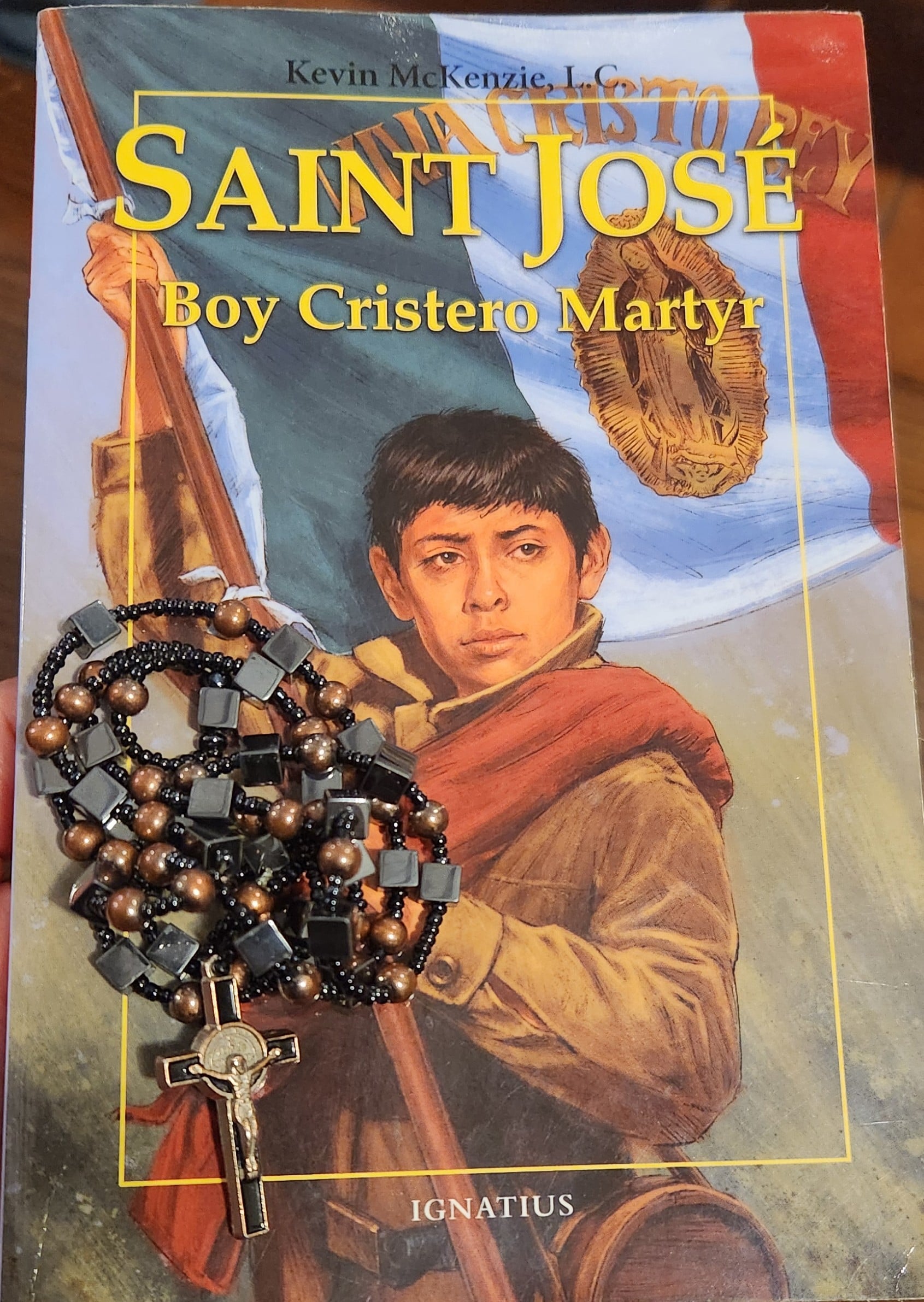
Author’s son’s copy of Saint José: Boy Cristero Martyr by Kevin McKenzie, L.C. (Vision Book, Ignatius Press, 2019) and author’s rosary from Cholula, Puebla, Mexico during Mass. April 17, 2026. Photo by author.
Ordained martyrs include St. José Miguel Agustín Pro Juárez, a Jesuit from Zacatecas who ministered the sacraments in secret. Sentenced to execution after being falsely accused of an assassination attempt on former president General Alvaro Obregón, he lifted his arms to die cruciform in front of the firing squad. Another priest, St. Pedro Esqueda Ramírez, promoted Eucharistic Adoration and catechized youth before being captured, tortured, forced to climb a tree where he was shot and then burned. A third priest, St. Toribio Romo González, ministered the sacraments in secret; federal troops stormed his bedroom one night and shot him; he’s the patron saint of immigrants, many of whom claim to have received his aid along the border.
The Cristero War officially ended on June 21, 1929. U.S. Ambassador Dwight W. Morrow drew up an accord signed by Archbishop Leopoldo Ruíz y Flores (representing Pope Pius XI), Bishop Pascual Díaz of Tabasco, and Calles’s successor, President Emilio Portes Gil. Even so, persecution continued, prompting resistance into the 1940s. When second-wave Cristeros burned government schools and killed Socialist teachers, Mexico responded by killing a priest for every teacher who died.
Not until 1992, after Pope St. John Paul II had visited Mexico twice, did church and state reestablish relations with a revised constitution and new laws on religious associations and public worship. The Catholic Church could own new church properties moving forward, with the Mexican government retaining all confiscated property. During JPII’s first visit in 1979, in fact, it was still illegal for Mass to be said by a non-Mexican or outside a church or to wear clerical garb in public.
***
My 8-year-old son reached the front of the church, clutching his copy of Saint José: Boy Cristero Martyr (Vision Book, Ignatius Press, 2019). After moving down the line and being touched by the first-class relics of St. Pedro Esqueda Ramírez, St. Toribio Romo González, Blessed Anacleto González Flores, and Blessed Miguel Gómez Loza, he reached his favorite: St. José Luis Sánchez del Río. My husband, snapping a photo, captured my delight at seeing our youngest hold up his book to be touched by the saint whose life is described within.
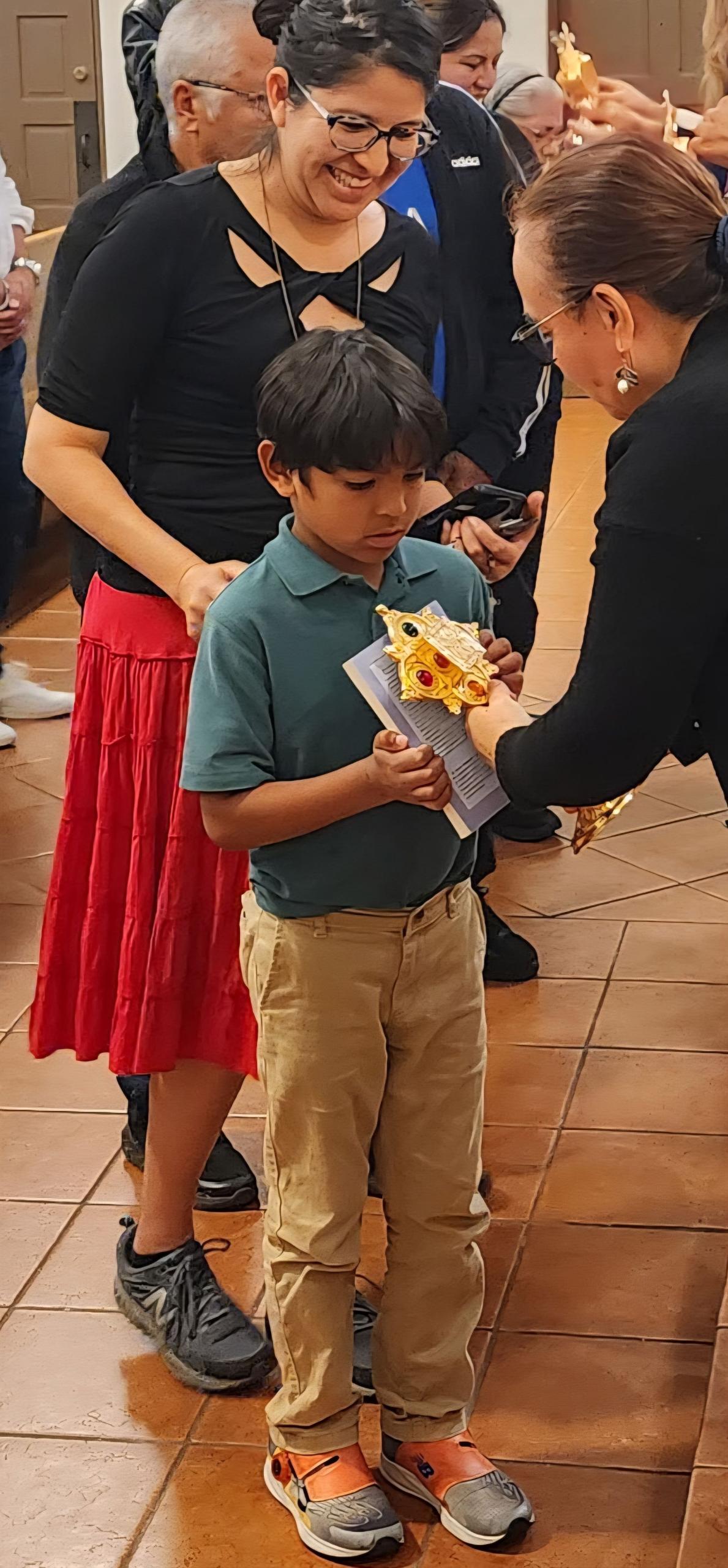
Author looking on as her son holds up his copy of Saint José: Boy Cristero Martyr to be touched by the first-class relics of said saint, April 17, 2026. Photo by author’s husband.
As we left the church, the cries of the presiding priest, Father Rafael Becerra González echoed in our minds: ¡Viva Cristo Rey! ¡Viva la Virgen de Guadalupe! ¡Viva la Iglesia! ¡Viva Cristo Rey! ¡Viva Cristo Rey! ¡Viva Cristo Rey!
Long live Christ the King! Long live the Virgin of Guadalupe! Long live the Church! Long live Christ the King! Long live Christ the King! Long live Christ the King!
I can still hear my son’s voice shouting: ¡Que viva!
Moments like this highlight the continuum of historical experience we share as Christians and remind us to be grateful to those who have given their lives to ensure our religious freedom.
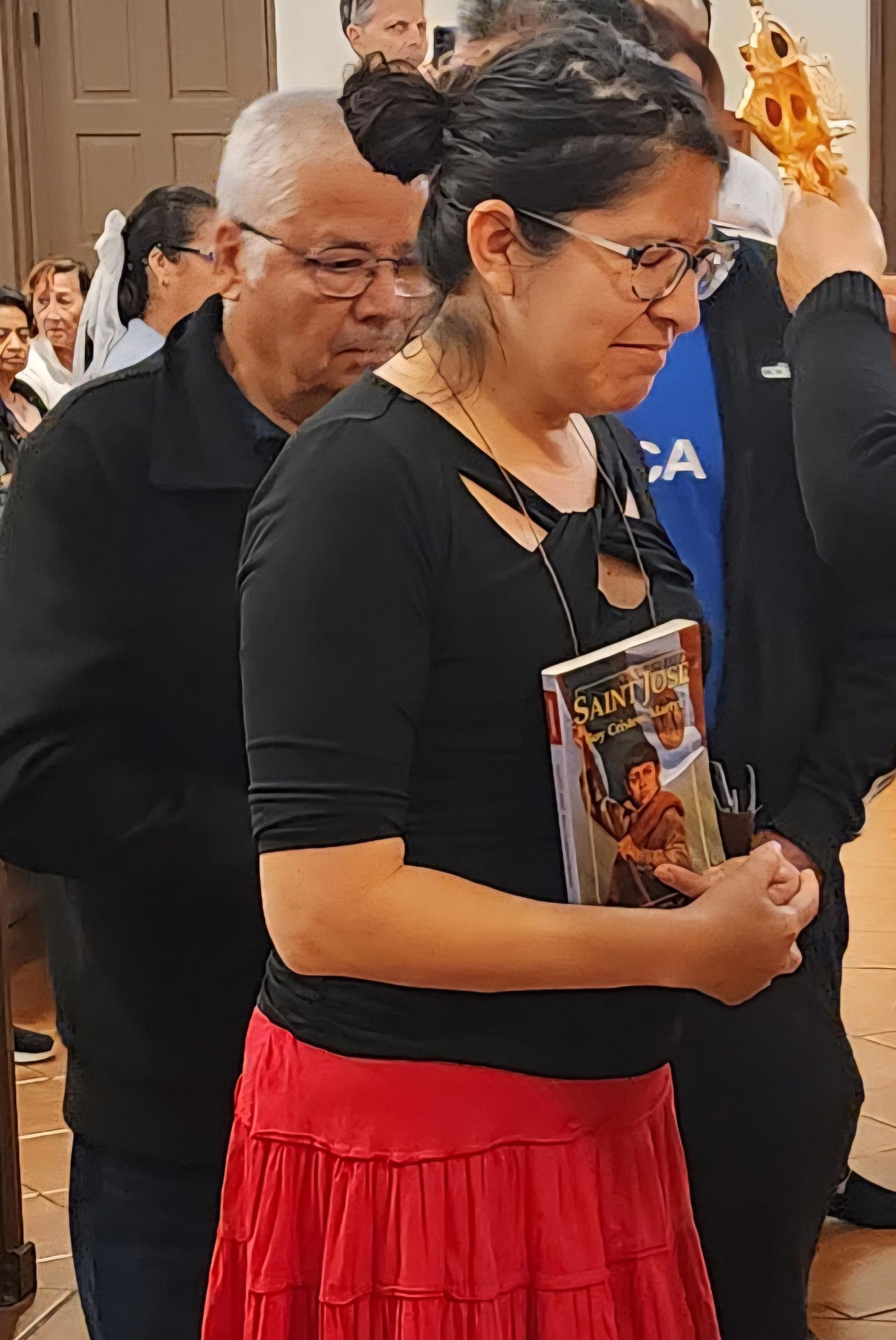
Author being touched physically and emotionally by the relics of the boy martyr, Joselito. April 17, 2026. Photo by author’s husband.






 Ad-Free & Subscriber Log-In