

My recent posts have explored various lost texts, mainly in the context of ancient Greek epics. But I have a long-standing interest in that theme of loss and rediscovery, and particularly in the context of sacred writings and scriptures, which will be the subject of my (probable) next book. Lost texts are intriguing in their own right, but they also raise fascinating questions about our attitudes to knowledge and our quest for authoritative written justifications for what we think, or would like to think. The truth, we think, is out there, or at least is in a text somewhere patiently waiting to be found. We want to believe.
Like many Brits of my era, I was fascinated by R. M. Wilson’s classic study of The Lost Literature of Medieval England (1952), which tracked many odd references and passing allusions to reconstruct what would once have been a vast array of lost heroic stories, saints’ lives, and ballads. But such lost literatures occur in many contexts. If you read the Old Testament attentively, you soon find many tantalizing references to such non-canonical works as The Book of Jasher (Book of the Just Man), The Book of the Wars of Yahweh, or The Annals of the Kings of Judah. There is no suggestion that the respective authors are inventing sources to add credibility to their accounts. Rather, they are just citing books that would once have been known and even commonplace, but which happened not to survive. There need have been no great mystery about that non-survival, and we certainly don’t have to assume any deliberate concealment or suppression. See the useful essay here on “The Disappearance of Ancient Books.”
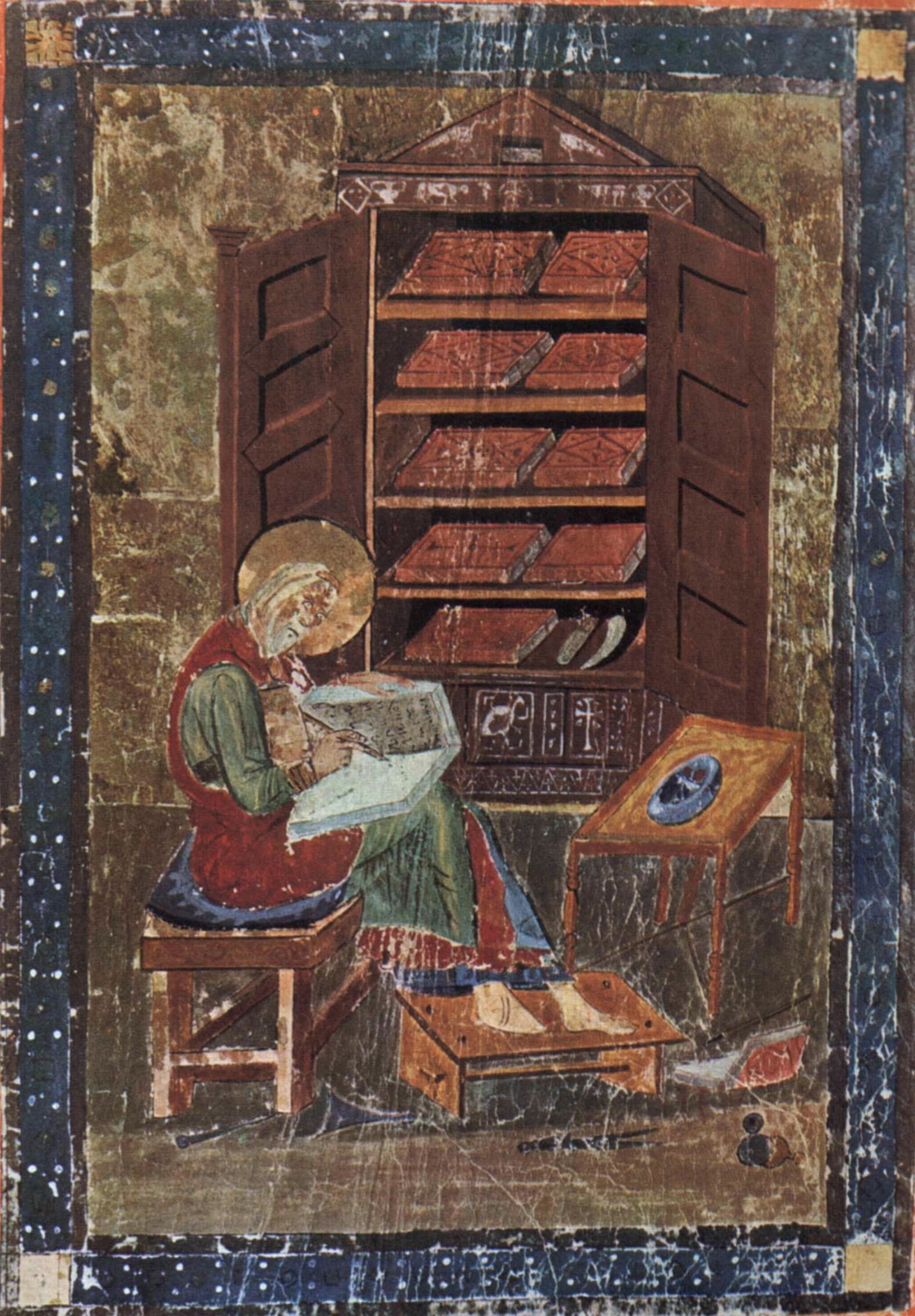 image is in public domain
These Biblical-adjacent texts did produce one outcome which was very common in such circumstances, namely that the existence of a title generated a desire to see the actual text, by forgery if necessary, and they all produced many bogus spinoffs.
But similar issues of “lost and found-ness” surface in many cultures. Just browse in the splendid (and very large) Wikipedia page cataloguing the List of lost literary works and note the many cultures and languages involved, including Chinese and others. In recent years, there have been several useful magazine articles with such titles as “The Top Ten Most Important Ancient Documents Lost to History”, “The Top 10 Books Lost to Time”, and even “14 Lost Ancient Texts That If Found Could Change the World”. By no means all the examples cited are ancient, and the Lost to Time list includes such works as Shakespeare’s Cardenio, which might have had the Bard drawing directly on Cervantes’s recently published Don Quijote. More recent authors such as Jane Austen, Hemingway, and Sylvia Plath are also represented in such “top tens.”
I will just mention a couple of fictional examples of rediscovery here, but in one case, I have to be annoyingly allusive. William J. Caunitz was a very smart author of police novels, drawing on his own professional experience, and in 1989 he published the thriller Black Sand. As the brief blurb reports, “United in a deadly struggle to recover a stolen ancient artifact are Det. Lt. Teddy Lucas of the NYPD and Maj. Andreas Vassos of the Hellenic National Police.” In an ideal world, I would tell you more about the artifact and how it fits into the book’s wonderful conclusion, but I can’t begin to do so without countless ruinous spoilers. Just read it, and read to the end. I CAN’T SAY WHY.
Some lost books generate whole fictional universes of their own. Shakespeare wrote a play called Love’s Labour’s Lost, and there are references to another work we don’t possess called Love’s Labour’s Won. We know next to nothing about that latter, assuming it is not the alternate title for some more famous piece we actually do have. But that has not prevented Love’s Labour’s Won from inspiring detective novels, not to mention the classic Doctor Who episode “The Shakespeare Code.” In that last, the lost text is to be used as a vehicle to spark an alien invasion of Earth, and because it is so dangerous, it has to be obliterated forever. That is why we don’t have it. Makes sense to me.
That question of intentionality often surfaces in the world of lost texts, reflecting as it does our perpetual quest to seek conscious intention or meaning in phenomena that are actually happenstance. Moreover, the fact of disappearance must somehow be important. In the Doctor Who example, the loss of that play must reflect a very conscious effort literally to save the world. Often, in the religious context, we find the theme of a special knowledge that has been hidden from us, perhaps even for divine or providential purposes, until the moment that it is destined to bring a restored revelation to a waiting world. God has saved this text until this crucial moment when we are ready to hear its words of life. Such a vision underlies something like the story of the Book of Mormon, but it actually features quite commonly in Scripture-based religions.
That idea, that mythological structure, actually has a solid Biblical warrant, drawing on events in the seventh century BC. Look at 2 Kings 22, in which the High Priest Hilkiah discovers an ancient scroll in the Temple, a text commonly believed to be what we most or all of what now know as the Book of Deuteronomy. Reading the text, the “Book of the Law,” and discovering its strict monotheism, the King Josiah is appalled by the gap separating that supposedly ancient Hebrew world from the syncretism of his own day, and he launches a sweeping religious revolution. Almost certainly, the book under discussion was in no sense an ancient text, and had been composed and planted quite recently by religious reformers, anxious to achieve precisely the bombshell effect that they actually achieved. They wanted a revolution, and they supplied the written textual evidence on which it could be based. Both the loss and rediscovery of books could be providential.
More on that topic in my next post.













 Ad-Free & Subscriber Log-In