

Last time I discussed just how distressingly much of ancient culture and literature is now lost, in whole or in part, and that fact gives us a distorted idea of those worlds. Today, we think of the ancient Greeks as being obsessed with the whole saga of Troy and the warriors who overthrew it, and what happened to them on their return. But there were whole other epic stories which in their days exercised just as much fascination. I will talk here about one of the most intriguing, namely the whole complex (and truly bloody) universe associated with the city of Thebes. Again, it suggests just how very little of what once existed is preserved for us.
In that previous blogpost, I listed the eight epics that would once have formed part of the Epic Cycle, which included the Iliad and the Odyssey, as well as six other largely-lost pieces addressing related themes of the Trojan War. But as they knew it in antiquity, the full canonical list of the Cycle included no few than twelve epics, beginning with the Titanomachia, and proceeding with three others focused on the city of Thebes, the Oedipodea, Thebaid, and Epigoni. I should say that the exact contents of such a catalog were and remain highly debated, and the Greeks tended to like lists of twelve, however hard they had to shoehorn their available materials into such a tight space. We need not consider ourselves too bound by that magic number. If you want the list to run to (say) sixteen, fine.
Taken together, the Twelve-item cycle covered the history of the Greek world from the days of the primal gods and their struggles right up to the end of the “Homeric” era. The Titanomachia describes the war between the Titans and the Olympian deities. We then proceed to three works focused on the city and dynasty of Thebes, events that would have occurred in the generation or so before the Trojan struggle. And then on to Troy.
 All images are in the public domain
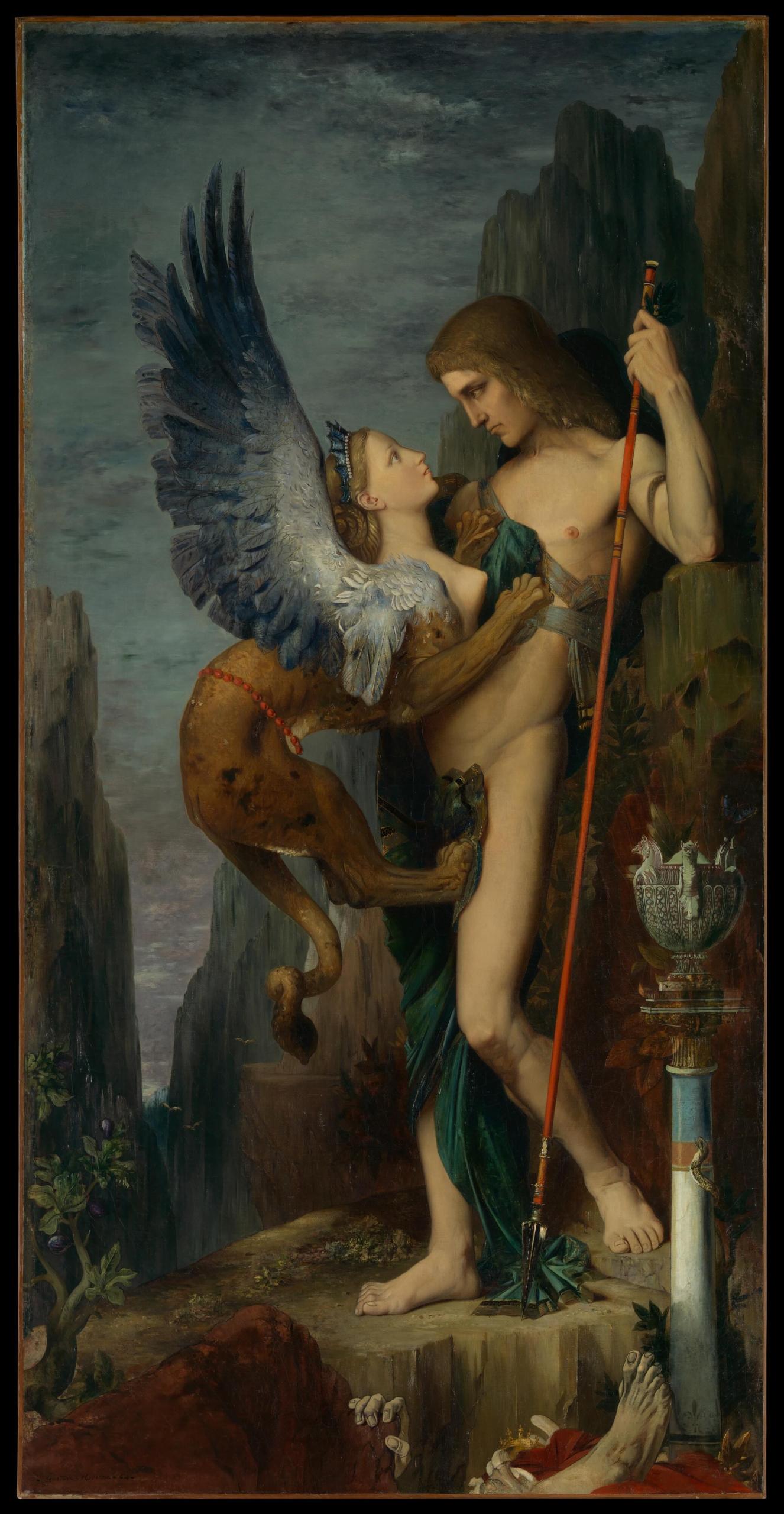
Anyone with cultural aspirations knows something about the legends of Thebes, as they are preserved for us in the work of Sophocles, and above all in his Oedipus Rex. We know the story well enough – the dialogue with the Sphinx, Oedipus’s unintentional murder of his father and his marriage with his mother, and his self-blinding. That tale then continues into two other productions, Oedipus at Colonus, and Antigone. Aeschylus and Euripides both touched on the long and contorted family saga in their dramatic works.
But originally, these tales were all integrated into a vastly larger sequence of stories all more or less connected to the Theban royal house. The action of Antigone revolves around the story of Oedipus’s two sons Eteocles and Polynices, who had shared the rule until the former seized absolute power. Polynices then gathered an army and attacked the city, in a war that killed both, leaving Antigone to try to secure worthy burials for both of them. As we see it through Sophocles’s eyes, this almost becomes a footnote to the original tale of Oedipus, but originally, it was anything but that.
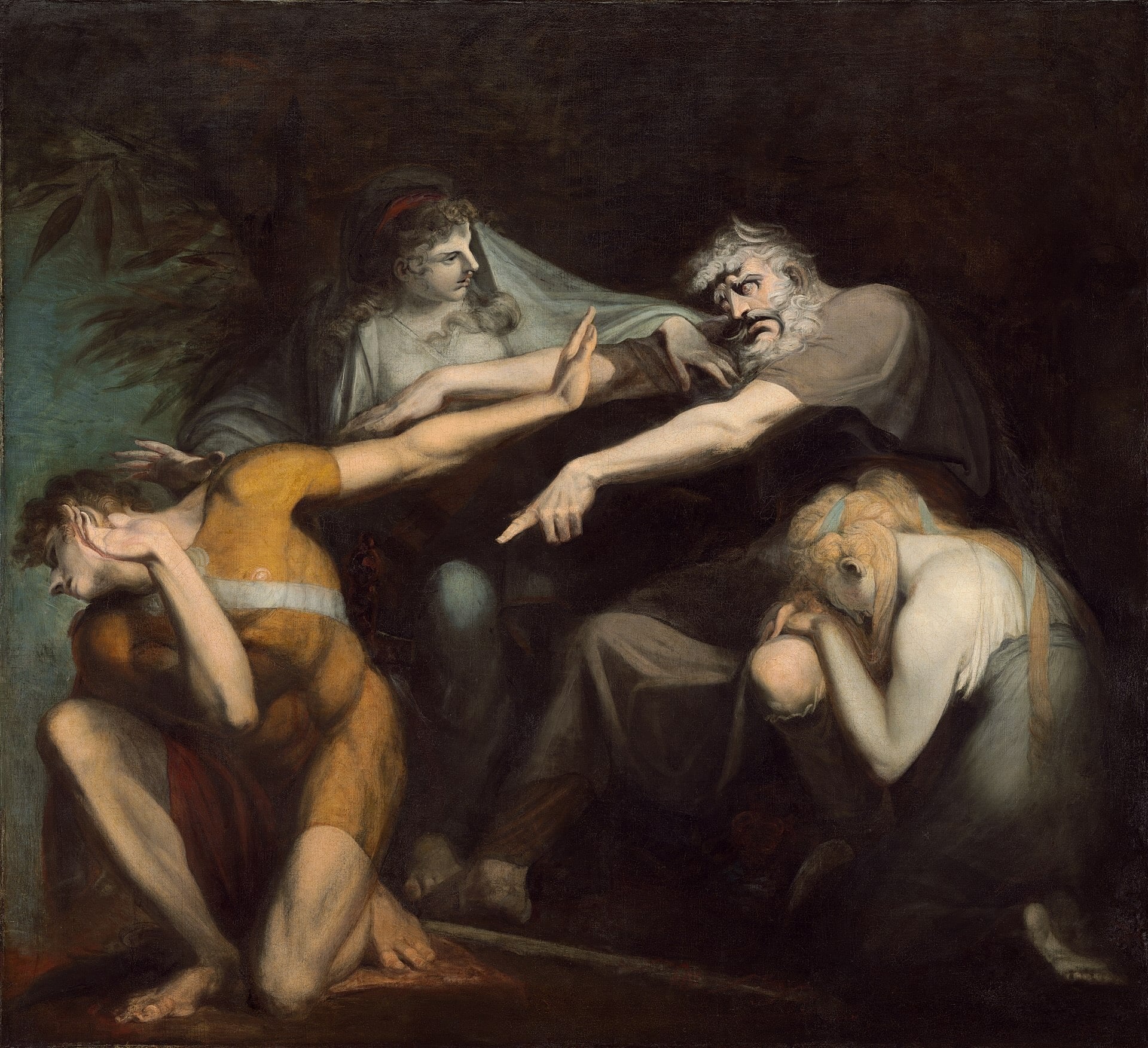
Once upon a time, Thebes was the subject of a whole epic cycle in its own right, of which we see only the distant echoes in the famous plays of the Athenian Golden Age. I should say that Classicists differ passionately as to whether the various Thebes-centered works constituted an actual “cycle” on Trojan lines, but the individual pieces certainly existed.
Central to the story was the war of the heroic “Seven Against Thebes” which in its day would have been almost as famous as the Trojan stories. When he described the Age of Heroes, Hesiod identified the two key events as the wars for Thebes and for Troy. Briefly, Polynices mobilized to retake Thebes from his brother, and he was supported in this by the King of Argos, Adrastus. In effect, this was an Argive effort to conquer Thebes. All seven champions perished in the attempt (gloriously, needless to add). Ten years later, the sons of those Seven – the successors, the Epigoni – returned and successfully took Thebes.
The Theban Epic Cycle, if such it was, had three (or conceivably four) components, most of which are all but wholly lost:
Oedipodea which reports a version of Oedipus’s confrontation with the Sphinx, but in an account very different from the one we know.
Thebaid – an account of the war between Eteocles and Polynices, and the Magnificent Seven. For what it is worth, the work was believed to be the work of Homer himself.
Epigoni – a sequel to Thebaid, describing the struggles of the children of those original seven heroes. Also attributed by some to Homer. The poem once included 7,000 lines, of which there survives just one, namely the opening, “Now, Muses, let us begin to sing of younger men …” One line down, 6,999 to go!
Alcmeonis – a bloody story of family murder involving Alcmaeon, one of the Epigoni. Included in some listings of the “Epic Cycle” but not others.
Although those epics are lost, the stories survive in later drama, including Aeschylus’s Seven Against Thebes, Sophocles’s Antigone, and two surviving plays by Euripides, The Suppliants and The Phoenician Women. Antigone and The Suppliants both deal with the aftermath of the war, the recovery of the remains and their proper disposal. Aeschylus’s play would once have formed part of a “Oedipal” trilogy, but it is the only one of the three to survive.
Far less well known was the huge Latin retelling of the war of the Seven in the Thebaid of the Roman poet Statius, written in the early 90s AD. Unknown today to non-specialists, it was throughout the Middle Ages one of the most popular of all Classical writings.
Today, we think of the two Homeric epics as constituting much or most of that Greek legendary world. 2,500 years ago, that mythical history was a far larger phenomenon, and even the category of “Homeric” was understood much more broadly than in later years. And that world had two poles, in Thebes and Troy.













 Ad-Free & Subscriber Log-In