

In a homily on Palm Sunday, Pope Leo XIV condemned violence and war and those who perpetuate it: “This is our God: Jesus, King of Peace, who rejects war, whom no one can use to justify war.” He goes on to cite Isaiah 1:15, “[God] does not listen to the prayers of those who wage war, but rejects them, saying: “Even though you make many prayers, I will not listen: your hands are full of blood” (Leo XIV, Homily). This has garnered much attention by those actively engaging in warfare, most notably by members of the Trump administration. So, JD Vance has responded to this homily by claiming that just war theory means that God is sometimes “on the side” of those who wield the sword and thus the pope must be careful when he “talks about matters of theology”. Further, Pete Hegseth has offered a sort of ‘counter-liturgy’ which support Vance’s statements in the form of prayer meetings where he asks for God’s favor upon US military action, even quoting Scripture (some real, some fake). Setting aside the fake Scriptures used by Hegseth, quotations from the Bible perhaps feel like they offer conflicting perspectives– and the claims being made right now certainly do. So, which is it? Does God support those who go to war or not? Perhaps we might learn from Early Christians on this question.
Non-Violence in Early Christianity
The Sermon on the Mount seems to call for total non-violence: an ‘eye for an eye’ (Leviticus 24:20) is replaced by ‘turn the other cheek’ (Matthew 5:39). That is not to say this call was always heeded though, as Jesus’ apostles even turned towards violence at times, with Peter pulling a sword and cutting of the ear of one who sought to capture Christ (John 18:10). Though, Christ rebuked him for it! The following generations of the church seem to mostly obey Christ’s call, living lives oriented towards peace and non-violence. So, Athenagoras (115-190) echoes Christ, asserting that Christians have learned not “to return blow for blow nor to go to law with those who plunder and rob us, but to those who smite us on one side of the face, to offer the other side also, and to those who take away our coat to give likewise our cloak” (Athenagoras, Plea for Christians 1). This new covenant theology, which prioritizes Christ’s commands over the Old Testament allowances for violence and retribution, meant that military service was often condemned. Hippolytus (165-235), for instance, is explicit in the church’s stance towards military service: “If a catechumen or a believer wishes to become a soldier they shall be rejected, because they have despised God” (On the Apostolic Tradition, 16.10).
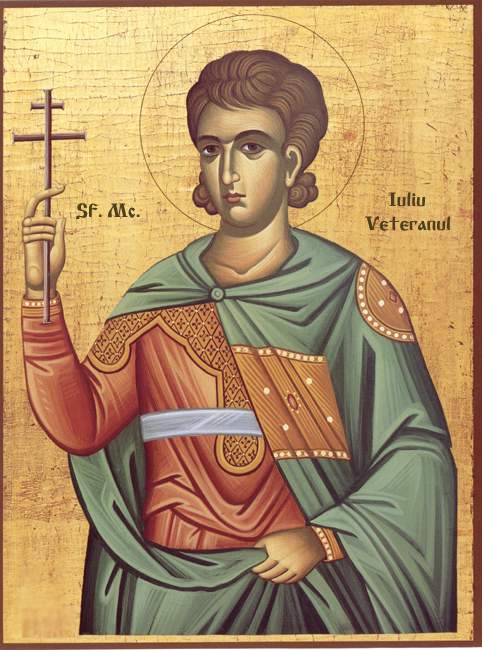
Recently, a number of scholars have pointed out examples which seem to destabilize a portrait of unanimous pacifism in early Christianity though (ex. Larry Hurtado, Destroyer of the Gods; John F. Shean, Soldiering for God). For instance, there are several examples of Christian soldiers in the late second century and many more in the third. Further, even the most vocal opponents of violence—such as Tertullian (155-220) and Origen (185-253)—support governmental military action for the sake of peace. So Daryl Charles writes, “While some in the early church were opposed to soldiering and war on the basis of ideological pacifism, this was not universally the case” (Charles, “Pacifists, Patriots, or Both?,” 43).
So how do we interpret this apparent inconsistency between the condemnation of violence and the acceptance of governmental military action, even the occasional participation in it? A popular way to explain this is to specify what exactly Christians are condemning: perhaps it is not military service nor violence itself, but the idolatry that is implicit in the life of a Roman soldier. And indeed, soldiers were expected to worship the emperor and Roman gods in this time (see: Knut Ruyter, “Pacifism and Military Service in the Early Church,” 59). That is to say, military service is condemned not on the grounds of ‘turn the other cheek’ (Matthew 5:39) but on ‘you shall have no other gods before me’ (Exodus 20:3). Another explanation, which seems to consider the evidence more holistically, has been offered up recently by Daniel Weiss. “Through a Levite-like dual-ethic approach, [early Christians] can endorse the emperor’s military battles while simultaneously holding that Christians cannot legitimately engage in military bloodshed and killing” (Weiss, “Christians As Levites,” 493). In other words, Christians were committed to non-violence themselves but thought that God might employ violence through non-Christian governments to maintain order.
Whether one is persuaded by Weiss or other interpretations of the evidence, it is important to not lose the forest for the trees. Yes, there early Christians who joined the military and those who condemned military service. Yes, there are ancient Christians who denounced violence while praying for the military to maintain peace through violent action. But it is not as if those received equal emphasis: the overwhelming evidence is towards non-violence as the normative position in early Christianity, no matter the circumstances. In sum: God might be “on the side” of those (governments) who use the sword, but Christians are not on the side of the sword—they are not to encourage or participate in war.
Warring against Non-Violence? Augustine and Just War Theory
While most of the early Christians seemed oriented towards non-violence in their actions and teachings, there is one who seems to provide the intellectual teeth to justify it: Augustine of Hippo (354-430), the supposed founder of ‘just war theory’. Just war theory essentially adjudicates when it might be morally permissible to enter into war (jus ad bellum) and how to conduct yourself when at war (jus in bello). Importantly, Augustine only hints at how to answer these specific questions—it is the later development of his thought in medieval scholasticism that provides systematic clarity, here. But he does grapple more than any Christian before him on how to think about warfare, which might give the impression that he is finds violence acceptable (See: John Mark Mattox, Saint Augustine and the Theory of Just War). Is Augustine breaking from those before him?

Importantly, the foundation of Augustine’s meditations on this topic are in basic continuity with other ancient Christian thinkers—he is, like most of the others, committed to non-violence. So, Robert Holmes summarizes: “That Augustine was almost certainly a personal pacifist may be granted. He denies that private individuals may kill even in self-defense. Short of assuming the duties of an official of the state or an agent thereof (as he understands soldiers to be), one not only need not but may not, on Augustine’s view, engage in killing” (Holmes, “St. Augustine and the Just War Theory, 429). Essentially, he employs the same sort of framework as those who came before (if Weiss is correct): Christians may not use violence personally, but the government might be able to use it for peace.
Of course, there is a massive difference between the world that Augustine was living in from those before—the Roman empire was now a Christian one. In this, he was forced to answer a question that Athenagoras didn’t even have to pose: how might a Christian government use violence? Augustine recognizes the differences himself, claiming that the different periods in salvation history demand different ethical responses, even if the abiding principles remain. So, while “God commanded the prophets in old times to make war,” he “forbade the apostles” (Against Faustus, 23.77). This command was binding “until the prophetic predictions about the faith of kinds and nations were fulfilled” (Letter 185.23), and now the new reality of a Christian government created space for specific uses of force. In other words, the principles of peace and non-violence remains for Augustine, but a nation ruled by Christians cannot always avoid wartime violence, hence his reflection on this question.
While I could examine Augustine’s various teachings on just war, perhaps it is more important to point out what undergirds his entire system: Augustine’s reflections about the acceptable forms of violence are all steeped in a Christian theology of peace, a theology which is shared with those who preceded him. While he was forced to grapple with new questions about warfare, the foundations of Augustine’s just war theory are predicated on assumptions of non-violence and peace.
Just War does not Justify War
The early church clearly has a variety of perspectives on violence and soldiering—with some rejecting all warfare and others accepting Christian military service. And while most all Christians were willing to pray for the military, only a few thought that Christians might participate in war. This is because there was a common assumption that peace and personal non-violence are normative for the Christian, and so military service was at best morally complicated. So how might these early Christians respond to this debate?
With the Pope, they would condemn war mongering and those who call for violence. Even then, they would pray for peace and for the military that is to uphold it (see, for example, Origen’s Against Celsus 8.73), noting that if God is ruler and king over all, he uses governments to his end. With the Trump administration, they might note that just war theory (especially of Augustine) might allow for specific uses of violence in wartime. But, they would have serious critiques to offer to this latter group, especially in their rhetoric around the war in Iran.
First, early Christians would condemn military aggression, calling military powers to reorient themselves towards peace. Even if there is space for governmental military action and even if Christians are allowed to fight as soldiers, the goal and emphasis throughout early Christianity is on love, peace, and security. In this, we can learn from Augustine in particular: the assumptions of just war theory are fundamentally pacifistic, as this theory severely limits when to go to war and how to conduct themselves. Thus, actions which are cruel and inhumane are explicitly condemned, like bombing schools or water treatment plants. One cannot reach a just end through unjust means. Second, if our orientation is towards peace, they would also condemn rhetoric that intentionally praises violence and death. There has been a concerning fetishization of warfare and militant language by Pete Hegseth and others that is idolatrous in nature, which is completely foreign to those early Christians who allowed for military action. Even a ‘just war’ is something to be mourned, as precious human life is disrupted, displaced, and lost.
During Eastertide, it is especially important to reflect on Lordship of Christ, with the early church: we serve a risen savior who rules and reigns over all things—and his name is ‘prince of peace’ (Isaiah 9:6). Pope Leo has reminded us of what the earliest Christians believed: that we too, are people of peace. This means that the existence of just war theory does not justify war and violence. Rather, just war theory seeks to cultivate peace in a messy world, restricting force to a very specific set of circumstances. Perhaps, then, we should be asking ourselves an additional question: Are we, in our actions and rhetoric, following the God who abhors war?












 Ad-Free & Subscriber Log-In