

My present work concerns the massive discoveries of early Christian texts, documents, and scriptures in the years between roughly 1870 and 1930 – that is, a generation or two before the famous finds at Nag Hammadi and Qumran in the 1940s. I have blogged a lot about this in the past, but I don’t think I ever asked one question, which was: why then? Why did that whole process not start even earlier? Today I want to offer an explanation, and one that I really don’t think features much in the standard writing on that whole phenomenon, which is the role of empire and imperialism. So yes, I am combining here a couple of my favorite themes (and hobby horses).
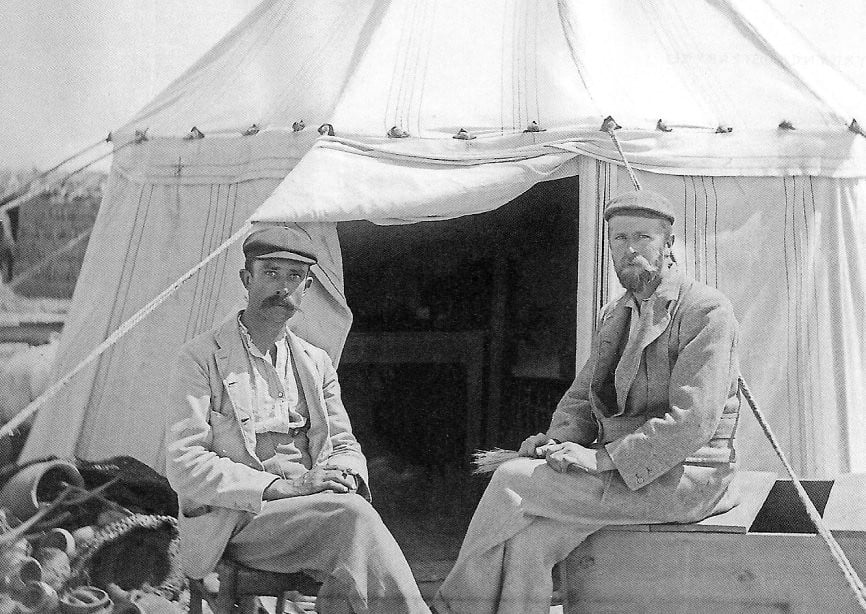 all images are the public domain
The Age of Discovery
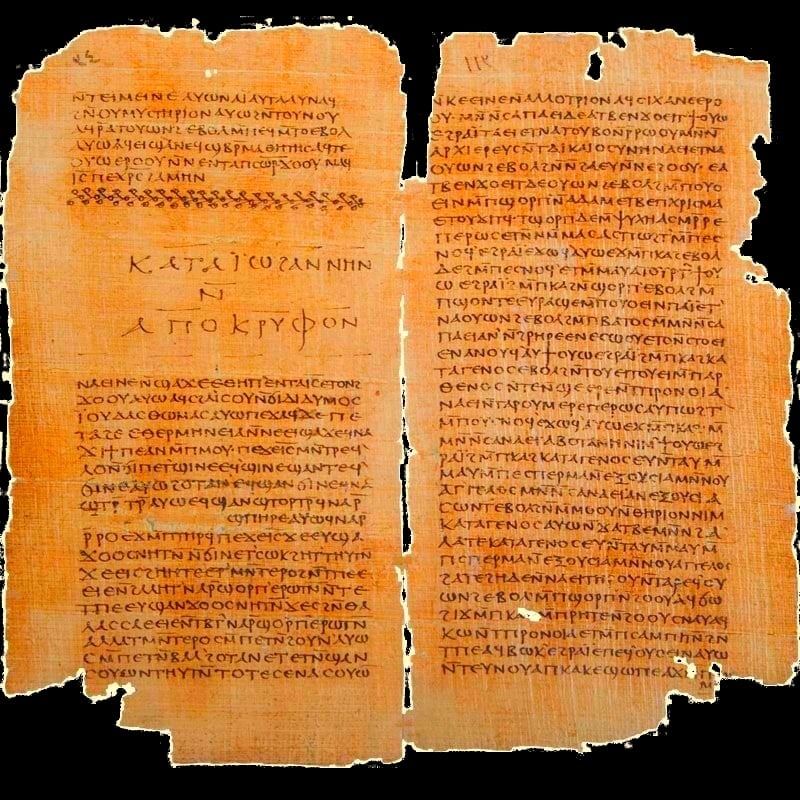
The discoveries of that era are very frequent, and some indeed are truly famous – we think for example of Constantine Tischendorf’s unearthing of the Codex Sinaiticus in St Catherine’s monastery in Sinai. But there was so much else, which I have discussed in multiple previous blogs. Just to name a few from Egypt, think of the Oxyrhynchus Sayings of Jesus in the 1890s, which produced most of what we would later call the Gospel of Thomas; the Gospel of Peter in the 1880s; or the Akhmim Gnostic Codex, which included the Gospel of Mary. Think of the finding of the papyrus P52, one of the very earliest fragments of a canonical gospel. That story then runs on through the 1940s, with the Nag Hammadi library, and the Bodmer Papyri in the following decade. Not to mention a great many other critical texts about the early Christian ages from the larger East Mediterranean world, such as the Apology of Aristides or the Didache. Everything seems to happen at once. (I won’t go into any detail here, as you can follow up those links if you are interested).
And that is just the Christian-related material. In Egypt alone, those years also brought the Amarna Letters (1887), our prime source on the Late Bronze Age. (See Eric Cline’s terrific Love, War, and Diplomacy: The Discovery of the Amarna Letters and the Bronze Age World They Revealed). The Zenon Papyri (discovered 1914-1915) tell us a lot of what we known about Hellenistic Egypt. In the 1890s, the Cairo Genizah supplied the first evidence of the Qumran sect that produced the Dead Sea Scrolls. Before the discovery of Qumran, the Nash Papyrus (1902) was the oldest known Jewish manuscript.
It all seems to start in 1859, with Tischendorf and Sinaiticus, and then basically never ends. Why? Well, the land of Egypt did not suddenly decide to grow some new antiquities. Nor did Western European Christians suddenly snap their fingers and say, “Of course! Egypt! That’s where we will find all the manuscripts we ever dreamed of. I bet they even have papyri.” True, there had been a couple of intrepid predecessors, above all the incredible James Bruce in the 1770s, but the sheer scale of new exploration and research from the 1860s onward is several orders of magnitude greater. Again, why?
Clashing Empires
When scholars report these magnificent achievements, they have a bad habit of focusing too exclusively on, well, scholarship, without paying proper attention to other critical factors. I think there is a vital element missing in the narrative of this oft-told tale, which is empire.
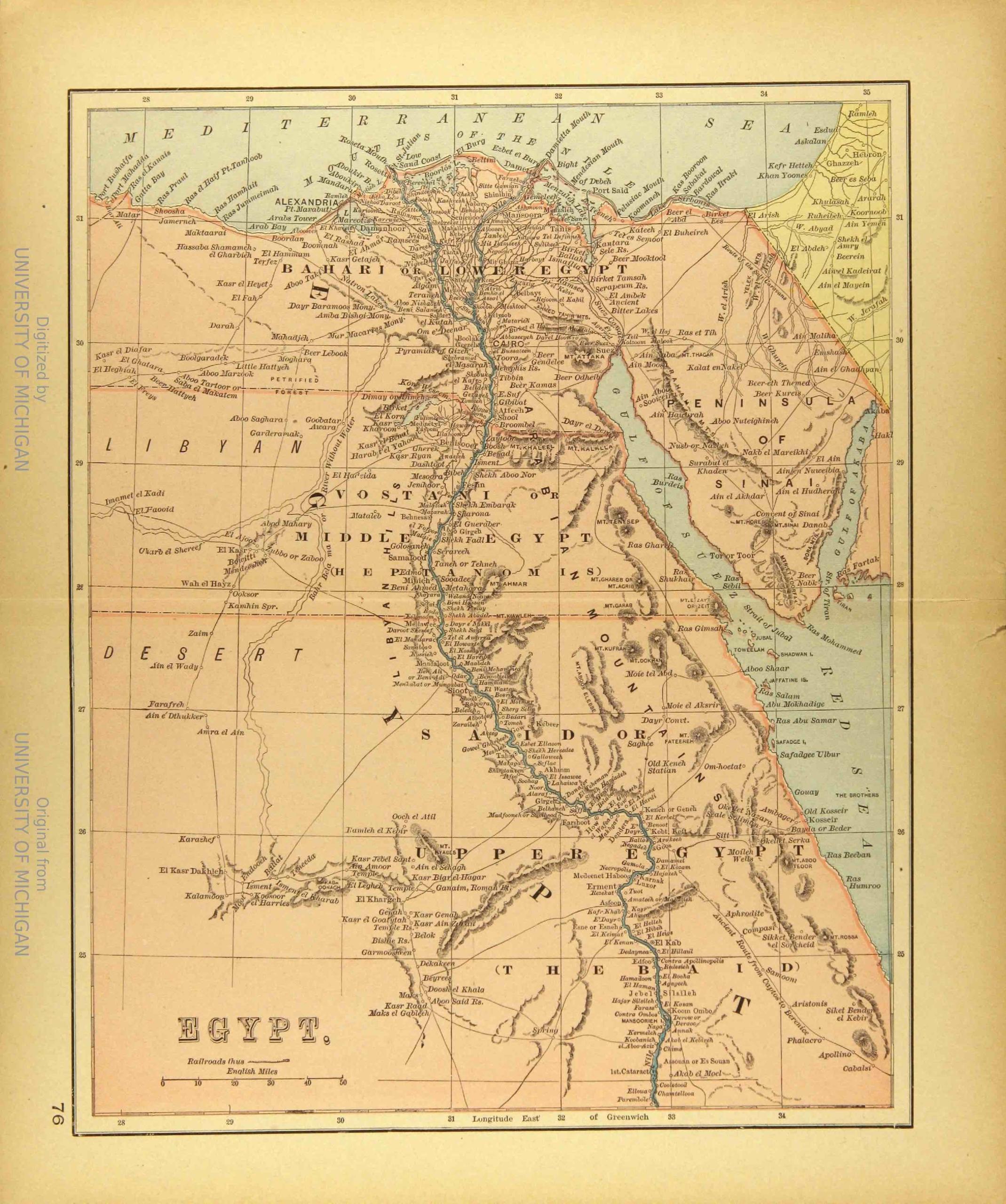
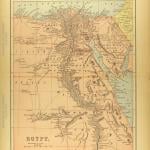
Most of the breakthroughs occurred in the lands of Eastern Mediterranean, in the Levant, and above all, in Egypt. The accumulation of such exhilarating activities from the mid-century did not mean that Western European scholars suddenly became aware of the scholarly riches to be found in these lands that they had previously chosen to ignore. Rather, hitherto unimaginable new opportunities now arose for research and intellectual exploration. One factor was the improved forms of transportation that now developed in the form of railroads and steamships, but above all, it was the new political environment that opened doors, and the new balance of power prevailing among competing empires.
From mid-century, European Christians no longer had to face the fearsome might of a unified or aggressive Ottoman Empire. Although that empire still ruled huge tracts of land stretching from Anatolia and Palestine through Mesopotamia and Syria, that territory was increasingly vulnerable to threats of invasion and partition, above all by the Russians. In mid-century, few educated Europeans had the slightest doubt that the Ottomans’ days were numbered: it was not a question of if, but of when. Just as doomed, in that vision, was Muslim dominance throughout the region. And the Russians would be the gravediggers.
Here is the experienced British traveler Robert Curzon writing in 1850:
From Mount Ararat to Baghdad, the different sects of Christians still retain the faith of the Redeemer whom they have worshipped according to their various forms, some of them for more than fifteen hundred years; the plague, the famine and the sword have passed over them and left them still unscathed, and there is little doubt but that they will maintain the position which they have held till the now not far distant period arrives when the conquered empire of the Greeks will again be brought under the dominion of a Christian emperor.
Or to be more precise, of an Orthodox Tsar. The Russians spoke publicly of planning to restore the Byzantine Empire, run this time from Moscow.
Local Turkish officials were well aware of their need not to offend such powerful states as Britain and France, which guaranteed the Ottomans against conquest, so they had to grant considerable latitude to visitors from those countries. In the Crimean War of 1854-56, the British and French joined the Turks to fight Russian advances in the Black Sea. War was again imminent in 1877, when London crowds famously sang
We don’t want to fight but by jingo if we do,
We’ve got the ships, we’ve got the men, we’ve got the money too
We’ve fought the Bear before, and while we’re Britons true,
The Russians shall not have Constantinople.
Hence the word “Jingoism.”
In short, the Ottomans came to depend totally on the British and French for their survival. If they blinked, the empire died.
“I Am A Roman Citizen”
Ottoman authorities also knew that severe military consequences awaited any nation that harmed foreigners. Look for instance at the French intervention in Lebanon in 1860, or the 1882 British assault on Egypt, which led to prolonged occupation of that country.
To understand just how sensitive such matters of national pride could be, look at the Don Pacifico affair of 1850. That was, we recall, the same year as Curzon’s quote cited above. David Pacifico was basically a Portuguese Jewish merchant, whose family background in Gibraltar gave him a somewhat questionable claim to be a British subject (Who knows?) While serving as a consul in Athens, his house was sacked in a riot directed against Jews generally, and him personally. The British government immediately demanded compensation for his property, and additional payment for the insult to himself. When the Greek government balked, the Royal Navy blockaded Greek ports, raising the possibility of confrontation with France and Russia. A settlement was ultimately reached.
When the British Prime Minister, Lord Palmerston, was attacked for his hair-trigger response, he defended his decisions in what became a legendary speech. He declared that “As the Roman, in days of old, held himself free from indignity, when he could say, Civis Romanus sum [I am a Roman citizen], so also a British subject, in whatever land he may be, shall feel confident that the watchful eye and the strong arm of England will protect him from injustice and wrong.” That set of principles now applied to every scholar, archaeologist, or dealer traveling anywhere in the Mediterranean. If they would go to such lengths for Don Pacifico, what might they do for a proper upper-class Oxford scholar?
The French were at least as sensitive to potential insults to their own people as were the British.
Egypt and the Empire
Meanwhile, Greece and Egypt had both achieved the status of independent nations, and neither wished to discourage free-spending Western European visitors. By the 1860s, both countries had developed lively tourist infrastructures, and Egypt offered luxurious hotels and frequent steamboat tours on the Nile. Reading fiction of the early twentieth century, we might be startled to see how thoroughly Egypt had been integrated into the European tourist vision, and looked very much like a facsimile of the French Riviera, complete with its fashionable seasons. The book is a bit late for my present purposes, but read Agatha Christie’s Death on the Nile (1937).
The opening of the Suez Canal in 1869, moreover, gave the country critical strategic significance. From 1882 through 1952, the country was under de facto British control, a part of the empire in all but name. British imperial aspirations in Africa famously stretched “from the Cape [of Good Hope] to Cairo.”
That context provided at once the motive, means and opportunity for scholarly exploration. Western researchers, antiquarians, archaeologists, and book hunters became a familiar sight in lands that were now wide open to scholarly free enterprise. Those intrepid travelers operated within an imperial context, with the promise of official assistance and protection always close at hand. When we hear about the Egyptian documentary finds of this era – at Oxyrhynchus and Akhmim, at St Catherine’s in Sinai and Nag Hammadi, at Amarna and in Cairo itself – we should always recall that these all occurred within a British imperial framework.
As those European scholars, antiquaries, explorers, and adventurers ranged widely through the Middle East, a substantial network of antiquities dealers and intermediaries emerged to accommodate the demands of collectors and cognoscenti. A hyperactive profession of forgers likewise appeared in the same years. Although the English and French led the movement, the thriving academic worlds of the German-speaking nations enthusiastically participated.
Particularly at the end of the nineteenth century, Egypt remained prominently in the headlines covering amazing new discoveries, and researchers and archaeologists had acquired an excellent sense of the areas most likely to produce fruitful evidence. European savants recognized with awe the inconceivably abundant papyrus remains that were so readily found in ancient sites, and which chiefly dated from the Hellensitic, Roman, and Early Christian periods. The modern scientific study of those materials dates from the 1880s, with the recognition of such sites as Faiyum (Arsinoe), Akhmim (Panopolis), Hermopolis, and Oxyrhynchus. Some wealthy patrons rapidly assembled huge collections, in the tens of thousands of fragments. Although only a tiny proportion had any religious relevance, there were already tantalizing hints of the potential that would be exploited in later years.

Wider Still And Wider
Then there were all the Old Testament Pseudepigrapha that so revolutionized understandings of Jewish and Christian origins, such texts as 1 Enoch. Many of those came from Ethiopia, which was subject to many of the same considerations as Egypt. Although Ethiopia remained independent through the 1930s, it operated within a political framework dominated by British power, and by that country’s interests in the Indian Ocean. When in 1867 the country’s emperor Tewodros II imprisoned British diplomats and missionaries, the insult provoked a major invasion that resulted in the fall of his main fortress: Tewodros committed suicide. Following this harsh lesson, the country’s authorities had to treat European manuscript hunters very gingerly.
Besides the textual finds, the new wave of “Oriental” exploration produced a legendary age of the archaeology of ancient cities and palaces, which contributed to the popular sense that modern science could uncover every aspect of ancient life. Many of the most remarkable were in Ottoman territories, but Greece and Egypt had their share, and in each case, imperial factors ensured the safety of Western visitors. The reading public avidly followed Heinrich Schliemann’s reported discoveries at Troy in the 1870s, and the ensuing wave of sensational reports continued steadily through the opening of Tutankhamun’s tomb in 1922. That latter find launched a global wave of “Tutmania,” with astonishing effects on Egyptian tourist statistics, but even half a century before that, the country was already an archaeological theme park.
For this world as it existed around 1910, do check out the terrific photographic series here.
Also Ottoman-ruled were the Assyrian lands of northern Iraq that produced so many treasures from the mid-century onward, such as the tablets describing the Epic of Gilgamesh. So often we see those Ottoman authorities struggling to balance the British against the French when they decide which side gets the go ahead to dig in particular locations. For more modern times, look again at Agatha Christie and the account she offers of archaeological enterprise in her Murder in Mesopotamia (1936). What a pervasively imperial and colonial world it is! (Yes, I know that the Ottomans were gone by that point, but the basic themes remained the same in the new Iraq).
We can and must have endless qualms about such imperial adventures, which could have horrible consequences for subject peoples. But dare we say that without the European empires, our knowledge of Jewish and Christian history, not to mention of the development of the Bible, would be immeasurably poorer than it actually is?
From a huge potential bibliography, check out for instance Empire and Excavation: Critical perspectives on archaeology in British-period Cyprus, 1878–1960.










 Ad-Free & Subscriber Log-In