

Some years back, I published a lot at this site on the general subject of Alternative Scriptures, and their rediscovery in modern times. I found a lot to say that was new and counter-intuitive, and the whole subject really cried out to be a book. At the time, I was focused on other topics, but my recent work on the 1890s really makes me think that the time has come to develop that. I will use my next couple of posts to expand on those ideas, but at every point, I will be harking back to those original posts with their extensive quotations, bibliographies and so on, and it would be helpful to follow those links as you go What follows here will be a bare bones summary.
In the ancient world, there existed a great many writings that were presented as scriptures or gospels, or which were attributed to famous holy individuals in the Jewish and Christian tradition. I have long been fascinated by this material, and have published several books including Hidden Gospels: How the Search for Jesus Lost Its Way (Oxford University Press, 2001); The Many Faces of Christ: The Thousand-Year Story of the Survival and Influence of the Lost Gospels (Basic Books, 2015) and Crucible of Faith: The Ancient Revolution That Made Our Modern Religious World (Basic Books, 2017). That last drew heavily on the Old Testament Apocrypha and Pseudepigrapha – that is, writings attributed to a venerated figure such as Enoch or Moses. Not exactly lost gospels, but very much in the same literary family.
In that sense, the book I am contemplating would be the fourth in a series. (“Did you hear about Philip Jenkins? He was swallowed up by a Tetralogy!”)
Recovering Lost Scriptures
Now, the idea that these various ancient writings were lost and rediscovered is very familiar, and most of us have a clear chronology to the story. We think above all of the finding of the Dead Sea Scrolls in 1947, and of the Nag Hammadi Library two years before. After years of research and translation, those works became available in English from the 1970s onward, producing such famous texts as Elaine Pagels’s The Gnostic Gospels (1979). The resulting publications have radically changed both scholarly and popular understandings of how the canonical Bible texts were produced, and the different voices that coexisted alongside orthodoxy.
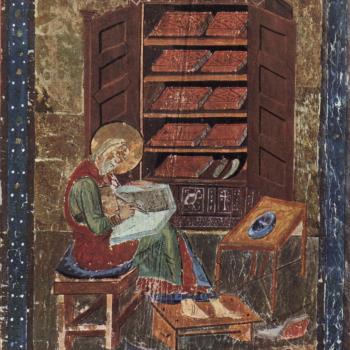
 Visuals used here are in the public domain
That is all clear enough. What is wrong with this picture, however, is a matter of dates. However significant those two 1940s finds were, they were absolutely not the first inklings that modern people had of the existence and importance of those “Other” forms of Judaism and Christianity. The crucial finds actually happened between about 1880 and the 1920s. Although people in the 1890s, say, had access only a handful of such texts, in contrast to the modern profusion, they understood the implications perfectly, and already, people were freely rewriting history to accommodate these new insights. Not only were the new finds available to scholars, but they swiftly appeared in readable vernacular translations.
Both in North America and Europe, those discoveries had a huge public impact, becoming the subject of endless stories in the news media, both responsible and sensationalist. Most fundamentally, the “new” texts raised crucial questions about the nature of the canonical Bible and how exactly it had become “canon.” Why had so many other texts slipped into the category of apocryphal or Deuterocanonical, or, most remarkable of all, been considered to oblivion? Were they quite valueless, actively harmful – or were they subversive to what had come to be seen as orthodoxy, for Jews and later for Christians? Did they contain lost truths?
As in the late twentieth century, the discovery of esoteric, mystic and broadly Gnostic texts attracted like-minded modern believers, who created whole new schools and cults based on those teachings, which appeared so closely tied to Buddhism and other Asian faiths. Women, especially, were entranced by these findings of a supposed alternative Christian history, which they incorporated into a feminist mythological system (and to be clear, I am not using “mythology” in any demeaning sense). One recovered Gnostic scripture above all, the Pistis Sophia, supplied the foundation of an ambitious feminist theology, and it was very widely cited in progressive circles.
The years around 1910 look very much indeed like the 1980 or 1990s, and if you had taken a modern book on Gnostics and alternative Christianities back to that earlier era, the main response would have been “So what else is new?” So much of the radical “new” thinking of the post-1970s period was in fact standard stuff for quite ordinary American consumers of news around the time of the First World War.
In short, this represents a whole lost aspect of the religious thought and spirituality of the early twentieth century. The story I am trying to tell concerns a deeply religious society being suddenly exposed to the repeated shocks of new scriptural discoveries, which must at all costs be understood and absorbed into current ways of understanding.
We See Things Not As They Are, But As We Are
Not, of course, that those understandings were necessarily correct, or objective. Then as now, people looked back at the early Christian era and found there what they wanted to find. Think of Albert Schweitzer’s famous image of the scholar looking down a well to see the historical Jesus, but the face they see gazing back at them looks very much like themselves. The years around 1900 were marked by effervescent cultural inquiry and speculation, with a strong esoteric slant. Inevitably, then, the Jesus many scholars believed they were finding in the lost scriptures looked all too relevant to their own age. That supposed ancient Christianity was ecumenical and interfaith, esoteric and egalitarian, militantly anti-institutional, woman-sensitive and mystical. None of those perceptions was necessarily wrong, but a good deal of caution is needed before accepting such pictures uncritically.
One movement in particular demands our attention. I have written often at this site about Theosophy as a vitally important social movement in this era, in Europe and North America. Even so, I have never sufficiently stressed how vital it was to forming these new visions of the “lost” ancient Christianities. I am in no sense positing a Theosophical plot, but rather suggesting how precisely that movement captured the progressive cultural thought of the time, and offered a language and a theoretical structure through which it could be expressed.
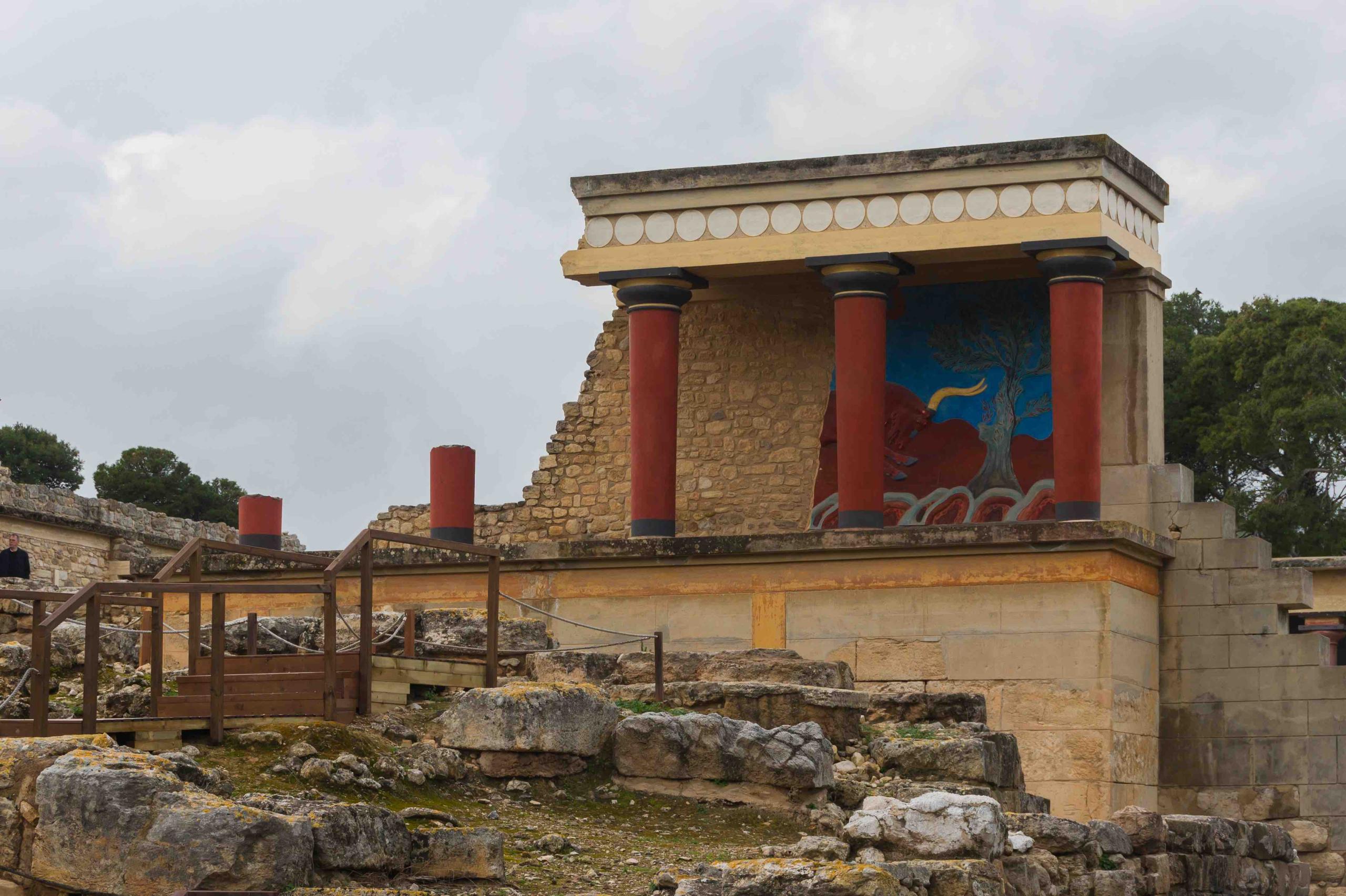
A visual analogy comes to mind here. One of the most famous sites in the ancient history of the Mediterranean is the Minoan palace of Knossos, in Crete, excavated by Sir Arthur Evans, and extensively (and controversially) restored in the early twentieth century. Virtually everything that can be seen there today should be seen not as a pristine restoration of ancient truth, but as an imaginative Modernist project that says at least as much about the Euro-American world of 1905 as about Cretan realities of the second millennium BC. That analogy applies well to the (literary and scholarly) reconstructions of early Christianity that I will be describing here. If we hadn’t believed it, we wouldn’t have seen it with our own eyes.
Despite such caveats, the rediscovery of those ancient scriptures is a heroic story, and one that involves some of the best-known religious figures of the age, not to mention some canonical authors. Particularly striking is the close and frequent interplay between canonical religious leaders and other thinkers that we might often dismiss as fringe or eccentric. They belong to one religious continuum.
When we think of the 1910s and 1920s, we naturally look to the struggle of Fundamentalists and Modernists, with its focus in the Scopes Trial. We rarely recall that in these very same years, a great many thinkers were pursuing quite other issues about the nature of faith and scripture, with implications at least as consequential. Commonly too, we might be shocked at just how modern those ideas appear to our eyes.
You know how important works like Pagels’s The Gnostic Gospels are to understanding popular religious culture at the end of the twentieth century? There are plenty of counterparts back in those early years, and they have been pretty much forgotten. My goal is to bring that older story back to the center of our narrative.
I am writing a history that is at once religious, cultural, and intellectual.
Chapters
In constructing any book, the vital first step for me is building a plausible sequence of chapters. This following list will certainly change over time, but this is how I am imagining the structure presently.
1.Necessary Amnesia And The Lost Scriptures
I would here address the puzzling question of just why each new generation tends to think that it has discovered these ancient scriptures for the first time, while forgetting the achievements of its predecessors. The answer actually speaks to some intriguing questions in the sociology of academe. I have discussed this “necessary amnesia” at some length in this post.
2.The Treasures In The Junk Room
In the story of rediscovery, the years 1896-1897 are of critical importance, quite as much as the mid-1940s in the far better known later era. This chapter describes the finding of the Cairo Genizah and its implication for the study of early Judaism and (arguably) the original Jesus Movement. That includes the finding of the Hebrew text of Sirach; and far more significant, the “Zadokite” text, which represented the first modern encounter with the world of Qumran and the Dead Sea Scrolls.
3.Jesus In The Scrolls
Speculation soon arose about the relevance of such finds to the earliest Jesus Movement, and whether in fact the texts might refer to such figures as Jesus, Paul and John the Baptist. These ideas became the subject of intense media coverage in major newspapers and popular magazines. They also received wide publicity through their treatment in major best-selling novels, notably George Moore’s The Brook Kerith (1916) and Robert Graves’s King Jesus (1946)
4.The Words Of Jesus
Also in that spectacular year of 1897, British archaeologists in Egypt found the “Sayings” of Jesus, Logia, which we now know to be part of the Gospel of Thomas. These mystical words fascinated the reading public, and were widely quoted. Beyond their intrinsic appeal, they also raised vital questions about the composition of the canonical gospels and the seemingly suppressed teachings that might lie at the core of Jesus’s life and work.
5.The New Old Gospels
Through the end of the nineteenth century, ancient Judaeo-Christian texts were not only being rediscovered in significant numbers, but they were being translated and published in large quantities. They were readily available to scholars, religious leaders, clergy, or to interested lay people with the means to afford them. Commonly, such writings initially appeared in German, but English versions soon followed. More to the point, these works were frequently summarized in mass market newspapers and magazines. Scholars such as R. H. Charles presented a lengthy series of titles, including the pseudepigraphical works that had often exercised such influence in the New Testament world. Meanwhile, New Testament scholars themselves were translating and publicizing such works as the Gospel of Peter. The idea of Lost Gospels was very much in the center of public discourse concerning religion. There was simply no excuse for any educated person not to know this material.
6.Fragments of a Faith Forgotten
While modern audiences are fascinated by the “Gnostics” as a vital aspect of lost (and suppressed) early Christianity, non-specialists usually assume that this movement was lost to history until very modern times, after the 1945 discoveries at Nag Hammadi. That view is quite incorrect. Even Herman Melville published his “Lost Gnostic Poem.” A great deal of evidence survived in ancient patristic sources, and everything that was available was easily accessible in translation through the scholarship of Charles W. King in The Gnostics and Their Remains (1864) and above all of the Theosophist G. R. S. Mead at the end of the century, in his Fragments of a Faith Forgotten. The Pistis Sophia, which I have already mentioned, gave an excellent idea of the nature and content of such writings, and that was much read decades before Nag Hammadi.
7.No Religion Higher Than Truth
At every point of this story, I stress the role of Theosophy and Theosophists in framing and publicizing these new views of a mystical, esoteric, early Jesus Movement. already as early as 1877, Helena Blavatsky’s pioneering work Isis Unveiled offered a systematic account of Gnostic Christianity as a vital aspect of the early Jesus movement, prior to its suppression by emerging Church orthodoxy. Thereafter, Theosophists such as Mead were prominent in the process of rediscovery and publicity, and in importing these insights into elite culture. In 1920, the famous English composer Gustav Holst presented a major work based on Gnostic texts in the apocryphal Acts of the Apostles.
8.Esoteric Women
Much as occurred in the late twentieth century, the claims made for the rediscovered Gnostic texts had a special appeal for women, who found in those writings a rich vein of feminist spirituality. They especially admired the portrayal of divine or semi-divine spiritual figures, such as Sophia, and the central role accorded to women apostles, and viewed the orthodox church as the perpetrator of a systematic suppression of that pristine truth. Between 1890 and 1920, identical theories were popularized by a group of writers including Matilda Joslyn Gage, Annie Besant, Anna Kingsford, and Frances Swiney. All were Theosophists, and prominent members of the movement, and their radical opinions were wholly integrated into the larger Theosophical world view. That new spirituality was inseparable from the other surging feminist movements of the era, for the suffrage, for Temperance, and for the sexual protection of women and girls.
If we are looking for the prehistory of modern feminist spirituality, and of feminist scholarship in Christian origins, this is where we find it.
9.Jesus and Buddha
Theosophists stressed the commonalities they perceived between their own mystical Jesus and the spiritual teachers of South Asian faiths. So strong were these apparent analogies that many claimed some kind of direct connection, perhaps even including Jesus’s own travels in that region. Those ideas culminated in a proliferation of pseudo-gospels such Levi Dowling’s The Aquarian Gospel of Jesus the Christ (1908) which became a phenomenal best-seller. The discovery of authentic Lost Scriptures actively provoked the generation of multiple modern-day candidates for scriptural status.
10.Conclusion and Implications
How the finds of these years utterly transformed understandings of the nature and composition of Jewish and Christian scripture, to the extent of marking a revolution in religious perceptions.
Over the next few posts, I will elaborate on these ideas.











 Ad-Free & Subscriber Log-In