

I have been posting about the loss and rediscovery of venerated ancient texts, including Scriptures. In a textual-based religion, such as Christianity, it is easy to attach a special significance to such rediscoveries, to suppose that they are destined to play a special Providential role at a special moment. Traditionally, what carried more weight than gospels? Therefore, clearly, a lost gospel must be a very special thing. But by the same token, it is tempting for anyone wishing to make their own point to exploit this rediscovery idea, either by interpreting new finds in devious or subversive ways, or else by inventing fake ancient texts. These themes, of false interpretation and forgery, account for a large part of the popular writing about rediscovered texts, and have long played a potent role in mainstream popular culture. Sad to say, for the average non-expert “intelligent reader,” this is often the means by which rediscovered texts are understood.
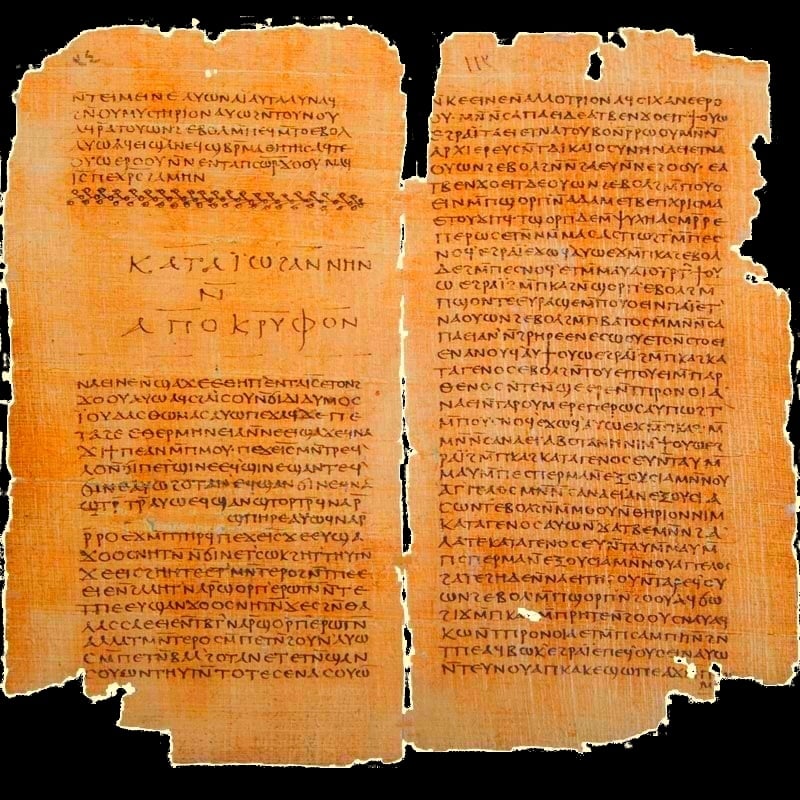 image is in public domain
In this post, I will discuss the “forged and fake” theme in that popular culture, and the tradition goes back a long way. Nineteenth century discoveries deeply concerned conservative believers, who dreaded the possible discovery of yet other new texts that could still further undermine orthodox faith. What else was still out there, waiting to be found? As early as 1869, in Innocents Abroad, Mark Twain (jokingly) reported his discovery of a very ancient Biblical manuscript that he promised to translate and publish. Although that document existed only in his imagination, the idea of such a find laid the foundation for the pseudo-scripture that Twain later offered in his Letters Fron the Earth, with its trenchant critique of Judeo-Christian beliefs. So provocative was the book that it only appeared in print long after his death.
When It Was Dark
Naturally, such works become all the more popular in times of special excitement about spectacular finds, and a couple of eras stand out. One is the aftermath of the 1897 discovery of ancient alternative gospel fragments at Oxyrhynchus, in Egypt, and the other involves the twin finds in the mid-1940s of the Dead Sea Scrolls and the Nag Hammadi library. That first era inspired a sensational piece of fiction in Guy Thorne’s When It Was Dark (1903), a phenomenal bestseller that also became a 1919 film: it sold half a million copies. The book depicts a villainous conspiracy to destroy Christianity by planting a faked inscription that supposedly proves that the Resurrection never happened.
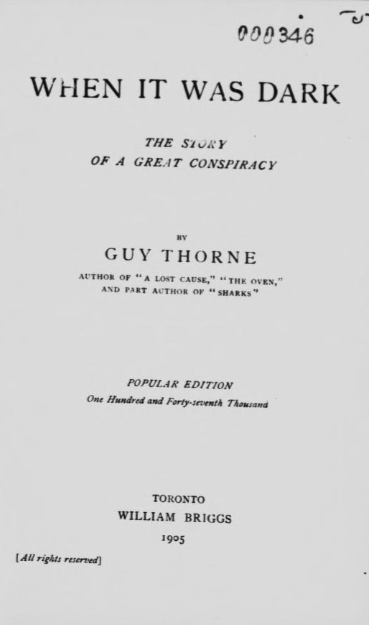
The villain is a highly stereotyped Jew, Constantine Schuabe, who is clearly introduced as an Antichrist figure:
His features were Semitic, but without a trace of that fulness, and sometimes coarseness, which often marks the Jew who has come to the middle period of life. The eyes were large and black, but without animation, in ordinary use and wont. They did not light up as he spoke, but yet the expression was not veiled or obscured. They were coldly, terribly aware, with something of the sinister and untroubled regard one sees in a reptile’s eyes.
He is, of course, a powerful moneylender, which allows him to blackmail the distinguished English scholar Sir Robert Llywellyn, who is “the very mainspring and arm of the Higher Criticism of the Bible.” Through that connection, Schuabe arranges the discovery of a forged ancient inscription in Jerusalem, which declares that
I, JOSEPH OF ARIMATHÆA, TOOK THE BODY OF JESUS, THE NAZARENE, FROM THE TOMB WHERE IT WAS FIRST LAID AND HID IT IN THIS PLACE.
The inscription proves conclusively (upper case in original, again):
THAT CHRIST NEVER ROSE FROM THE DEAD, THAT CHRISTIANITY IS ALL A LIE.
The effects are cataclysmic, as public morality is destroyed, almost overnight. “During the first days of the Darkness, hundreds of thousands of Christian men and women were chilled almost to spiritual death.” The economy fails, stock markets plunge. Sexual restraints evaporate. The textual discovery comes close to causing the collapse of civilization and of European empires, both of which are utterly grounded in Christianity. Subject peoples arise, Muslims mobilize to slaughter Christians.
And now? India was slipping swiftly away; a bloody civil war was brewing in America; Central Europe was a smouldering torch; the whips of Africa were cracking in the ears of Englishmen; the fortunes of thousands were melting away like ice in the sun. In London gentlemen were going from their clubs to their houses at night carrying pistols and sword-sticks. North of Holborn, south of the Thames, no woman was safe after dark had fallen.
Spoiler alert: good does eventually triumph, but it is a near-run thing.
Two Fictional Finds at Mar Saba
When It Was Dark had a very influential successor in 1940, when James Hogg Hunter published The Mystery of Mar Saba, in which Nazi plotters fake a bogus gospel discovery to achieve the same end, to disprove the Resurrection. The book is a pioneering evangelical gospel thriller, and in turn (I believe) it bore its own offspring.
The story is complicated, and I spell it out in much more detail here. Briefly, in 1958, American academic Morton Smith claimed to have found the fragment of a lost “Secret Gospel of Mark,” with hints of Jesus’s homoerotic context. His claims were published in 1973, sensationally, in his Clement of Alexandria and a Secret Gospel of Mark (Harvard University Press) and The Secret Gospel: The Discovery And Interpretation Of The Secret Gospel According To Mark (Harper & Row): do note the stellar publishers. Many scholars, including wise, critical, and honest people, treat that reported find seriously, and they continue to offer learned commentary on the Secret Gospel as a genuine ancient text. I do not for a moment believe it is authentic, and the clues pointing to that stance are numerous to the point of overwhelming. In fact, I believe that Morton Smith deliberately planted outrageously blatant clues for anyone sufficiently awake to note them. For Heaven’s sake, he even made his alleged discovery of a lost gospel at Mar Saba (!). Oh, please.
Smith’s claimed discovery also has many echoes of another recent novel of that time, Angus Wilson’s Anglo-Saxon Attitudes (1956), which is about (guess what?) a smart prankster deliberately salting an archaeological site with faked evidence to subvert common interpretations of early orthodox Christianity. In other words, I believe that everything Morton Smith wrote on this topic is bogus, or rather fictional, just as much as When It Was Dark or The Mystery of Mar Saba. Anyway, do read that earlier post in which I spell out the evidence at some length.
Wallace’s Word
When we describe the mainstream impact of finds like those of Nag Hammadi, we usually refer to popularizations by such reputable scholars as Elaine Pagels, in her The Gnostic Gospels (1979). But in terms of reaching a very wide audience, and forming their ideas about such mysterious texts, we absolutely have to turn to fiction and even potboilers, with The Da Vinci Code as Exhibit A. One such work that is now all but forgotten was Irving Wallace’s novel The Word, which appeared in 1972 and which spent a stunning 31 weeks on the New York Times bestseller list, two of which were at number one. It became a popular miniseries in 1978 – eight hours in prime time. Looking at the book today, it reads like a proto-Da Vinci Code.
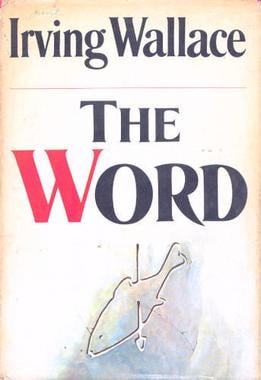
Irving Wallace was a strange candidate for such a project, as a notorious author of pulpy fiction (and not in the good Tarantino sense). To quote a contemporary Time review,
In the first 282 pages, Wallace writes down to his usual awful standard. His villain has “beady, ferret eyes.” His heroine wears “two wisps of bra which did little to contain the overflow of her provocative breasts.” Scenes of perfervid theological discussion alternate plonkingly with episodes like one in which the P.R. man performs some ungodly acts with an ex-nun. Then Wallace stops pandering and starts attending to the plot. From there on the book takes off.
O ye of little faith who cannot believe that Irving Wallace could tell a lively tale in reasonably readable prose, who can blame you? But that’s how the papyrus crumbles.
The book itself recalls other fictions I have described here. An ancient Gospel by Jesus’s brother James is found in the ruins of Ostia Antica. It presents a radically different story of Christian origins, in which Jesus survived the Crucifixion, and lived to teach clandestinely before dying (and being Resurrected) in Rome in 49 AD. The book carries immense spiritual power and conviction, to the point that its readers actually experience miraculous healings. But as in those other novels, it soon becomes apparent to the main characters that the new Gospel is a modern forgery. That does not, however, prevent it becoming respected and beloved, and in effect added to the approved scriptural canon of the mainstream churches, as the chief and principal gospel. The newly “discovered” scripture inspires a global religious rebirth.
In no way would I recommend The Word, except to those with an archaeological interest in 1970s pop culture. But if you want to see the kind of ideas that people were prepared to tolerate about Christian origins in that era, and the possible illumination they thought might be derived from lost gospels, you really could not do better.
Hollywood A.D.
I won’t go into this in detail here, but in 2000 The X Files did a classic episode called “Hollywood AD,” concerning a serial forger called Micah Hoffman, who operates a sideline in bombing. Hoffman’s particular project is a counterfeit Gospel of Mary Magdalene. The episode is great in its own right, but it gains immensely if you happen to know the real life story of the similarly named Mark Hoffmann, who in the 1980s forged many documents about the early history of Mormonism, and also undertook bombings.
You can’t make this up.
Do any other good examples come to mind?










 Ad-Free & Subscriber Log-In