

I have to admit that I am a little bit obsessed with Taylor Swift’s song “Elizabeth Taylor.” The fascination began with the simple fact that I just enjoy the song, probably listening to it at least once a day on my daily walk. Then the music video came out, which features scenes from Taylor’s movies (Elizabeth’s not Taylor Alison’s) and from her personal life:
The video is like a time machine taking the viewer back to the age of classic cinema—literally a musical history lesson. I am self-consciously nostalgic for old Hollywood. I love old classic films so I thought the video was cool, even though I was never the biggest fan of Taylor’s movies.
I was listening to Taylor’s song all the time, I still used the opportunity to watch James Dean and Natalie Wood in Rebel Without a Cause a couple of weeks ago with my sons. When I asked if they were open to watching an old movie they agreed. I was happy they enjoyed the classic story of teenage rebellion (yes, I went through a James Dean phase in my teens—or was it 90210?— like my dad did when he was younger). Dean’s tragic death made him an immortal youth. What about Elizabeth Taylor? Why did Swift write a song about her?
Since I was listening to this song so much, even on my commute to school, I started to really pay attention to the lyrics. I even took my Swiftie wife and our sons to Musso and Frank’s for her birthday last month (maybe not the “best booth” there, but it was nonetheless, nice). As Swift often does, there are subtle links to her own relationship to fame and to the public with Elizabeth Taylor.
The one lyric that stood out to me comes from the second part of the chorus, which is the title of my post. What happens when the hits stop coming?
*
We are often told that history is written by the winners. That’s funny since many times history features the losers. Don’t misunderstand me. The biographies we have our kids read are of the underdogs, who managed to rise above life’s challenges. Creative geniuses, who march to their own drum beat, make for inspirational stories. I get inspired to wake up every morning hoping, with the Vangelis theme song to Chariots of Fire playing softly in my subconscious, to make a success out of the day and meet my personal goals.
But what about the has-been? It is one thing to be average, but another thing to be washed up—a meteoric rise to the top and then suddenly a swift descent to the bottom. The has-been is a cautionary tale. I am guessing it is better to be average and just okay at things then gain the whole world only to lose your soul.
Speaking of cautionary tales, I just finished reading a biography about the singer-actress-model Nico, who is probably most famous for singing with Lou Reed’s Velvet Underground. She had the unfortunate luck of being born in Cologne, Germany in 1938, which means her earliest memories was of a war torn country. The violence and desolation she witnessed as a child haunted her for life. A few modeling gigs, a role in Federico Fellini’s film La Dolce Vita, and becoming one of Andy Warhol’s “Chelsea Girls” catapulted her to fame.
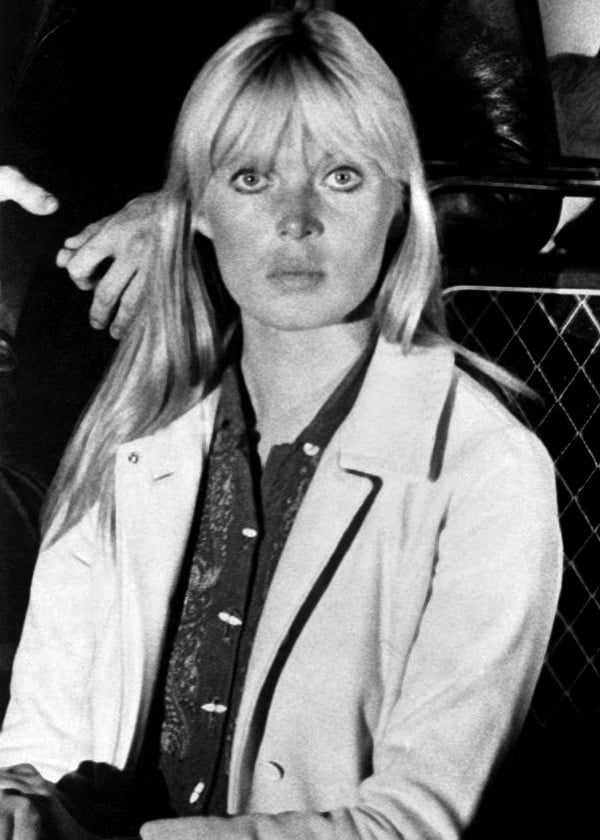
Then the drugs started taking effect. She slowly became a shell of herself. It seemed that she lived to make just enough money to then spend them on drugs. While I was reading, I kept waiting for her to get better as the almost 400 page biography rolled along. However, her life never really improved. She lost much of what initially made her famous—her physical beauty. Her art suffered for it. The Chelsea Girls circle dumped her like a bad habit.
Then the word has-been was used to describe her in the book. Some referred to her as the person that used to be Nico. She performed in small venues until her passing. Rumor has it that she died—alone—after she fell from a bike. No happy ending for poor Nico.
*
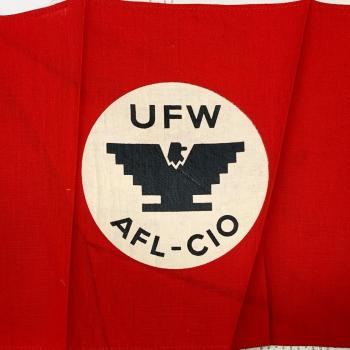
The disgraced UFW leader Cesar Chavez seems destined to be lumped into the category of has-been. (I keep saying I am going to stop writing about him, but he keeps coming up in polite conversation about what my next research project could possibly be). His erasure since last month’s post has been swift.
There is a scene in the classic film Ten Commandments where Moses is sent packing from Egypt, which reminds me of the way Chavez’s image and name were “stricken” from the public record.
No Pharaoh commanded this action—it all just sort of happened. Like Moses who is sent off to the desert, Chavez seems destined to become a mirage, someone we thought was a good man.

Chavez was actually obsessed with celebrity. I think one way he became such a public figure was being seen with the Kennedys, rock stars, and movie stars. It is a good strategy for a movement to receive support but it may have fed right into his ego. This was one of the nuances I was researching these past years.
Historians may not get everything right, far from it, but they can help revitalize someone’s career. Nico’s biographer attempts to give her back some agency, recognizing that some of her more experimental music in her solo, post-Velvet career is now considered pioneering. Moreover, accolades are given to The Velvet Underground and Lou Reed, but Nico is often absent from these praises even though her vibe was crucial for Velvet’s most famous work.
Swift’s song and video helps us remember how central Elizabeth Taylor was at the rise of motion pictures. I could not help but see how annoying the media was in following Taylor’s every move in the documentary I watched last week. If I was a betting man, Swift might have watched this show thinking—oh boy, how far we have come. I can’t imagine the media circus that will follow her upcoming wedding.
I readily admit that my interest in history is my love of stories, but the especially human, all too human ones. Sometimes history, like this very blog post, seems like old fashioned gossip. Americans are criticized that we love our celebrities while “serious” nations favor their intellectuals—so what, our celebrities are fun and your philosophers are boring (I’m mostly kidding about philosophers). And yes, history about actresses, models, and musicians is history. Unfortunately, it often takes the wisdom that comes from the distance of time to appreciate talent in the past.
What is really happening here is a reckoning of sorts. Women’s history has been on the rise since Nico sang with the Velvet and Elizabeth Taylor starred in Cleopatra (yes, it was a box office failure, but did you see her paycheck?). They might have not appreciated the has-been label, but both were pioneers at the moment of women’s history’s nascent. And why doesn’t someone write a history of celebrity media and the paparazzi? The almost religious devotion of these media types for what they think the consumer wants is begging for further study. All the women highlighted here would be a part of that history.
I have always been interested in the actual religious views and actions of celebrities. Sometimes it is deeper than you think. For all of Elizabeth Taylor’s faults, she played a pivotal role in using her celebrity status for AIDS research at a time when she was a so-called has-been.
And then there is Chavez’s story. Why was a more critical lens, like the one applied to Elizabeth Taylor, not applied to him? (I get it—she got married a lot, but to be called out by the Vatican?) Why did it take decades later for a chorus of women to decry Chavez’s actions and begin the revision? One can only imagine the exposé documentary about Chavez when it comes out. Well, since I religiously watch these sort of Netflix documentaries, you know I will be tuning in once it comes out.










 Ad-Free & Subscriber Log-In