

Before jumping into this piece, I want to make an acknowledgement. First, Professor Sutton has a new and well-regarded book expanding his argument from the article I discuss here. It just came out, and I have begun reading it. I’m quite excited to engage further. He is an emminently readable and remarkable cogent scholar. Putting an entire history of American/Christian history in a mere 600 pages is a feat worth praising, all its own. I plan to finish the book and write a review, probably in my next post here, but maybe somewhere else. Obviously, reading the book may change my view on what I present here. I promise to notify you if it does.

On the evening of February 29, 1832, four speakers addressed a packed audience in Boston’s Federal Street Church: Lyman Beecher and Edward Everett, Elias Boudinot, editor of the Cherokee Phoenix; and William Apess, a Pequot Methodist minister. The gathering was improbable. Beecher had shut down the Cornwall School after Boudinot’s interracial marriage. Apess belonged to a breakaway Methodist sect widely regarded as lower-class and ecstatic. He appears only fleetingly in newspapers before 1832. The church itself was embroiled in a controversy over admitting African American members. The audience, surviving reports tell us, was racially mixed. Lydia Maria Child, William Lloyd Garrison, and Louisa Park were all present. David Walker had died in 1830, but it is likely Maria Stewart attended.[1]
That Apess appeared at all—largely unknown to the press, theologically out of place, yet invited to address one of Boston’s most prominent audiences—is itself evidence of informal networks operating beyond the archival record. Someone knew him. Someone brought him in. And the reason he fit on that stage alongside Boudinot, despite their denominational and tribal differences, was that they shared a common theological and political vision: that all human beings belong to one divine family, and that the settler republic’s project of removal was an offense against the God who made them. That vision was a shared inheritance, carried through what I call the capillary networks of the early republic: cross-racial intellectual relationships built under conditions of enslavement, dispossession, and racial terror. It also connects Apess and Boudinot backward through figures the formal record has often worked to obscure: David Walker, Prince Saunders, and a tradition of subaltern Christian thought that has been left out entirely from one of the most consequential debates in American religious historiography.
Matthew Sutton‘s incredibly popular and hotly debated 2024 article in the Journal of the American Academy of Religion “Redefining the History and Historiography on American Evangelicalism in the Era of the Religious Right” argues that those he calls “consensus evangelical historians”—George Marsden, Mark Noll, Nathan Hatch, and others—constructed a transhistorical category of “evangelicalism” defined theologically, then applied it retroactively from Jonathan Edwards to Rick Warren.[2] This produced an “exceedingly positive” narrative: abolitionists, reformers, missionaries, all marching under a single evangelical banner. The term, Sutton argues, obscured how post-World War II evangelicalism was at its heart a white nationalist, right-wing political movement, and made it impossible for many scholars to anticipate or explain evangelical support for Donald Trump. His proposed solution: restrict “evangelical” to the post-1942 period, define it culturo-politically, and before that date use denominational labels or the term “revivalist.”[3]
To say the article has generated significant debate would be an understatement. Those sympathetic to Sutton have emphasized what the evangelical (or consensus) historians’ approach often obscured—the Lost Cause, white supremacy, the southern pro-slavery theological tradition—and called for the Bebbington quadrilateral to be retired. Those defending the consensus position have insisted that evangelicalism is fundamentally about theology, and that a politico-racial redefinition loses the ability to track genuine intellectual and spiritual continuities across time.[4]
Before proceeding, it is worth addressing a fundamental question about how scholarly categories function. Jonathan Z. Smith’s influential essay “Religion, Religions, Religious” contains one of the most cited passages in religious studies: “‘Religion’ is not a native term; it is a term created by scholars for their intellectual purposes and is therefore theirs to define.” This principle applies directly to the evangelicalism debate—and cuts against Sutton’s critique in a way he does not seem to recognize.
The consensus historians constructed their transhistorical category and traced it from Edwards through the Great Awakening to Billy Graham. Sutton objects that they “made it up,” that the category is a scholarly invention imposed retrospectively on historical actors who wouldn’t have recognized it. This is true. It is also irrelevant. Of course they made it up. That is what scholars do. Smith’s point is not that we should abandon second-order analytical categories in favor of native terms, but that we should be self-conscious about why we’re creating them and what intellectual work they’re meant to perform.
By Smith’s standard, the consensus historians were well within their rights to construct “evangelicalism” as they did. They had scholarly purposes: to track theological continuities across denominational lines, to explain the rise of activist Protestantism in the antebellum United States, to make sense of transatlantic networks of print and revival that transcended institutional boundaries. The question is not whether they invented the category—they did—but whether it does useful analytical work. And on that front, the answer is mixed to positive.
The consensus historians got something fundamentally right: theology matters. The continuities they traced between Edwards and Hopkins and Dwight and Finney were real. The shared commitments to scriptural authority, conversion experience, and activist faith did shape a recognizable tradition with intellectual coherence across time. Their work demonstrated that evangelicalism was not just a sociological phenomenon or a political coalition, but a theological inheritance with its own internal logic and generative capacity. Noll’s America’s God and Hatch’s The Democratization of American Christianity remain among the most sophisticated accounts we have of how theological ideas moved through early American culture.

But the writings of the consensus school have been criticized—not always fairly—for telling a story that was too white, too northern, and too optimistic. This characterization flattens a more complicated reality. Noll, in particular, has spent much of the last quarter century layering race and diversity into his account of American Christianity, and the other consensus historians have similarly expanded the scope of their project as new scholarship and new networks of connection opened up to them. The nature of the enterprise continued to grow. Still, the works that defined the field—the books that shaped how a generation of scholars understood the category—did not fully account for figures like Lemuel Haynes, Phillis Wheatley, David Walker, William Apess, or Prince Saunders: people who were deploying the same scriptural arguments, operating within the same theological grammar, and arriving at political conclusions that followed at least as logically from the shared premises as anything their white contemporaries produced. This is to say nothing of the South, which was often neglected. The gap was not one of dishonesty but of scope.
The category worked, up to a point. It illuminated continuities but obscured conflicts. It explained evangelical theology but did not yet theorize what happened when that theology was applied by people with radically different relationships to power. And crucially, it tended to narrate evangelicalism as though it were fundamentally consensual—a tradition people agreed on—rather than fundamentally contested—a tradition people argued about.
Sutton’s response is to abandon the theological definition entirely and restrict “evangelical” to a post-1942 white nationalist political movement—trading a theological category for a political one. This solves the problem of white supremacy in the tradition by definitional fiat: if evangelicalism is intrinsically white and nationalist and post-war, then there’s no need to explain why twentieth-century evangelicals supported segregation—that’s just what the term means. But this creates a new problem: it makes Black and Indigenous (and other non-white) evangelical thinkers unintelligible. David Walker can’t be an evangelical under Sutton’s definition because he wasn’t a white nationalist. He wasn’t an evangelical under the consensus narrative because that narrative didn’t include him. But he was doing theology within the same tradition, reading the same texts, deploying the same scriptural arguments about divine sovereignty and human equality, and arriving at political conclusions that were internally consistent with those premises even if most white evangelicals were unwilling to entertain them.
What we need is not a new definition that excludes different people, but a better theoretical framework for understanding how traditions actually function. Both work in the anthropology of Christianity and a bit of theory can help us offer that.
In their 2008 article “Who is a Christian?”, William Garriott and Kevin Lewis O’Neill argue that anthropologists should adopt a “dialogic approach” to studying Christianity—one that shifts attention from the problems Christianity poses to anthropology, to the problems Christianity poses to Christians themselves.[5] Drawing on Mikhail Bakhtin’s concept of dialogue, they propose that Christian traditions are best understood not as fixed doctrinal systems but as ongoing arguments among practitioners about what their shared commitments require. The tradition is constituted not by agreement but by the nature and stakes of the disagreement.
This approach builds on but moves beyond Talal Asad’s influential definition of Islam as a “discursive tradition” in which practitioners relate themselves to founding texts through debate over correct practice.[6] Asad’s formulation is powerful, and the dynamics he describes—practitioners relating themselves to founding texts through debate over correct practice—are not unique to Islam. Christianity, too, is a discursive tradition in Asad’s sense. But Garriott and O’Neill’s “dialogic” framework pushes the analysis further in a direction especially useful for our purposes: it asks what problems Christians are arguing about and treats those arguments—not the quest for definitive answers or the answers themselves—as constitutive of the tradition.
Applied to evangelicalism, this means understanding the category not as a checklist of beliefs or a political coalition, but as a shared theological grammar that generates ongoing conflict about what that grammar demands of the individual and community. What gives evangelicalism continuity from Edwards to Graham is not agreement on politics or identical doctrinal formulations, but a set of theological commitments—scriptural authority, the centrality of conversion, activist faith, the doctrine of the image of God—which different inheritors have applied differently based on their social position, their historical moment, and their encounters with power.
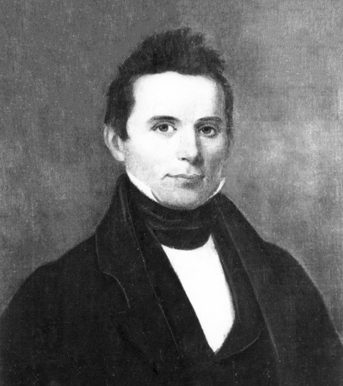
Evangelicalism was never one thing. It was a dialogue and a conflict as much as a movement. And the most important arguments were not between evangelicals and their critics, but among evangelicals themselves: What does it mean that all humans are made in God’s image? What does scriptural authority require when Scripture condemns oppression? What does conversion demand when it occurs across racial lines? These were not abstract theological puzzles. They were questions with immediate political consequences, and different inheritors of the tradition answered them differently. Indeed, the argument over this very definition is itself part of the ongoing contest that shapes what evangelicalism is. I believe Mark Noll, Matthew Sutton, and I have each grown up within particularized (and radically different) communities participating in this argument. We each bring those formations and our own stories to the conversation about what “evangelical” means.
The reason the evangelicalism debate feels stuck is that all sides have conceded too much to each other. Sutton accepts that the theology is basically just the Bebbington quadrilateral and then says it doesn’t matter. His opponents defend the quadrilateral but have been slow to reckon with how the tradition’s founding narratives centered whiteness, even as individual scholars have worked to broaden the picture. What’s missing is the recognition that theological traditions have always been broader, more diverse, and more internally contested than either side acknowledges. The contest itself—the ongoing argument about what shared commitments demand—is not a problem to be solved. It is the most important thing to understand about evangelicalism as a category. Drawing on Derrida, I have called this a logic of experience. Authentic inheritance doesn’t mean reproduction. Rather it requires respecting the logics of a tradition enough to turn it in potentially new directions—sometimes against those who claim to be its guardians. The most faithful inheritor of a tradition may be the one who reveals, in Derrida’s words, “what has never yet been seen in the inheritance”—who by “an unheard-of act of reflection,” presents an iteration of what the tradition always implied but never acknowledged.[7]
Jan Stievermann’s work on the Boston-Halle-Tranquebar network demonstrates that this is how the category of “evangelical” functioned from its very origins. The transconfessional Protestant identity that emerged in the early eighteenth century was constructed not through doctrinal councils but through networks of correspondence, shared mission work, and print culture—what Cotton Mather called a “syncretism of piety.”[8] For Mather and his Pietist correspondents, the Christian religion was “a Practical Thing rather than a meer Theory; the Intention whereof is, to animate a Real, Solid, Vital PIETY.” What held the network together was not creedal agreement but shared experiential commitments—conversion, scriptural devotion, activist engagement—that crossed the Lutheran-Calvinist divide precisely because they operated at the level of lived religion rather than systematic theology. This is also why Sutton’s proposed replacement term, “revivalist,” fails. As Douglas Winiarski’s work on the “people called New Lights” has shown, the men and women shaped by the eighteenth-century awakenings had complex theological commitments, denominational affiliations, and institutional entanglements that “revivalist” fails to capture.[9] Many of the most important figures in the networks I study were not revivalists at all. Walker was not leading camp meetings. Saunders was operating through Masonic lodges and transatlantic activism. Bouidnot was only white spaces as a fundraiser and activist. What they shared was a theological grammar, not a revival technique.

The Edwardsean inheritance didn’t just produce Timothy Dwight’s Federalist conservatism, Samuel Hopkins’s abolitionism, and Jedidiah Morse’s imperial missionary enthusiasm.[10] It also produced Black and Indigenous intellectual lineages that were and are just as theologically serious. Samson Occom annotated Edwards’s theological writings directly. Hendrick Aupuamut corresponded with Edwards’s son Timothy and requested copies of his father’s books. Elias Boudinot studied under New Divinity men at the Cornwall School, which shaped his translation of the New Testament into Cherokee. Apess read Edwards through Wesley’s edited Faithful Narrative. Lemuel Haynes deployed Edwardsean Calvinism to argue for racial equality. And Phillis Wheatley—writing from within the same Calvinist grammar that Edwards and his heirs inhabited—turned its logic against the racial order that sustained it.[11] As Tamika Nunley has argued, Wheatley (and I would argue these other figures) employed Christian theology in ways that politicized freedom for Africans in North America, deploying the tradition’s own premises as what Nunley calls an “evolving liberation poetics.” In “On Being Brought from Africa to America,” Wheatley addressed white Christians directly, insisting that those who viewed the “sable race with scornful eye” remember that “Negroes, black as Cain, / May be refin’d, and join th’ angelic train.” The theology of redemption, applied without racial exception, became a demand for the full spiritual equality of enslaved Africans—and, by implication, their political equality as well.[12] Walker insisted that “God Almighty is the sole proprietor or master of the WHOLE human family” and that “Man, in all ages and all nations of the earth, is the same. Man is a peculiar creature — he is the image of his God.”[13] Apess declared t

hat Indigenous peoples “retain the original complexion of our common father Adam” and, via Bartolome de las Casas, that “all nations are equally free. One nation has no right to infringe on the freedom of another.”[14] Saunders appealed to “the mysterious operation of [God’s] providence” on behalf of “the best interests of the descendants of Africa,” framing Black sovereignty in Haiti as evidence of what divine justice demanded in practice.[15] These were not political slogans dressed in scriptural language. They were theological claims about creation and human unity that generated political conclusions about human equality, Indigenous sovereignty, and the illegitimacy of slavery. The ideas were not incidental to the activism. They were foundational.
All living traditions function this way. As one Indigenous Studies text describes the process among Native Americans, “tradition indeed brings the past into the future, not by being rigid but by providing a bundle of constraints within which a spectrum of practices and possible innovations can take place. In time and through countless reiterations of tradition, even the constraints that define it can change.”[16] No serious historian would abandon the term “Roman Catholic” because Vatican II looks different from Aquinas, or “Jewish” because rabbinic Judaism differs radically from Second Temple Judaism. To insist that evangelicalism must be either a fixed theological checklist or a post-war political formation is to apply a standard of definitional purity that no tradition could survive.
These thinkers were not isolated voices. They were connected through networks that the archives have passively and actively worked to obscure.

Prince Saunders taught Apess at a school for “colored youths” in Colchester, Connecticut, studied at Dartmouth and taught in Boston, before traveling to England to meet Wilberforce and to Haiti to serve Christophe’s court. Saunders then moved back to Boston, where he returned to the same Masonic networks and reform circles that Walker would later inhabit.[17] Computational stylometric analysis I have conducted as part of my dissertation reveals striking patterns of shared rare vocabulary and parallel argumentative structures between the writings of Walker and Apess—patterns that intensify over time and point toward direct or mediated intellectual transmission. Saunders sits at the origin point: the teacher, the Mason, the transatlantic diplomat who carried intellectual resources from Connecticut to Dartmouth to England to Haiti to Boston, connecting Indigenous and African American intellectual worlds before most white observers believed such worlds existed.[18]
The formal mechanisms of citation were unavailable to them. To openly acknowledge a cross-racial intellectual network was to invite exactly the kind of retaliation that Georgia’s ten-thousand-dollar bounty on Walker represented. But the traces of their shared formation survive in the texture of their prose.
With this evidence in view, the terms of the evangelicalism debate look different. Neither a purely theological definition nor a purely political one can account for what Walker, Apess, and Saunders were doing. They were not operating outside the evangelical tradition. They were applying its deepest premises—scriptural authority, the image of God, the universality of redemption—more consistently than most of their white contemporaries were willing to countenance. The ongoing argument about what those shared commitments demand is not a problem the category needs to solve. It is the category’s defining feature.
When you look at the interstices—at the forgotten, hidden spaces where a Pequot minister, a Black pamphleteer, and a young enslaved poet all deploy the same theological premises to dismantle the exclusionary foundations of the settler state—the definitional question looks completely different. The term “evangelical” can do useful analytical work across time, but only if we understand it as naming a tradition in permanent internal conflict over what its own commitments require.
 Recovering these figures doesn’t fully rescue the consensus narrative—the tradition was never as benign as it was made to look. But it does rescue something Sutton’s redefinition would destroy: the recognition that theology can generate politics, that ideas are not necessarily epiphenomenal to power, and that the most radical applications of evangelical theology in antebellum America came from the people with the least institutional power and the most to lose. In 1774, Phillis Wheatley wrote to Samson Occom—a Black woman to a Native man, both working within the same Calvinist, Edwardsean, and evangelical tradition, both navigating a world that denied them the capacity for intellectual production—and declared: “For in every human Brest, God has implanted a Principle, which we call Love of Freedom; it is impatient of Oppression, and pants for Deliverance.”[19] The theology did the work. It generated the politics. And the tradition’s own logic—applied honestly and without exception—was more revolutionary than anything its white guardians were willing to admit. The true sign of life in a tradition is not agreement but conflict.[20] Evangelicalism isn’t an identity. It’s an argument.
[1] Maureen Konkle, Writing Indian Nations Native Intellectuals and the Politics of Historiography, 1827-1863 (Chapel Hill, NC: University of North Carolina Press, 2004) p 97; The Liberator March 5, 1831
[2] Matthew Avery Sutton, Redefining the History and Historiography on American Evangelicalism in the Era of the Religious Right, Journal of the American Academy of Religion, Volume 92, Issue 1, March 2024, Pages 37–60
[3] Ibid
[4] There was a fascinating panel on the article at the S-USIH in 2024 in Boston. I might bring this up more in my review of Sutton’s book.
[5] William Garriott and Kevin Lewis O’Neill, “Who Is a Christian?,” Anthropological Theory 8, no. 4 (December 2008): 381–98, https://doi.org/10.1177/1463499608096645. I’m incredibly grateful to Phil Davis at Northwestern for pointing me toward this article and the field of anthropology of religion in general as a fruitful and needed area of theory for my work. Just as with a lot of the figures I mention here, teamwork makes the dream work.
[6] Ibid.
[7] J. Derrida and M. Tlili, For Nelson Mandela (Henry Holt & Co, 1998) p 17
[8] Jan Stievermann, “A ‘Syncretism of Piety’: Imagining Global Protestantism in Early Eighteenth-Century Boston, Tranquebar, and Halle,” Church History 89, no. 4 (December 2020): 829–56
[9] Ibid.
[10] See Douglas L. Winiarski, Darkness Falls on the Land of Light: Experiencing Religious Awakenings in Eighteenth-Century New England (Williamsburg, VA: Omohundro Institute, 2019).
[11] For Occom see Ryan Carr, Samson Occom: Radical Hospitality in the Native Northeast. Religion, Culture, and Public Life (United States, NY: Columbia University Press, 2023). For Aupuamat see Rachel Wheeler, “Hendrick Aupaumut: Christian-Mahican Prophet,” Journal of the Early Republic 25, no. 2 (June 2005): 187–220. For Boudinot see Margaret Clelland Bender and Thomas N. Belt, The New Voice of God: Language, Worldview, and the Cherokee Bible (Norman, OK: University of Oklahoma Press, 2025) and John Demos, The Heathen School: A Story of Hope and Betrayal in the Age of the Early Republic (New York, NY: Alfred A. Knopf, 2014). For Apess see Philip F. Gura, The Life of William Apess, Pequot (Chapel Hill, NC: The University of North Carolina Press, 2015).
[12] Tamika Nunley, “The Intellectual World of Phillis Wheatley and the Politics of Genius,” Journal of Women’s History 36, no. 1 (March 2024): 105–28,
[13] David Walker, David Walker’s Appeal to the Coloured Citizens of the World (Bensenville, IL: Lushena Books, 2022).
[14] William Apess, On Our Own Ground: The Complete Writings of William Apess, a Pequot, ed. Barry O’Connell (Amherst, MA: University of Massachusetts Press, 1992).
[15] Prince Saunders, Haytian Papers, 1818, ed. Maxwell Whiteman (Philadelphia, PA: Rhistoric, 1969).
[16] Rethinking Colonialism Indigenous Innovation and Colonial Inevitability STEPHEN A. MROZOWSKI, D. RAE GOULD, AND HEATHER LAW PEZZAROSSI p 129
[17] Philip F. Gura, The Life of William Apess, Pequot (Chapel Hill, NC: The University of North Carolina Press, 2015) p 7-10; “CHILDREN OF AFRICA, SHALL BE HAYTIANS”: Prince Saunders, Revolutionary Transnationalism, and the Foundations of Black Emigration (1815-1865) Westenley Alcenat, unpublished dissertation
[18] Ibid.
[19] Tamika Nunley, “The Intellectual World of Phillis Wheatley and the Politics of Genius,” Journal of Women’s History 36, no. 1 (March 2024) p 119. She continues, “These words did not appear as mere ruminations blindly accepted by Africans but as theological considerations of evil and good, right and wrong. These theological underpinnings were the makings of liberation thought and the divine impetus…”
[20] I borrow this sentiment from something I once heard Malcolm Foley say on a panel.










 Ad-Free & Subscriber Log-In