

God is in the midst of her; she shall not be moved: God shall help her, and that right early. Psalms 46:5
In one of the first episodes of the show Park & Recreation, the earnest Leslie Knope (played by Amy Poehler) describes the joys of the annual park Easter egg hunt sponsored by the Parks and Recreation Department of Pawnee, Indiana, while many children search for the eggs in the background. Unfortunately, for Leslie and the kids, her assistant Tom (played by Aziz Ansari) forgot to hide the eggs. Search and search all they want, but they will find no eggs.
I felt the same frustration recently reading Hamid Dabashi’s book Iran in Revolt. It matches somewhat the same experience reading Isabella Hammad’s Recognizing the Stranger last year. The “Easter eggs” in question is any reference to the 1,200 murdered Jewish men, women and children on October 07, 2023 not to mention the 250 hostages. Search and search, but you will find not much about their suffering.
This might be expected from Dabashi and Hammad. At the very least, they will point out that Hamas is a corrupt regime. However, I sense a similar dynamic among progressive Christians, often well versed in the language of liberation theology. Search and search for these same “Easter eggs” and one would find it even more difficult to locate any. In addition, other Christians waste precious time buying into conspiracy theories.
The analogy of “Easter eggs” that were never placed for children to find in the first place is an odd one considering the long and complicated relationship between the Jewish and Christian traditions. Covering this history in class, from the Crusades to Luther to the Holocaust is difficult.
I am working on a paper to highlight just one instance to repair this relationship in our recent past—my study yielding many twists and turns I did not see coming. In summary, there has been some important moments of reconciliation in the past 75 years. This fact should be celebrated. However, how did we so quickly get here—in 2026—, where antisemitism is a clear and present danger in our churches? That is one of the big questions of the moment.
I think this issue really became clearer to me as the events in Iran have spiraled out of control. I recently read more sobering accounts of this history and even documented it. And once again, like the “Easter eggs” that were not placed in the park, there was not much public decrying of the assault by the regime in January 2026 over its population. Now with the American intervention, the dissenting voices are public again.
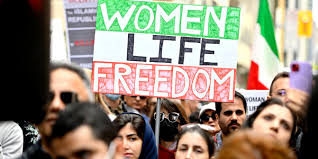
Interesting enough, Professor Dabashi in recent public statements and the book in question, did highlight the way everyday Iranians are trying to resist this regime. The book centers on the Women, Life, Freedom uprising in 2022-3. To his credit, he condemned the regimes torture and murder of its people back in 2022-3 and now in 2026. In this way, his book was a compliment to Arash Azizi’s more sobering and less ideologically driven What Iranians Want, which I looked at last month.
When Professor Dabashi is not lost on a long rant about the United States or colonialism or on a diatribe about Israel and Masih Alinejad, he is quite informative about Iranian history and culture. He has been a key interlocutor over the years. His work was my introduction to Iranian cinema, poetry and theology. I discovered his writings particularly on the history of liberation theology in the 1970s. In many ways, this was a global, somewhat ecumenical movement trying find a religious expression toward political frustrations.
Dabashi opens Chapter 8 of his book detailing the public execution of 23 year old Majidreza Rahnavard in December 2022. After retelling Rahnavard’s defiance toward his judges, Dabashi connects this act with the other young demonstrators from these past uprisings by highlighting the song “Khoda Nur-e (God is Light) performed by Iranian artists Babak Amini and Ardavan Hatami.
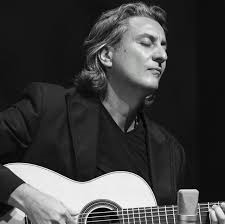
The song opens with God as Light but then follows this with naming some of the victims of the Women, Life, Freedom marches as intimate with the divine. Dabashi suggests “a different conception of divinity that lives in the enduring memories of every murdered martyr” is expressed in this song (Dabashi, 181). In short, Dabashi envisions a new type of liberation theology with God on earth immanent among the young martyrs. In this way he criticizes the violent, oppressive religiosity of the Islamic regime without getting caught in a binary of positing a pure secularism instead.
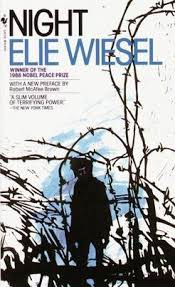
Probably much to Professor Dabashi’s consternation, this passage reminded me of post-Holocaust literature, particularly the theological kind. German theologians like Jürgen Moltmann and Johann Baptist Metz concretely engaged Jewish contemporary thinkers and declared that Auschwitz was the starting point for any future Christian theology. Moltmann references Elie Wiesel’s Night in his classic work The Crucified God (Moltmann, 273-4). In fact, Moltmann sites the passage of the three condemned prisoners hanging from the gallows, including a young boy, that Dabashi’s chapter brought to mind:
“Where is merciful God? Where is He?” someone behind me was asking…
For more than half an hour [the child in the noose], lingering between life and death, writhing before our eyes. And we were forced to look at close range. He was still alive when I passed in front of him. His tongue was still red, his eyes were not yet extinguished.
Behind me, I heard the same man asking:
“For God’s sake, where is God?”
And I heard a voice within me answer him:
“Where is He? Here He is—He is hanging here on this gallows. . . .” (Wiesel, 64-5).
The question about God’s location inevitably brings the divine into direct identification with the suffering human—in this case young people, both Jewish and Iranian, executed by a corrupt state. Post-Holocaust theologians were obsessed about God’s location during intense suffering. Here we are today and we read stories about hundreds to thousands of deaths: Jews, Palestinians, and Iranians. The question of God’s location returns. However, is what Dabashi and Wiesel expressing a form of pantheism? If yes, then do we simply dismiss such musings?
History presents us with a lot of bad news. 10/07 and the following war and now the recent deaths of thousands in Iran should produce mourning from all of us. Where do we find relief? In some ways religion/theology has helped to respond to both tragedies and blessings. In the case of Wiesel, at the heart of his testimony and witness to the Holocaust, he inherits the role of the biblical Job, questioning God’s silence. Perhaps in our day, with Amini’s and Hatami’s song as a testimony of the recent Iranian martyrs, they inherit the lamentations of the biblical prophet Jeremiah. In a theologically saturated world, they reflect that God, in fact, identifies with these young, courageous martyrs. Of course there is a cry for answers, but also the very human resolve to embrace song as a way of trying to cope with this world. And what we do not know, we reflect in silence, placing faith, like the psalmist, that God is indeed here.








 Ad-Free & Subscriber Log-In