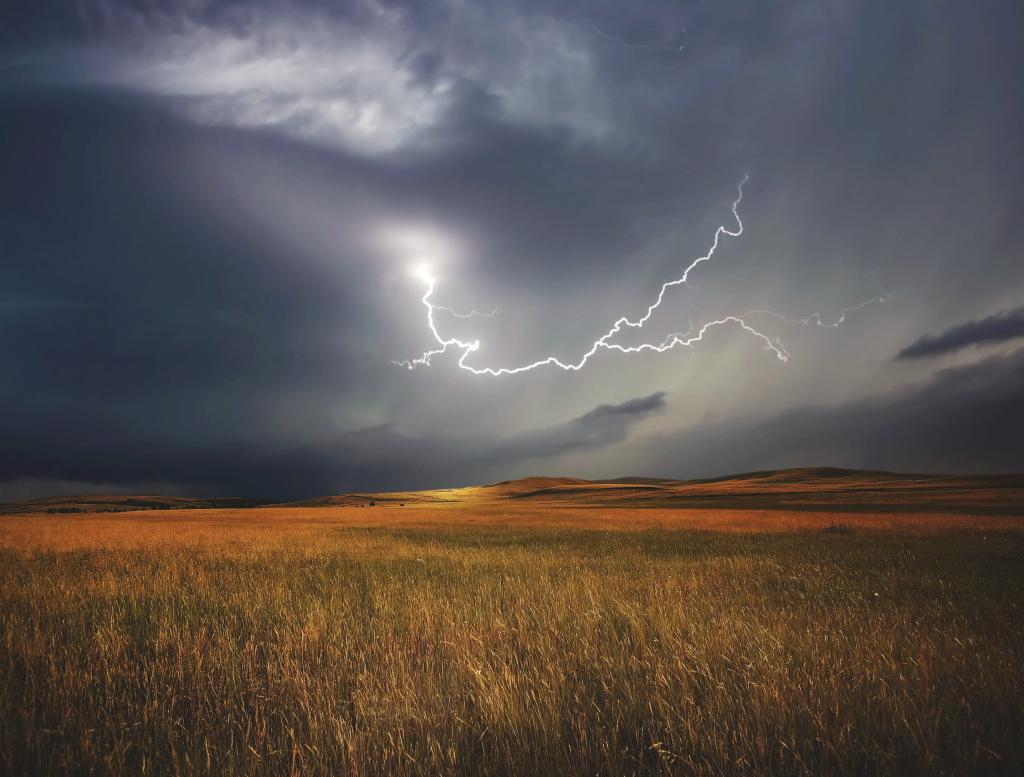
A year ago around this same time, we here in St. Louis had a tornado. And it blew off part of our roof! I grew up in Oklahoma where tornados were a regular occurrence. As a young lad, I’ve seen one headed our way, I’ve cowered in quite a few basements and cellars, and I’ve driven through the aftermath in which whole neighborhoods and downtowns were reduced to huge piles of splinters. But never had I been actually hit by a tornado. But now I have!
Now that we are in the season of tornados, thunderstorms, and hurricanes, I want to console you. I came across an article that says bad weather can actually be good for us.
So says Trevor Harley, a psychology professor at the University of Dundee in Scotland, writing in the Daily Mail. The piece is actually taken from his upcoming book (to be released in July) Head in the Clouds: How the Weather Affects Our Minds and Mental Health. And he makes some good points!
Rain, for example, is soothing. Its creates a sound called “pink noise” (similar to “white noise” but a pitter-patter rather than a hiss) that is conducive to relaxation and sleep, as confirmed by brain wave studies. One study found that the sound of falling rain tones down feelings of stress and pain.
When rain strikes soil, a chemical called geosmin is released into the air, which is accounts for that pleasant fragrance during and after a spell of rain. That substance can boost the immune system, reduce inflammation, and increase levels of the feel-good hormone serotonin.
According to a Japanese study, our cognition and productivity are also higher on rainy days.
Thunderstorms put lots of charged particles–ions–into the air, which is why we get lightning. Those negatively-charged ions kill mold and bacteria in the air, remove particulate matter, and reduce the inflammation that such material can cause. Air rich in negative ions also improve the function of our respiratory, cardiovascular, and nervous systems. Perhaps because of their effect on the brain, negative ions also reduce depression.
A study found that the feeling on wind on our skin increases the production of the positive-emotion regulator serotonin and the pleasure-hormone dopamine.
Snow muffles sound, toning down noisy stimulation and having a calming effect. It also reflects a great deal of light–sometimes as much as a bright summer day–helping us with Seasonal Affective Disorder, the so-called SAD syndrome in which the increased darkness of winter, with its shorter days and longer nights, makes us feel depressed. Also, snow puts more of those negative ions into the air.
I would add this benefit of bad weather. Watching a thunderstorm–or standing outside in a thunderstorm–fills us with awe. We feel small next to the overwhelming power of the created order. This is an aesthetic experience: It’s more than beautiful, a perception that creates in us something like love; rather, it’s sublime.
Sublimity is tinged with fear, but it’s an evocation of infinity and transcendence. Experiencing the sublime is good for us. Because God is sublime. Just ask Job about his tornado.
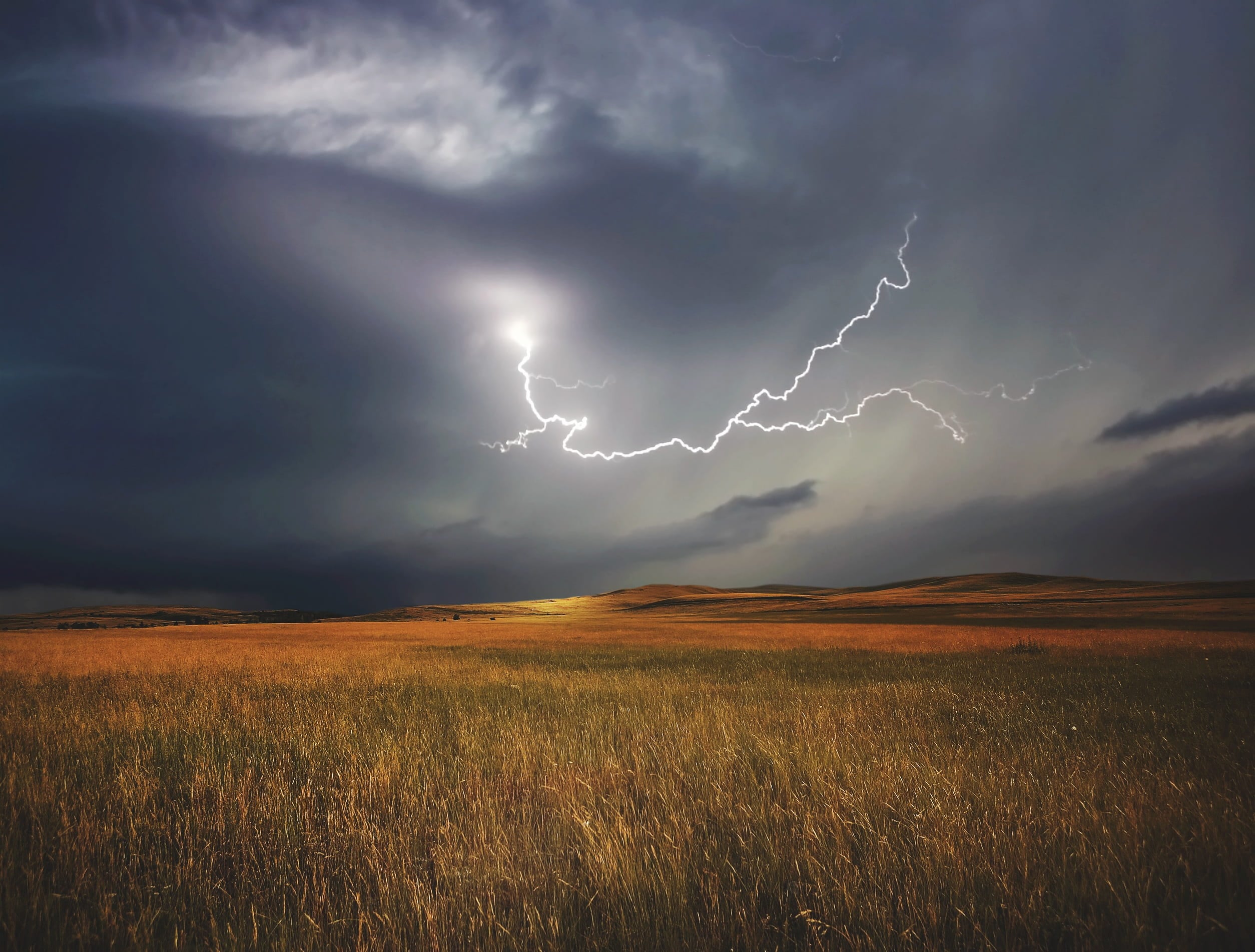
Photo: Thunderstorm via PickPik, Royalty-Free photos.















 Ad-Free & Subscriber Log-In