

As my grant (and time in Norway) wrapped up this spring, I spent a lot of time being bad at communication in public.
Let me explain. I had two conferences (one in Paris, one in Oslo) where I was able to go present my work. These were really rewarding experiences, and I learned a lot from the other presenters and received positive and helpful engagement with my own work. But along with the learning and engagement came reminders that my own spoken language skills are poor compared to those of my European colleagues. The conference in Paris was in French, Italian, and English, while the conference in Oslo was primarily in Norwegian, with presentations in Swedish and English as well. Now over the years I’ve studied most of those languages (all but Swedish), but it’s a different experience to slowly read an academic text with a dictionary at hand and to try and converse in a language, or keep up in an engaged question and discussion section that bounces from French to Italian to English and back again. In short, my educational background as an American spent so much less time emphasizing languages than did my European colleagues’ education that comparatively, I’m just bad at the sort of multilingual engagement that is the norm in a European setting.
Now I knew this objectively – that the US education system does not prioritize language learning in the same way as Europe, and that our educations shape our perspectives and assumptions, whether in how we approach classical authors or in how we think about the past and today’s political debates. And I’d already spent a good portion of the past year being bad at Norwegian in public! But in discussing these broader educational differences with colleagues at these conferences, a few other contrasts emerged. I think it’s worth highlighting some of these differences that surprised me, as well as things that we can perhaps learn from these contrasts.
Education and Priorities
One of the differences I was most familiar with going into these conferences was that in approach to foreign languages. From years of travel and work in European settings, I was already aware that my European colleagues received an education that emphasized language learning far more than ours in the US. In conversations at these conferences, the differences in approach between countries became more apparent.
At least as explained to me in conversations across these conferences, educational curriculums in European countries varied in two particularly striking ways. Norwegian children start learning a second language around the age of 7, while French children learn two languages (alongside French) by the time they graduate high school. Italian children learn a second language in middle school, while children in Switzerland, a country with three official languages, usually learn German, French, Italian, and English before starting university. In short, European approaches to language reflect an emphasis on cross-cultural communication that the U.S. approach to languages simply does not prioritize.
An additional difference that surprised me was a difference in curricular requirements around humanities and arts. In Spain, most required history classes, at least as described by my colleagues, focus on very modern history, with no required art history classes in the curriculum. In Italy and France, however, all students of high school age take several years of art history, along with classical and medieval history. Norwegian history curriculum emphasizes the years after 1700 (with premodern history covered primarily in elementary and middle school, or in elective classes); Norwegian education also offers more emphasis on the arts, on citizenship, and on global perspectives than US curriculums. Like in the US, it seems that in many European curriculums, the focus is on modern history rather than premodern, with a few notable exceptions; whether a country requires art history as part of its curriculum or not seems to depend at least somewhat on whether a robust art history is seen as central to that nation’s heritage and significance. Education in foreign languages reflects a broadly accepted European emphasis on distinct national identities interacting in collaboration; education in history and the arts seems to reflect each nation’s self-perception of its own contributions to global history and of its own heritage.
Education and Perspectives
These differences are striking in and of themselves and confirm some of what we already know from following debates about curriculum within the US: what we teach matters, and the ways we frame our history (and place within the broader sweep of global history) plays an outsized role in shaping geopolitics today. And since all learning is cumulative, curriculums that emphasize citizenship, culture, arts, and an expansive historical narrative from primary school through university create citizens who see the world and their place in it differently.
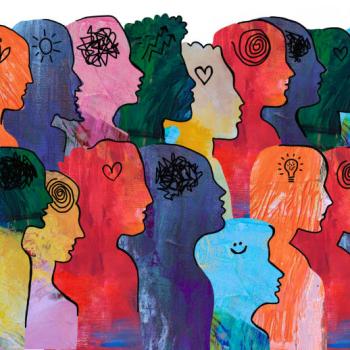
What I found most interesting, though, was how differences in education shaped cultural perspectives and assumed norms in such permanent ways. An emphasis on language learning from a young age literally shapes the brain differently, creating cognitive flexibility, self-control, and better concentration. It’s not just that colleagues from different places learn different sets of facts or have a different focus in their history classes. How we learn (and what we learn and when) shapes our brains and how we think, thus creating differences in approach and perspective that go so deeply we often do not realize they are there. We may think we are being culturally aware or seeing things from another’s perspective- but our very thought processes may be fundamentally different.
So what can we learn from this? As both global citizens and as Christians, members of a global church that transcends chronological and geographic boundaries? First, I think we need to ask far more questions of each other; without first noting these differences shaping our thought processes and perceptions, we’re likely to misunderstand each other. Second, I think it’s worth noting that each of us is deeply formed by the culture in which we live, often in ways we do not see until we step outside of comfortable environments. It helps us to better see our world and our God in new ways if we intentionally move outside of our own culture and time period, for until we move out of our comfort zone, we’re not even aware of all the ways (big and small) it’s shaped our perspective on the world. (more on this next month, as we talk about our forthcoming devotional Candles in the Darkness). Third and relatedly– I think we need to be willing to be bad at things more often: to go into uncomfortable settings where we will misunderstand or blunder, ask questions, and listen, especially to our sisters and brothers in Christ who come from very different perspectives than our own. Only by being humble and willing to struggle in a new place and context can we expand our own perspectives.













 Ad-Free & Subscriber Log-In