


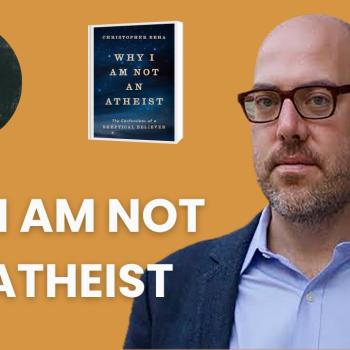
Lutheran apologist Jordan B. Cooper has written a terrific book on modern philosophy, particularly the strain that led to Michel Foucault, Jacques Derrida, and woke academia. I was asked to review it for Religious Liberty Online. Here is the first part of my review. To read the rest of it, just click the link at the end of the post.
Why the Woke Think the Way They Do
Academics today are in thrall to sophisticated philosophies that make learning impossible.
by Gene Edward Veith
Leftists used to focus on economics, but today they fixate on nonbinary genders, microaggressions, and pronouns. Woke progressivism may seem silly, but Jordan B. Cooper, in his new book, Makers of the Modern Mind: A Guide to the Thinkers Who Formed the Modern Left, shows it has deep roots in modern philosophy. He traces the metastasizing of Marxism into an ideology that reduces pretty much everything—truth, reason, culture, language, science, all human interactions—to the oppressive imposition of power.
Cooper is a Lutheran pastor best known for his Just & Sinner podcasts and YouTube videos on Lutheran apologetics. But his academic specialty is 17th-century Lutheran scholasticism, so he knows his philosophy. To understand Marx, he says, one must understand Hegel, which requires understanding Kant, which requires understanding Descartes. He also moves forward from Marxism to its expansion into cultural criticism, structuralism, post-structuralism, feminism, and critical theory. This is the “tradition” that constitutes today’s intellectual establishment.
Most of the thinkers Cooper treats express themselves in jargon-ridden language that is difficult for nonspecialists to understand. Cooper, however, is lucid and engaging. Though he points out where these ideas go wrong, his tone is not polemical. The polemics in this review are purely my own.
This crash course in modern—that is, post-classical, post-Christian—thought includes an illuminating discussion of Enlightenment thinkers like Hobbes, Locke, and Paine, showing that “liberalism” has both conservative and radical strains. But his treatment of the various strands of “post-Marxism” is especially valuable in explaining what lies behind our current controversies and exploring the assumptions that rule today’s universities.
Karl Marx, with his economic determinism and Hegelian view of history, predicted that the working class would rise up in an inevitable revolution to overthrow bourgeois capitalism, thus ushering in the communist utopia. Unfortunately for his theory, the workers of the world did not rise up. As working conditions improved, the proletariat often staunchly defended the status quo. Even where revolution became reality, in the Soviet Union and China, the state did not wither away as Marx expected.
That workers failed to engage in a global revolution would seem to falsify Marxism. But many of its intellectual adherents refused to accept this evidence. Instead, they tried to find reasons why the proletariat refused to be radicalized. What’s wrong with them?
The basic elements of today’s woke scholarship can be found in the work of Georg Lukács, the Commissar of Culture and Education in communist Hungary. His job was to promote socialist propaganda, fire dissident teachers, and ban “bourgeois” books.
He reasoned that nonrevolutionary workers had a “false consciousness” because the ruling class controlled every aspect of culture, thus constraining how the proletariat thinks. The task of leftist intellectuals was to raise the consciousness of the masses so they will recognize how oppressed they are.
Since the totality of culture is determined by the ruling class, reasoned Lukács, that culture must be thrown down. Intellectuals must critique every facet of cultural life—art, literature, religion, ethics, knowledge—to uncover the implicit oppression that is its foundation.
Art and literature, he said, should reflect the proletariat perspective, while bourgeois work should be suppressed. Mere aesthetic considerations distract the masses to keep them docile. Classic works of the past are propaganda for the ruling class. The value of a work is determined solely by the socio-political views of the artist. As Cultural Commissar, Lukács promoted “social realism,” which dramatized the class struggle, the only artistic style the Soviets permitted.
Reading about Lukács brings back fond memories of my own career as an English professor, watching colleagues in my field “interrogate” authors for their socio-political beliefs (note the police-state metaphor); inserting authors with correct beliefs into the canon regardless of aesthetic merit; and reading oppression into every classic text. Lukács called his totalitarian method simply “theory,” and so did they.
The French semiotician Roland Barthes lived on the other side of the Iron Curtain, but he was arguably even more radical. Barthes insisted that language determines thought. And since the ruling class controls language, it thus controls the masses.
The failure of the revolution to materialize lead Barthes to an extraordinary conclusion. As Cooper explains his reasoning,
If realism were correct, and the realities of the universe could actually be known, this would support the idea that the bourgeoisie are able to rightly reason towards these truths; as a consequence, bourgeoisie values and beliefs must be seriously considered and (if true) adopted by citizens. In order to tear down this pillar upon which the powerful have constructed their authority and privilege, the existence of universal or objective reality must be rejected–at least as accessible to human cognition. In his attack on the bourgeoisie, Barthes aims at nothing less than reality itself.
Barthes, however, was only a structuralist. The post-structuralists took these ideas even further. And they are the primary influences on today’s woke academics.
Photo: Jordan B. Cooper via the author’s website









 Ad-Free & Subscriber Log-In