

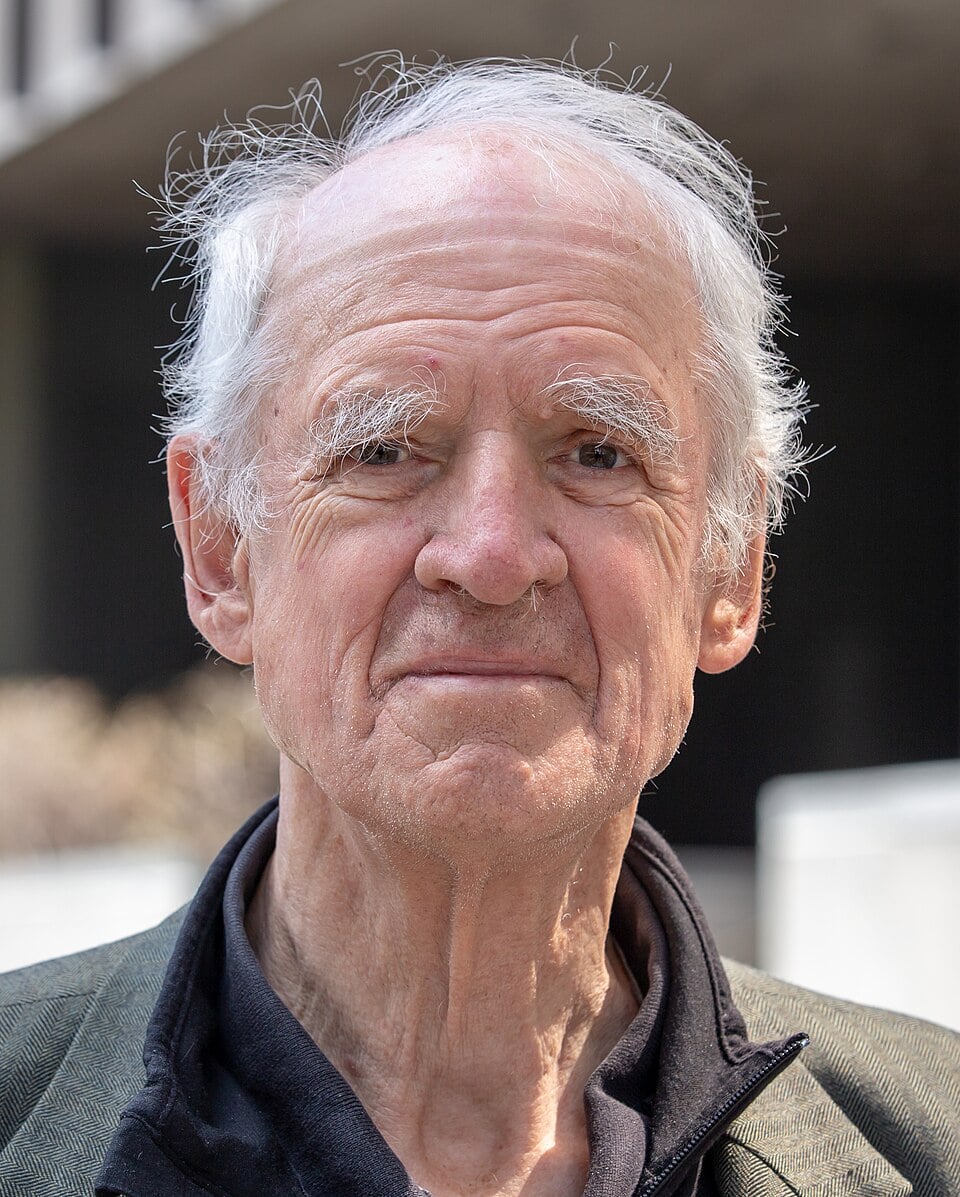
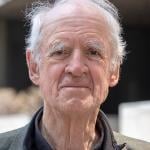
Yesterday we discussed the concept of the”social imaginary,” referring to the work of the Canadian Catholic philosopher Charles Taylor, author of what is generally accepted to be the definitive study of secularism, A Secular Age.
The Wikipedia entry for the book, published in 2018, summarizes its main points: “In this book, Taylor looks at the change in Western society from a condition in which it was almost impossible not to believe in God, to one in which believing in God is simply one option of many.”
Notice that he is not saying that secularism has replaced religion, as in the conventional “secularization hypothesis” according to which as people become ever more modern, they stop being religious. Taylor rejects that. Clearly, modernity has not eliminated religion. In many parts of the world, for example, Christianity has made societies more modern.
Taylor does see a shift, though. Before the Enlightenment in the West, virtually everyone believed in God. Religions might differ, but religion itself–the existence of a transcendent reality that is connected to the reality of everyday life –was a “given.” That is to say, God was part of the social imaginary.
But now, in our modern post-Enlightenment age, religious belief is one option out of many, including having no religious belief. Even religious people are well-aware that they have friends, neighbors, and family members with different religious convictions and practices than they do. And they themselves may well have adopted a different religion from the one they grew up with. They do believe in God, but God is not part of the social imaginary.
Taylor defines secularism in terms of the diversity of religious options, which includes the option not to believe at all. For everyone today, including committed Catholics like him, religion is no longer a “given.” As such, it no longer exerts a powerful influence on society.
Taylor says that today in our secular age our social imaginary is in an “immanent frame.” That is, we are oriented to what is immanent–the existing world in the here and now–more so than to what is transcendent. For some, the immanent frame is closed. This physical world as they experience it is all there is, all they can imagine. For others, the immanent frame is open. It is open to the transcendent, to God. And yet, they too tend to be most focused on this world–their well-being, their daily lives, their immediate experience, their society.
I would observe that this open immanent frame helps to explain some of the religious phenomena we are seeing today. Many Christians are so fixated on the immanent world that they succumb to the Prosperity Gospel, seeing their faith in God as a means of acquiring health and wealth in this life. Many Christians have become preoccupied with politics, to the point that their faith is tied up with political ideologies, whether of the right or the left. Other Christians do not go that far, but they see their faith in therapeutic terms, as a way to solve their problems, or hold to Christianity because of its cultural benefits.
Now Christianity teaches that God is both transcendent and immanent. He is the Creator outside of space and time, but He is also intimately involved with His creation in His providential care for every sparrow (Matthew 10:29) and blade of grass (Psalm 104:14). He reigns in Heaven, and He has become incarnate: “the Word became flesh and dwelt among us” (John 1:14). That is to say, God broke into the immanent frame.
And He still does. Some of us Christians believe He does so in the Sacraments, coming to us through the tangible, immanent means of bread, wine, and water.
To be sure, Christians should embrace and be embraced by God in both the transcendent and the immanent realms. In our recent Owen Barfield post, we discussed his point that the “participation” with reality that the ancients enjoyed in an immediate, non-reflective way, can recovered now in the “final participation” stage only with deliberation and intention. Similarly, in our secular age we need to deliberately and intentionally pursue the transcendence that the Christian faith opens up to us.
But I would say that Christianity is well-positioned to reach people who live in and are often imprisoned by this immanent frame. The Incarnation, the Sacraments, and Vocation (God’s presence and His work through ordinary people in their everyday lives) are manifestations of God’s immanence that can resonate profoundly in this secular age.
The big religion story of our day is about how so many young adults, particularly young men, are feeling the pull of sacramental Christianity–Catholicism, Orthodoxy, Lutheranism (as reported by the president of the LCMS)–in which it is believed that Christ gives not just His spirit but His body, in the context of worship that is both sensory and transcendent.
Another facet of the social imaginary of our secular age is what Taylor calls the “buffered self.” The pre-modern eras were characterized by what he calls the “porous self,” in which the individual was not isolated by “porous” to nature, other selves in the family and the community, and to God. For various historical and cultural reasons that Taylor goes into, we now have a “buffered self,” with a barrier between the mind and the world, our inner and our outer lives. As a result, the self is isolated, walled off, and self-contained. This has given rise to “expressive individualism,” a term coined by Taylor that Reformed theologian Carl Trueman applies in his book The Rise and Triumph of the Modern Self, showing its connection to the sexual revolution, transgenderism, and other desperate attempts to express one’s authentic self.
Again, Christianity can meet that buffered self where it is, honoring the sanctity of the soul and the personal relationship with Christ, while breaking down the barriers that bring isolation. And also bringing the alienated individual into the community of the church.
So what’s next? Barfield projected a “final participation” in which human beings would deliberately recover what they had lost. What is next for the social imaginary? Though, as we have shown, the data about a religious revival is mixed, God may be entering the social imaginary. Elite thinkers are now taking the possibility of God seriously. Even those most opposed to Christianity, the radical of the hard left, are making an exception for Islam, despite its harsh legalism and its repudiation of the sexual revolution in all its forms. Science, which has played such a big part in our “buffering,” has gone far beyond rationalistic materialism. Perhaps God will once again become a “given.”
In closing, I want to thank DakotaLutheran, a long-time reader and commenter, for his comment to the Owen Barfield post that tied together Barfield and Charles Taylor. He also showed how their insights relate to the Christian doctrine of the Fall:
Charles Taylor would distinguish the older porous self from the buffered modern one. Barfield is interested in the birth of consciousness, in particular self-consciousness. This notion is also associated with Weber’s disenchantment. We can imagine something similar happening in the Fall. The unconscious, non-deliberate, uncritical union with God broken by the divorce of man and God with the question, a divorce, a separation, that once broken cannot be unheard or re-established, our self, our will, our ethics, stand in the way. It is not unlike the child’s relationship with a parent that begins with unquestioning trust, and “matures” by separation from the parents.
This was a catalyst that helped me connect the dots between my posts! So thanks, Dakota!
Photo: Charles Taylor by Lëa-Kim Châteauneuf – Own work, CC BY-SA 4.0, https://commons.wikimedia.org/w/index.php?curid=177561339










 Ad-Free & Subscriber Log-In