


A key feature in J.R.R. Tolkien’s works is his environmentalism. He saw the degradation of the environment due to industrialization, and he believed it to be a great evil, one which could and would lead to pain, suffering, and even death. In The Lord of the Rings, Saruman took over the Shire, engaging a plan to destroy the beauty and integrity of the Shire. Trees were cut down, homes were destroyed, and the water and air was polluted by a new, large mechanized mill. Tolkien used experiences in his own life, what was happening to Oxford, as inspiration for Saruman’s actions, using it to show the tragic consequences of modern industrialization (if the environment and its integrity are not defended). In The Lord of the Rings, Frodo and his companions put Saruman’s reign of terror to an end in the chapter, “The Scouring of the Shire,” a chapter which shows the way William Morris influenced his writing.Then the Shire had its eucatastrophe, a surprising good end which emerged out of the tragedy which came before it, as it was restored with help from a gift Samwise had been given by Galadriel, a box of dirt taken from her garden in Lothlórien. He spread dust from that gift around, mixing it with saplings which he planted, and saw to his surprise, that the Shire quickly, that is, miraculously, recovered from the harm Saruman had cause it.
From The Lord of the Rings, it should be clear to his readers that Tolkien believed humanity could cause grave harm to the environment. He feared the consequences of environmental destruction. Lives are at stake. Those who promote pure industrialization, like Saruman, can quickly cause long-lasting, if not permanent, damage to the world. In the Lord of the Rings, Tolkien allowed for a happy resolution, but he understood, in history, things are often not given such an end. Thus, in another work, the newly released The Bovadium Fragments, he wrote a story which did not have such a happy ending. The short story was, in part, a work of satire, but it was also a story which demonstrated the concerns he had for what was happening, not only in Oxford, but around the world, as motorcars became the popular means of transportation, causing all kinds of pollution and destruction to the natural environment. He believed it was ironic that many of the claims made about the potential for motorcars ended up having the opposite effect; for example, while they were built for speed, they often enough were slowed down, if not stopped, by traffic. As a solution to that, cities took land from the public and made more streets, streets which only speed up the destruction being done by motorcars, as not only were the cars polluting the environment, more of the natural environment is destroyed by city planners. And, of course, it did not solve the problem of congestion, but instead, allowed for more people to have motorcars, and more places for them to get stuck in a traffic jam. In this way, he foresaw that the problems with motorcars would only get worse and worse, until cities were filled streets, and this streets filled with stalled traffic, allowing all the motorcars to put more of their pollution in the environment until, at last, people suffered and died from it.
The Bovadium Fragments was written as an archeological investigation of the past, where a few fragments from a chronicle talking about the rise of motorcars is translated and discussed by scholars in the future. In that chronicle is revealed what happened to Oxford:
There came at last a day when every street, every road, lane, alley, court, and by way was blocked: nothing cold move either forward or backward. All Motores stopped dead. Silence fell. The silence of a tomb. For when at length men came to the city, walking over the tops of inert Motores, they found all the inhabitants were dead. Slain by the poisonous fumes, their shades fled to seek a cleaner air in Hell.[1]
Tolkien’s wit is shown in that last sentence as he indicates Hell has better air than what humanity produced — that is, motorcars are shown as making the world to being worse than Hell itself. To be sure, Tolkien suggests that this was, in part, due to some sort of “daemonic” influence, that there was a “daemon” which influenced the development of the motorcar and suggested humans put their care and effort into their upkeep over the needs of the environment and the common good.
Tolkien, in many other works, in his letters, in his conversations with friends, made it clear how much he promoted taking care of the earth. He was especially concerned about the fate of the trees and how they were being mercilessly cut down without good reason. He was upset about the changes happening in Oxford which went against the good of the environment. It made things ugly. It made the air unhealthy. We can get a glimpse of those changes in John Wain’s “Oxford Trilogy,” where we see the life of a scholar who went to Oxford and became a don while these changes were taking place; John Wain was far more ready to accept the changes (as the novels represent his own experiences with them) than Tolkien, though it is clear he still showed care and concern for the natural beauty that was had in Oxford.
Tolkien’s environmentalism should resonate with us today, as we have seen what he warned us has come to be. We have seen how deadly pollution can be (such as in Flint, Michigan). In a way, Tolkien’s writings have proven prophetic in the proper sense, where he warned us of what might happen if we did not do better.
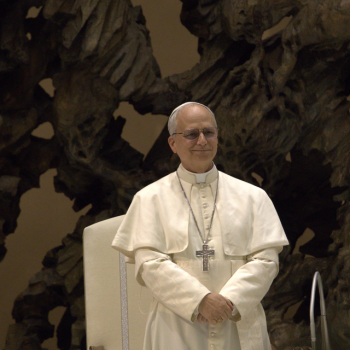
Many rightfully point out and praise the Christian influences in Tolkien’s works. No better representation of this can be found than in his notion of eucatastrophe, but it can also be seen in all his concerns for the environment. He understood the world was created by God as something to be protected by us. It was created good, and industrialization threatened that good. Indeed, he experienced that destruction first hand. He saw where it could and would get worse if we didn’t take our duty as stewards of the earth seriously. He showed why we might succumb to industrialization due to good we see accomplished through it. Evil always tempts us with a good, but the end result is more harm than good. He wrote to show us how to see through the illusion of the good and to see the harm that such evil would produce. He understood the destruction of the environment would lead to an existential crisis, one which is presented in The Bovadium Fragments, for in it, he shows how a society, not following proper environmental stewardship, can lead to its own demise. Climate change is real, and the science behind it demonstrates what Tolkien understood, that if we are not careful, we can be the cause of our own extinction. It has become so clear that contemporary Christian leaders have indicated it our duty to resist climate change, to do what we can to heal the damage we have done to the earth; it certainly is the message we find recent Popes (St. John Paul II, Pope Benedict XVI, Pope Francis, and now Pope Leo XIV) have had in common, as well as something they have had in common with the Patriarch of Constantinople, Bartholomew I. Tolkien’s concern should, therefore, be our concern, and while we can and should be entertained by his writings, as he wanted us to be, we should also take this concern seriously. If we don’t, we might find what happened to Oxford in The Bovadium Fragments will happen to us.
[1] J.R.R. Tolkien, The Bovadium Fragments (New York: William Morrow, 2025), 30.
* This Is Another Post From My Personal (Informal) Reflections And Speculations Series
Stay in touch! Like A Little Bit of Nothing on Facebook.
If you liked what you read, please consider sharing it with your friends and family!
N.B.: While I read comments to moderate them, I rarely respond to them. If I don’t respond to your comment directly, don’t assume I am unthankful for it. I appreciate it. But I want readers to feel free to ask questions, and hopefully, dialogue with each other. I have shared what I wanted to say, though some responses will get a brief reply by me, or, if I find it interesting and something I can engage fully, as the foundation for another post. I have had many posts inspired or improved upon thanks to my readers.












 Ad-Free & Subscriber Log-In