

The unprecedented public clash between Donald Trump and Pope Leo XIV is not merely another episode of political theater; it is a revealing theological moment that forces a fundamental question about the nature of Christianity itself. When a self-identified Christian political leader openly denounces the Bishop of Rome for articulating core Gospel principles, the issue at stake is not only ideology but discipleship. One might say that this conflict exposes a deep fissure between the performative Christianity of power and the ethical Christianity of the New Testament.
The controversy intensified when Trump took to Truth Social to launch a blistering attack on the pope, calling him “weak” and “terrible” on matters of global conflict and accusing him of undermining Western strength. The denunciation was not simply political disagreement; it was a rejection of the pope’s insistence that war, particularly the escalating conflict involving Iran and Lebanon cannot be reconciled with the will of God. Trump’s rhetoric framed the pope’s peace advocacy as naïveté, even betrayal. Yet in doing so, he implicitly positioned himself against one of the most basic teachings of Jesus: “Blessed are the peacemakers.” The dissonance here is not subtle. It is theological and stark.
Pope Leo’s response, delivered with characteristically calm resolve aboard the papal plane en route to Algeria, underscored the contrast. He rejected the premise that his statements were political, insisting instead that they were rooted in the Gospel. He emphasized dialogue, human dignity, and the moral imperative to resist violence. This is the language of progressive Christianity, echoing centuries of Catholic social teaching and the ethical core of the teachings of Jesus Christ. In refusing to engage Trump on his terms, the pope effectively reframed the debate: this is not about partisan alignment but about fidelity to the message of Christ.
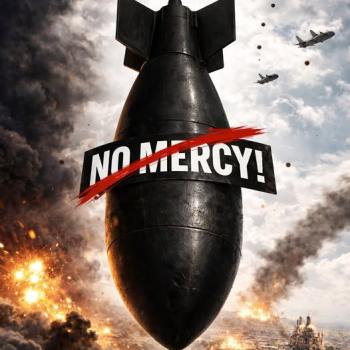
At the heart of the conflict lies the question of war and peace. The teachings of Jesus, particularly in the Sermon on the Mount, elevate nonviolence, mercy, and love of enemies as central virtues. Pope Leo’s condemnation of modern warfare as incompatible with divine will stands firmly within this tradition. Trump’s posture, by contrast, embraces militaristic imperialism and frames conflict in terms of strength, dominance, and civilizational struggle. Such a framework may resonate politically with his MAGA evangelical base, but it sits uneasily—if not incompatibly—with the ethical demands of the Gospel. To attack a religious leader for opposing war is, in effect, to attack a core Christian principle.
Equally revealing is the issue of pride, long understood in Christian theology as the root of sin. Trump’s response to the pope was not marked by humility or introspection but by personal insult and self-assertion. The AI-generated image casting himself as Jesus, which he posted on his own Truth Social, only deepens the theological concern. In Christian tradition, self-exaltation—especially when it borders on the appropriation of Christ-like symbolism—is not merely inappropriate; it is blasphemous.
The Trump as the Messiah image even led some critics, such as former Republican congresswoman, Marjorie Taylor Greene, to suggest the Antichrist has manifested. “It’s more than blasphemy. It’s an Antichrist spirit.” The contrast with the pope’s emphasis on humility and service could hardly be more pronounced.
The divide extends beyond foreign policy into questions of social ethics, particularly the treatment of migrants and the marginalized. Pope Leo’s consistent defense of immigrants reflects the Gospel mandate to care for “the least of these,” a theme that runs throughout the teachings of Jesus. Trump’s rhetoric and policies, which often emphasize exclusion and deterrence, stand in tension with this mandate. This is not a matter of partisan preference but of theological priority: whether the Christian faith is fundamentally oriented toward compassion for the vulnerable or toward the preservation of national power.
Perhaps most troubling is the broader pattern suggested by this conflict: the instrumentalization of Christianity for political ends. When religious language is deployed to justify policies that contradict the ethical teachings of Jesus, the faith itself risks being distorted. Pope Leo’s warning against the misuse of the Gospel is therefore not abstract; it speaks directly to the present moment. Christianity, in its historical and theological depth, is not a tool of nationalism or a veneer for power. It is a call to radical love, self-sacrifice, and reconciliation.
What makes this confrontation so significant is that it strips away ambiguity. It forces a reckoning with the meaning of Christian identity. If to be Christian is to follow the teachings of Jesus—teachings centered on peace, humility, truth, and care for the marginalized—then actions and rhetoric must be measured against that standard. Trump’s public denunciation of a pope for advocating peace, combined with his embrace of militaristic and self-aggrandizing language, reveals a profound disjunction between claim and practice.
In the end, the conflict between fellow Americans, Trump and Pope Leo, is not simply unprecedented; it is clarifying. It reveals that the label “Christian” cannot be divorced from the ethical content of the Gospel. Pope Leo’s response, grounded in the teachings of Christ and the tradition of the Church, reflects a continuity with the core of Christianity. Trump’s response, by contrast, reflects a model of leadership rooted in power, violent confrontation, and self-aggrandizement. The distance between these two visions is not merely political. It is theological. And in that distance, one can discern the enduring challenge of Christianity in the modern world: whether it will remain faithful to the path of Jesus or be reshaped in the image of power.












 Ad-Free & Subscriber Log-In