


It always gets me upset when I hear people complain about a “War on Christmas” while they are engaging a war on refugees. I find it ironic to hear complaints about a “War on Christmas” by those who deny Christ in the poor. It saddens me to hear about a “War on Christmas” by those who seek death and destruction in the world. To be sure, the hypocrisy can only go so far, which is why it doesn’t surprise me that on a Florida airbase, military families are being told to take down Christmas decorations, saying there is a limit to when and where they can put them up. Will those who complain about a “War on Christmas” complain about what is happening on the air base, or will they support it because of who is in charge of the military? If they can get behind what happened on the base, they show their rhetoric is baseless, but if they cannot, what will they say to Trump who said that he has brought Christmas back to the United States (while, truth be told, it was never gone).
I think it is rather obvious how performative those who talk about a “War on Christmas” are with their talk. For many, they use Christmas for political or virtue signaling, leading them to be concerned about Christmas on a superficial level. They want things which make them feel good, which is why they want to hear people say “Merry Christmas” when they are out shopping. It is also why they want to see Christmas decorations (long before Christmas itself). They want to have all the external aesthetics because of how such aesthetics make them feel. What they don’t seem to want is to take in the Christ child into themselves, to give room for Christ in their lives. They are antagonistic instead of peaceful. They want the war, they want something to complain about, while ignoring those who, like Christ, are being told there is no room for them in the inn, in the country they desire to live, in the homeless shelter, or on the streets. Either they ignore Christ as he is found in the poor, the oppressed, the vulnerable, the refugee, and the migrant needing food and shelter, or they attack Christ in them.
While Christmas should be celebrated with joy, and we, as a culture, do so with feasts, with exchanges of presents, and, of course, for many, going to church, this is all secondary to welcoming the Christ child himself by welcoming them in whom he said he is to be found. We must praise him more than in word, but in deed.
Obviously, it is good for us to rejoice, to look for and share in the blessings of the incarnation, but if we are not open to those blessings by engaging them in a proper fashion, we will find ourselves wanting after Christmas. How do we prepare ourselves for them? By making sure we are people of goodwill. I rarely see such goodwill coming from those who are screaming about a “War on Christmas;” indeed, their time before Christmas seems to be all about the “War on Christmas” instead of truly preparing for Christ’s nativity. This can be seen in the way they treat others, such as poor workers who are often casualties in their war. Because they do not make room for Christ in their lives, it should not be surprising how quickly they abandon Christmas, with some, the day after Christmas, being the time they take down all their Christmas decorations.
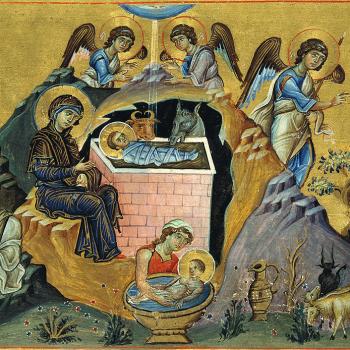
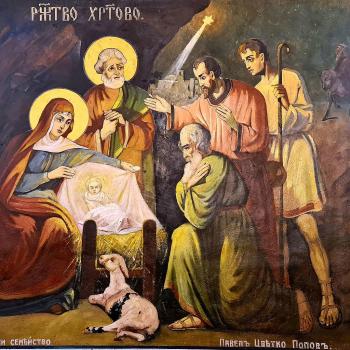
Instead of focusing on a “War on Christmas,” which is really a battle of the larger culture war, it is important to take on the spirit of Christmas so that we celebrate Christmas, not just on one day, but all our lives. There are many ways we can do this. Our society certainly has its own way, which includes putting up decorations long before Christmas itself, so that, in a way, it encourages us to experience elements of Christmas in anticipation of Christmas itself (similar to the way the eschaton is experienced now, while we are also waiting the coming of Christ and the eschatological feast at the end of time). But, we must do more. We must not take on the joyous elements while ignoring the transformation which should be had inside us as we meet and greet the Christ child once again. We should find a way to welcome him by welcoming him as he is found in others, especially in the refugees and migrants being pursued, abducted, locked up, and sent to hellish landscapes by ICE. For, it seems to me, that those who talk about a “War on Christmas” are, in some ways, right, there is a war, but it is a war of their own making, and a war which does not put them on the side of Christ but on the side of those who persecuted Christ and his family (like Herod and various authorities in Egypt). Every time they celebrate the abuse being shown to the poor, the needy, the oppressed, the foreigner, to those who they view as “different,” they are celebrating abuse on Christ, for again, he said what is done to them is done to him. To prepare for Christ, therefore, we should not be like Herod, but rather, we should imitate the Magi, taking the time to think of those in need, those in whom Christ is being persecuted, and do what we can for them, from speaking up for them and their rights to giving them room and shelter and financial aid (if we are able), even if it means we must do so against the wishes of governmental authorities.
Of course, we should also listen to our faith tradition and various ways they have developed to help us prepare for Christmas; in my tradition (Byzantine Catholic), the forty days before Christmas is known as the “St. Philip’s Fast”; it is a period, like Great Lent, geared towards self-discipline, including, of course, fasting, but also, like Lent, with the desire to help us find a way to become better persons. We should open up our hearts, become more loving, more compassionate, more welcoming of others. And, what better representative do we have of that than, in the middle of this time, we find the Feast of St. Nicholas, upon which we are shown a saint who demonstrates the joy and charity of spirit we should have as Christians?
We are in the middle of the season before Christmas. Will we make it a time of war, or a time of peacebuilding? A time of ill or good will? Will we prepare ourselves to welcome the Christ child wherever he is to be found, or will we become like a spoiled child, telling everyone to follow our inordinate desires?
* This Is Another Post From My Personal (Informal) Reflections And Speculations Series
Stay in touch! Like A Little Bit of Nothing on Facebook.
If you liked what you read, please consider sharing it with your friends and family!
N.B.: While I read comments to moderate them, I rarely respond to them. If I don’t respond to your comment directly, don’t assume I am unthankful for it. I appreciate it. But I want readers to feel free to ask questions, and hopefully, dialogue with each other. I have shared what I wanted to say, though some responses will get a brief reply by me, or, if I find it interesting and something I can engage fully, as the foundation for another post. I have had many posts inspired or improved upon thanks to my readers.












 Ad-Free & Subscriber Log-In