

When I first became Catholic, I saw first hand the beginnings of the division between American Catholicism and the rest of the Catholic world. While there were many secondary sources for this, such as the large number of Protestant converts who did not completely change their mindset and yet became popular Catholic figures in apologetics, they seem to merge together through EWTN. While EWTN had already begun its rise in America before I converted, it would later become a major powerhouse influencing Catholics, both those who watched their channel, and others through the churches and clergy who promoted their material. I saw how EWTN gained control of the way Catholicism was viewed in the United States, and it did so by pushing Catholics to embrace the developing culture wars in America, a fundamentalistic sensibility, and various elements of Catholic piety (especially, early on, with a focus on Marian apparitions, including many not approved by the church). Much was left out of their presentation. Theology was undermined by apologetics. Catholic social teaching, save for those elements which could connect with the culture war, were ignored, or worse, ridiculed.

While this was bad enough, it became worse; I saw Mother Angelica getting into fights with bishops, distorting and misrepresenting what they said in order to suggest they were heretics; even when the Vatican made her apologize, she did so in a backhanded way and the damage had been done. Catholics had been given a methodology and way of thinking which would, over time, grow until it would be the way many of them would deal with and treat the Pope when the Pope did not say or do as they wish. Thanks to the influence of EWTN, and many of its affiliates and offshoots, Catholics judged everything based upon the limited vision of the faith, the vision given to them by EWTN, instead of seeking to understand and learn what they had not yet understood.
I have watched and seen where this has led: Catholics in America, clergy and laity alike, follow the vision started by EWTN, reinforced by politics, calling anyone who does not follow it a heretic, even if it is the Pope. They do so, also, with the methodology used by Mother Angelica. That is, they have a willingness to distort and misrepresent the Pope if necessary. This often done when the Pope tells Catholics to do something which stands against their own political ideology. It is also what many of them learned thanks to various apologists who, in their debates with others, engaged others in the same fashion. Thus, from what I have seen, many Catholics have not learned to open up and listen and properly understand what they criticize, rather, if they find what is being said runs contrary to their own particular ideology, they think whoever says it must not only be wrong, but also be a heretic, and they are to be dealt with by any means possible.
Thus, I saw EWTN, and their associates, determining what Catholics would or would not hear about Catholicism. They gave rise to a new kind of sensibility in American Catholicism, one which easily found itself united with right-wing American ideologies. Catholic social doctrine was simplified, if not outright ignored, which is why, when Popes presented it in ways which countered those same right wing ideologies, it was the Popes who were rejected. At first, with St. John Paul II and Pope Benedict XVI, their reputation prevented American Catholics taking this too far; instead, EWTN and those like them, only presented elements from John Paul II and Benedict XVI which could be used for their ideology and found ways to ignore or reject everything else (such as by suggesting their writings were being corrupted and one would have to determine which part of their writings are authoritative and which was to be dismissed). Similarly, they wrongly focused on the notion of infallibility by suggesting if something is not infallible, then Catholics can easily dismiss it. This is how many treated the way John Paull II and Benedict XVI’s engagement of the environment, or Pope Benedict XVI’s interests in social doctrine. During this time, we also saw the rise of Catholic influencers who took on what Mother Angelica started, but took it further, becoming even further from the center.
Things changed under Pope Francis. Even before he was in office for a week, he had right-wing traditionalists in Latin America spreading malicious rumors and lies against him, rumors and lies which were picked up by Catholic media like EWTN. Then, when it was clear that Pope Francis was concerned about and promoted the necessity of Catholic social doctrine, that it must be followed even when it went against various political ideologies, many in the Catholic media in the US, and with them, many bishops, started fighting Pope Francis. He was given nominal acknowledgment for what he said by the USCCB, but then they would ignore what he said they should do. I also saw various American bishops speaking out against and fighting Pope Francis, and those who did not, remained relatively silent, allowing those loud bishops to become the ones whose influence was felt far and wide on social media. We see these bishops treating Francis with the same disdain, the same misrepresentation, that Mother Angelica gave in the 90s to various American bishops. Thus, from what I have seen after becoming Catholic, I saw Catholicism in America being led astray, and many of the American clergy were involved in that distortion. It is often something which I have found myself having to deal with time and time again in my writings.
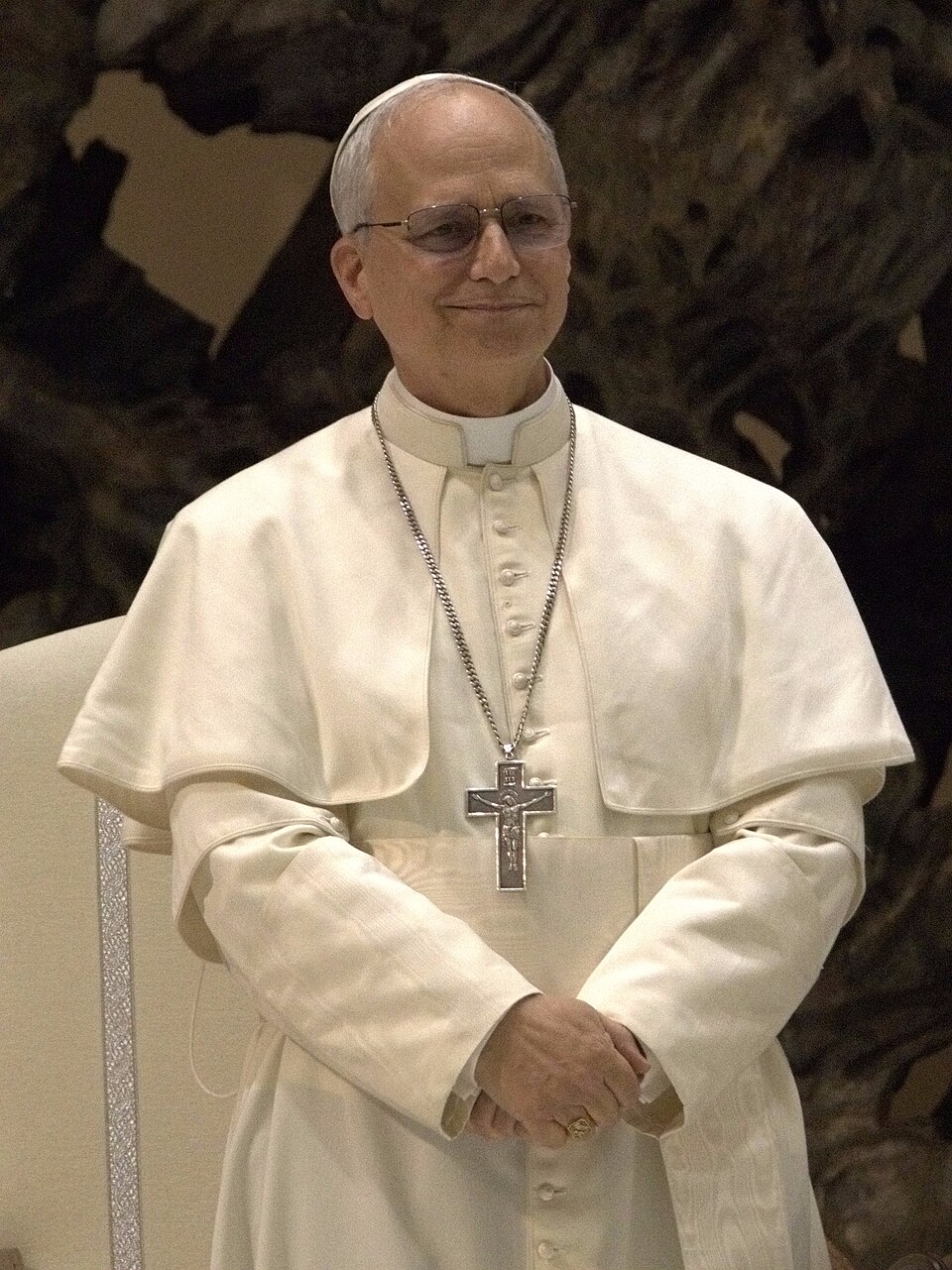
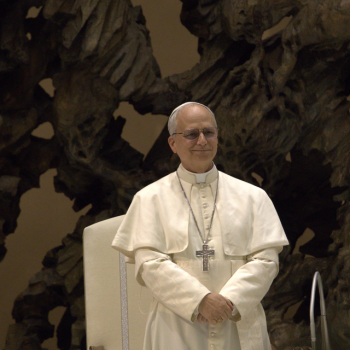
When Pope Francis died, Pope Leo XIV showed he would continue what Francis started. However, he also showed us that he planned to do so in his own way. To me, it seems as if he is trying to be pastoral, trying to give a chance for many who drifted away during Francis’s pontificate to come back, to ease them back into the fullness of the faith. But it is also clear, he is not doing this by turning his back on Francis and what Francis started. He sees the crisis in the world today and the need for Catholics to properly deal with it. He understands that Catholics must promote the human dignity of all because that dignity is being questioned and attacked by authoritarian regimes. He continues to highlight the preferential option for the poor, and with it, show how migrants are among the poor whose rights must be protected. He, like St. John Paul II, Benedict XVI, and Francis, is concerned with climate change and the harm it is causing around the world. He is telling us we can’t just sit back and do nothing but contemplate theological mysteries. Catholics must be at the forefront of the resistance to injustices in the world and the harm sin is causing it. He told the US bishops they cannot ignore the evil being done by the Trump administration, that they must actively resist Trump’s cruelty, a cruelty which is not only given to migrants, but to the poor and vulnerable. Sadly, I do not see the USCCB listening. Indeed, many in charge are close to Trump and seem to want to promote Trump the best they can, while offering no criticism of Trump or even acknowledge the evil he is doing. Thankfully, there are some bishops listening to Leo and they are speaking out and doing what they can to deal with the crisis which is at their feet, but we need to see more, and we need to see it as being a focal point of the work being done by the USCCB.
The lack of authentic direction from the USCCB, the way many Catholic influencers are ignoring basic teachings of Catholic social doctrine, cannot last. Pope Leo is going to have to do something. It has been clear to many, at least since the time of Pope Francis, a schism between America and Rome is starting to emerge. However, I think the roots of the schism go back decades, at least to the 90s if not earlier, and came from the way EWTN had taken over the American Catholic imagination, allowing its distorted presentation of Catholicism appear to be what authentic Catholicism is about.
This, at least, is a what I saw happening since I have become Catholic. To be sure, there are many layers to this which cannot be said in a short space. There are many influential Catholic figures not only tied with EWTN, but financed by many questionable sources; they promote a pseudo-Catholicism, one which many listen to instead of the Pope. What I have is the dismissal of a large portion of authentic Catholic teaching in America, one which has Catholics believe teachings which go, not only against the Pope, but against what Jesus preached in his temporal ministry. Will the developing schism end with full schism, or will something change? I do not know. All I can do is offer my voice, promoting and showing the traditions of the church many now do not know or ignore.
* This Is Another Post From My Personal (Informal) Reflections And Speculations Series
Stay in touch! Like A Little Bit of Nothing on Facebook.
If you liked what you read, please consider sharing it with your friends and family!
N.B.: While I read comments to moderate them, I rarely respond to them. If I don’t respond to your comment directly, don’t assume I am unthankful for it. I appreciate it. But I want readers to feel free to ask questions, and hopefully, dialogue with each other. I have shared what I wanted to say, though some responses will get a brief reply by me, or, if I find it interesting and something I can engage fully, as the foundation for another post. I have had many posts inspired or improved upon thanks to my readers.





 Ad-Free & Subscriber Log-In