2025-08-31T17:31:45-07:00

How should we interpret Paul’s letters? One good way to read him is in accordance with his main motivations. In other words, which particular informants drive him to do what he does and say what he says as an apostle? There are at least 3 major motivations that are at the heart of our apostle’s calling. The first is his revelational experiences, the second is his reading of Scripture, and the third is his knowledge of Jesus traditions. When reading... Read more
2025-08-12T07:32:40-07:00

What are some of my findings regarding the gospel according to Paul? As I wrap up a book project that has taken up the majority of my writing time since my Sabbatical last year, here are 8 things I would like to share about what I discovered from my research: Origin of the Gospel The origin of Paul’s use of the word “gospel” (euangelion) appears to be adopted from the earliest apostles in Jerusalem, who adopted it from Jesus. Namely,... Read more

2025-07-29T23:57:34-07:00

One of the scariest passages in the Bible is Matthew 7:21–23. It is spoken by Jesus: “Not everyone who says to me, ‘Lord, Lord,’ will enter the kingdom of heaven, but the one who does the will of my Father who is in heaven.” The text speaks about judgement day in which “many” will say on that day to Jesus “Lord, Lord, did we not prophesy in your name, and cast out demons in your name, and do many mighty... Read more

2025-07-16T22:28:06-07:00

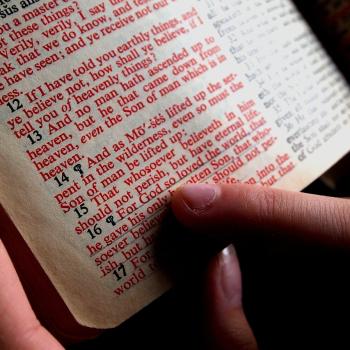
Perhaps the most famous words in the New Testament are in John 3:16: “For God so loved the world that He gave His only begotten Son, that whoever believes in Him should not perish but have everlasting life” (NKJV).* But who said these famous words—Jesus or John? In red letter editions of the Bible, such as we find in the NKJV and ESV, black letters are supposed to indicate the author’s words. In John’s Gospel, John is claimed to be... Read more

2025-06-30T16:41:54-07:00

The New Testament contains 13 letters attributed to the Apostle Paul, but which of these letters did he really write? Certain church fathers also thought that Paul wrote Hebrews, but this is unlikely. His name appears nowhere in this sermonic letter. Likewise, its Greek style, content, and theology suggest a different author, though one acquainted with Pauline churches. The author mentions Timothy as a “brother” (Heb 13:23). Scholars normally break down the 13 Pauline letters as follows: Undisputed letters of... Read more

2025-06-19T23:05:09-07:00

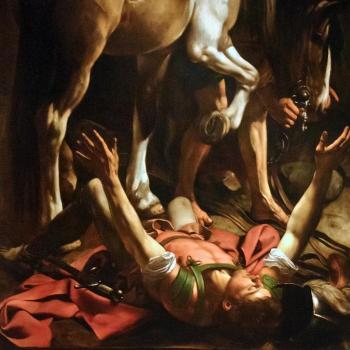
What can we know about Ananias, a minor character from the book of Acts? If any person could claim to have played a major role in saving Paul the Apostle, it would be this guy. Unfortunately, we find him mentioned nowhere in Scripture except in Acts. What can we learn from him? When Paul Met Ananias The two passages in Acts that speak of Ananias include the first narrative about Paul’s Damascus experience (Acts 9) and Paul’s first speech about... Read more

2025-06-17T06:26:32-07:00

Paul in Romans 4:25 claims regarding Jesus that he “was delivered over because of our transgressions [4:25a], and was raised because of our justification [4:25b]” (NASB: italics mine). Another version states that it was the Lord Jesus “who was handed over for our trespasses (4:25a] and was raised for our justification [4:25b]” (NRSVue: italics mine). These two translations represent the typical ways Bible versions often translate this verse. The readers of these translations normally do not have a problem understanding the first part of the verse (Rom 4:25a).... Read more

2025-05-22T13:09:13-07:00

What is often overlooked in the Old Testament are the instances in which women are proclaiming the gospel or “good news.”  There are two significant texts in particular that depict this phenomenon—Psalm 68:11 and Isaiah 40:9. Let’s take a closer look at these verses. Women who Bring the Good News of an Enemy’s Defeat (Psalm 68:11) In Psalm 68:11–12 the Scripture reads as follows: The Lord will give a word—the women who bring good news are a great host. They... Read more

2025-05-06T21:56:00-07:00

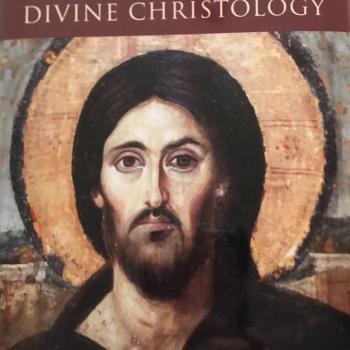
The Gospel of John is widely known for Divine Christology. It portrays Jesus as God from the beginning of the letter (John 1:1–3) to its virtual end (John 20:28).To discuss Christology with us, we have once again with us this week Brant Pitre, who recently wrote, Jesus and Divine Christology (Grand Rapids: Eerdmans, 2024). Dr. Pitre is Distinguished Research Professor of Scripture at the Augustine Institute Graduate School of Theology. He was with us last week to discuss his book... Read more

2025-04-26T20:29:45-07:00

We are here this week with my special guest, Brant Pitre, to discuss his recent book, Jesus and Divine Christology (Grand Rapids: Eerdmans, 2024). Dr. Pitre is Distinguished Research Professor of Scripture at the Augustine Institute Graduate School of Theology. He has written a number of publications including Jesus and the Last Supper (Eerdmans), Jesus and the Jewish Roots of Mary (Image), the audio book, The Case for Jesus: The Biblical and Historical Evidence for Jesus (Random House), and with... Read more

Follow Us!


TAKE THE
Religious Wisdom Quiz

What does "Jubilee" mean?

Select your answer to see how you score.


Browse Our Archives