2025-12-28T21:13:22-07:00

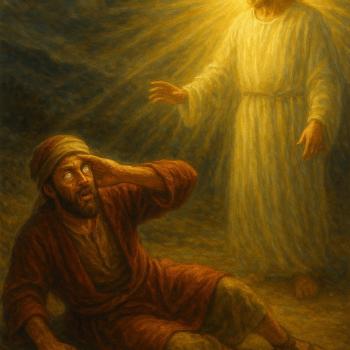
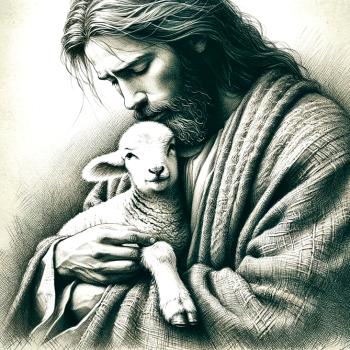
Ephesians 1:3–14 stands out among biblical passages that emphasize God’s election and predestination of people. I translate the super long sentence as follows: Eph 1:3 Blessed be the God and Father of our Lord Jesus Christ, who has blessed us with every spiritual blessing in the heavenly realms in Christ, 1:4 just as he chose us in him before the foundation of the world that we should be holy and blameless before him in love, 1:5 having preordained us to... Read more
2026-02-02T09:11:36-07:00

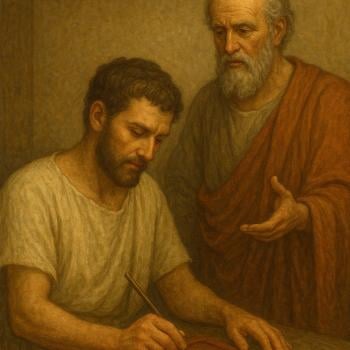
Who wrote Romans, the most famous letter in the Bible? Paul? This is what Romans itself claims: “I, Tertius, greet you, the one who wrote this letter in the Lord” (Romans 16:22). Most people are surprised to read this! Actually, Paul is indeed the author of Romans—notice Romans 1:1. But authoring a letter and actually writing it are not exactly the same thing in the ancient world. Tertius is Paul’s amanuensis, a secretary who wrote down what Paul told him... Read more

2026-02-02T09:12:16-07:00

In 1 Corinthians 11:2–16 the apostle Paul encourages women in the Corinthian congregation to wear head coverings. Are veils and coverings for women in the church still for today? Although there are some churches that still have their women wear coverings according to 1 Corinthians 11, many westernized churches do not practice this. Why? They assume that there must have been a cultural issue at stake at that time, which warranted Paul discussing this point. In essence, they are correct.... Read more

2025-11-26T23:02:39-07:00

What is the origin of Paul’s message of reconciliation and the new creation? We read about his new creation from such texts as Galatians 6:15 and 2 Corinthians 5:17. The latter speaks of anyone who is “in Christ” now becomes and belongs to a new creation. Immediately after this, he speaks of his ministry as one of reconciliation (2 Cor 5:18–20). It follows that this reconciliation characterizes what takes place for those who are in Christ in the new creation.... Read more

2025-10-26T14:50:42-07:00

We already discussed how to select a good Bible version, but what is the worst Bible version of all? Is it one that you personally own? Maybe. Is it a literal, dynamic, or paraphrased translation? Maybe. The worst Bible of all is the Bible that is never read!* Bible reading is essential for owning a Bible, regardless of the version. Although I am not fond of paraphrased versions, I would choose such a Bible over one that is never read. In... Read more

2025-10-08T12:27:14-07:00

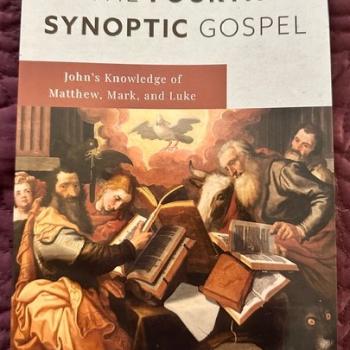
I’m here this week with a special guest—Mark Goodacre, whose new book is entitled, The Fourth Synoptic Gospel: John’s Knowledge of Matthew, Mark, and Luke (Eerdmans, 2025). He is professor of religious studies at Duke University. Among his areas of expertise are Christian origins, the Gospels, and the historical Jesus. This book, you might say, belongs to a trilogy that Dr. Goodacre has written on the origins of the Gospels. The first is entitled, The Case Against Q, in which... Read more

2025-10-08T21:38:25-07:00

Which Bible should you read? What is the key to selecting a good Bible version? If you are new at Bible reading, you might be wondering such questions. As a Bible translator, here are my suggestions. Selecting a Good Bible Version If this is the first time you will be making a concentrated effort to read the Bible, perhaps the best translation would be one that is considered a dynamic equivalence version. Such versions include: Common English Bible (CEB) Today’s... Read more

2025-09-24T13:21:47-07:00

We focus our attention this week on reading James, 1 Peter, and Hebrews missiologically with our guest, Professor Abeneazer G. Urga. He is an adjunct faculty member with Columbia International University, and he teaches also at the Evangelical Theological College in Addis Ababa, Ethiopia. Professor Urga is a co-editor of the monograph, Reading Hebrews and 1 Peter from Majority World Perspectives (Library of New Testament Studies 700, T.&T. Clark, 2024). He is also listed as the primary editor of the... Read more

2025-10-01T10:59:33-07:00

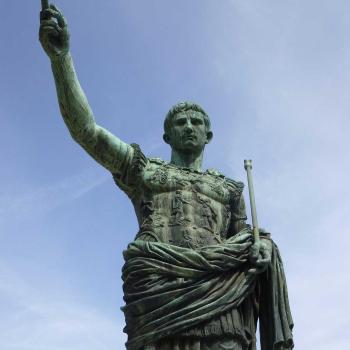
Jesus and Caesar—there are a number of striking similarities between these historical figures, and some differences. We will cover 10 of them. The Priene calendar inscription sparked on a renewal of Caesar studies in relation to the Christian gospel when it was first discovered in Anatolia (1899). In this inscription, Caesar Augustus’s birthday is considered good news in a sacred context: “The birthday of the emperor god opened up for the world a series of good tidings in his favor”... Read more

2025-09-07T21:38:31-07:00

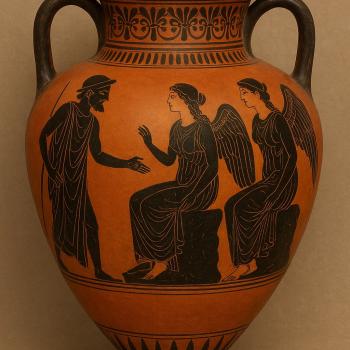
What did the gospel look like for non-Christians in the ancient world? Prior to Jesus and Paul, the “gospel” in the sense of (good) news  (εὐαγγέλιον/euangelion) appears in Greek and Roman classical literature. What passes for good news is different than what we find in the New Testament. Ancient Examples of the Good News for Pagans Classical Greek lexicons understand euangelion as a reward or recompense for good news. In Homer’s Odyssey, for instance, the hero Odysseus, disguised as an... Read more

Follow Us!


TAKE THE
Religious Wisdom Quiz

What does "Jubilee" mean?

Select your answer to see how you score.


Browse Our Archives