

“They Deserve to Be Executed, Just Not by Us”: A Theological Reflection on the Death Penalty, Mercy and Each of Us
The Death Penalty as Theological Ground
I’m haunted by the death penalty.
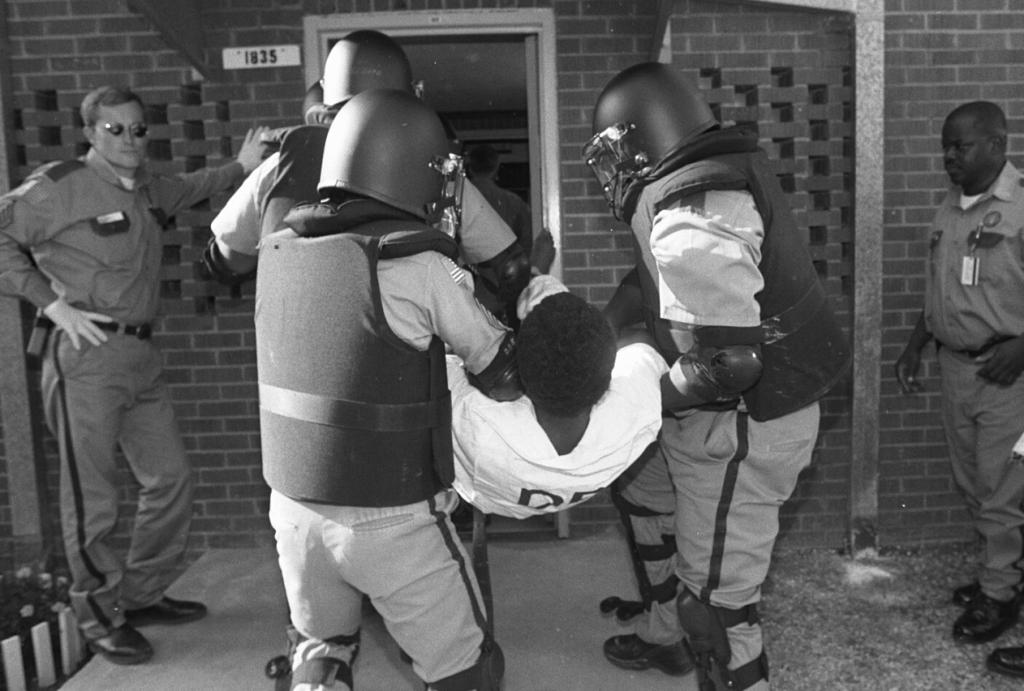
I’ve walked the sterile corridors of death row. The echo of my shoes bouncing against the concrete walls. I’ve sat on narrow benches in visitation rooms. The smell of metal, sweat and disinfectant pressing into my nostrils, thick and unrelenting. I’ve knelt beside men whose lives were measured in hours, sometimes minutes, whose cracked voices whispered confessions that carried the weight of eternity. Their trembling hands pressed against mine. Raw fear is something I can still remember in my chest. These faces, these moments…they all haunt me.
I do not write from theory. I write from presence…from seizing with fear, from the intimate knowledge of human fragility that has settled into my bones and refuses to leave. I do not claim authority over life or death. I only carry what I have seen…what I have felt…what faith demands of me.
“They deserve to be executed, just not by any of us…” I remember saying these words aloud once, almost to myself, as I walked out of a prison after a particularly horrific visit. The cold wind was pushing against my coat like a heavy reminder of the realities of the crimes I’d just been told about. The words are not a compromise. They are a moral summons, a call to conscience, a refusal to let the machinery of death become our god. Justice is real. Sin is real. Violence is real. But, ultimate judgment belongs to God, not to us. I kneel in the shadows of the condemned, listening, learning and praying that mercy might rise where the world demands death…the death penalty.
Scripture on the Death Penalty (Life, Mercy & Judgment)
The Bible insists that life is sacred, and vengeance belongs to God alone.
“Whoever sheds the blood of any person, by a person shall that person’s blood be shed; for God made humankind in his image” (Genesis 9:6). I have felt the weight of that verse in the tremor of a man’s hand pressed into mine…his fear a living echo of God’s love for us.
Yet, God spares Cain…even marking him for protection, “Then the LORD said to him, ‘Not so! Whoever kills Cain will suffer a sevenfold vengeance.’ And the LORD put a mark on Cain, so that no one who came upon him would kill him” (Genesis 4:15). I have whispered this verse in the quiet of cells, imagining it resting on the shoulders of men whose histories could have led only to death, reminding them that God’s mercy can mark even the vilest of sinners.
Even David, guilty of grievous sins, was spared, “Then David said to Nathan, ‘I have sinned against the LORD.’ And Nathan said to David, ‘The LORD also has taken away your sin; you shall not die’” (2 Samuel 12:13). I have watched the way forgiveness flickers in the eyes of men on death row, a fragile light I seek to fuel and hold carefully in my prayers.
Jesus shatters the death penalty…the illusion of human authority over life, “Let anyone among you who is without sin be the first to throw a stone…” (John 8:7). I have felt the weight of that verse when I have seen men look at one another, eyes wide, terror and hope mingling. Paul underscores the radical restraint of mercy, “Beloved, never avenge yourselves, but leave room for the wrath of God; for it is written, ‘Vengeance is mine, I will repay, says the Lord’” (Romans 12:19). And John’s vision reminds me that ultimate authority rests in God alone, “I am the one who lives, and I was dead, and see, I am alive forever and ever! And I have the keys of Death and of Hades” (Revelation 1:18). Life bleeds through every page of scripture.
Even the passages of the law that seem to sanction execution must be read with care. Moses’ law allowed it, yet the prophets and the Gospels consistently urge us to step back, leave room for repentance and honor life. Mercy is not soft…it is divine. When humans wield death, they don’t just end a life…they damage themselves, the communities they’re supposed to protect and the sacred web of creation. I have felt this in the tremor of hands pressing against mine, in whispered confessions that could be extinguished forever if not protected.
I have watched men in solitary cells…their voices cracking as they pray…repeating the Psalms quietly, “The LORD is my shepherd, I shall not want. He makes me lie down in green pastures; he leads me beside still waters; he restores my soul” (Psalm 23:1–3). Those verses become lifelines, a reminder that God’s justice restores, even when the state’s system threatens to undo all of it. I’ve pressed my ear against the thin wall to hear a whispered prayer. I’ve felt a chill run down my spine as a man murmured hope amid despair.
Mercy is tangible here. It is sweat and breath, stiff hands and tears held behind steel doors. I have seen it, felt it, carried it into the silence that follows each final step toward the execution chamber…the death penalty.
Witnesses to Mercy: The Death Penalty Amongst the Theologians
Among theologians, I hear them all…each and every time I even think about the death penalty…and they each press against my conscience in unique ways as I walk this path.
The Church Fathers and Early Christian Voices on Execution
The Church Fathers laid the foundation. St. Clement of Alexandria insists that God desires not the destruction of sinners but their correction and transformation (Paedagogus III.12, trans. Wilson, 1903). St. Origen of Alexandria stresses that no one is finally lost unless they turn away from the light of salvation (De Principiis II, trans. Crombie, 1869). St. John Chrysostom, wrestling with Romans 13, warns rulers that punishment must be tempered by mercy, or it collapses into cruelty (Homilies on Romans 13, trans. Schaff, 1889). Their voices echo through the shadows of cells, reminders that there is hope for even the cruelest of sinners.
The saints carry this vision further. St. Athanasius of Alexandria describes St. Anthony the Great discovering strength in forgiveness, revealing that real power…the kind that transforms hearts and endures beyond fear…is mercy (Life of Anthony, §§53–55). I can almost hear Anthony’s whispered prayers echoing through the centuries as I kneel beside men whose hands shake against mine, each confession smashed yet unbroken under the weight of guilt and hope. St. Gregory of Nyssa tells of St. Macrina the Younger, whose sense of justice was measured not in punishment but in care for the vulnerable (Life of Macrina, §§1–5). I see her in the bowed heads of mothers, the clutching of worn photographs, the soft but firm insistence of wives pressing their palms against the glass, their voices quivering yet refusing to yield.
Modern Theologians and the Call to Mercy
Modern church leaders add fire to this call. Pope Francis declares the death penalty inadmissible, grounding his stance in mercy (Fratelli Tutti §263, 2020). Cardinal Luis Antonio Tagle insists justice lies not in life taken but in life restored (CBCP News, 2020). I have heard these words in families’ whispered pleas, in tears pressing against steel barriers, in the way hope clings to despair in the same breath. I have felt them in the shiver of a father’s hand against mine, in the quiet sobs of a mother who refuses to leave the cell block until she has spoken her love aloud one last time.
Female theologians illuminate the cost further. Mary McClintock Fulkerson shows executions tear apart communal bonds (Places of Redemption, 2007). Karen Baker-Fletcher insists God calls forth life even when the state demands death (Dancing with God, 2005). Ivone Gebara, a Brazilian ecofeminist liberation theologian, reminds us that every life is bound up in fragile interdependence, and that killing severs not only the victim but the entire web of the poor and oppressed (Out of the Depths: Women’s Experience of Evil and Salvation, 2002). Ada María Isasi-Díaz, the voice of mujerista theology, insists that real justice must be rooted in the survival and flourishing of marginalized communities, and that any system of death betrays the God of life (En la Lucha, 1993). Pioneering womanist theologian Delores S. Williams insists that God’s work is survival and that Black women’s history reveals how life itself resists structures of death (Sisters in the Wilderness, 1993). Kelly Brown Douglas unmasks how white supremacy has infected Christian understandings of justice…declaring that any theology which sanctions death is complicit in America’s racial sins (Stand Your Ground: Black Bodies and the Justice of God, 2015). I hear their truths when mothers of all identities collapse into my arms after a final visit, tears soaking my sleeve…demanding to know why the death penalty is even an option.
Queer theologians press the point with urgency. Patrick S. Cheng envisions justice as radically restorative (Radical Love, 2011). Marcella Althaus-Reid unmasks how theology can be twisted to justify violence (Indecent Theology, 2000). Their voices remind me that executions fall hardest on the already marginalized. I have felt this in the silent shuffling of men from communities already oppressed, their eyes pleading, their breaths shallow.
From Protestant thought: Karl Barth insists judgment belongs solely to Christ (Church Dogmatics II/2, 1957). Dietrich Bonhoeffer warns against legitimizing killing as justice (Ethics, 1955). Paul Tillich reminds us that coercion undermines reconciliation (The Courage to Be, 1952). Jürgen Moltmann asserts that Christian hope resists every power of death, emphasizing that life must be guarded because the resurrection has already overcome the ultimate enemy (Theology of Hope, 1964). Martin Luther King Jr. proclaims that violence cannot drive out violence…that only love has the power to redeem the oppressor and the oppressed (Strength to Love, 1963). Rowan Williams insists that the death penalty contradicts the gospel’s witness…for to claim the right to kill is to deny the possibility of redemption (Faith in the Public Square, 2012). Amidst the horrors of the death penalty, I press my hand into the palm, feeling the weight of these words in the pulse beneath my fingers. I hear the shallow, uneven breaths of a man who has spent decades behind bars, whose body has learned to flinch at every command yet who still looks me in the eye, seeking acknowledgment of his humanity.
Orthodox theologians root this in creation. David Bentley Hart warns that killing desecrates beauty (The Beauty of the Infinite, 2003). Kallistos Ware and John Zizioulas remind us that executions fracture communion itself (The Orthodox Church, 1993; Being as Communion, 1985). Ecumenical Patriarch Bartholomew has spoken with clarity that human dignity is inviolable…insisting that to take life is to wound the image of God and to betray the Orthodox vision of creation as sacrament (On Earth as in Heaven: Ecological Vision and Initiatives of Ecumenical Patriarch Bartholomew, 2012). I have seen this fracture in the guard’s averted eyes, in the echo of heavy doors slamming shut, in broken men led away to die, their footsteps bouncing hollowly off concrete corridors. Nobody asked them for their thoughts on the death penalty. I’ve felt it in the sudden hush that falls over a visitation room, where whispers of consolation struggle to rise above the oppressive weight of anticipation.
Liberation, African, Asian, and Native Theologies on Justice
Liberation voices cry out. St. Oscar Romero insists that abandoning the weakest is betrayal (The Violence of Love, 1988). James H. Cone unmasks the death penalty in America as inseparable from the history of lynching (The Cross and the Lynching Tree, 2011). Naim Ateek warns that justice severed from mercy distorts God’s will (Justice and Only Justice, 1989). Gustavo Gutiérrez reminds us that God’s justice is always good news for the poor (A Theology of Liberation, 1971). Leonardo Boff insists that killing destroys the very communion God intends for creation (Cry of the Earth, Cry of the Poor, 1997). Jon Sobrino declares that true discipleship demands standing with the crucified peoples of history (Jesus the Liberator, 1991). Every time I walk the corridors of a prison, these voices confront me with the machinery of racialized and political violence. I see it in the faces of marginalized persons, young and old, whose eyes hold a mixture of resignation and unspoken anguish, whose lives are framed by systems that have already decided their value.
African theologians expand the vision. John S. Mbiti insists personhood is communal, and executions tear the social web (African Religions and Philosophy, 1969). Mercy Amba Oduyoye insists justice must be restorative (Introducing African Women’s Theology, 2001). Kwame Bediako reminds us that authentic Christian identity is measured by how the community safeguards life and resists forces of death (Theology and Identity, 1992). Allan Boesak insists that God always takes the side of the oppressed…and that any system that kills betrays the gospel of liberation (Farewell to Innocence, 1977). Desmond Tutu, unwavering in his opposition to executions, proclaimed that taking life degrades both victim and executioner, insisting that forgiveness and truth—not death—are the only paths to justice (No Future Without Forgiveness, 1999). I feel these truths in burning faces. And as I move from one prison to another, from one cell to the next, I carry these insights with me, remembering that the work of justice is never merely about punishment…it is about restoring, weaving back together what has been broken, affirming the dignity and life of every person, and refusing to allow death to sever the ties that make us fully human.
Asian theologians echo the call to communal responsibility. Kosuke Koyama measures faith by how we care for the weakest among us (Waterbuffalo Theology, 1974). C. S. Song insists that justice requires forgiveness and healing, that it cannot exist without restoration of relationships (Third-Eye Theology, 1997). Kwok Pui-Lan declares that neutrality in the face of oppression is itself complicity (Postcolonial Imagination, 2005). I have seen these truths in confessions that tremble against the harsh walls of a visitation room, in the way a man flinches yet reaches for a hand extended in solidarity, in the briefest flicker of hope that struggles to breathe in a body weighed down by decades of confinement.
Indigenous voices deepen the imperative. Tink Tinker unmasks executions as extensions of colonial violence (Missionary Conquest, 1993). Vine Deloria Jr. reminds us that Native survival depends on resisting systems of domination that erase life and memory (God Is Red, 1973). Andrea Smith insists that state violence, including executions, is bound up with the same logics that justify gendered and racial oppression (Conquest: Sexual Violence and American Indian Genocide, 2005). I hear the whispers of their ancestors in the quiet of the visitation room, a chorus of memory and mourning that hums beneath the clanging of doors and the low murmur of guards moving between cells. Each slight movement, each shiver, carries the weight of generations, a testament to the violence that continues to shape bodies and communities.
Together, these voices form a chorus…mercy is not optional. Justice without mercy is a lie. The death penalty fractures creation. I feel it in the pulse of every heart…every sob across barriers…every whispered plea.
Theological Reflections amidst the Death Penalty
Among witnesses to executions, the convergence of life and death become tangible…flesh and blood confronting moral reckoning.
The death penalty takes us to places unimaginable. I’ve seen the search for mercy in the darkest of places. I’ve seen those who desperately claw for it…as though mercy itself might break through concrete walls and razor wire. I’ve heard last words spill out…sometimes apologies, sometimes rage and sometimes silence that shakes the air. Families are left in pieces, their hearts torn open on the altar of the state. They weep, they collapse, they hold one another as if the embrace itself might push back the death that surrounds them. Guards look away, some steeling themselves with practiced indifference, others weeping quietly when they think no one is watching. All of us are drawn into the ritual of death…caught in a machinery that grinds down not only the condemned but every soul it touches.
Into this moment, verses of scripture do not arrive as comfort but as judgment…even as fire in the bones. Words that do not float as pious metaphor in the chamber…but rather words that burn. Who among us dares to claim such innocence? “…who is without sin…” (John 8:7). “…you did it unto me…” (Matthew 25:40). “…depart from me…” (Matthew 7:23). “I have not come to call the righteous…” (Matthew 9:13). “…all are one in Christ Jesus…” (Galatians 3:28). These words are not relics of a distant age. They are the voice of God breaking into the present…naming the execution chamber for what it is…not justice but blasphemy, a usurpation of the judgment that belongs to God alone. On death row, the scriptures are no abstraction…they are like lightning cutting through the night, exposing our sin, demanding repentance.
The condemned…even when guilty…still bear the image of God. That truth cannot be erased by verdicts or crimes or headlines. “Let us make humankind in our image, according to our likeness” (Genesis 1:26). That promise still clings to the one strapped down before the needle. It still glimmers in the eyes of the one lying on the gurney. To deny their life is to deny God’s creation…to blaspheme the Creator. I have seen flickers of holiness in their final hours…repentance blossoming in unlikely soil…courage shaking yet resolute…tenderness breaking through. These are glimpses of a God who does not throw anyone away…who does not finish with any of us until the last breath. However…with the extinguishing of one fragile life…society declares that God’s image is expendable…that repentance can be cut short…that the cross is unnecessary. The death penalty is a lie…and God will not let us forget it.
The death penalty wounds more than the condemned. Executions wound families…shredding them across generations. They wound the guards and the witnesses…forcing them to carry the weight of blood on their hands. They wound the community…teaching us to believe that violence heals and vengeance saves. They wound the nation itself…making us colder, harder…more estranged from the heart of God. The blood-soaked ground beneath our prisons cries out for change. The trauma never leaves…it clings…it festers. I live it. You return home in silence…haunted…unable to reconcile what you’ve seen with the God who breathes life into every soul.
And yet…God is not absent. Even in the valley of the shadow of death, love somehow breaks through. A hug given by a mother who refuses to let her son die unloved. A whispered prayer offered as a last defiance of despair. A family of a victim speaking words of forgiveness…breaking the cycle of violence with grace that no law can mandate. These moments are fragile…but they burn like embers against the cold. They remind us that justice is not merely retributive but restorative, that mercy is the scandal at the heart of God’s reign. “I desire mercy, not sacrifice,” says the Lord (Hosea 6:6 / Matthew 9:13). Every act of mercy in that chamber is a prophetic sign…a foretaste of the Beloved Community…a resistance to the empire of death.
The economy of God is never about what one deserves. If justice were about what one deserves…we would all get the death penalty. Grace is not earned. It is given. Grace overturns our calculations and shatters our scales…exposing the lunacy of murder as righteousness. The cross of Christ proclaims forever that life…not death…is the last word. Every execution denies the gospel…but every whisper of mercy, every act of compassion, every refusal to let violence have the final say…loudly proclaims God’s love for us all. To stand against execution is not sentiment but prophecy. It is to declare with the Aposttle Paul that, “Death has been swallowed up in victory…” (1 Corinthians 15:54). It is to stand with Jesus against the powers and say: not one more stone, not one more death, not one more blasphemy against the God who is life.
Pastoral and Ethical Responsibility amidst the Death Penalty
Pastoral responsibility here is raw.
I have knelt on dirty floors, heard final words and felt the thunderous echo in my own chest long afterward. Some words were apologies, whispered like fragile confessions carried into the silence. Others were cries of rage, hurled like stones against a wall no one would let fall. Still others were only silence, the unbearable hush of a life about to be extinguished. These moments never leave me. They walk with me into prayer…into preaching…into my dreams. Jesus’ words…“I was in prison…” (Matthew 25:36)…are not metaphor. They are an incarnational imperative. They are not poetic sentiment. They are a divine directive. To stand beside the condemned is to stand beside Jesus Christ himself…suffering, rejected and ultimately executed.
Pastoral responsibility amidst the death penalty is not clean. It is not theoretical. It is bloody, weary and fragile. I have prayed with mothers whose bodies shake with grief, with children who cannot comprehend why their father will not come home and with guards whose eyes glaze over with shame even as they put the process in motion. I have seen witnesses leave execution chambers unable to speak, unable to breathe. This ministry is not safe. It is dangerous, because love always is. Yet the shepherd cannot abandon the sheep in the valley of death. Even when the state has judged, condemned…and prepared to kill…Christ commands His followers to be present in the darkest hour. That is pastoral responsibility…to embody mercy where everything around you cries out for vengeance.
Ethical and Prophetic Witness Against the Death Penalty
Ethical responsibility is no less urgent. The death penalty fractures…not only the condemned…but families, communities and all who participate in the system. Every death sentence ripples outward like shockwaves from an earthquake. Children learn despair. Parents carry shame. Neighbors lose hope. Guards are hardened. Clergy are torn. Communities are poisoned. No one is untouched. Pastoral care must reach across these fractures…to the condemned, to the victims’ families, to the executioners, to the politicians…to all who could be touched by the act. To remain silent in the face of such destruction is to collude with it. Even amidst the horror of it all…we have a responsibility to live out what scripture says…“Do not repay anyone evil for evil…” (Romans 12:17).
Prophetic witness demands that we say what others won’t. Killing does not heal. Death cannot bring life. The machinery of execution is a lie…promising closure but delivering only deeper wounds. Prophetic witness of restorative justice is the only faithful path. We must consistently declare the obvious, “Don’t kill…” (Exodus 20:13). Damning the actions of people who glorify execution is a prophetic act. Each act of presence…each plea for clemency…each effort at reconciliation…resists a culture that worships vengeance and sanctifies violence. The prophet Isaiah cries out, “Learn to do good; seek justice, rescue the oppressed, defend the orphan, plead for the widow” (Isaiah 1:17). The word of God’s justice has not expired. It is alive and binding.
This is why the Church cannot be silent. We must preach mercy from pulpits, cry it out in the streets, teach it everywhere we go and embody it in pastoral care. We must stand between the mechanisms of death…the killers disguised as politicians…and declare…not in our name, not in Christ’s name, not in the name of the God of life. The prophetic task is always costly. John the Baptist was beheaded. Jesus was crucified. The vast majority of the apostles were brutally executed. Prophets are never welcomed by empires that wield death. Yet to refuse this witness is to betray the God who is life itself…the one who has given His life that we might be forever free.
Spiritual Formation as Resistance Against the Death Penalty
Spiritual formation is not optional in this work. It is lifeblood. Without it, I collapse. Without it, despair consumes me. Every prayer is oxygen. Every act of mercy and compassion is a flame of grace against the suffocating darkness. To pray with the condemned is to join Christ in Gethsemane. To walk into the chamber is to walk toward Golgotha. To hold a grieving mother is to cradle Mary at the cross. These are not metaphors. They are incarnations of the Gospel.
In our souls, we must be faithful, “Pray without ceasing” (1 Thessalonians 5:17). But prayer is not passivity. Prayer is fuel for action. When I pray with shaky hands…I also rise to work for justice. When I pray for mercy…I step into the breach to embody it. When I pray for courage…I find myself speaking words I thought I could never utter. This is formation. We must allow ourselves to be shaped by the Spirit into people who refuse to kill…who refuse to bless death…who insist on life…most often to our own detriment.
The Church must cultivate communities where prayer and action are inseparable…where liturgy trains us to love mercy more than vengeance…where scripture is read as a living word against the idols of violence…where sacraments remind us that life is a gift never ours to take…where all are raised to believe that forgiveness is stronger than punishment. Without such formation, we become captives of the culture of death. With it…we become a living resistance.
To walk the path the death penalty has laid before us is exhausting. It is lonely. It is often despised. Yet it is holy. Every visit to the condemned, every tear shed with a grieving family, every word spoken in defiance of the death penalty is a testimony that Christ is risen…and life…not death…will always have the final word. To be formed in this way is to believe and proclaim that no one…not even the filthiest of monsters…is beyond the reach of God’s mercy. This is the Gospel. This is our call.
Refusing to Be Executioners: Our Role In the Era of the Death Penalty
Walking amongst a diversity of theologians and the witness of scripture, I see one undeniable truth…human hands should never be instruments of ultimate judgment. The death penalty is the apex of evil.
The death penalty rips through God’s creation. Families are torn apart, communities splinter and scars remain for generations. It denies mercy, twists justice and turns human suffering into a cruel show….a public demonstration of vengeance masquerading as righteousness. I’ve seen it with my own eyes. Each execution carries a moral contagion…infecting all it encounters. We watch the state claim life. We suspect our own complicity…our own vulnerability to the seduction of violence…yet far too often we do nothing. The machinery of execution is a lie that whispers of finality. But justice can never be achieved in killing. What is inflicted on the condemned is mirrored in the hearts of those who execute…the hands that administer…the eyes that watch…the law that authorizes. All are wounded. All are diminished.
“They deserve to be executed, just not by any of us…” is not a compromise. It is not a timid appeal to sentiment or pragmatism. It is declaration. It is fire. It is refusal. It is a sword against the idol of vengeance…a torch carried into the darkness of human cruelty. It proclaims that life…even that of the horribly guilty…is sacred…that mercy is not optional…and that justice will never be able to be measured by the scale of death. To say this is to insist that we can recognize evil without becoming instruments of evil ourselves. We are all sinners…none righteous enough to take life…all saved by grace. Scripture reminds us, “None is righteous, no, not one” (Romans 3:10). Not the judge…not the executioner…not the lawmakers…not the courts…no one. No truly moral teaching will ever grant permission to extinguish the life God created. To touch the condemned with death is to deny God’s ultimate sovereignty over life.
Our vocation is piercingly clear. We are called to speak truth…to resist the allure of evil…to advocate fiercely for life…to love those whom society would discard…to defend and restore the condemned. Refusal of execution is not passive of evil…it is active resistance of evil. It is insistence that even the guilty…even the monstrous…remain within the protective reach of God’s mercy. In every courtroom…every prison corridor…every legislative chamber…our witness proclaims, “…today is the day of salvation” (2 Corinthians 6:2). Salvation is not reserved for the innocent alone. If it was…we would all be damned. Salvation is offered in the present moment, even to those the world would consign to death. What are we waiting for? To remain silent is to consent. To delay is to betray. The task before us is urgent, sacred and non-negotiable. We cannot know Christ unless we fight the death penalty. We have got to get saved from all of this killing.
In many ways, my life is often defined by the death penalty. Thus, I stand. I shake. I grieve. I am afraid. Yet I am resolute. I stand as a witness to mercy in the midst of injustice. I stand as a voice crying in the wilderness of sanctioned violence…reminding the world that no statute, no machinery, no executioner can annul the sacredness of life or the claim of God’s mercy. The condemned must be defended. Families must be comforted. Society must be awakened. Mercy must rise. And we must refuse…in both word and deed…to be executioners. Each act of resistance, each defense of life, each plea for clemency is a sacred flame in the horrors we have created, a sign that God’s love is not extinguished by human cruelty.
“Let anyone among you who is without sin be the first to throw a stone…” (John 8:7). These words are not gentle advice. They’re a command. They’re a jackhammer on the conscience of a world too quick to kill. They are a reminder that power is not measured in death…but in restraint, in compassion and in refusal to mimic evil. To live by this command is to be faithful to the God of life. To stand with the condemned is to stand with Christ Himself. And to stand…frightened yet unyielding…is to declare that mercy is stronger than vengeance, that life is inviolable and that no one has the right to claim that which belongs only to God.
*If you would like to support the Execution Intervention Project (the organization that financially supports Dr. Hood’s work), click here.











 Ad-Free & Subscriber Log-In