


The Cult of Luigi : How Fandom is Killing the Conversation That Can Save His Life
The cult of Luigi is terrifying.
I’ve spent years sitting with men on death row. I’ve held their hands as the state strapped them to gurneys. I’ve watched them take their last breaths. I know what it means to fight for someone’s life…not as a symbol, not as a meme, not as a mascot for political rage…but as an actual human being whose heart will stop beating if we fail.
And so, I watch what has become of the Luigi Mangione conversation with a kind of exhausted grief…
What began as a legitimate moment of national reckoning…about healthcare, about corporate greed, about the desperation of those trapped in a broken system…has devolved into something bizarre. A fandom. A brand. A carnival of t-shirts, fan clubs and glorified violence dressed up in the language of revolution. And in the process, everyone has forgotten the one conversation that actually matters…keeping Luigi Mangioni alive.
An Abolitionist’s Position
Let me be clear. I am an abolitionist. I have dedicated my life to ending the death penalty. I believe that the state has no right to kill anyone…not the guilty, not the innocent, not the sympathetic, not the reviled. My opposition to Luigi Mangione’s potential execution is not contingent on whether I like him, whether I agree with him or whether I find his actions defensible. It is rooted in the conviction that killing is wrong. Period. That includes the killing of Brian Thompson. That includes any killing the state wants to do in response.
But here’s what the Luigi fandom doesn’t seem to understand, you cannot build a movement to save someone’s life on a foundation of celebrating death.
The Cult of Luigi: The Digital Circus
Open any social media platform and you’ll find yourself drowning in it. The Luigi content is relentless. Overwhelming. Deeply unserious. TikToks set to trending audio glorifying the shooting. Instagram accounts dedicated entirely to fan edits…slow-motion footage of his perp walk set to moody music, as if we’re watching a movie trailer rather than a murder suspect being led to arraignment. Twitter threads spinning elaborate theories about his manifesto, his motives and his supposed genius. They’re treating the whole thing like an alternate reality game rather than a capital case.
Memes and Mythology in The Cult of Luigi
The memes multiply faster than anyone can track. Luigi as a saint, complete with halo. Luigi as revolutionary icon, fist raised. Luigi photoshopped into historical paintings, into movie posters, into every conceivable context that transforms a real human being into a consumable image. The comments sections overflow with hearts, fire emojis and declarations of love for a man most of these people know nothing about beyond what they’ve projected onto him.
And then there are the thirst posts. Thousands upon thousands of them. But I’ll get to that insanity in a moment.
Disconnection from Consequence
What strikes me most about the social media frenzy is its complete disconnection from consequence. These posts exist in a vacuum where a man didn’t actually die, where a family isn’t actually grieving, where another man isn’t actually facing the possibility of state execution. It’s all content. All engagement. All performance for an algorithm that rewards the most extreme, the most provocative and the most shareable takes. Nuance doesn’t trend. Complexity doesn’t go viral. What goes viral is “Luigi did nothing wrong” and “CEO of the year” jokes…and endless variations on the theme that murder is actually fine if the victim was rich.
I scroll through it and I think about the men I’ve sat with on death row. I think about how the public’s perception of them…shaped by media coverage, by the narratives that took hold in the immediate aftermath of their crimes…followed them all the way to the death chamber. Public opinion calcifies. First impressions become permanent impressions. And right now, in the crucial early stages of this case, the impression being created is that Luigi Mangione is the mascot of a movement that celebrates killing.
The Prosecution Is Watching
The prosecution is watching. They’re screenshotting. They’re building a case not just against one man but against an ideology they’ll argue he represents. Every glorifying post is evidence. Every celebratory meme is ammunition. The social media circus isn’t just distasteful…it’s actively dangerous to the man these people claim to support.
The Cult of Luigi: The Courthouse Carnival
If the online behavior is unhinged, what’s happening in physical space is somehow worse.
I’ve seen the footage. The crowds gathered outside the courthouse, camping overnight like they’re waiting for concert tickets or a product drop. People racing through the streets to catch a supposed glimpse of him. Pushing and shoving. Phones held high to capture the moment for their feeds. The energy is not that of a political protest or a legal proceeding. It’s the energy of a circus.
The Cult of Luigi: Spectacle Over Substance
This is a man on trial for murder. This is a courthouse, not a concert venue. But you wouldn’t know it from the scene outside. People have shown up in homemade Luigi merchandise. They’ve brought signs declaring their love. They’ve treated his court appearances as entertainment, as spectacle, as something to be witnessed, documented and shared for clout.
I think about other trials I’ve followed over the years. I think about the families of victims having to walk through crowds to enter courtrooms. I think about what it must be like for Brian Thompson’s loved ones to see all this. To know that their grief has become a backdrop for other people’s content creation. Whatever you think about healthcare executives and corporate greed, there are children who lost their father. There are all sorts of family and friends that lost someone who mattered to them. And outside the courthouse, people are tailgating like it’s a damn football game.
Misdirected Dedication
The camping is disturbing. The dedication required to sleep on concrete for the chance to sit in a courtroom gallery…that’s real commitment. Imagine if that commitment were directed toward actual healthcare advocacy. Imagine if those hours were spent organizing, lobbying, building power to change the systems that everyone claims to be so angry about. Instead, they’re spent in pursuit of proximity to a defendant. In pursuit of the experience of being there. In pursuit of something that looks like activism but produces nothing except social media content and a deep sense of unease in anyone watching who understands what’s actually at stake.
This is what happens when politics becomes fandom. The goal stops being change and starts being experience. The point stops being outcome and starts being fan participation. Everyone wants to be part of the moment. Nobody wants to do the work that might actually prevent the next desperate person from feeling like violence is their only option.
The Thirst That Consumes Everything
And then there’s the thing that might be the strangest element of all…the obsession with his appearance.
Luigi Mangione is, by conventional standards, an attractive man. He has the kind of face that photographs well. The kind of bone structure that catches light in flattering ways. And the internet has responded to this fact with a fervor that borders on collective madness.
Aestheticizing a Murder Suspect
“Hot mugshot guy.” “He can murder me any day.” “I would let him deny my claims.” The jokes write themselves, apparently, and people cannot stop writing them. His face has been plastered on fan accounts dedicated entirely to his appearance. People have dissected his features with the intensity usually reserved for celebrity crushes. They’ve created edits set to love songs. They’ve posted fantasies that range from mildly inappropriate to genuinely disturbing.
This is a man who most likely shot another human being in the back. A suspected murderer whose trial will determine whether he lives or dies. And the primary discourse in significant corners of the internet is about how cute he is.
The Collapse of Moral Seriousness
I don’t know how to adequately express how deranged this is. The complete collapse of any moral seriousness. The reduction of a murder case to aesthetic appreciation. The way that physical attractiveness has become, for many people, a kind of absolution…as if being good-looking somehow mitigates the gravity of taking a life.
We’ve seen this before, of course. The phenomenon of the attractive criminal who captures public fascination is not new. But the scale and intensity of this particular outbreak feels unprecedented. It’s not a subset of the conversation…it has become the conversation for far too many people. When articles about the case lead with his appearance, when news coverage mentions his “fanbase” in the same breath as the charges against him, something has gone seriously wrong with our collective capacity for moral reasoning.
Thirst as Cover for Violence
And here’s what makes it particularly insidious…the thirst content provides cover for the violence glorification. When someone posts “I know he killed someone but he’s so hot,” they’re normalizing the minimization of murder. They’re modeling a response that treats killing as secondary to attractiveness. They’re training an audience to see violence as an acceptable trade-off for aesthetic pleasure. The obsession with his looks isn’t separate from the celebration of his actions…it’s part of the same moral collapse.
I think about the men I’ve ministered to on death row. Most of them are not conventionally sexy or hot. Most of them don’t have the bone structure that trends on social media. Most often, it is just them and I fighting for their lives. And I can’t help but wonder, would any of this energy would exist if Luigi Mangione looked different. If he were older, heavier, less photogenic…would anyone be camping outside his courthouse? Would anyone be making fan edits? Or is the whole carnival predicated on the accident of his appearance?
The answer, I suspect, is damning.
The Descent into Unseriousness
I am haunted by watching the trajectory of all of this. In the immediate aftermath of the shooting, there was at least a kernel of something real in the public response. People were angry about healthcare. They were sharing stories of denied claims, of loved ones who died because insurance companies refused to cover treatment, of their own battles with a system designed to extract profit from suffering. The anger was raw and legitimate. For a brief moment, it seemed like this tragedy might catalyze something meaningful…a genuine reckoning with the cruelty baked into American healthcare.
That moment passed. And what replaced it has grown more frivolous, more detached, more performatively absurd with each passing week.
The Cult of Luigi: From Critique to Content
The early posts at least gestured toward systemic critique. Now the content is pure entertainment. The memes have become increasingly ironic, increasingly self-referential, increasingly removed from anything resembling political substance. People aren’t sharing stories about healthcare anymore. They’re sharing Luigi fan cams. Debating which photos of him are hottest. Creating elaborate inside jokes that require knowledge of forty previous layers of Luigi lore to even understand.
The discourse has developed its own grammar. Its own vocabulary. Its own closed loop of self-reference. New participants don’t engage with healthcare policy…they learn the memes. They memorize the canon. They demonstrate their belonging by mastering the language of the fandom rather than by articulating any coherent political vision. It’s not about what you believe anymore. It’s about whether you’re in on the joke.
The Inversion
I’ve watched this happen in real time. The ratio of substantive posts to absurdist content has inverted completely. What started as maybe seventy percent genuine outrage and thirty percent internet nonsense has become ninety-five percent nonsense and five percent people desperately trying to steer the conversation back toward anything real. Those people are drowned out. They’re not funny. They’re not engaging. They’re not feeding the algorithm what it wants.
The unseriousness compounds on itself. Each ironic post lowers the bar for the next one. Each absurdist meme makes genuine engagement seem naive. Uncool. Embarrassingly earnest. To be serious about Luigi Mangione’s case…to actually care about the legal implications, the death penalty threat, the healthcare system…is to mark yourself as someone who doesn’t get it. The fandom rewards those who treat it all as entertainment and punishes those who insist on treating it as what it actually is…a matter of life and death.
The Pattern Repeats
I see this pattern and I recognize it. It’s what happens to every political moment in the digital age. The initial energy gets captured, commodified and memed into meaninglessness. What could have been a movement becomes a moment. What could have been a moment becomes content. What could have been content becomes background noise indistinguishable from everything else fighting for attention in the feed.
The supporters have become fundamentally unserious because unseriousness is what social media thrives on. Seriousness is boring. Seriousness doesn’t get engagement. Seriousness asks people to sit with discomfort, to hold complexity, to resist the easy satisfaction of great content. The Luigi fandom has chosen the easy path at every turn, and now they’re so far down it that they couldn’t find their way back to seriousness if they wanted to.
The Cult of Luigi: The Clock Is Ticking
Meanwhile, the legal case proceeds. The death penalty remains on the table. The stakes remain exactly as high as they always were. But you wouldn’t know it from the discourse. You’d think this was all a game. You’d think there was nothing actually on the line. You’d think one had all the time in the world to joke around before getting serious.
There is no time. There never is. And by the time the fandom realizes that, it will be far too late to matter.
The Cult of Luigi Glorification Problem
The cognitive dissonance at the heart of all this is staggering. I scroll through social media and see the same people posting “Free Luigi” alongside memes celebrating the murder of a man in front of his family. I see fan art depicting Mangione as a heroic figure, gun in hand, as if the taking of human life is something to be aestheticized. I see people wearing shirts emblazoned with his face at rallies supposedly dedicated to healthcare justice, as if the man has become a mascot rather than a defendant facing the ultimate punishment.
This is not activism. This is cosplay.
And it is killing any chance to mount a serious defense against the death penalty in this case.
Public Opinion and Capital Cases
Here’s what the fandom doesn’t grasp…public opinion matters in capital cases. It matters enormously. Prosecutors make charging decisions based on what they think juries will support. Governors make clemency decisions based on political calculations. The more Luigi Mangione becomes a cult figure celebrated for violence, the easier it becomes for the state to seek his death. Every “hero” meme, every glorifying post, every piece of merchandise treating murder as something cool…it all feeds the prosecution’s narrative that this man represents a dangerous ideology that must be stamped out with the ultimate penalty.
The fandom is not helping him. They are building his coffin.
The Tyrannicide Delusion
The tyrannicide argument is perhaps the most maddening pseudo-intellectual argument I have ever heard. I’ve seen it everywhere now…this unhinged justification that the killing of Brian Thompson was somehow a legitimate act of political resistance, comparable to the assassination of tyrants throughout history. It’s wrapped in the language of philosophy…as if dropping names makes murder morally acceptable.
What Tyrannicide Actually Means
Tyrannicide, in the classical sense, referred to the killing of political rulers who held absolute power over life and death. Rulers who could not be removed through any other means. Rulers whose continued reign meant the ongoing slaughter of innocents. Brian Thompson was a CEO. He was not a king. He was not a dictator. He was a man in a suit who made decisions within a corporate structure that is, yes, often cruel and deadly in its effects…but he was not irreplaceable, not unreachable through other means and by no means the sole architect of the healthcare system’s failures.
The Door to Moral Chaos
More importantly, the tyrannicide tradition has always been deeply contested precisely because it opens the door to exactly the kind of moral chaos we’re now witnessing. Once you accept that individuals can decide for themselves who deserves to die for their perceived crimes against society, you have abandoned any coherent ethical framework. You have embraced vigilante violence as a legitimate political tool. And you have made it impossible to argue against the state’s own violence in return.
You Cannot Have It Both Ways
The Luigi fandom wants to have it both ways. They want to celebrate the killing of Thompson while decrying any attempt to kill Mangione. But you cannot coherently argue that violence is acceptable when your side does it and unacceptable when the state does it. Either we believe in the sanctity of human life or we don’t. Either we oppose killing or we don’t.
I oppose killing. All of it. The murder on that Manhattan sidewalk and the potential murder in a federal death chamber. But I can only make that argument credibly if I refuse to celebrate either one.
The Conversation We Lost
What we needed…what we still need…is a serious conversation about healthcare in America. About the desperation that drives people to the breaking point. About corporate structures that prioritize profit over human survival. About the moral weight of decisions made in boardrooms that ripple out into emergency rooms and funeral homes. These are urgent, necessary conversations. They deserve our full attention.
Instead, were getting fresh Luigi gear and memes.
Hijacked by The Cult of Luigi
We got fan clubs trading conspiracy theories about whether he was a CIA plant or a revolutionary genius. We got merchandise vendors making money off a murder. We got people more interested in following the aesthetic of rebellion than in doing the actual work of changing systems. The healthcare conversation got hijacked by people who wanted a hero, and they didn’t much care that their hero is more than likely a killer.
This is what fandoms do. They flatten complexity into simple narratives. They transform human beings into symbols. They create in-groups and out-groups based on loyalty rather than principle. And they are absolutely useless when it comes to the slow, grinding and unglamorous work of actual change.
The Human Being Beneath the Mythology
I don’t know Luigi Mangione. I’ve never sat with him. I haven’t looked into his eyes or heard his story in his own words. But I know this…he is a human being. He has friends and family that love him. He is a man who, whatever he did, does not deserve to be killed by the state. And he is also a man who by all indications did something terrible…something that caused unimaginable grief to a family, something that cannot be undone.
How the State Wins
Every execution I’ve witnessed has taught me the same lesson…the state wins when we let the conversation become about whether someone deserves to die. The state wins when we allow the humanity of the condemned to be eclipsed by the nature of their crime…or, in this case, by the bizarre mythology their supporters have constructed. The state wins when we make it easy for them to kill.
The Luigi fandom is making it very easy.
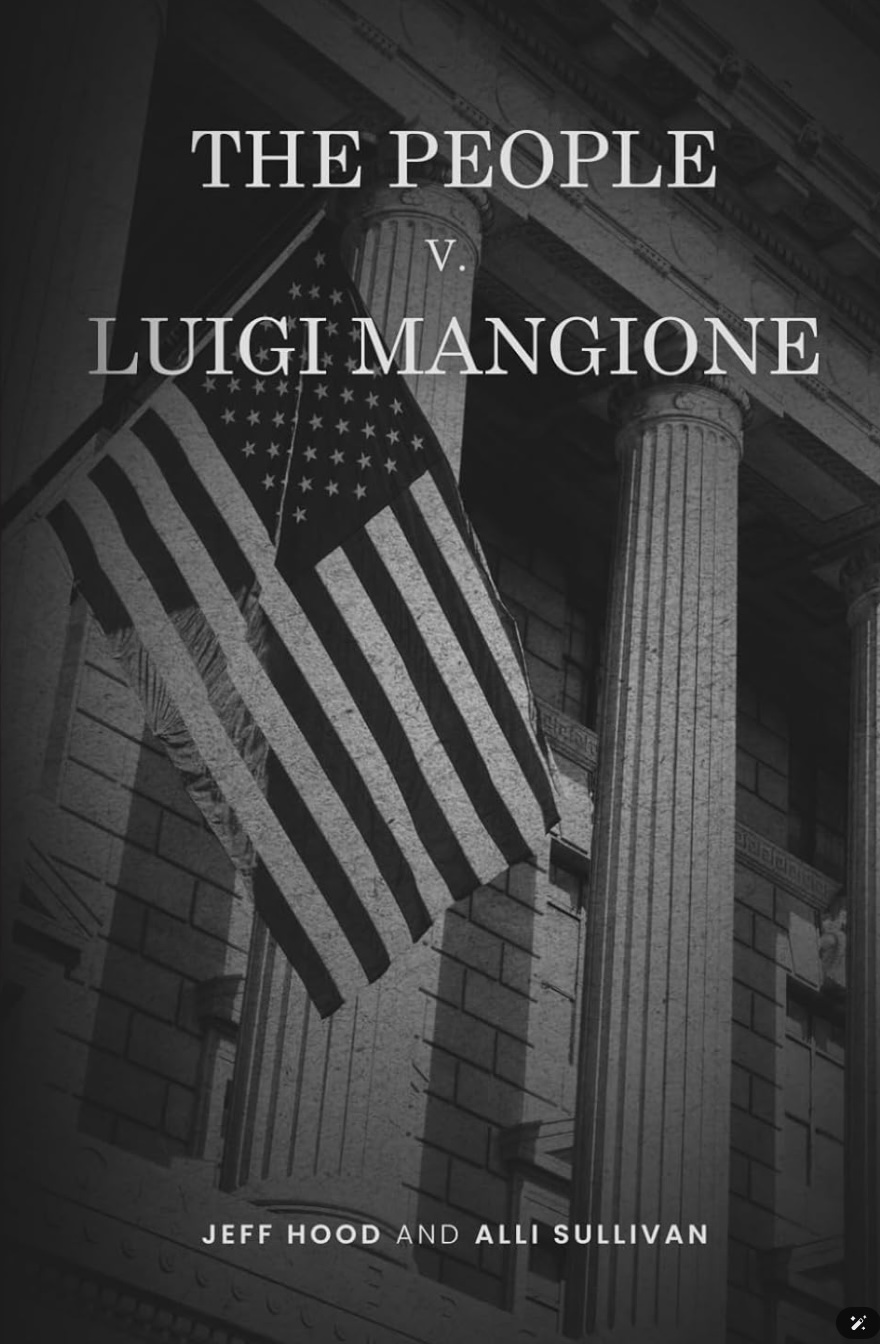
*”The Cult of Luigi” is derived from an essay that I contributed to a new book that I wrote with Alli Sullivan. It can be found on Amazon.















 Ad-Free & Subscriber Log-In