

The Theology of Nitrogen: What Steve Marshall ’s Defeat Says About Death, Power & the Soul of the South
Steve Marshall : A Political Collapse Few Expected
There are moments in politics when an election result says more than the candidates themselves ever intended. Alabama Attorney General Steve Marshall’s Senate loss feels like one of those moments. On paper, Marshall should have been one of the strongest candidates in the race. He had statewide name recognition, donor infrastructure, institutional backing and years of credibility with conservative voters. He had built a reputation as one of the most aggressive Republican attorneys general in the country. Yet despite every structural advantage, Marshall finished third in Alabama’s Republican Senate primary behind Trump-endorsed Congressman Barry Moore and former Navy SEAL Jared Hudson, a political newcomer who had never held elected office.
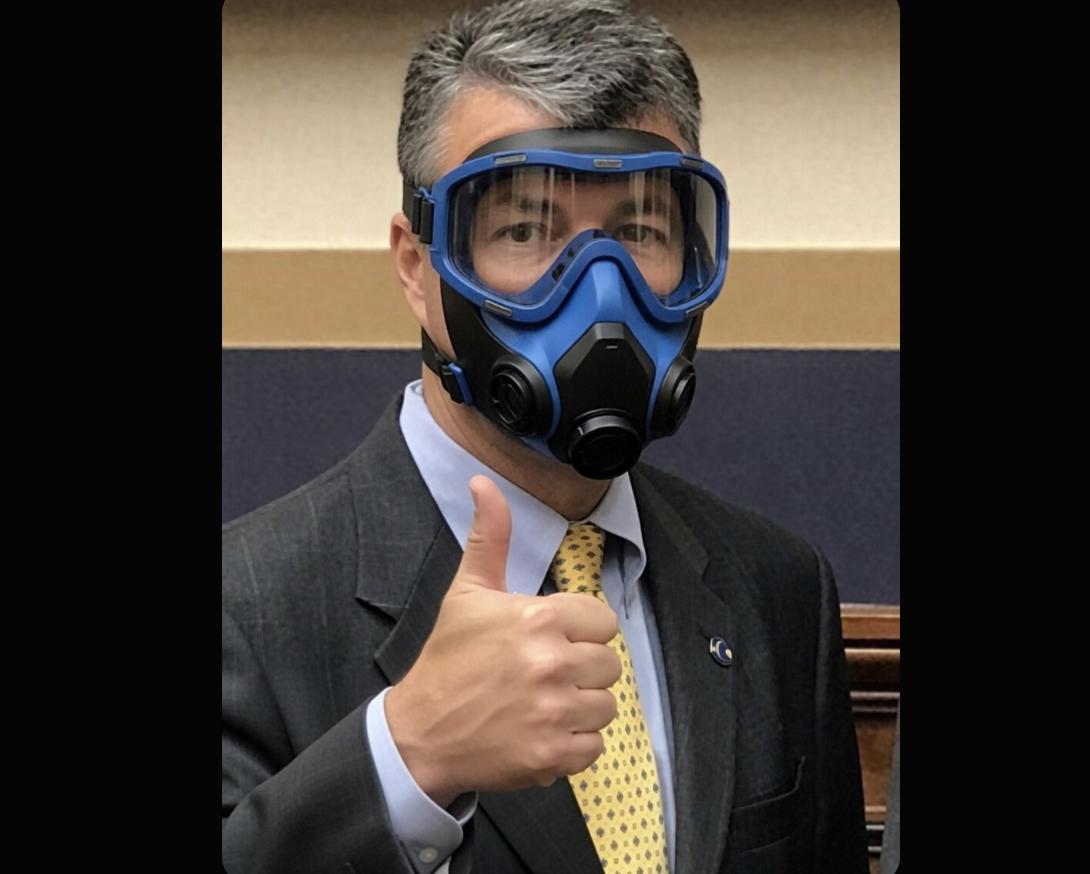
Most political analysis will focus on the obvious explanations. Donald Trump’s endorsement mattered enormously in Alabama Republican politics. Marshall also carried the burden that comes with being a long-time officeholder during an anti-establishment era. Those realities are true. But they are incomplete. There was another force hanging over Marshall’s campaign, something deeper than polling strategy or messaging discipline. Over the last two years Marshall made nitrogen hypoxia executions not merely part of his record but part of his political identity. He became nationally known as the man who transformed Alabama into the testing ground for a new method of killing human beings.
And there is something spiritually corrosive about building public identity around the machinery of death.
The Night Kenneth Smith Died
In January 2024, Alabama executed Kenneth Smith using nitrogen gas, the first known execution of its kind in the United States. Afterward, Marshall stood before cameras and described the execution as “textbook.” He insisted nitrogen hypoxia was “no longer an untested method” but “a proven one.” Then he looked outward toward the rest of the country and invited other states to follow Alabama’s lead. “Alabama has done it, and now so can you, and we stand ready to assist you.”
The statement landed with a kind of eerie triumphalism. It sounded less like the sober language of law enforcement and more like the unveiling of a technological achievement. There was an unmistakable sense of pride in being first. Marshall did not speak like someone reluctantly carrying out a legal duty. He spoke like someone unveiling a political legacy.
But I was there that night.
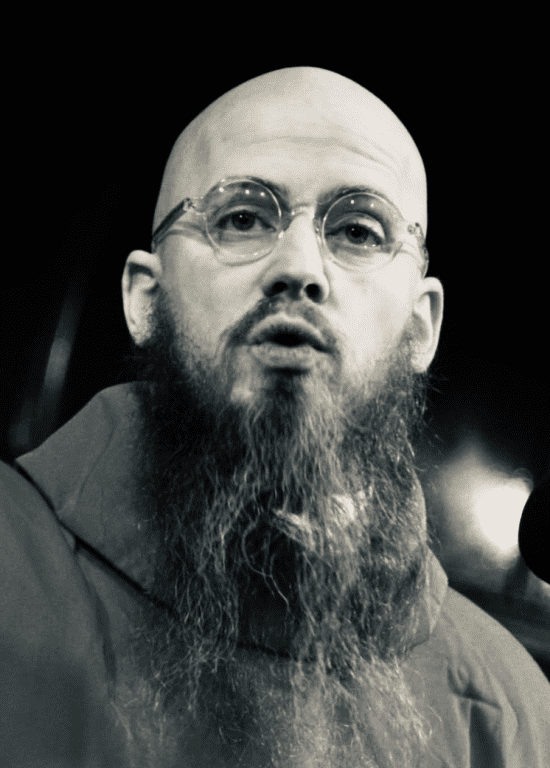
I entered the execution chamber as Kenneth Smith’s spiritual advisor. I prayed with him moments before the mask was tightened onto his face. Whatever abstractions people use when discussing capital punishment vanish quickly inside that room. The chamber strips away slogans. It strips away rhetoric. It strips away distance. There is only a human body, a human soul and the terrible machinery the state has constructed to extinguish both.
What I witnessed over the next twenty-two minutes is something I will carry for the rest of my life.
Smith remained conscious for several minutes after the nitrogen began flowing. He writhed against the restraints while journalists watched through the observation window. One veteran reporter later called it the most violent execution he had ever seen in Alabama. Other witnesses described the same prolonged struggle. The language that followed from the state insisted the execution had proceeded according to protocol. But protocol is often just another word we use when institutions need to normalize suffering.
The state wanted the public to see control. What many of us witnessed instead was anguish.
Steve Marshall and the False Promise of a “Humane” Execution
There is a temptation among modern governments to treat execution methods as public relations problems rather than moral problems. The language changes every generation but the instinct remains the same. One era reaches for the gallows. Another embraces electrocution. Then lethal injection arrives wrapped in the sterile language of medicine. Now nitrogen hypoxia enters carrying the rhetoric of scientific precision and technological efficiency. Every generation tells itself the same lie: perhaps we have finally discovered a clean way to kill.
But there is no clean way to turn a human being into an object of state disposal.
The deeper spiritual danger is not simply that executions happen. It is that societies slowly train themselves to stop seeing the condemned as human at all. Bureaucracy creates emotional distance. Legal language anesthetizes conscience. Politicians begin discussing death the way executives discuss infrastructure projects. Eventually, entire careers are built around appearing emotionally untouched by the act of killing.
That is where Steve Marshall crossed into dangerous territory.
There is a difference between defending a legal system and spiritually identifying yourself with the mechanics of death itself. Marshall increasingly presented nitrogen hypoxia not as a grim responsibility but as a political accomplishment. Alabama was not merely carrying out executions. Under Marshall’s framing, Alabama was pioneering something. Innovating something. Leading something.
Christianity and the Language of Mercy
Yet scripture consistently warns about what happens to societies that begin glorifying power over mercy.
The Hebrew prophets repeatedly condemned nations that became intoxicated with domination. The Book of Isaiah warns against those who “call evil good and good evil.” The Book of Ezekiel describes leaders whose hearts become hardened through violence. Even in Romans 13, where state authority is acknowledged, the sword is treated as tragic necessity rather than moral spectacle. The New Testament moves still further toward mercy. Christ interrupts executions. Christ stands beside the condemned. Christ Himself is executed by the state while political and religious authorities insist the procedure is justified, orderly and necessary for public stability.
Christianity was born beneath the shadow of state execution.
That should make Christians extraordinarily cautious whenever political leaders begin celebrating new methods of killing.
None of this means Alabama Republicans suddenly became abolitionists. They did not. Support for capital punishment remains strong across much of the South. But politics is not only about policy agreement. Politics also carries emotional and spiritual symbolism. Most Republican voters were not looking for a candidate whose identity revolved around execution technology. They cared about inflation, immigration, border security and national political power. Marshall increasingly became known nationally as “the nitrogen guy,” a label that may have generated cable news attention but created spiritual unease even among people who still supported the death penalty itself.
Because there is something unsettling about watching a politician appear too comfortable around death.
Especially in the South, where Christianity still shapes moral imagination even among many who rarely attend church, voters instinctively recognize the difference between strength and hardness. Southern political culture still carries traces of biblical language whether people consciously realize it or not. Voters may support punishment while recoiling from the appearance of enthusiasm. They may support law and order while becoming uncomfortable when leaders seem eager to transform execution into personal branding.
Steve Marshall : What Alabama’s Voters Rejected
That distinction matters.
Marshall’s deeper political mistake was misunderstanding the spiritual psychology of his own electorate. Alabama conservatives may support capital punishment but many still expect public leaders to approach death with gravity rather than theatrical confidence. They expect sobriety rather than celebration. Even those who believe executions are justified often retain an instinctive discomfort with politicians who appear emotionally invested in the process itself.
Nitrogen hypoxia magnified that discomfort because the method itself already carried disturbing imagery. Lawsuits described it as a human experiment. International human rights officials condemned it publicly. Witness accounts undermined the state’s assurances about peacefulness and efficiency. Every new headline forced voters to revisit images many would rather not dwell upon at all.
And spiritually speaking, that matters because repeated exposure to violence changes both individuals and societies.
Theologians have long understood that what we ritualize eventually shapes us. Nations develop liturgies just as churches do. Some liturgies teach compassion. Others teach domination. Public executions have always functioned as civic rituals designed to communicate state power. Even when hidden behind prison walls, they still shape the moral imagination of the culture surrounding them. The question is never only what executions do to the condemned. The question is what they do to the souls of those carrying them out, defending them and politically profiting from them.
At some point, Steve Marshall stopped sounding like a public official carrying out a legal obligation and started sounding like a man evangelizing a technology of death.
That is a spiritually dangerous place for any society to go.
The irony is that Marshall’s political collapse may reveal something unexpectedly hopeful about the moral instincts still alive inside the South. Alabama Republicans did not reject conservatism. They did not reject toughness. They did not reject the death penalty itself. But they may have rejected something narrower and more unsettling: the transformation of execution into political identity.
Because somewhere deep beneath all the polling data and campaign strategy is a truth older than partisan politics. Human beings know instinctively that death is sacred territory. Even when societies justify killing, they still expect leaders to approach it with trembling hands.
A politician who appears too eager around death eventually alarms people in ways polling cannot fully measure.
Marshall spent years building nitrogen hypoxia into a national political symbol. He believed it projected strength. Perhaps many voters instead saw something colder. Something spiritually hollow. Something that felt less like justice and more like fascination with the machinery itself.
And perhaps that is why his defeat matters beyond Alabama.
Other Republican attorneys general, including Tim Griffin in Arkansas, Liz Murrill in Louisiana and Lynn Fitch in Mississippi, should pay close attention to what happened here. The temptation to build national profiles through execution politics remains strong in parts of the South. The media attention is immediate. The symbolism feels powerful. But Marshall’s defeat suggests there may still be moral boundaries voters do not want crossed, even inside deeply conservative states.
Because eventually the soul recognizes when politics stops speaking about justice and starts speaking the language of death too fluently.














 Ad-Free & Subscriber Log-In